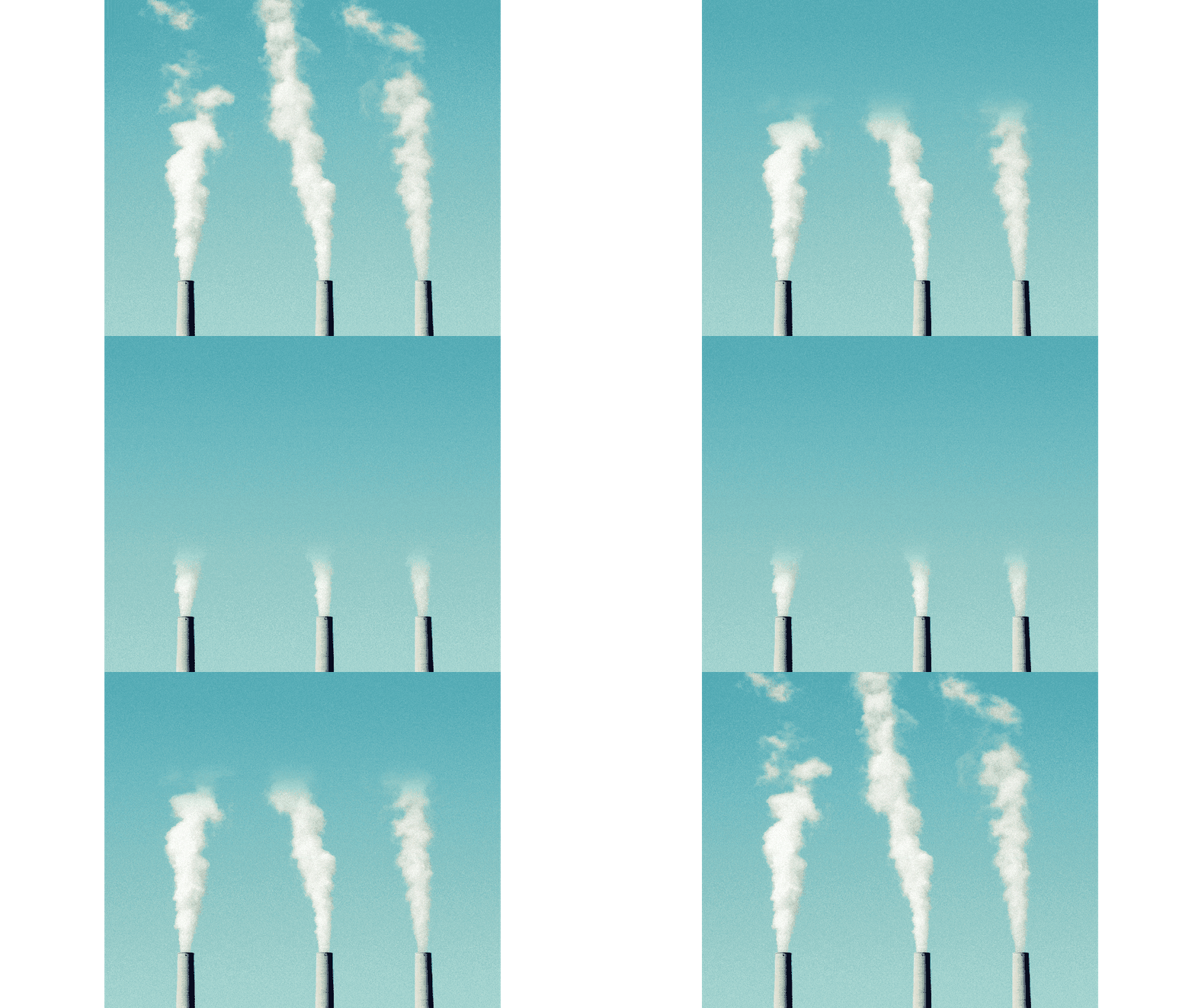
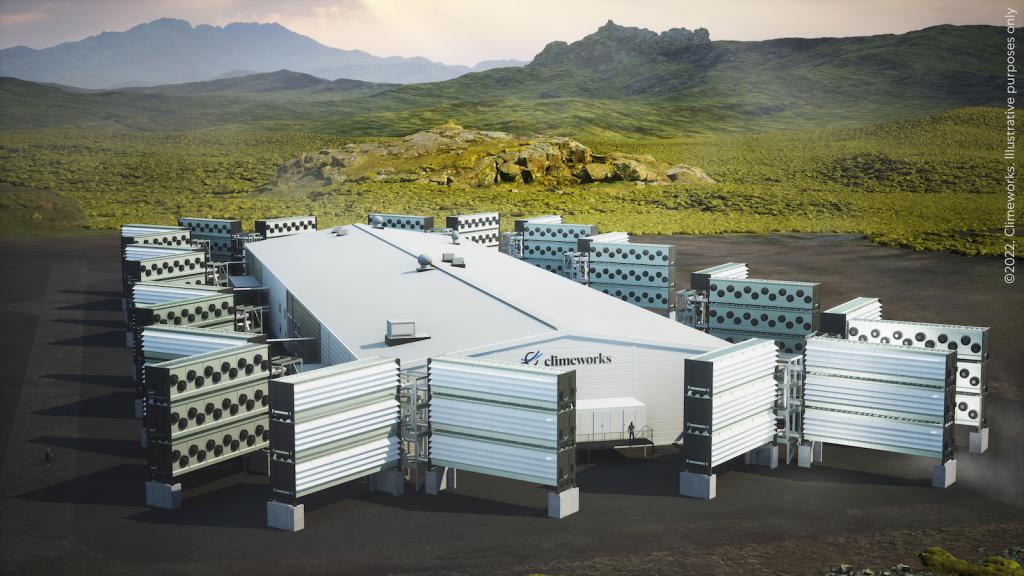
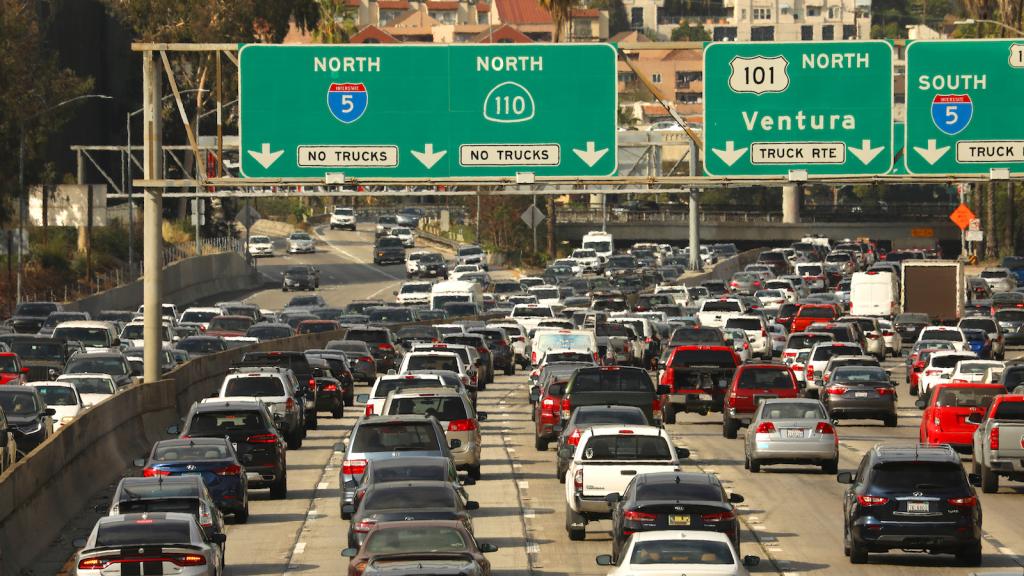
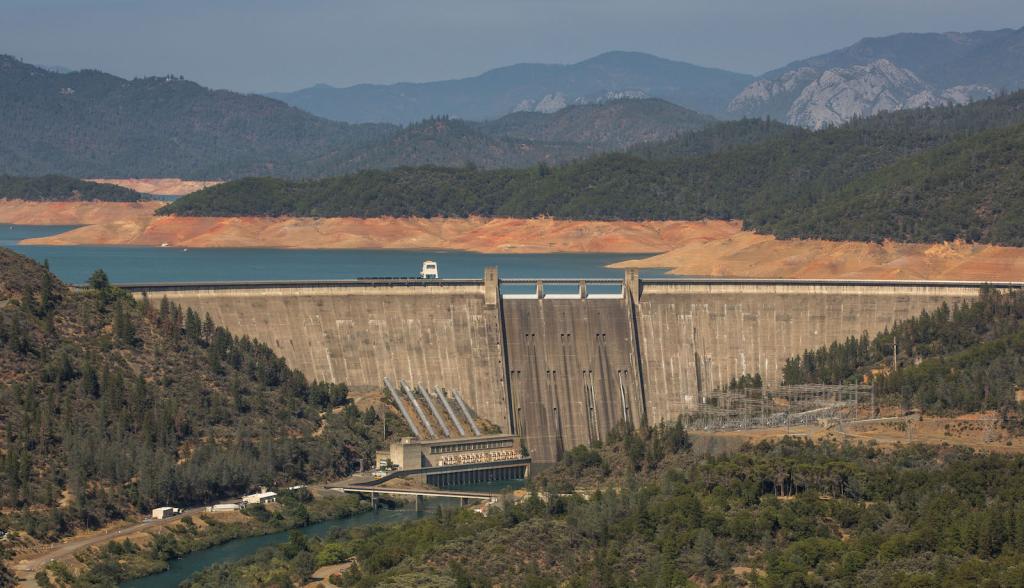
Here at Grist, climate change is our bread and melting butter. But this month, we’re feeling especially hot and bothered. As part of our in-depth look at the warming planet, we’ve compiled a list of the U.S. cities that we think will be in the hottest water as the mercury rises -- in some cases, up to their foreheads.
A quick note about New Orleans: It’s hard not to include a city that’s already lost so much, but the Big Easy’s new $14.5 billion, state-of-the-art levee system is finally up-and-running just eight short years after Katrina. Some warn that the new system, designed to stop a once-in-a-century storm -- the kind that seem to be coming about every other Thursday these days -- is already out of date. But it’s better than nothing, especially when compared to the rest of the country, so we're giving New Orleanians credit as most-improved. That said, here we go!
I was optimistic when I began reading the Washington Post op-ed on climate change by Rep. Lamar Smith (R-Texas), current chairman of the House Science Committee. He began with a plea for a thoughtful and objective discussion of climate science. But like Lucy snatching the football away from Charlie Brown, he quickly dashed my hopes as he proceeded to provide a one-sided view of the state of climate science.
Rep. Smith neglected to acknowledge that the U.S. National Academy of Sciences and 18 U.S. professional scientific societies [PDF] agree that climate change is real and that carbon dioxide and other heat-trapping gases from human activities are now the primary driver of it. He also forgot to mention sea-level rise, which is already increasing the risk from every storm to coastal communities in Massachusetts and around the nation. There was no mention of the shift in rainfall patterns to more extreme downpours, or that the ocean’s chemistry is changing [PDF] as it warms up and absorbs carbon dioxide.
Susie CagleThe extreme weather events of the past few years go unmentioned in Rep. Smith’s piece. Americans have watched homes engulfed by wildfires, crops decimated by drought, and infrastructure twisted like a pretzel during Superstorm Sandy. Last week, an analysis estimated that U.S. taxpayers paid a $96 billion bill for cleanup after climate-related disasters in 2012 alone. I recently launched a new House Natural Resources Democrats app that shows the costs of extreme weather, both in terms of dollars spent and lives lost.
Curiously, Rep. Smith’s climate piece ignores the global temperature records of NOAA and NASA that show 2010 as the hottest year on record since 1880, and the decade ending in 2009 as the hottest decade on record. He also ignores the results of the Berkeley Earth Surface Temperature Study conducted by independent -- and formerly skeptical -- scientists who also found that global land temperatures have been increasing and that heat-trapping gases are driving that rise. Instead, he relies on a temperature record produced by U.K. scientists that he [PDF] and other Republicans have previously -- falsely, it turns out -- accused of conspiring to alter temperature data. Choosing the temperature record that best fits your argument, especially when it is from a group you questioned just a few years ago, hardly seems objective.
I would welcome, as Rep. Smith writes, a “legitimate evaluation of policy options” by Congress for dealing with climate change and its impacts. Indeed, it was my honor to lead then-Speaker Nancy Pelosi’s Select Committee on Energy Independence and Global Warming, where we held more than 80 hearings and a rigorous bipartisan discussion on both climate science and climate solutions. Sadly, when Tea Party Republicans took control of the House in 2010, one of the very first things they did was eliminate the Select Committee.
Mike SmailExxonMobil's accident-prone complex in Baton Rouge.
"Oops."
Gulf Coast oil refiners and chemical processors say that a lot, but regulators are doing precious little to rein in what the industry euphemistically calls "upset" emissions.
Upset emissions are inadvertent releases of chemicals by industrial operations when something goes awry. And things seem to go awry awfully frequently. An ExxonMobil refinery in Baton Rouge, La., was averaging two accidental releases every week during one grim stretch.
That's according to an analysis by The Center for Public Integrity, which found that upset emissions are more prevalent than industry admits or government knows. Some highlights from the center's investigative report:
Los Angeles got a new mayor this morning: City Councilmember Eric Garcetti beat City Controller Wendy Greuel, a fellow Democrat, more handily than expected in a historically low-turnout race (a pathetic 19 percent of L.A. voters cast ballots). He takes office July 1.
Garcetti, a Rhodes scholar and L.A.’s first Jewish mayor, has big shoes to fill: Will he carry on current Mayor Antonio Villaraigosa’s celebrated efforts to combat L.A.’s image as a smog-choked, car-worshipping, freeway-entangled sprawlsville?
So far, the signs point in that direction. Some have criticized Garcetti for being too friendly to business interests, but he sees working with developers as a necessary component of the smart-growth strategy he’s pursued to revitalize once-blighted areas of Hollywood, Echo Park, and Silver Lake, his home turf.
Villaraigosa did not endorse a candidate in the race. But Garcetti earned the support of the Sierra Club, which called his environmental record "unmatched":
He authored the nation's largest green building ordinance, the nation's largest local clean water initiative, and legislation making L.A. the nation's largest city with a solar feed-in-tariff. He nearly tripled the number of parks in his district by finding innovative ways to create 31 new neighborhood parks. He led the effort to pass the plastic bag ban and Low Impact Development Ordinance.
Solar Impulse, the world's most advanced solar aircraft, is trekking across the United States. It's already made it from the Bay Area to Phoenix, Ariz. Check out photos from its U.S. flights, and read more about the all-solar plane's journey.
Have you ever sat on the subway across from a hot guy or girl holding the book you just finished, trying to peek at their left hand and wondering whether it's kosher to start a conversation? The organization that runs the subways in Prague has a plan that will end these awkward deliberations for good. The company, ROPID, "wants to set aside carriages on some or all of its trains for singles seeking a soul mate," Reuters reports. It'd basically be like Amtrak's quiet car, except instead of sitting in silence, everyone will be scanning the car like they would a bar on a Saturday night.
America passed a milestone on Monday, according to electric-vehicle advocacy group Plug-In America. That's when the 100,000th EV was sold in the U.S., the group estimates.
Based on the average US household size, this means that over a quarter million people are now being exposed regularly to the benefits of electric transportation. The vehicles themselves are reaching an even greater number of people simply by being on the road -- perhaps as many as 1 million or more people per day. While much work remains to be done, 100,000 vehicles means that we are ever closer to the tipping point for electric transportation.
This is a quokka. It's got nothing to do with utilities, but it's cute.
Last week, I posted on the fight between electric utilities and solar advocates over rooftop solar power. Today, I want to pull back the lens and begin to tackle the bigger question: How should utilities work? What's the right way to provision and manage electricity in the 21st century?
There's very little public discussion of utilities or utility regulations, especially relative to sexier topics like fracking or electric cars. That's mainly because the subject is excruciatingly boring, a thicket of obscure institutions and processes, opaque jargon, and acronyms out the wazoo. Whether PURPA allows IOUs to customize RFPs for low-carbon QFs is actually quite important, but you, dear reader, don't know it, because you fell asleep halfway through this sentence. Utilities are shielded by a force field of tedium.
It's is an unfortunate state of affairs, because this is going to be the century of electricity. Everything that can be electrified will be. (This point calls for its own post, but mark my words: transportation, heat, even lots of industrial work is going to shift to electricity.) So the question of how best to manage electricity is key to both economic competitiveness and ecological sustainability.
It's time to start talking about utilities. I, your courageous blogger and servant, am going to attempt to lay out, at a high level, how utilities work and why, the challenges facing them, and what a utility more suited to the 21st century might look like. It's a complicated problem, but I think the basics are approachable by ordinary citizens, who very much need to get involved and speak up on these issues. Occupy PUCs! (You'll get that joke after you read my next few posts.)
Smuggled into the bill President Obama signed to avert a government shutdown in March was a sneaky little rider called the “farmer assurance provision.” It’s since come to be known as the Monsanto Protection Act, being very assuring to the biotech giant, if no one else. It allows farmers to plant genetically modified crops before they’ve been declared safe by the U.S. Department of Agriculture, in defiance of court orders suspending planting until environmental reviews can be completed.
Once food-advocacy groups and then the general public found out about the quietly passed provision, outcry against it spread, in the form of petitions and even rare displays of bipartisan solidarity. On Monday, Sen. Jeff Merkley (D-Ore.) announced that he’s introducing an amendment to the Senate version of the farm bill that would repeal the Monsanto Protection Act in its entirety.
It's easy to get paranoid when you're riding a bike alongside drivers who, despite commanding vehicles much bigger and faster than yours, seem uninterested in your safety or survival. Sometimes it feels like they're out to get you. Or at least like they'd be happy if you got hurt.
And apparently, that paranoia is not entirely unjustified. In the U.K., for instance, one driver bragged on Twitter about knocking a person off his bike with her car:
In this case, bike activists who monitor social media for anti-cycling comments alerted the police, who told Way to report having being in a collision. (We can just imagine her whining "but I did report it! I told everyone on Twitter he deserved it!") But it is creepy that anyone would be so excited about potentially injuring another human being.