<?xml version="1.0" encoding="UTF-8"?><rss version="2.0"
	xmlns:content="http://purl.org/rss/1.0/modules/content/"
	xmlns:wfw="http://wellformedweb.org/CommentAPI/"
	xmlns:dc="http://purl.org/dc/elements/1.1/"
	xmlns:atom="http://www.w3.org/2005/Atom"
	xmlns:sy="http://purl.org/rss/1.0/modules/syndication/"
	xmlns:slash="http://purl.org/rss/1.0/modules/slash/"
	xmlns:georss="http://www.georss.org/georss" xmlns:geo="http://www.w3.org/2003/01/geo/wgs84_pos#" xmlns:media="http://search.yahoo.com/mrss/"
	>

<channel>
	<title>Grist: Dana Gunders</title>
	<atom:link href="http://grist.org/author/dana-gunders/feed/" rel="self" type="application/rss+xml" />
	<link>http://grist.org</link>
	<description>Environmental News, Commentary, Advice</description>
	<lastBuildDate>Thu, 23 May 2013 11:24:53 +0000</lastBuildDate>
	<language>en</language>
	<sy:updatePeriod>hourly</sy:updatePeriod>
	<sy:updateFrequency>1</sy:updateFrequency>

	<generator>http://wordpress.com/</generator>
<cloud domain='grist.org' port='80' path='/?rsscloud=notify' registerProcedure='' protocol='http-post' />
<image>
		<url>http://1.gravatar.com/blavatar/330e84b0272aae748d059cd70e3f8f8d?s=96&#038;d=http%3A%2F%2Fs2.wp.com%2Fi%2Fbuttonw-com.png</url>
		<title>Grist: Dana Gunders</title>
		<link>http://grist.org</link>
	</image>
	<atom:link rel="search" type="application/opensearchdescription+xml" href="http://grist.org/osd.xml" title="Grist" />
	<atom:link rel='hub' href='http://grist.org/?pushpress=hub'/>

			<item>
			<title>No bad apples: Grocery store cuts waste and cost by selling imperfect fruit</title>
			<link>http://grist.org/food/no-bad-apples-grocery-store-cuts-waste-and-cost-by-selling-imperfect-fruit/?utm_source=syndication&#038;utm_medium=rss&#038;utm_campaign=feed:danagunders</link>
			<comments>http://grist.org/food/no-bad-apples-grocery-store-cuts-waste-and-cost-by-selling-imperfect-fruit/#comments</comments>
			<dc:creator><![CDATA[Dana Gunders]]></dc:creator>			<pubDate>Thu, 24 Jan 2013 12:17:19 +0000</pubDate>

					<category><![CDATA[Article]]></category>
		<category><![CDATA[Business & Technology]]></category>
		<category><![CDATA[Food]]></category>

			<guid isPermaLink="false">http://grist.org/?p=155127</guid>

			<description><![CDATA[By selling apples normally deemed not pretty enough for retail, one California grocery chain leads the way in cutting food waste and saving eaters money. <img alt="" border="0" src="http://stats.wordpress.com/b.gif?host=grist.org&#038;blog=5104299&#038;post=155127&#038;subd=grist&#038;ref=&#038;feed=1" width="1" height="1" />]]></description>

			
									<content:encoded><![CDATA[ <p><img class="size-medium wp-image-155145 alignright" alt="apples-foodstar-andronicos-nrdc" src="http://grist.files.wordpress.com/2013/01/apples-foodstar-andronicos-nrdc.jpg?w=187&#038;h=250" width="187" height="250" />On the surface, it’s a common display. A bin of apples with a sale sign greets customers as they enter the grocery store. Behind the scenes, however, it’s unchartered territory. Those apples are too small to be considered sufficient quality, or grade, for retail grocery stores. They were destined to be juice, cattle feed, or maybe even landfill waste until a few crafty folks and a bold supermarket decided to break the grade barrier.</p>
<p>Meet <a href="http://www.foodstarpartners.com/">FoodStar</a> and its courageous partner <a href="http://www.andronicos.com/">Andronico’s Community Market</a>, a small Northern California grocery chain. Together, they are taking a chance on the idea that maybe we consumers aren’t as picky as most supermarkets seem to think we are. Maybe we’d be willing to buy a slightly smaller apple that only has 37 percent red coverage instead of the requisite 40 percent needed to qualify as the “fancy” grade that stores usually buy (yes, it’s actually measured). Maybe we consumers would even consider it a score to get a bag of Pink Lady apples for just 69 cents per pound.</p>
<p>Last month, the Natural Resources Defense Council released a survey of farmers that indicated <a href="http://switchboard.nrdc.org/blogs/dgunders/left_out_how_much_of_the_fresh.html">sometimes as much as 30 percent of fresh produce does not make it off the farm</a>. This is a waste of nutrition in addition to all of the money and resources that went into growing that food. One key driver that causes fruits and veggies to be left on the field or fed to cattle is that they are <a href="http://www.sacbee.com/2012/06/24/4583217/not-pretty-but-still-perfect.html#storylink=misearch">not cosmetically perfect enough</a> to meet the high standards that grocery stores mandate. Many retailers insist that fruits and veggies meet exact cosmetic criteria, including specifications for size, color, weight, and blemish level &#8212; leading to culling and incorporating waste as part of doing business. Waste, however, is not cheap. The U.S. Department of Agriculture estimates that <a href="http://ucce.ucdavis.edu/files/datastore/234-2425.pdf">supermarkets lose $15 billion</a> [PDF] each year in fruit and vegetable losses alone.<span id="more-155127"></span></p>
<p>Andronico’s Jonathan Packman said of the project, “We’re proud to be working with FoodStar to launch this initiative, since it simultaneously addresses several problems in the food supply chain. FoodStar presented Andronico’s with an opportunity to partner on this concept to divert food from the waste stream and create a viable, marketable product.”</p>
<figure id="attachment_155170" class="grist-img-container alignleft" style="width:250px" ><img class="size-medium wp-image-155170" alt="granny-smith-apples-hanoian" src="http://grist.files.wordpress.com/2013/01/granny-smith-apples-hanoian.jpg?w=250&#038;h=175" width="250" height="175" /><figcaption class="credit" ><a title="image credit" href="http://www.flickr.com/photos/preya/1795299365/">Hanoian</a></figcaption></figure>
<p>&#8220;This is very groundbreaking stuff, because a retailer has broken the grade barrier <em>and</em> passed along the significant cost savings to the consumer,&#8221; says Ron Clark, coordinator for the Farm Direct aspect of FoodStar and former director of the California <a href="http://www.cafoodbanks.org/Farm_to_Family.html">Farm to Family</a> program, which distributed 120 million pounds of rescued produce to food banks in 2011 alone. By breaking the “grade barrier,&#8221; he is describing the highly specified standard of quality and aesthetics that most supermarkets would not dare to go below for fear a customer will be disappointed with their produce offerings. As Packman explains, “While selling from the same open bin of apples that the grower sends to us may seem simple, it actually represents a significant departure from how things are normally done in the grocery business.”</p>
<p>These were perfectly good apples we’re talking about, just with a bit of a Goldilocks problem. They were one quality level below what grocery stores traditionally buy. They were also too small to be used as “peelers,” which eventually become apple pie, applesauce, and McDonald’s Happy Meal snacks. In fact, they were actually on their way to becoming caramel apples for Halloween, but were pulled off the sorting line because orders for caramel apples were not as large as originally thought. Given this predicament, the apples would normally have been sent to the juice market if there were demand, or to cattle feed or a landfill if not. By intercepting them, FoodStar and Andronico’s are ensuring that these apples are going to their highest and best use possible &#8212; feeding people fresh food, affordably.</p>
<p>There are a few key aspects to this plan that make it work. First, the featured product changes, which allows surplus product in the supply chain to be absorbed in the way it happens &#8212; spontaneously. One week it’s Pink Ladies, the next week Granny Smiths. Second, decisions are made to keep the cost down, such as selling the apples out of large bins instead of the shipper paying to box them and the grocery store paying to unpack them. And finally, savings are passed on to the consumer, effectively warning the consumer that they might have to be slightly more tolerant of imperfections they wouldn’t normally see on the shelf. By carrying the FoodStar brand and locating the product in a different place, Andronico’s avoids the risk that consumers will judge their whole produce offering on this product.</p>
<p>Though they’re only a few weeks into the program, Packman reports that “so far, it’s going really well; we have sold over two tons of apples already, while actually improving our overall produce sales.” Everyone wins in this scenario. For Andronico’s, it’s a way to bring in traffic and offer their customers a good deal. FoodStar, who sources the product, is able to provide good value with products that would otherwise go to lower uses or waste. The supplier is able to sell the apples at a better price. And for us consumers, we score a bag of apples for half the normal cost.</p>
<p>Apple pie, anyone?</p>
<br />Filed under: <a href="http://grist.org/article/?utm_source=syndication&amp;utm_medium=rss&amp;utm_campaign=feed:danagunders">Article</a>, <a href="http://grist.org/business-technology/?utm_source=syndication&amp;utm_medium=rss&amp;utm_campaign=feed:danagunders">Business &amp; Technology</a>, <a href="http://grist.org/food/?utm_source=syndication&amp;utm_medium=rss&amp;utm_campaign=feed:danagunders">Food</a>  <img alt="" border="0" src="http://stats.wordpress.com/b.gif?host=grist.org&#038;blog=5104299&#038;post=155127&#038;subd=grist&#038;ref=&#038;feed=1" width="1" height="1" />]]></content:encoded>


		<media:thumbnail url="http://grist.files.wordpress.com/2013/01/granny-smith-apples-hanoian.jpg?w=150" />
		<media:content url="http://grist.files.wordpress.com/2013/01/granny-smith-apples-hanoian.jpg?w=150" medium="image">
			<media:title type="html">granny-smith-apples-hanoian</media:title>
		</media:content>

		<media:content url="http://1.gravatar.com/avatar/a37fbac7aac75579ca10f23cd0cfe355?s=96&#38;d=http%3A%2F%2F1.gravatar.com%2Favatar%2Fad516503a11cd5ca435acc9bb6523536%3Fs%3D96&#38;r=G" medium="image">
			<media:title type="html">clairekt615</media:title>
		</media:content>

		<media:content url="http://grist.files.wordpress.com/2013/01/apples-foodstar-andronicos-nrdc.jpg?w=187" medium="image">
			<media:title type="html">apples-foodstar-andronicos-nrdc</media:title>
		</media:content>

		<media:content url="http://grist.files.wordpress.com/2013/01/granny-smith-apples-hanoian.jpg?w=250" medium="image">
			<media:title type="html">granny-smith-apples-hanoian</media:title>
		</media:content>

		</item>
			<item>
			<title>These numbers will help you feel grateful, not wasteful</title>
			<link>http://grist.org/food/these-numbers-will-help-you-feel-grateful-not-wasteful/?utm_source=syndication&#038;utm_medium=rss&#038;utm_campaign=feed:danagunders</link>
			<comments>http://grist.org/food/these-numbers-will-help-you-feel-grateful-not-wasteful/#comments</comments>
			<dc:creator><![CDATA[Dana Gunders]]></dc:creator>			<pubDate>Fri, 16 Nov 2012 12:15:05 +0000</pubDate>

					<category><![CDATA[Food]]></category>

			<guid isPermaLink="false">http://grist.org/?p=141508</guid>

			<description><![CDATA[Turkey doesn't grow on trees (yeah, OK -- it'd be really weird if it did). So why do we waste almost one-third of the turkey we buy?<img alt="" border="0" src="http://stats.wordpress.com/b.gif?host=grist.org&#038;blog=5104299&#038;post=141508&#038;subd=grist&#038;ref=&#038;feed=1" width="1" height="1" />]]></description>

			
									<content:encoded><![CDATA[ <figure id="attachment_142318" class="grist-img-container alignright" style="width:250px" ><img class="size-medium wp-image-142318" title="shutterstock_77204038" alt="" src="http://grist.files.wordpress.com/2012/11/shutterstock_77204038.jpg?w=250&#038;h=167" height="167" width="250" /><figcaption class="credit" ><a title="image credit" href="http://www.shutterstock.com/pic.mhtml?id=77204038">Shutterstock</a></figcaption><figcaption class="caption" ></figcaption></figure>
<p>Once a year, we feast to celebrate that our ancestors had enough food to survive their first winter, acknowledging that once upon a time food was something to be grateful for. Then the next day, we throw half of it away.</p>
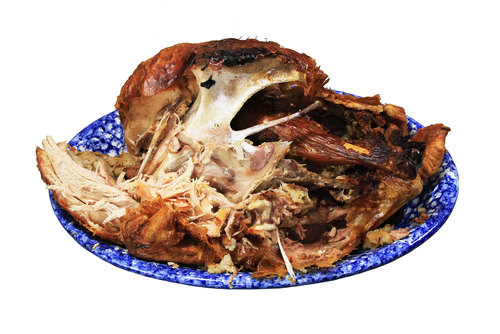
<p>Amidst groans about being more stuffed than the bird itself, Americans will toss a whopping <a href="http://www.fb.org/index.php?action=newsroom.news&amp;year=2012&amp;file=nr1108.html">$282 million</a> worth of uneaten turkey into the trash this Thanksgiving, contributing to the <a href="http://switchboard.nrdc.org/blogs/dgunders/not_eating_away_at_our_resourc.html">$165 billion</a> in uneaten food Americans waste every year. Along with trashing uneaten turkey, they’ll be wasting the resources necessary for its production &#8212; meaning 105 billion gallons of water (enough to supply New York City for over 100 days) and greenhouse gas emissions equivalent to 800,000 car trips from New York to San Francisco. That’s enough turkey to provide each American household that is food insecure with more than 11 additional servings (17.9 million American households suffer from food insecurity).<span id="more-141508"></span></p>
<p>Nationwide, consumers will purchase around <a href="http://www.eatturkey.com/consumer/history/history.html">736 million pounds of turkey</a> this Thanksgiving, of which about 581 million pounds will be actual meat. The <a href="http://www.ers.usda.gov/publications/tb-technical-bulletin/tb1927.aspx">USDA reports</a> that 35 percent of perfectly good turkey meat in the U.S. does not get eaten after it is purchased by consumers (and that’s not including bones). This compares with only 15 percent for chicken. Why the disparity? “Possibly because turkey is more often eaten during holidays when consumers may tend to discard relatively more uneaten food than on other days,” the USDA writes.</p>
<p>And unless we take action to prove the USDA wrong, we’ll be throwing away about 204 million pounds of that meat and about 1 million tons of CO2 with it. Per pound, the resources needed to produce that turkey are equivalent to driving your car 11 miles and taking a 130-minute shower (at four gallons/minute).* And that’s to say nothing of the vast amounts of antibiotics used to produce turkey meat, leading to antibiotic resistance, which you can read more about <a href="http://grist.org/food/that-bugs-the-latest-news-about-antibiotics-in-meat/?utm_source=syndication&amp;utm_medium=rss&amp;utm_campaign=feed:danagunders">here</a>.</p>
<p>This outlandish wastefulness may seem absurd, but only because it’s rare that we stop and appreciate just how much goes into getting food to our tables. But our Thanksgiving feast brings too much joy and <a href="http://switchboard.nrdc.org/blogs/dgunders/not_eating_away_at_our_resourc.html">requires too many resources</a> to just toss. These wasteful holiday tendencies have worsened over time, with <a href="http://switchboard.nrdc.org/blogs/dgunders/portion-mania_problematic_for.html">portion sizes growing</a> astronomically in the last 40 or so years. Fortunately, there are a bounty of ideas that can help us creatively repurpose leftovers and give them new life for days to come. <a href="http://www.foodnetwork.com/thanksgiving-leftovers/package/index.html">The Food Network</a>, <a href="http://www.marthastewart.com/275078/recipes-for-thanksgiving-leftovers/@center/276949/everything-thanksgiving">Martha Stewart</a>, and just about every other cooking site out there share recipes. And most chicken recipes can be made with turkey too.</p>
<p>You can be sure that those pilgrims were truly grateful for the food before them. This Thanksgiving, I invite you to do the same. Stop for a moment and imagine everything it takes to bring that brilliant feast to your table &#8212; the grains that were grown to feed your turkey, the bog that nurtured your cranberries, the land that allowed your pumpkin to spread its big leaves all over, and the hands that worked tirelessly to grow our food. Then, go ahead and dig in!</p>
<p><strong>Here’s the math:</strong> Producing one pound of turkey meat releases five kilograms of CO2 emissions, according to the Environmental Working Group, and uses 520 gallons of water (if it’s similar to chicken production, as estimated by the Water Footprint Network). At 423 grams of CO2 per mile as estimated by the EPA, that’s a per-pound equivalent of driving your car 11 miles and taking a 130-minute shower (at four gallons/minute). Nationwide, consumers will purchase around <a href="http://www.eatturkey.com/consumer/history/history.html">736 million pounds of turkey</a> this Thanksgiving, of which about 581 million pounds will be actual meat. Using the USDA estimate of 35 percent consumer loss for turkey, that amounts to 204 million pounds of meat discarded. Multiplied by the above numbers, that equates to a total of about 1 million tons of CO2 and 105 billion gallons of water with it. New York City consumes about 1 billion gallons of water per day and San Francisco is 2,915 miles from New York, according to Google. USDA defines a serving as three to four ounces of lean meat &#8212; four ounces were used for this calculation. 17.9 million households in the U.S. are food insecure, according to the USDA.</p>
<br />Filed under: <a href="http://grist.org/food/?utm_source=syndication&amp;utm_medium=rss&amp;utm_campaign=feed:danagunders">Food</a>  <img alt="" border="0" src="http://stats.wordpress.com/b.gif?host=grist.org&#038;blog=5104299&#038;post=141508&#038;subd=grist&#038;ref=&#038;feed=1" width="1" height="1" />]]></content:encoded>


		<media:thumbnail url="http://grist.files.wordpress.com/2012/11/shutterstock_77204038.jpg?w=150" />
		<media:content url="http://grist.files.wordpress.com/2012/11/shutterstock_77204038.jpg?w=150" medium="image">
			<media:title type="html">shutterstock_77204038</media:title>
		</media:content>

		<media:content url="http://0.gravatar.com/avatar/65e7ad82b361c47b027aee5c7403b683?s=96&#38;d=http%3A%2F%2F0.gravatar.com%2Favatar%2Fad516503a11cd5ca435acc9bb6523536%3Fs%3D96&#38;r=G" medium="image">
			<media:title type="html">gristadmin</media:title>
		</media:content>

		<media:content url="http://grist.files.wordpress.com/2012/11/shutterstock_77204038.jpg?w=250" medium="image">
			<media:title type="html">shutterstock_77204038</media:title>
		</media:content>

		</item>
			<item>
			<title>Super size, super waste: What whopping portions do to the planet</title>
			<link>http://grist.org/food/super-size-super-waste/?utm_source=syndication&#038;utm_medium=rss&#038;utm_campaign=feed:danagunders</link>
			<comments>http://grist.org/food/super-size-super-waste/#comments</comments>
			<dc:creator><![CDATA[Dana Gunders]]></dc:creator>			<pubDate>Mon, 15 Oct 2012 17:48:29 +0000</pubDate>

					<category><![CDATA[Food]]></category>

			<guid isPermaLink="false">http://grist.org/?p=134672</guid>

			<description><![CDATA[Did you know that the surface area of the average dinner plate expanded by 36 percent between 1960 and 2007? Here's how growing portion sizes are contributing to our national food waste problem.<img alt="" border="0" src="http://stats.wordpress.com/b.gif?host=grist.org&#038;blog=5104299&#038;post=134672&#038;subd=grist&#038;ref=&#038;feed=1" width="1" height="1" />]]></description>

			
									<content:encoded><![CDATA[ <figure id="attachment_134822" class="grist-img-container alignright" style="width:250px" ><img class="size-medium wp-image-134822" title="big hamburger" alt="" src="http://grist.files.wordpress.com/2012/10/shutterstock_24320422.jpg?w=250&#038;h=167" height="167" width="250" /><figcaption class="credit" ><a title="image credit" href="http://www.shutterstock.com/pic.mhtml?id=24320422">Shutterstock</a></figcaption><figcaption class="caption" ></figcaption></figure>
<p>McDonald’s has a pretty unsavory reputation when it comes to public health. Lately the company has taken some steps to improve its image, launching vegetarian restaurants in India and putting fresh apples into Happy Meals. But there’s something at the core of its business that has at least the potential to do some good for both our waistlines and a different kind of waste: our waste of food. McDonald&#8217;s offers flexible portions.</p>
<p>Walk through those golden arches and you have your choice of a cheeseburger, double cheeseburger, quarter pounder with cheese, or double quarter pounder with cheese. Chicken nuggets? Do you want four, six, nine, or 20? Fries with that or no? It’s choice, and we Americans love choice. But it also means only ordering (and only spending money on) the food we actually intend to eat.</p>
<p>Of course, simply providing choice is not the whole picture. How many people actually opt for the plain single hamburger when the double is just a few cents more expensive? Turns out, not many.</p>
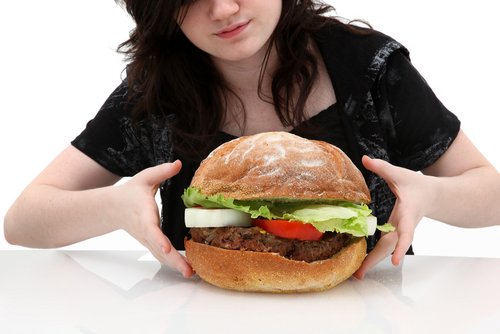
<p>In 1955, McDonald’s introduced a new product line &#8212; french fries. The original portion weighed 2.4 ounces (and had 210 calories). Today, that product is known as a small order of french fries, and is normally overlooked for the super size, at 7.1 ounces (and 610 calories). What’s more, the largest order of french fries in the United States is a whopping 37 percent larger than the largest size available in the United Kingdom. That’s a lot of fried potato.</p>
<p>Consider how portion sizes of some other common foods have grown over the past 40 or so years:</p>
<ul>
<li>From 1982 to 2002, the <a href="http://hp2010.nhlbihin.net/oei_ss/PDII/slide1.htm">average pizza slice grew 70 percent</a> in calories.</li>
</ul>
<ul>
<li>The average chicken Caesar salad doubled in calories.</li>
</ul>
<ul>
<li>The average chocolate chip cookie quadrupled in calories.</li>
</ul>
<ul>
<li>Portion sizes can be <a href="http://portionteller.com/pdf/portsize.pdf">two to eight times larger than USDA or FDA standard serving sizes</a> [PDF].</li>
</ul>
<ul>
<li>Our plates have grown to hold all those portions, too. The surface area of the average dinner plate expanded by 36 percent between 1960 and 2007.<span id="more-134672"></span></li>
</ul>
<p>This has meant a lot of additional calories that we’re routinely eating but probably don’t need to be. But it’s also meant a pretty shocking increase in the amount of food we’re discarding. Today, we waste 50 percent more calories than we did in the &#8217;70s. The average American today wastes 10 times as much food as their counterpart in Southeast Asia.</p>
<p><a href="http://www.nrdc.org/food/wasted-food.asp">Food waste is a complex issue</a> with many drivers, but ever-expanding portion sizes are undoubtedly one of them. But while much attention has been paid to the resulting impacts on obesity, there has been relatively less focus on the ways in which increased portion sizes have contributed to the growing amount of food that gets wasted.</p>
<p>“Plate waste,” the food left on the plate after a meal is finished, is a significant contributor to food waste in restaurants. On average, diners leave 17 percent of meals uneaten, and 55 percent of these potential leftovers are not taken home. At the heart of the problem is the fact that for restaurants and cafeterias, food costs represent a relatively low portion of operating costs when compared to things like labor and rent. Put simply, they need to make a certain amount of money per customer to stay afloat, and since throwing more food on the plate makes the value go up in most people’s eyes, that’s exactly what they do. From a business perspective, this makes perfect sense. From a social or environmental perspective, the costs are pretty staggering.</p>
<p>Consider that we use 50 percent of our land and 80 percent of our fresh water every year to grow food, 40 percent of which never gets eaten. That’s a lot of resources going to waste. And when that wasted food ends up in landfills, it releases methane, a greenhouse gas 23 times more powerful than carbon dioxide and a major contributor to global warming. Consider also that this is all happening at a time when one in six Americans today is food insecure, meaning that at any given time, they might not have the means to get enough food. Just a 15 percent reduction in food waste could free up enough food to feed 25 million people.</p>
<p>And it’s not just restaurants.</p>
<p>Homes are not exempt from the large-portion trend. The Cornell Food and Brand Lab reports that serving sizes in the <em>Joy of Cooking</em> cookbook have increased 33.2 percent since 1996 alone. That is, a recipe that used to “serve 10” now “serves seven” (or the ingredient amounts are greater for the same number of servings). In some cases, this leads to overeating. In others, it simply leads to extra food that ends up in the trash.</p>
<p>So what’s the fix? Well, for starters, more restaurants can take a page from McDonald’s book and start offering half orders and a la carte options. Popular restaurants and cafes like T.G.I. Friday&#8217;s, Au Bon Pain, and Cheesecake Factory already offer smaller portion options. Now the rest of the industry should follow suit. Restaurants can also do away with “split plate” charges, which actually penalize customers for only ordering what they’ll eat and eating what they order.</p>
<p>For McDonald’s part, offering a small portion but highly incentivizing purchase of something twice the size is still problematic. If the restaurant is going to truly be a partner in this public health crisis, it needs to use all its persuasive techniques to truly help people eat better, not just list the option on the menu.</p>
<p>As consumers, we should know that many restaurants offer half orders at a reduced price even if it’s not on the menu. And if they don’t, just take home the leftovers. And then remember to eat them. When you’re at home, be realistic about what you’ll eat, save leftovers, and consider replacing your plates. Simply switching to a <a href="http://www.smallplatemovement.org/">smaller plate</a> could mean eating fewer calories, bringing with it important health benefits and the potential to waste less food and save more money.</p>
<br />Filed under: <a href="http://grist.org/food/?utm_source=syndication&amp;utm_medium=rss&amp;utm_campaign=feed:danagunders">Food</a>  <img alt="" border="0" src="http://stats.wordpress.com/b.gif?host=grist.org&#038;blog=5104299&#038;post=134672&#038;subd=grist&#038;ref=&#038;feed=1" width="1" height="1" />]]></content:encoded>


		<media:thumbnail url="http://grist.files.wordpress.com/2012/10/shutterstock_24320422.jpg?w=150" />
		<media:content url="http://grist.files.wordpress.com/2012/10/shutterstock_24320422.jpg?w=150" medium="image">
			<media:title type="html">big hamburger</media:title>
		</media:content>

		<media:content url="http://0.gravatar.com/avatar/65e7ad82b361c47b027aee5c7403b683?s=96&#38;d=http%3A%2F%2F0.gravatar.com%2Favatar%2Fad516503a11cd5ca435acc9bb6523536%3Fs%3D96&#38;r=G" medium="image">
			<media:title type="html">gristadmin</media:title>
		</media:content>

		<media:content url="http://grist.files.wordpress.com/2012/10/shutterstock_24320422.jpg?w=250" medium="image">
			<media:title type="html">big hamburger</media:title>
		</media:content>

		</item>
			<item>
			<title>Dear U.S. government, please get your food waste act together</title>
			<link>http://grist.org/food/dear-u-s-government-please-get-your-food-waste-act-together/?utm_source=syndication&#038;utm_medium=rss&#038;utm_campaign=feed:danagunders</link>
			<comments>http://grist.org/food/dear-u-s-government-please-get-your-food-waste-act-together/#comments</comments>
			<dc:creator><![CDATA[Dana Gunders]]></dc:creator>			<pubDate>Thu, 13 Sep 2012 13:05:36 +0000</pubDate>

					<category><![CDATA[Food]]></category>

			<guid isPermaLink="false">http://grist.org/?p=128739</guid>

			<description><![CDATA[The bad news: The U.S. is lagging way behind the European Union when it comes to cutting down on wasted food. The good news: It wouldn't be hard for us to follow suit. <img alt="" border="0" src="http://stats.wordpress.com/b.gif?host=grist.org&#038;blog=5104299&#038;post=128739&#038;subd=grist&#038;ref=&#038;feed=1" width="1" height="1" />]]></description>

			
									<content:encoded><![CDATA[ <p><img class="alignright size-medium wp-image-46679" title="food-waste.jpg" src="http://grist.files.wordpress.com/2011/07/food-waste1.jpg?w=250&#038;h=165" alt="" width="250" height="165" />This past January, the European Parliament adopted a <a href="http://www.europarl.europa.eu/news/en/pressroom/content/20120118IPR35648/html/Parliament-calls-for-urgent-measures-to-halve-food-wastage-in-the-EU">resolution to reduce food waste by 50 percent by 2020</a> and designated 2014 as the “European year against food waste.” Members of the European Parliament have called improving the efficiency of our food system and reducing food wastage “a matter of urgency,” stating that:</p>
<blockquote><p>The most important problem in the future will be to tackle increased demand for food, as it will outstrip supply. We can no longer afford to stand idly by while perfectly edible food is being wasted. This is an ethical but also an economic and social problem, with huge implications for the environment.</p></blockquote>
<p>Additionally, the United Kingdom government has helped conduct a public awareness campaign called <a href="http://www.lovefoodhatewaste.com/">Love Food Hate Waste</a> that plastered London with fancy billboards encouraging people to waste less food.</p>
<p>And what has the U.S. government done to tackle food waste? Close to nothing.</p>
<p><img class="alignright size-full wp-image-128741" title="whenyoutake-foodwaste" src="http://grist.files.wordpress.com/2012/09/whenyoutake-foodwaste.jpg?w=279&#038;h=391" alt="" width="279" height="391" />OK, that’s not <em>entirely </em>true. During World War II, the U.S. government had a massive campaign, with posters that still make for good kitchen decorations, to discourage wasted food in order to save food for the army. One of my favorites is “When you take more than you can eat, you cheat your buddies in the fleet.”</p>
<p>But since then, there hasn’t been a whole lot of action. The EPA runs a laudable-for-its-meager-budget <a href="http://www.epa.gov/foodrecoverychallenge/">Food Recovery Challenge</a> that provides recognition and shares best practices for businesses preventing and recovering food waste. There’s also one team at USDA which, as only part of its responsibilities, collects some information about food losses at the retail and consumer levels of the supply chain. Other than that, the government’s involvement is pretty barren.</p>
<p>Our neighbors across the pond show us we’ve got a lot of catching up to do in terms of prioritizing food waste reduction at a national level. It is due time for the U.S. government to act on the food waste crisis with real urgency and leadership as well. <span id="more-128739"></span></p>
<p>As discussed in <a href="http://www.nrdc.org/food/wasted-food.asp">NRDC’s recent report</a> about improving the efficiency of the U.S. food system, about 40 percent of food in this country goes uneaten &#8212; a situation that is imposing staggering social, financial, and environmental costs. Government, businesses, and individuals all have a key role to play in bringing that number down. Next week, we’ll look at how businesses can turn this into opportunity. For the government’s part, here are a few recommendations on what could be more of a priority at the federal level.</p>
<p><strong>Conduct a comprehensive study of food losses throughout the U.S. food system</strong></p>
<p>The adage “you manage what you measure” applies. Food loss isn&#8217;t being measured or studied, so it&#8217;s difficult to understand or evaluate our progress. That&#8217;s why we need a comprehensive report on food loss throughout the U.S., so we can identify hot spots and opportunity areas, set baselines against which improvement can be measured, and provide more detailed and accurate data. A similar study, completed by the European Commission in 2010, was an important first step in establishing reduction goals.</p>
<p><strong>Establish national goals</strong></p>
<p>Reducing food loss in the United States should be a national priority, starting with the establishment of clear and specific efficiency improvement targets as was done in Europe.</p>
<p><strong>Address date labeling confusion</strong></p>
<p>As I&#8217;ve <a href="http://grist.org/food/2011-11-18-use-by-dates-a-myth-that-needs-busting/?utm_source=syndication&amp;utm_medium=rss&amp;utm_campaign=feed:danagunders">written about before</a>, &#8220;use-by&#8221; dates do not necessarily indicate food safety. Sadly, most consumers toss food after it has &#8220;expired&#8221; nonetheless. The U.K. recently set guidelines to standardize date labeling on foods, after research there suggested clarifying its meaning to the public could reduce household food losses by as much as 20 percent. And the European Commission concluded that “date labeling coherence” is one of the top three policy priorities for the European Union when it comes to reducing food waste.</p>
<p><strong>Incentivize food recovery </strong></p>
<p>Only about 10 percent of surplus edible food is currently recovered in the United States. Clearly, we can do much better. Two tax programs that could help with this are:</p>
<ul>
<li><strong>Small business enhanced tax deduction: </strong>An enhanced tax deduction for smaller businesses that donate food expired in December 2011. Unless Congress votes to extend this provision, only large businesses (known as C corporations) will be eligible for the deduction. Proposed bill <a href="http://www.govtrack.us/congress/bills/112/hr3729">H.R. 3729</a> would go even further by making the deduction for food donation permanent for smaller businesses, raising the cap for total deductions for food donations, and codifying other related aspects of the tax code.</li>
</ul>
<ul>
<li><strong>Farm-level tax credits:</strong> In January of 2012, the state of California joined Arizona, Oregon, and Colorado in offering a tax credit for donations of excess farm produce to state food banks. A national version of the policy, which offered farms across the country money back for their donations of fresh produce, could make a huge impact.</li>
</ul>
<p><strong>Improve public awareness</strong><strong> </strong></p>
<p><a href="http://www.lovefoodhatewaste.com/">Love Food Hate Waste</a>, the U.K.&#8217;s major public-awareness campaign (complete with <a href="http://england.lovefoodhatewaste.com/content/portions-and-planning">meal portion and planning guides</a>), has been extremely successful. Avoidable household food waste has dropped 18 percent in the five years since the campaign was launched, though increased food prices likely played a part in that as well. A recent survey by the nation&#8217;s Food Standards Agency also found that food waste was one of the top three issues of concern to the public, ranking above food safety. A large similar public campaign featuring widespread communications and celebrity spokespeople could be effective in putting food waste on the radar of American consumers.</p>
<p>There are things we can all do on our own to reduce food waste (see <a href="http://www.nrdc.org/living/eatingwell/files/foodwaste_2pgr.pdf">these tips</a> [PDF]), but systemic action needs to come from our nation’s leadership. Let’s raise this issue as a priority at the national level. After all, it’s our resources that are going into growing all that food. And our hungry neighbors who aren&#8217;t getting to eat it.</p>
<br />Filed under: <a href="http://grist.org/food/?utm_source=syndication&amp;utm_medium=rss&amp;utm_campaign=feed:danagunders">Food</a>  <img alt="" border="0" src="http://stats.wordpress.com/b.gif?host=grist.org&#038;blog=5104299&#038;post=128739&#038;subd=grist&#038;ref=&#038;feed=1" width="1" height="1" />]]></content:encoded>


		<media:thumbnail url="http://grist.files.wordpress.com/2011/07/food-waste1.jpg?w=150" />
		<media:content url="http://grist.files.wordpress.com/2011/07/food-waste1.jpg?w=150" medium="image">
			<media:title type="html">food-waste.jpg</media:title>
		</media:content>

		<media:content url="http://0.gravatar.com/avatar/65e7ad82b361c47b027aee5c7403b683?s=96&#38;d=http%3A%2F%2F0.gravatar.com%2Favatar%2Fad516503a11cd5ca435acc9bb6523536%3Fs%3D96&#38;r=G" medium="image">
			<media:title type="html">gristadmin</media:title>
		</media:content>

		<media:content url="http://grist.files.wordpress.com/2011/07/food-waste1.jpg?w=250" medium="image">
			<media:title type="html">food-waste.jpg</media:title>
		</media:content>

		<media:content url="http://grist.files.wordpress.com/2012/09/whenyoutake-foodwaste.jpg" medium="image">
			<media:title type="html">whenyoutake-foodwaste</media:title>
		</media:content>

		</item>
			<item>
			<title>Don&#8217;t toss your cookies: Curbing the crisis of food waste</title>
			<link>http://grist.org/food/dont-toss-your-cookies-curbing-the-crisis-of-food-waste/?utm_source=syndication&#038;utm_medium=rss&#038;utm_campaign=feed:danagunders</link>
			<comments>http://grist.org/food/dont-toss-your-cookies-curbing-the-crisis-of-food-waste/#comments</comments>
			<dc:creator><![CDATA[Dana Gunders]]></dc:creator>			<pubDate>Wed, 22 Aug 2012 12:13:54 +0000</pubDate>

					<category><![CDATA[Article]]></category>
		<category><![CDATA[Food]]></category>

			<guid isPermaLink="false">http://grist.org/?p=124869</guid>

			<description><![CDATA[Almost half the food in the U.S. goes uneaten, and every part of the supply chain is to blame -- including you and me. But we can do better.<img alt="" border="0" src="http://stats.wordpress.com/b.gif?host=grist.org&#038;blog=5104299&#038;post=124869&#038;subd=grist&#038;ref=&#038;feed=1" width="1" height="1" />]]></description>

			
									<content:encoded><![CDATA[ <div>
<figure id="attachment_124884" class="grist-img-container alignright" style="width:250px" ><img class="size-medium wp-image-124884 " title="half-eaten-cookie-shutterstock" src="http://grist.files.wordpress.com/2012/08/half-eaten-cookie-shutterstock.jpg?w=250&#038;h=250" alt="" width="250" height="250" />Americans waste about half our food. (Photo by <a href="http://www.shutterstock.com/pic-76023697/stock-photo-choc-chip-and-nut-cookie-with-bites-missing-isolated-on-white.html">Robyn Mackenzie/Shutterstock</a>.)</figure>
<p>Imagine leaving the grocery store with three bags filled to the brim with your favorite foods. As you walk through the parking lot, one slips out of your hand. You look at it, shrug, and just keep walking.</p>
<p>Seems ridiculous, right? But that is essentially what is occurring throughout our food system. And in a time of drought and skyrocketing food prices, we simply can’t afford to be this inefficient.</p>
<p>People all around the world are investing time, land, water, energy, and loads of other resources to grow, store, process, and transport food, only for nearly half of that food to be thrown away. Those potatoes on a breakfast platter get shrugged at because of a low-carb diet. The cheese, for which the kid screamed bloody murder, only gets one bite before that kid is off to play again. The chips remain at the bottom of the nacho plate, because who can really eat <em>that</em> many chips?</p>
<p>In the United States today, about 40 percent of all food goes uneaten. Each year Americans are throwing away the equivalent of $165 billion in uneaten food, making food the single largest component of solid waste in our landfills. This costs the average family of four between $1,350 and $2,275 annually.</p>
<p>Yesterday, Natural Resources Defense Council released <a href="http://www.nrdc.org/food/wasted-food.asp">a report</a> and kicked off a <a href="http://switchboard.nrdc.org/blogs/dgunders/">food waste blog series</a> investigating the causes and extent of our food losses at every level of the supply chain, and how to get the most out of our food system through smart efficiency solutions.<span id="more-124869"></span></p>
<p>But it’s not as straightforward as the potatoes left on your plate. Food is lost all along the supply chain &#8212; on farms, during processing and distribution, in retail stores and restaurants, and in our homes. The reasons for these losses vary. At the farm level, crops can be left on the field because the price at the time of harvest is too low for farmers to recuperate even the costs of labor to harvest. Inventory can be left over at distribution centers. Retail stores often overbuy produce in the hopes that creating the illusion of abundance in food displays will sell more. With offerings that are two to eight times government recommended serving sizes, large portions and extensive menus can lead to food loss in restaurants. And then there are consumers at the end of the supply chain. You and me, tossing half a sandwich simply because we don’t feel like carrying it home.</p>
<p>As I’ve mentioned in <a href="http://switchboard.nrdc.org/blogs/dgunders/the_easiest_way_to_reduce_your.html">previous blogs</a>, the resources consumed to grow food that is never eaten take a staggering toll on the environment, including a full 25 percent of freshwater consumption, 4 percent of oil, and about 23 percent of all U.S. methane production once food scraps arrive at the landfill. Yes, landfill. Only about 3 percent of food scraps in the U.S. are composted.</p>
<p>The good news is, it doesn’t have to be this way. We can do much better.</p>
<p>In fact, we didn’t used to be this wasteful. Today, we’re discarding 50 percent more food in the U.S. than we did in the 1970s. Like with energy, while we may never get to perfect efficiency, there <em>are </em>many promising ways to improve upon the current state of affairs.</p>
<p>For example, the $16 billion grocery chain Stop and Shop/Giant Landover was able to save an estimated annual $100 million by conducting a thorough analysis of freshness, product loss, and customer purchases in their perishables. They found whole stock-keeping units that weren’t necessary. They also redesigned their displays to no longer be overfilled so that less product spoiled on the shelf (thus requiring less staff handling to sort out the damaged items). As a direct result of increasing operations efficiency, in addition to saving loads of money, customer satisfaction rose because the chain&#8217;s produce was on average three days fresher than before.</p>
<p>Dining services at the University of California-Berkeley campus reduced food waste in their kitchen by 43 percent using a software product that helps track food waste. This amounted to savings of more than 1,000 pounds of food and $1,600 per week.</p>
<p>It’s not just businesses. Avoidable household food waste in the United Kingdom has decreased by 18 percent over five years, in part due to the successful public awareness campaign <a href="http://www.lovefoodhatewaste.com/">Love Food Hate Waste</a>.</p>
<p>We all have a role to play in reducing our waste tallies, and it’s time to get moving. See our <a href="http://www.nrdc.org/food/wasted-food.asp">new report</a> for steps that people in business, government, and households can take to start addressing the problem. The report includes more efficiency ideas, success stories, and explanations of what is causing so much food to go to waste. You can also find quick tips on helping to reduce food waste in this <a href="http://www.nrdc.org/living/eatingwell/files/foodwaste_2pgr.pdf">fact sheet</a> [PDF]. And as you go about your three meals a day, keep in mind that no matter how sustainably our food is farmed, if it’s not being eaten, it wasn’t a good use of resources.</p>
</div>
<br />Filed under: <a href="http://grist.org/article/?utm_source=syndication&amp;utm_medium=rss&amp;utm_campaign=feed:danagunders">Article</a>, <a href="http://grist.org/food/?utm_source=syndication&amp;utm_medium=rss&amp;utm_campaign=feed:danagunders">Food</a>  <img alt="" border="0" src="http://stats.wordpress.com/b.gif?host=grist.org&#038;blog=5104299&#038;post=124869&#038;subd=grist&#038;ref=&#038;feed=1" width="1" height="1" />]]></content:encoded>


		<media:thumbnail url="http://grist.files.wordpress.com/2012/08/cookie-bite-hplead.jpg?w=150" />
		<media:content url="http://grist.files.wordpress.com/2012/08/cookie-bite-hplead.jpg?w=150" medium="image">
			<media:title type="html">cookie-bite-hplead</media:title>
		</media:content>

		<media:content url="http://0.gravatar.com/avatar/65e7ad82b361c47b027aee5c7403b683?s=96&#38;d=http%3A%2F%2F0.gravatar.com%2Favatar%2Fad516503a11cd5ca435acc9bb6523536%3Fs%3D96&#38;r=G" medium="image">
			<media:title type="html">gristadmin</media:title>
		</media:content>

		<media:content url="http://grist.files.wordpress.com/2012/08/half-eaten-cookie-shutterstock.jpg?w=250" medium="image">
			<media:title type="html">half-eaten-cookie-shutterstock</media:title>
		</media:content>

		</item>
			<item>
			<title>A look at the $175 in your compost</title>
			<link>http://grist.org/food/2012-01-16-a-look-at-the-175-in-your-compost/?utm_source=syndication&#038;utm_medium=rss&#038;utm_campaign=feed:danagunders</link>
			<comments>http://grist.org/food/2012-01-16-a-look-at-the-175-in-your-compost/#comments</comments>
			<dc:creator><![CDATA[Dana Gunders]]></dc:creator>			<pubDate>Mon, 16 Jan 2012 17:05:42 +0000</pubDate>

					<category><![CDATA[Food]]></category>
		<category><![CDATA[compost]]></category>
		<category><![CDATA[food]]></category>
		<category><![CDATA[waste]]></category>

			<guid isPermaLink="false">http://www.grist.org/article/2012-01-16-a-look-at-the-175-in-your-compost/</guid>

			<description><![CDATA[In 2009, U.S. consumers spent a whopping $32 billion on vegetables they bought, never ate, and ended up throwing away. And no, the solution is not to stop buying vegetables. <img alt="" border="0" src="http://stats.wordpress.com/b.gif?host=grist.org&#038;blog=5104299&#038;post=73421&#038;subd=grist&#038;ref=&#038;feed=1" width="1" height="1" />]]></description>

			
									<content:encoded><![CDATA[ <figure " class="grist-img-container alignright" style="width:315px" ><img title="Composting." src="http://grist.files.wordpress.com/2012/01/composting-flickr-melissa.jpg?w=315" alt="" width="315" />Photo: Melissa</figure>
<p>Have you ever considered what that rotten food in your refrigerator costs? The average American family of four throws out an estimated $<a href="http://www.cleanmetrics.com/html/food_waste_offerings.htm">130</a>-<a href="http://www.americanwastelandbook.com/">175</a> per month in spoiled and discarded food. That&#8217;s real money going straight into the garbage or compost bin instead of paying off your credit card bills.</p>
<p>Don&#8217;t get me wrong &#8212; I love compost. It&#8217;s just not the best use of the <a href="http://switchboard.nrdc.org/blogs/dgunders/the_easiest_way_to_reduce_your.html">staggering amount of resources</a> that are needed to grow all the food that never even gets eaten, including the money you spent to buy it. If you don&#8217;t eat half of that $10 fish, that&#8217;s $5 you&#8217;re throwing away.</p>
<p>Collectively, we consumers are responsible for more wasted food than farmers, grocery stores, or any other part of the food supply chain. We&#8217;re also wasting far more food than ever before, as the average American today <a href="http://www.plosone.org/article/info:doi%2F10.1371%2Fjournal.pone.0007940">wastes 50 percent more</a> food than 40 years ago. The truth is the implications of our wasteful habits with food are just not on most of our radars.<span id="more-73421"></span></p>
<p>However, our British friends across the pond have demonstrated that with some basic public awareness, we can make big strides in food waste reduction. A public awareness campaign in the United Kingdom has been stunningly successful in reducing <a href="http://www.wrap.org.uk/downloads/New_estimates_for_household_food_and_drink_waste_in_the_UK_FINAL_v2.94a85ece.11460.pdf">household food waste by 18 percent</a> [PDF] in just five years. Doing the same here would mean hundreds of dollars in savings for the average family.</p>
<p>There are many <a href="http://switchboard.nrdc.org/blogs/dgunders/prune_that_fruit_cake_tips_to.html">steps we can take</a> to turn this food waste trend around, but one of the first is to understand just what we&#8217;re wasting.</p>
<p>Using USDA data, <a href="http://www.cleanmetrics.com/pages/ClimateChangeImpactofUSFoodWaste.pdf">a recent report by Clean Metrics</a> [PDF] provides estimates of the retail value of all the food we Americans waste, broken down by categories of meat, dairy, and fresh produce. Note that these numbers summarize the retail value of <em>avoidable</em> wasted food &#8212; that is, they do not include bones, peels, and fat that burns off during cooking.</p>
<p><span class="media mediaItem alignleft" style="float:left;"><img src="http://grist.files.wordpress.com/2012/01/retail-food-waste-chart.jpg" alt="Chart." width="620px" /></span></p>
<p>The winner? Vegetables by a long shot. In 2009, U.S. consumers spent a whopping $32 billion on vegetables they bought, never ate, and ended up throwing away. By volume, tomatoes and potatoes are the most common culprits, but that&#8217;s partially because they&#8217;re also the most commonly eaten vegetables in the U.S. If we look by percentage, greens, onions, peppers, and pumpkins (Halloween?) are tossed at the highest rates.</p>
<p>You know your own food habits best, but here&#8217;s a peek into the average American kitchen garbage bin:</p>
<p><span class="media mediaItem alignleft" style="float:left;"><img src="http://grist.files.wordpress.com/2012/01/consumer-waste-631.jpg" alt="Chart." width="620px" /></span></p>
<p>(If you&#8217;re like me and want to totally geek out on the percentage of eggnog and hazelnuts that go to waste, see this <a href="http://www.ers.usda.gov/Publications/TB1927/TB1927.pdf">recent USDA report</a> [PDF].)</p>
<p>Take a moment to think about the products on this list that most often go bad in your household. When you go to the store, are you realistic about how much you actually cook and eat? Do you know the best way to store food items, or how to tell when they&#8217;re actually bad? (Hint: It&#8217;s not necessarily  the expiration date. See my previous blog <a href="/food/2011-11-18-use-by-dates-a-myth-that-needs-busting">here</a>.) Do you take the time to freeze food you won&#8217;t eat in time?</p>
<p>The <a href="http://www.lovefoodhatewaste.com/storage_and_tools">Love Food Hate Waste</a> site has excellent advice for how to store many different foods and fun recipe tools to help use up specific foods. They also have a <a href="http://www.lovefoodhatewaste.com/perfect_portions">portion planner</a> to help you cook just the right amount. NRDC&#8217;s new <a href="http://www.nrdc.org/living/eatingwell/files/foodwaste_2pgr.pdf">food waste fact sheet</a> [PDF] has tips on what to think about when buying and storing food. And there&#8217;s a wealth of knowledge out there in the form of friends, family, and cookbooks. I like <em><a href="http://www.powells.com/biblio/9781581823660?&amp;PID=25450">The Use-It-Up Cookbook</a></em> or <em><a href="http://www.powells.com/biblio/9781573443630?&amp;PID=25450">The Frugal Foodie</a></em>.</p>
<p>Awareness is the first step, so you&#8217;re already well on your way. Now it&#8217;s time to take action. Observe your habits, educate yourself, try a new recipe or freeze something you haven&#8217;t frozen before, and get on the journey to reducing your food waste, food bills, and food print all at the same time.</p>
<p><em>A <a href="http://switchboard.nrdc.org/blogs/dgunders/save_the_175_youre_throwing_down_the_compost.html">version of this post</a> originally appeared on Switchboard, the </em><em>blog of the </em><em>Natural Resources Defense Council.</em></p>
<br />Filed under: <a href="http://grist.org/food/?utm_source=syndication&amp;utm_medium=rss&amp;utm_campaign=feed:danagunders">Food</a>  <img alt="" border="0" src="http://stats.wordpress.com/b.gif?host=grist.org&#038;blog=5104299&#038;post=73421&#038;subd=grist&#038;ref=&#038;feed=1" width="1" height="1" />]]></content:encoded>


		<media:thumbnail url="http://grist.files.wordpress.com/2012/01/composting-flickr-melissa.jpg?w=150" />
		<media:content url="http://grist.files.wordpress.com/2012/01/composting-flickr-melissa.jpg?w=150" medium="image">
			<media:title type="html">composting-flickr-melissa.jpg</media:title>
		</media:content>

		<media:content url="http://0.gravatar.com/avatar/65e7ad82b361c47b027aee5c7403b683?s=96&#38;d=http%3A%2F%2F0.gravatar.com%2Favatar%2Fad516503a11cd5ca435acc9bb6523536%3Fs%3D96&#38;r=G" medium="image">
			<media:title type="html">gristadmin</media:title>
		</media:content>

		<media:content url="http://grist.files.wordpress.com/2012/01/composting-flickr-melissa.jpg" medium="image">
			<media:title type="html">Composting.</media:title>
		</media:content>

		<media:content url="http://grist.files.wordpress.com/2012/01/retail-food-waste-chart.jpg" medium="image">
			<media:title type="html">Chart.</media:title>
		</media:content>

		<media:content url="http://grist.files.wordpress.com/2012/01/consumer-waste-631.jpg" medium="image">
			<media:title type="html">Chart.</media:title>
		</media:content>

		</item>
			<item>
			<title>Eat leftovers, save the world</title>
			<link>http://grist.org/food/2011-11-25-eat-leftovers-save-the-world/?utm_source=syndication&#038;utm_medium=rss&#038;utm_campaign=feed:danagunders</link>
			<comments>http://grist.org/food/2011-11-25-eat-leftovers-save-the-world/#comments</comments>
			<dc:creator><![CDATA[Dana Gunders]]></dc:creator>			<pubDate>Fri, 25 Nov 2011 19:30:47 +0000</pubDate>

					<category><![CDATA[Food]]></category>
		<category><![CDATA[holidays]]></category>
		<category><![CDATA[Thanksgiving]]></category>

			<guid isPermaLink="false">http://www.grist.org/article/2011-11-25-eat-leftovers-save-the-world/</guid>

			<description><![CDATA[Photo: Patrick Gage KelleyAs if turkey pot pie and turkey a la king aren&#8217;t enticing enough on their own, here&#8217;s another reason to eat leftovers this holiday season: About 1 million tons of CO2, 95 billion gallons of water, and $275 million will be thrown away this Thanksgiving in the form of leftover turkey. The&#160;USDA reports&#160;that 35 percent of perfectly good turkey meat in the U.S. does not get eaten after it is purchased by consumers (and that&#8217;s not including bones). This compares with only 15 percent for chicken. Why is so much more turkey wasted than chicken? &#8220;Possibly because &#8230;<img alt="" border="0" src="http://stats.wordpress.com/b.gif?host=grist.org&#038;blog=5104299&#038;post=49751&#038;subd=grist&#038;ref=&#038;feed=1" width="1" height="1" />]]></description>

			
									<content:encoded><![CDATA[ <p><span class="media mediaItem alignright" style="float: right"><img alt="Turkey meat." src="http://grist.files.wordpress.com/2011/11/turkey-meat-flickr-patrick-gage-kelley.jpg" width="315px" /><span class="credit">Photo: <a href="http://www.flickr.com/photos/patrickgage/3165166608/in/photostream/">Patrick Gage Kelley</a></span></span>As if turkey pot pie and turkey a la king aren&#8217;t enticing enough on  their own, here&#8217;s another reason to eat leftovers this holiday season: About 1 million tons of CO2, 95 billion gallons of water, and $275  million will be thrown away this Thanksgiving in the form of leftover  turkey.</p>
<p>The&nbsp;<a href="http://grist.files.wordpress.com/2011/11/tb1927.pdf">USDA reports</a>&nbsp;that  35 percent of perfectly good turkey meat in the U.S. does not get eaten after  it is purchased by consumers (and that&#8217;s not including bones). This  compares with only 15 percent for chicken. Why is so much more turkey wasted  than chicken? &#8220;Possibly because turkey is more often eaten during  holidays when consumers may tend to discard relatively more uneaten food  than on other days,&#8221; the USDA writes.</p>
<p>Here&#8217;s the math: Producing one pound of turkey meat releases over 4 kg of CO2 emissions according to the&nbsp;<a href="http://grist.files.wordpress.com/2011/08/methodology_ewg_meat_eaters_guide_to_health_and_climate_2011.pdf">Environmental Working Group</a>&nbsp;and uses about 468 gallons of water (if it&#8217;s similar to chicken production as estimated by the&nbsp;<a href="http://www.waterfootprint.org/?page=files/productgallery&amp;product=chicken">Water Footprint Network</a>).  That&#8217;s equivalent to driving your car 11 miles and taking a 94-minute  shower. Nationwide, consumers will purchase around 736 million pounds  of turkey&nbsp;this Thanksgiving, of which about 581 million pounds will be  actual meat. Unless we take action to prove the USDA wrong, we&#8217;ll be  throwing away about 204 million pounds of that meat and about 1 million  tons of CO2 and 95 billion gallons of water with it.&nbsp;</p>
<p>And that&#8217;s to say nothing of the vast amounts of antibiotics used to  produce turkey meat, leading to antibiotic resistance, which you can  read more about&nbsp;<a href="http://switchboard.nrdc.org/blogs/akar/turkey_recall_highlights_grave.html">here.</a></p>
<p>For anyone watching their dollars, throwing away all that turkey isn&#8217;t cheap. According to prices from the&nbsp;<a href="http://www.fb.org/index.php?action=newsroom.news&amp;year=2011&amp;file=nr1110.html">Farm Bureau&#8217;s annual Thanksgiving price survey</a>, nationwide we&#8217;ll be trashing $275 million in painfully cooked, delectable turkey meat.</p>
<p>Friends, I challenge you to feast thoughtfully this year and&nbsp;<em>not</em>&nbsp;to succumb to this wasteful holiday trend.</p>
<p>The good news is a host of websites have creative turkey leftover  ideas that make it easy to use all the turkey you buy. There are some  mouth-watering recipes at&nbsp;<a href="http://www.tastespotting.com/tag/thanksgiving+leftovers">Tastespotting</a>&nbsp;and <a href="http://www.bonappetit.com/recipes/slideshows/2008/04/creative_turkey_leftovers_slideshow#slide=1">Bon Appetit</a>, and of course, you always can use turkey in your favorite chicken recipe.&nbsp;</p>
<p>So, search no more for a reason to go in for that extra helping!  Pile it on, dig in, then wrap it up, and repeat &#8212; enjoying holiday treats  that keep on giving and saving the Earth while you&#8217;re at it.</p>
<p><em>A <a href="http://switchboard.nrdc.org/blogs/dgunders/the_eco-case_for_eating_your_t.html">version of this post</a> originally appeared on Switchboard, the </em><em>blog of the </em><em>Natural Resources Defense Council.</em></p>
<br />Filed under: <a href="http://grist.org/food/?utm_source=syndication&amp;utm_medium=rss&amp;utm_campaign=feed:danagunders">Food</a>  <img alt="" border="0" src="http://stats.wordpress.com/b.gif?host=grist.org&#038;blog=5104299&#038;post=49751&#038;subd=grist&#038;ref=&#038;feed=1" width="1" height="1" />]]></content:encoded>


		<media:thumbnail url="http://grist.files.wordpress.com/2011/11/turkey-meat-flickr-patrick-gage-kelley1.jpg?w=150" />
		<media:content url="http://grist.files.wordpress.com/2011/11/turkey-meat-flickr-patrick-gage-kelley1.jpg?w=150" medium="image">
			<media:title type="html">turkey-meat-flickr-patrick-gage-kelley.jpg</media:title>
		</media:content>

		<media:content url="http://0.gravatar.com/avatar/65e7ad82b361c47b027aee5c7403b683?s=96&#38;d=http%3A%2F%2F0.gravatar.com%2Favatar%2Fad516503a11cd5ca435acc9bb6523536%3Fs%3D96&#38;r=G" medium="image">
			<media:title type="html">gristadmin</media:title>
		</media:content>

		<media:content url="http://grist.files.wordpress.com/2011/11/turkey-meat-flickr-patrick-gage-kelley.jpg" medium="image">
			<media:title type="html">Turkey meat.</media:title>
		</media:content>

		</item>
			<item>
			<title>&#8216;Use-by&#8217; dates: A myth that needs busting</title>
			<link>http://grist.org/food/2011-11-18-use-by-dates-a-myth-that-needs-busting/?utm_source=syndication&#038;utm_medium=rss&#038;utm_campaign=feed:danagunders</link>
			<comments>http://grist.org/food/2011-11-18-use-by-dates-a-myth-that-needs-busting/#comments</comments>
			<dc:creator><![CDATA[Dana Gunders]]></dc:creator>			<pubDate>Sat, 19 Nov 2011 03:28:18 +0000</pubDate>

					<category><![CDATA[Food]]></category>
		<category><![CDATA[food]]></category>
		<category><![CDATA[food waste]]></category>

			<guid isPermaLink="false">http://www.grist.org/article/2011-11-18-use-by-dates-a-myth-that-needs-busting/</guid>

			<description><![CDATA[&#160; Here&#8217;s a superbly kept secret: You know all those dates you see on food products that say &#8220;sell by,&#8221; &#8220;use by,&#8221; and &#8220;best before&#8221;? Those dates do not indicate the safety of your food, and generally speaking, they&#8217;re not regulated. I couldn&#8217;t believe it either, but a quick look at USDA&#8217;s food labeling site confirms that the only product for which &#8220;use-by&#8221; dates are federally regulated is infant formula. Beyond that, some states regulate dates for some products, but generally &#8220;use-by&#8221; and &#8220;best-by&#8221; dates are manufacturer suggestions for peak quality. Suggestions. For peak quality. That&#8217;s all. If this is &#8230;<img alt="" border="0" src="http://stats.wordpress.com/b.gif?host=grist.org&#038;blog=5104299&#038;post=49623&#038;subd=grist&#038;ref=&#038;feed=1" width="1" height="1" />]]></description>

			
									<content:encoded><![CDATA[ <p>&nbsp;</p>
<figure id="attachment_51087" class="grist-img-container alignright" style="width:250px" ><img class="size-medium wp-image-51087" title="Image (1) yogurt_expire.jpg for post 49623" src="http://grist.files.wordpress.com/2011/11/yogurt_expire.jpg?w=250&#038;h=187" alt="" width="250" height="187" />Photo by Frank Farm.</figure>
<p>Here&#8217;s a superbly kept secret: You know all those dates you see on food products that say &#8220;sell by,&#8221; &#8220;use by,&#8221; and &#8220;best before&#8221;? Those dates do not indicate the safety of your food, and generally speaking, they&#8217;re not regulated.</p>
<p>I couldn&#8217;t believe it either, but a quick look at USDA&#8217;s food labeling site confirms that the only product for which &#8220;use-by&#8221; dates are federally regulated is infant formula. Beyond that, some states regulate dates for some products, but generally &#8220;use-by&#8221; and &#8220;best-by&#8221; dates are manufacturer suggestions for peak quality.</p>
<p>Suggestions. For peak quality. That&#8217;s all.</p>
<p>If this is news to you, you&#8217;re not alone. Research on date labeling in the U.K. by the organization WRAP shows that 45 to 49 percent of consumers misunderstand the meaning of the date labels, resulting in an enormous amount of prematurely discarded food. In fact, WRAP estimates that a full 20 percent of food waste is linked to date labeling confusion. Of course, that also means 20 percent more sales for manufacturers recommending those dates. After all, if your milk goes bad, you don&#8217;t stop drinking milk; you just go to the store and buy some more.<span id="more-49623"></span></p>
<p>&#8220;Sell-by&#8221; dates are equally problematic. The goal of sell-by dates is to help stores stock and shelve their goods. Sell-by dates are designed to indicate a product is still fresh enough for a consumer to take it home and keep in their fridge for days or weeks. Most stores discard products as soon as they&#8217;re past their sell-by dates. It&#8217;s understandable. Many consumers would balk at buying something with an expired date, especially since they may not understand the date&#8217;s meaning.</p>
<p>But the cost of this waste is significant. In <em><a href="http://www.powells.com/biblio/9780738215280?&amp;PID=25450">American Wasteland</a></em>, a book that examines the massive quantities of food we waste from farm to fork, an industry expert estimates grocery stores discard $2,300 worth of &#8220;out-of-date&#8221; food goods each day. Even worse, the waste continues at home, since many consumers also misinterpret this date and discard products with weeks of good shelf life remaining. And all that adds up to a huge amount of wasted resources, with serious impacts to our land, air, and water.</p>
<p>The good news is that there&#8217;s a pretty straightforward solution to all this confusion and waste. It&#8217;s a system called &#8220;closed dating,&#8221; which uses a code to communicate information on product freshness to stores for stocking and shelving purposes without confusing consumers in the process.</p>
<p>As for the &#8220;use-by&#8221; and &#8220;best-by&#8221; sisters, there are two routes the system could take to reduce confusion and waste. Government could regulate dates more closely so that they serve as genuine indicators of food safety, as consumers already believe. But since the government can&#8217;t predict when you&#8217;ll accidentally leave your milk in a warm car for an hour, this can get tricky.</p>
<p>The alternative would be to eliminate the confusing array of dates completely and for consumers to once again rely on the wisdom of their senses to determine if food is edible. If that milk smells rotten, by all means throw it away. But if it smells like good milk and tastes like good milk, it makes little sense to pour it down the drain because the manufacturer has suggested to you that it&#8217;s bad. In fact, when was the last time you heard of someone actually drinking bad milk and getting sick?</p>
<p>There are, of course, options in between &#8212; government regulation of some items and no dates on others; no regulation but increased education around the current system; or simply teaching people about safe food.</p>
<p>Once you&#8217;re over the shock of not having to throw out that perfectly good yogurt, let me know: What do you think?</p>
<p><em>A <a href="http://switchboard.nrdc.org/blogs/dgunders/use-by_and_best-by_dates_a_myt.html">version of this post</a> originally appeared on Switchboard, the </em><em>blog of the </em><em>Natural Resources Defense Council.</em></p>
<br />Filed under: <a href="http://grist.org/food/?utm_source=syndication&amp;utm_medium=rss&amp;utm_campaign=feed:danagunders">Food</a>  <img alt="" border="0" src="http://stats.wordpress.com/b.gif?host=grist.org&#038;blog=5104299&#038;post=49623&#038;subd=grist&#038;ref=&#038;feed=1" width="1" height="1" />]]></content:encoded>


		<media:thumbnail url="http://grist.files.wordpress.com/2011/11/yogurt_expire1.jpg?w=150" />
		<media:content url="http://grist.files.wordpress.com/2011/11/yogurt_expire1.jpg?w=150" medium="image">
			<media:title type="html">yogurt_expire.jpg</media:title>
		</media:content>

		<media:content url="http://0.gravatar.com/avatar/65e7ad82b361c47b027aee5c7403b683?s=96&#38;d=http%3A%2F%2F0.gravatar.com%2Favatar%2Fad516503a11cd5ca435acc9bb6523536%3Fs%3D96&#38;r=G" medium="image">
			<media:title type="html">gristadmin</media:title>
		</media:content>

		<media:content url="http://grist.files.wordpress.com/2011/11/yogurt_expire.jpg?w=250" medium="image">
			<media:title type="html">Image (1) yogurt_expire.jpg for post 49623</media:title>
		</media:content>

		</item>
	</channel>
</rss>