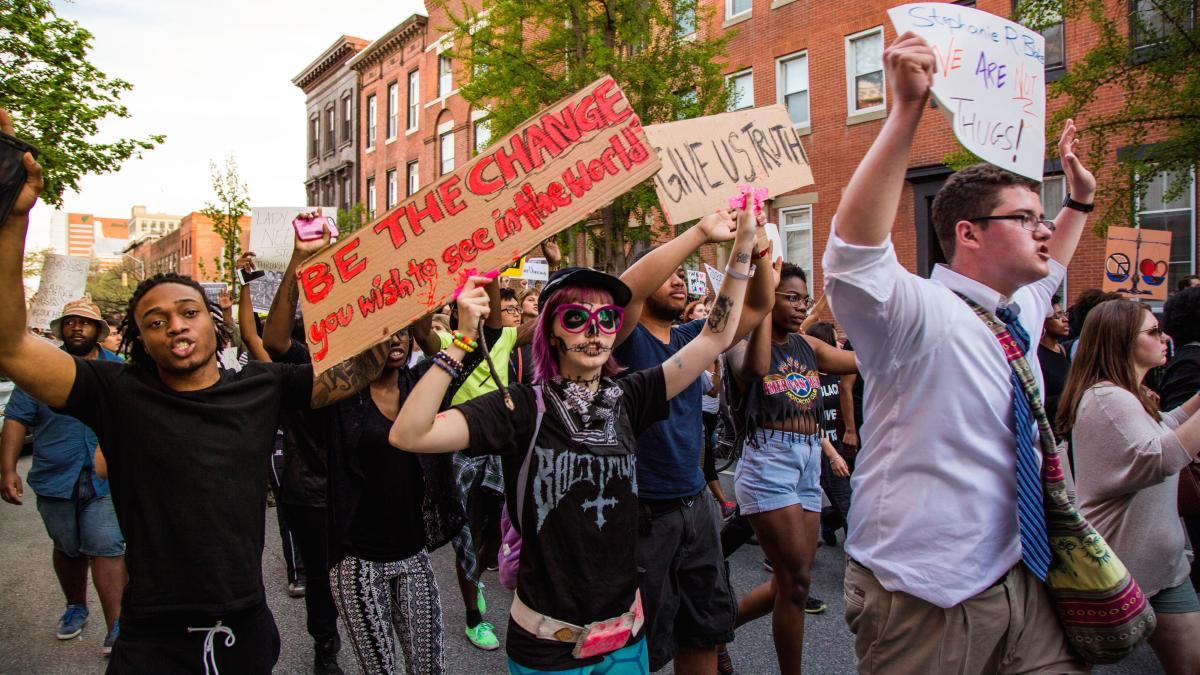
Baltimore is a city of many slogans, a reflection not only of its citizens’ fondness toward their often-troubled hometown, but also of the serial rebranding efforts those troubles spawned. Most famously, in 2000 the then-new Mayor Martin O’Malley painted over bus-stop benches with the lunatic boast “The Greatest City in America,” which still inspires mockery. But two nicknames have stuck.
In the early 1970s, after rioting and white flight battered the city’s image, civic boosters proclaimed Baltimore “Charm City USA.” Improbably, it worked — the phrase fit our modest ambitions and well-earned reputation as an enclave of oddballs, and it has since insinuated itself into much of the metro area’s commercial signage.
Charm City even managed to supplant a nickname born of earlier unrest — Mobtown, coined when brawling political gangs roamed the streets in the early 19th century. Confederate sympathizers battled Federal troops here in the opening moments of the Civil War, and Baltimore’s lawless proclivities made national news, not for the last time. Today, Mobtown lends its swagger to underground theater companies and craft beers.
In the midst of yet ... Read more