Skip to content Skip to site navigation

Comments

The cost of not using renewable energy

A clever new study [PDF] from the World Future Council attempts to do something I haven't seen before: quantify the cost of not using renewables.

The idea is pretty simple. When we use finite fossil fuels to generate energy, rather than the inexhaustible, renewable alternatives, we make those fossil fuels unavailable for non-energetic uses (think petrochemicals) in the future. In other words, when we burn fossil fuels for energy, we are needlessly destroying valuable industrial capital stock.

You can read the paper for more on methodology and assumptions. The paper uses current market values for fossil fuels rather than attempting to predict future prices, so the estimates are likely conservative.

Here's the conclusion:

Protecting the use of increasingly valuable fossil raw materials for the future is possible by substituting these materials with renewables. Every day that this is delayed and fossil raw materials are consumed as one-time energy creates a future usage loss of between 8.8 and 9.3 billion US Dollars. Not just the current cost of various renewable energies, but also the costs of not using them need to be taken into account. [my emphasis]

Got that? Every day we use fossil fuels for energy, we steal $9 billion from future people who will need those fossil fuels for non-substitutable industrial uses.

Read more: Climate & Energy

Comments

Colbert skewers the climate fatalism caucus

The Colbert Report had a wicked segment on climate change last night:

The first conservative line of defense against climate action is outright denial that climate change exists. The second is that the climate is changing, but it's not our fault and won't be so bad and isn't worth worrying about. Both those are getting tougher, what with all the crazy weather and increasingly shrill warnings from scientists, so it looks like cons are now falling back to their third line of defense: there's nothing we can do about it. This can take the shape of the "sophisticated objection" I wrote about earlier. Or it can take the shape of the rather-less-sophisticated "China! China!" stuff Colbert so artfully skewers.

Comments

The unsophisticated reply to the ‘sophisticated objection’

Ever since climate change entered U.S. public consciousness -- let's date it to James Hansen's 1988 testimony to Congress -- one objection to national climate legislation has remained steady: It will hurt our country without benefiting the climate. If we raise the price of fossil-fuel energy, carbon-intensive industries will simply migrate to other countries, possibly even emitting more carbon there. We'll hobble ourselves economically for no net reduction in carbon. "It's called global warming, not American warming!" (A related argument is sometimes made about investing money in cleantech RD&D: Other countries will enjoy the benefits -- the "spillover" effects -- of our investments without any of the costs.)

This objection was the substance of the famed Byrd-Hagel Resolution, signed by 95 U.S. senators, which said that the U.S. would not ratify the Kyoto Protocol as long as developing countries were exempt from carbon targets. It has been a reliable go-to for those fighting off climate legislation ever since.

For reasons not entirely clear to me, Harvard law professor (and former head of Obama's Office of Information and Regulatory Affairs) Cass Sunstein has rebranded this old chestnut the "sophisticated objection" to climate action. Now that science rejectionism has become the baseline position on climate in the GOP, I guess anything short of outright obscurantism counts as sophisticated.

Sunstein's arguments against it (he believes the U.S. should act unilaterally on climate if necessary) are also fairly familiar: first, that American action is a necessary precursor to international action; second, that regulation spurs cleantech innovation; and third, that many actions we could take unilaterally already pass a cost-benefit analysis based on the widely accepted social cost of carbon.

Over at National Review Online, Reihan Salam has rounded up (and written) some interesting responses to Sunstein. Kudos to Salam, by the way, for being the rare conservative to take climate seriously. I hope he prompts some internal NRO discussions.

The first is from Oren Cass (er, no relation to the other Cass), one of Mitt Romney's top domestic policy advisers in the 2012 campaign. In it, he addresses Sunstein's third argument. He says:

This argument doesn’t answer the Sophisticated Objection, it ignores the Objection altogether. If carbon emissions actually had a quantifiable, linear, ton-by-ton cost then the Sophisticated Objection would make no sense because the value of action at home could be measured independent of what action was or was not taken abroad. If we gain the same benefit every time we reduce emissions by another ton, why would we care what China does? But of course, as Sunstein acknowledges by taking the Objection seriously in the first place, this is not how climate change works.

The entire premise of the Objection is that climate dynamics are extraordinarily non-linear and that the climate change threat is not susceptible to mitigation at the margin. The best science available today attempts to estimate the amount of warming associated with a given level of carbon in the atmosphere, and to determine the thresholds at which such warming is likely to trigger severe and irreversible effects on climate systems. On their current trajectory, global emissions blow through these thresholds; blowing through them by a little bit less does not have much value.

Cass is onto something important here. Many of the damages scientists fear most from climate change are nonlinear -- that is, pressure on an biophysical system builds and builds until it "snaps" suddenly into a new steady state ("suddenly" relative to geological time, that is). Cass is right: If one of those "tipping points" is going to be triggered at, say, 550 parts per million of CO2 in the atmosphere, there's no value at all in a policy that hits 560 instead of 580. If you tip, you tip; irreversible is irreversible.

Read more: Climate & Energy

Comments

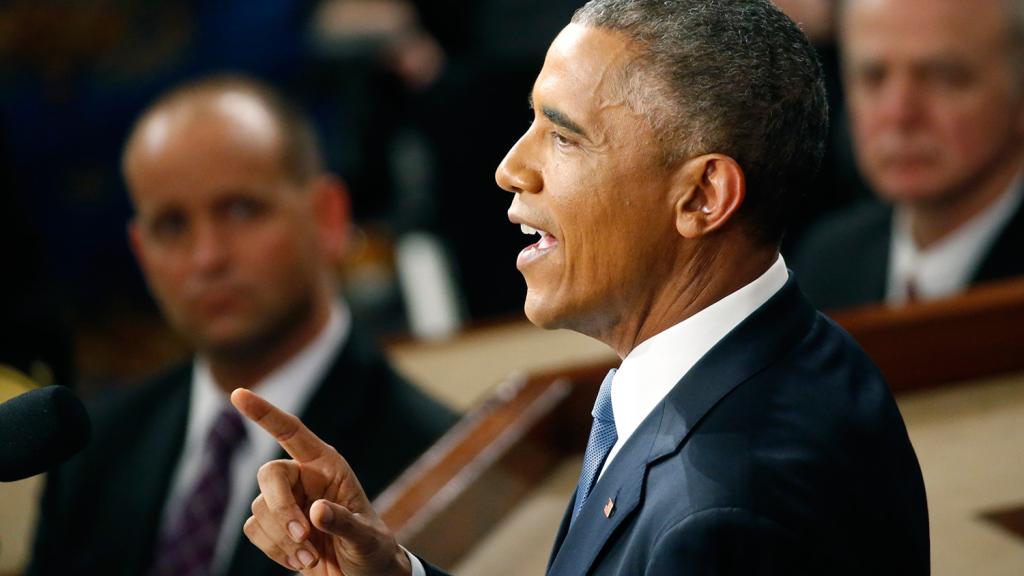
What it looks like when Obama’s passion spurs him to defy the political odds

Last week, I scolded greenies for indulging in the "cult of the presidency," being unduly fixated on President Obama's role in public life. Congress, the courts, state governments, cities, and citizen movements all deserve attention too. We need a reasonable sense of the limitations of the presidency.

On Sunday, The New Republic (newly redesigned!) published an interview with Obama that seems designed to feed me a little crow.

To see why, consider the issues of gun safety and climate change. A half-dozen months ago, both were considered political losers for Democrats. There was broad support for reform, but opposition was far more intense, outspoken, and well-funded.

Then came the Sandys: Hurricane Sandy and Sandy Hook Elementary. Both were traumatic, galvanizing events with the potential to shift politics (though of course it's impossible to say in advance how much or how fast).

The Sandys did not have equal effects on the president, however. Obama was, by all accounts, crushed by the shootings:

Comments

A chat with the Sierra Club’s Michael Brune about civil disobedience

michael-brune-sierra-club
Sierra Club
Michael Brune rallies the troops.

Earlier this month, Sierra Club Executive Director Michael Brune announced that the Club would, for the first time in its long and storied history, officially participate in an act of civil disobedience -- i.e., break the law. The target? The Keystone XL pipeline. "For civil disobedience to be justified, something must be so wrong that it compels the strongest defensible protest," he wrote. "Such a protest, if rendered thoughtfully and peacefully, is in fact a profound act of patriotism."

I called Brune to get some insight on the Club's thinking and its future plans.

Q. How was this decision made?

A. One of the strengths of the Club is that we are a democratically driven organization. If you're a member and you write a check for $30, you get to vote on who's on our board, and the board sets policies. The board voted to authorize the Sierra Club to engage in civil disobedience, to pressure the president to use his full authority to reject the Keystone pipeline. There will likely be a conversation about the Club's position on civil disobedience more broadly, but all that has happened so far is approval to take this single action.

Q. Obviously nothing is stopping members of Sierra Club from engaging in civil disobedience on their own. What is the significance of this sort of authorization?

Comments

Friday music blogging: The Wooden Sky

The Wooden Sky: Every Child a Daughter, Every Moon a Sun

I had just gotten done compiling my best of 2012 music mix when I stumbled across the new album by The Wooden Sky, a band out of Toronto. (I'm telling you, good indie music is Canada's greatest export. Way better than tar sands.) Now I feel bad, because this is one of the best things I've heard all year. I may have to sneak it on my 2013 mix.

The band's been around a while -- their newest album, 2012's Every Child a Daughter, Every Moon a Sun, is their third full-length -- but they are new to me. The album is only available as an import, which suggests that they haven't exactly caught fire in the U.S. market, but damn, that needs to change.

I can't pin down exactly what has so caught my fancy about this album, which I've been spinning obsessively, on repeat, for about a week now. It's pretty typical indie folk, mostly strummed guitars, a little steel guitar or fiddle here an there, and a mournful beardy dude singing with the occasionally lovely female harmony. (Yes, that describes 90 percent of the music I listen to.) But it's just haunting, and so ear-wormy, and they lyrics are so finely wrought. I really, really want to see these guys live.

I had real trouble picking one song, but this one, "The Night Goes On and On," is fairly representative:


Read more: Uncategorized

Comments

Solar power cheaper than coal: One company says it’s cracked the code

Over time I've grown more and more suspicious of stories about breakthrough technologies. I always think back to those heady days of EEStor, the guys who were going to make a battery that would revolutionize grid storage and electric cars alike. "EEStor CEO says game-changing energy storage device coming by 2010”! As you may have noticed, 2010 came and went and the game remains unchanged.

All of which is to say, regarding the post to follow: caveat lector.

Still, this looks very, very cool.

CleanTechnica has an exclusive on a new solar technology that claims to be able to produce power with a levelized cost of energy (LCOE) of 8¢/kWh. That is mind-boggling, "two-thirds the price of retail electricity and over 3 times cheaper than current solar technology." If the claim proves to be true (and a lot can happen between prototype and mass manufacturing), it could revolutionize the solar industry.

The company is called V3Solar (formerly Solarphasec) and its product, the Spin Cell, ingeniously solves two big problems facing solar PV.

First, most solar panels are flat, which means they miss most of the sunlight most of the time. They only briefly face direct sunlight, unless expensive tracking systems are added. The Spin Cell is a cone:

V3Solar Spin Cell
V3Solar

Comments

Everything is awful

Grist finally got around to having its holiday party last night. Consequently, I am rather hungover and haggard, which is unfortunate, since the moment I arrived at my computer this morning I was besieged by bad news. Here’s an annotated list of awful things that have happened this week:

1. Filibuster reform collapses.

Senate Majority Leader Harry Reid (D-Nev.) and Minority Leader Mitch McConnell (R-Ky.) came to an agreement [PDF] on the filibuster today. Joining hands in the spirit of bipartisan comity, they agreed to do nothing. It's pathetic, worse even than I expected, and I generally expect the worst from the Senate. Even the most egregious filibuster abuse -- filibustering the motion to proceed with a bill -- will remain in place. Reid will still need McConnell's permission to bring anything to the floor.

Why did Reid punk out? Because he supports the 60-vote supermajority threshold, as do many of his Democratic colleagues. In the thick air of the Senate they have bought the "world's most deliberative body" mythology wholesale, losing track of the distinction between deliberative and dysfunctional. They view Senate tradition as a fragile treasure and the clubby, insular atmosphere as an advantage. When the hero of filibuster reform, Sen. Jeff Merkley, called out Democratic reform opponents by name, Reid scolded him. They don't want to go on record as opposing reform. But they don't want to lose their individual leverage either.

And so the Senate will remain the only legislative body among advanced democracies (or U.S. states) to give the minority absolute veto power over legislation. It is so frightened of democracy it won't even allow itself to be ruled democratically. So nothing will pass, certainly nothing bold or effective, on climate or anything else. And those who speak most solemnly about Senate tradition will continue to render the institution a laughingstock.

2. The Washington Post humps for Keystone.

Comments

Why are greens so defensive about the rebound effect?

Several people have now sent me this Nature commentary on the "rebound effect," saying something to the effect of, "See? The rebound effect isn't a problem!"

That's a peculiar thing to say. Indeed, the commentary itself is quite peculiar.

For those who have missed my previous posts on this, the "rebound effect" refers to the fact that a) energy efficiency makes things cheaper, and b) when things are cheaper, we consume more, which c) erodes some of the energy-saving benefits of efficiency.

If you want to dig in on this -- it's a fascinating subject -- I wrote a three-part series on it last year:

Here's the short version: Yes, the rebound effect is real. It varies wildly depending on technology and economic circumstances. (It's a lot higher in developing countries, where consumption is constrained, than it is in rich countries, where most basic consumption preferences are already satisfied.) In most cases it's fairly small; only in very rare circumstances is it big enough to wipe out more than half the energy savings; it's hardly ever big enough to wipe out all of them. It is not, in any way, shape, or form, an argument against energy efficiency -- in fact, it's just another way of phrasing the fact that energy efficiency stimulates economic growth.

So, yeah: It exists, but has very few policy implications. It might temper how much energy reduction we expect from efficiency policies, but that's about it.

So why on earth are climate and clean-energy folks so defensive about it?

Occasionally you see something goofy like David Owen in The New Yorker vastly exaggerating the significance of rebound. There's always a market for this kind of self-consciously counterintuitive, hippies-are-wrong-after-all kind of stuff. You can find similar stuff about any climate or energy policy. (Electric car batteries have toxic heavy metals! Wind turbines kill birds! Carbon taxes just displace emissions to other countries!) Such is media.

But in my experience, climate hawks are uniquely touchy about rebound. I don't really get why.

Anyway, the Nature commentary reviews the evidence on rebound and confirms basically what I said above, but with a weird gloss. Take this:

Macroeconomic models estimate total combined rebound effects to be in the range of 20–60%.

In sum, rebound effects are small and are therefore no excuse for inaction.

Uh, 60 percent is not "small"!

But so what? The rebound effect is usually small, especially in developed countries. And even when it's big, it's not an argument against efficiency. So why this weird insistence on shouting it down?

I don't get it.

Comments

Uncertainty about climate change is reason for more aggressive action

I've done some writing about uncertainty and the role it plays in climate change analysis. (See: here, here.) I continue to think that it's one of the most widely misunderstood aspects of the mess we're in. Insofar as uncertainty enters climate discussions, it's usually in dopey arguments over whether "the science is settled." In fact, it's true both that the basic science is settled and that we face enormous uncertainties about climate impacts and their cost. We need to start dealing with those uncertainties in a more sophisticated way.

One place uncertainty is not well-represented is in the economic models used to determine what's called the "social cost of carbon" -- that is, how much it's worth to reduce carbon emissions.

Efforts to remedy that are underway. One came across my radar recently (via the ever-vigilant RL Miller). It's called "The Social Cost of Stochastic and Irreversible Climate Change."

Wait! It's not boring! Okay, maybe a little boring. But important!

Read more: Climate & Energy
Don't miss a green thing!
Get Grist in your inbox every morning.