Skip to content Skip to site navigation

Margaret Swink's Posts

Comments

Kids Books and Rainforest Destruction

Imagine your horror if you picked up a copy of a book on rainforests to read to your kids, intending to teach them good environmental values, and discovered that the book about rainforests was printed on dead rainforests. Unfortunately, in many American bedrooms tonight, that horror is likely to be reality. A report released today by Rainforest Action Network finds that a majority of the top ten U.S. children’s publishers have released at least one children’s book that tested positive for paper fiber linked to the destruction of Indonesia’s rainforests, including some books that describe the benefits of rainforest conservation. …

Read more: Living

Comments

What’s in your food that’s destroying orangutans?

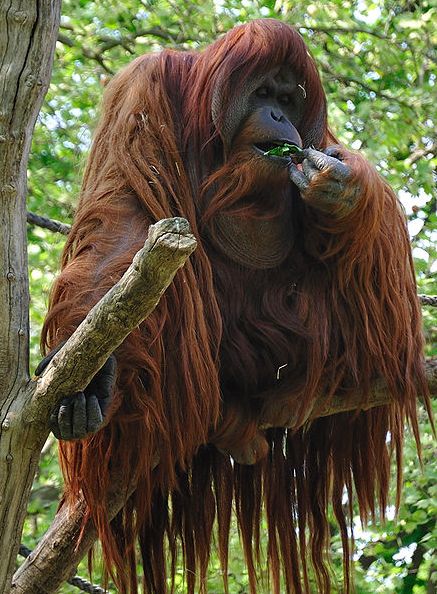
Photo: Wikimedia Commons.Have you bought soap in the past week? How about lipstick? Cheerios? Soy milk? Today, a new report reveals that the nation's largest private agribusiness company -- Minneapolis-based Cargill -- is a major culprit behind rainforest destruction. It turns out that Cargill, who both owns their own palm oil plantations and buys and trades palm oil from others, is directly destroying rainforests in Indonesia to produce palm oil. In fact, since 2005, Cargill has mowed down an area of rainforest the size of Disney World (including hotels) and replaced it with palm oil. Since Cargill sells this palm …

Read more: Food

Comments

Year of the Tiger Brings in Fewer Tigers than Ever

According to the Chinese lunar calendar, February 14, Sunday, begins the Year of the Tiger. The largest of all cats, the tiger is one of the most charismatic and evocative species on earth. It’s also one of the most threatened. WWF estimates that there could be as few as 3,200 wild tigers left in the world – a shockingly low number. What’s bad for tigers is also bad for people. In Indonesia, where maybe only 400 Sumatran tigers (one of the seven remaining subspecies) exist in the wild, tiger-human conflicts have escalated as the rainforest – traditional tiger habitat – …

Read more: Uncategorized

Comments

What happens now for the forests?

So Copenhagen is over, with forests mentioned in one paragraph of a politically ambiguous "Copenhagen Accord" and an incomplete REDD agreement stapled on the back with major safeguard and finance issues still unresolved. Clearly, high hopes of a deal that might save the world's forests and reduce the 15-20 percent of global greenhouse gas emissions from deforestation and degradation will have to wait, at least till next year's December meeting of the UNFCCC in Mexico City, if not beyond. So along with many other people, you might be wondering, what happens now for REDD and for the world's tropical forests? …

Read more: Climate & Energy

Comments

Protecting the rainforests: Are we there yet?

COPENHAGEN -- Many of us who are here reading the text drafts, talking to ministers and following the negotiations were a bit surprised to read in the New York Times yesterday that we’re about to close a deal on REDD. Vaka0627 via FlickrIt’s true, negotiations have progressed, and balanced-but-far-from-completely-resolved text moved early this morning from delegates to a ministerial level, meaning that we’re moving away from technical bickering to a political fight over big issues that bureaucrats could not resolve on their own. And what big issues! Four key aspects of the deal have been left to ministers to negotiate, …

Read more: Climate & Energy

Comments

Will Copenhagen save the rainforests?

In the midst of decreasing expectations over a global climate deal, saving forests has been held out as the one thing that might be achieved over the next two weeks in Copenhagen. Says Newsweek: “One of the few tangible achievements expected from the climate talks in Copenhagen this month is agreement on a program called REDD, or Reducing Emissions From Deforestation and Forest Degradation, a complex set of regulations that would help developing countries keep their rainforests standing by turning their carbon-storing capacity into a source of income.” Others, including the AP, have joined in the chorus of excitement. It …

Read more: Climate & Energy

Comments

Gucci Group commits to saving Indonesia’s rainforests

Photo: Shi! There’s a new fashion trend this fall: saving Indonesian rainforests. The Gucci Group, the prestigious conglomerate of fashion and luxury brands that owns Yves Saint Laurent, Alexander McQueen, Stella McCartney, and Balenciaga, has decided to eliminate all paper made from Indonesian rainforests. That includes everything from its letterhead to the pretty paper bags with ribbon handles that they give to shoppers to hold their new couture. A paper policy, you say? That’s not really fashionable, is it? Turns out it is. Gucci Group’s policy puts it at the front of a list of major companies -- including Tiffany …

Comments

Bangkok, Day 5: Breaking News: Forests do not naturally grow in straight lines

Forest negotiations recently have been featuring a lot of talk about something called “sustainable forest management,” or in climate policy parlance, SFM.  Because it contains the word “sustainable,” this term conjures up images of nice standing forests, perhaps occasionally harvested by indigenous peoples to make “sustainable” furniture or artisanal paper for those of us in the United States. However, here in Bangkok, SFM is at the heart of a fierce debate over what the fundamental shape of the climate change treaty will be. Environmentalists are lining up against industry interests in a debate over the inclusion of SFM in the …

Read more: Climate & Energy

Comments

If REDD can’t save this….

Bukit Tigapuluh Forest is truly one of those special places. It’s got three endangered species, two minority groups of indigenous people and a superlative: it’s the last remaining stand of tropical lowland forest left on the island of Sumatra. Funnily enough, it’s also about to be cut down. Notorious rainforest destroyer Asia Pulp and Paper has cut a road through the forest and is working on getting a concession to convert the forest (containing over 1,000 species of trees) into a tree plantation (containing maybe 2 species). They’re calling this development. Nonprofits and businesses around the world are calling it …

Read more: Climate & Energy

Comments

The case for carbon speed limits

If the earth was a car, it would come with an operating instructions not to drive faster than 350 parts per million of carbon in the atmosphere. Unfortunately, like an unruly teenager, humanity – with the United States in the drivers seat – has already revved up the engine and broken all speed limits – we’re speeding at 387 ppm and our tires are already smoking. Unless we start breaking, we’re full speed ahead towards engine meltdown in the scarily near future. The final plenary session today at the Bonn climate talks drove this point home. As the draft “shared …

Read more: Climate & Energy
Don't miss a green thing!
Get Grist in your inbox every morning.