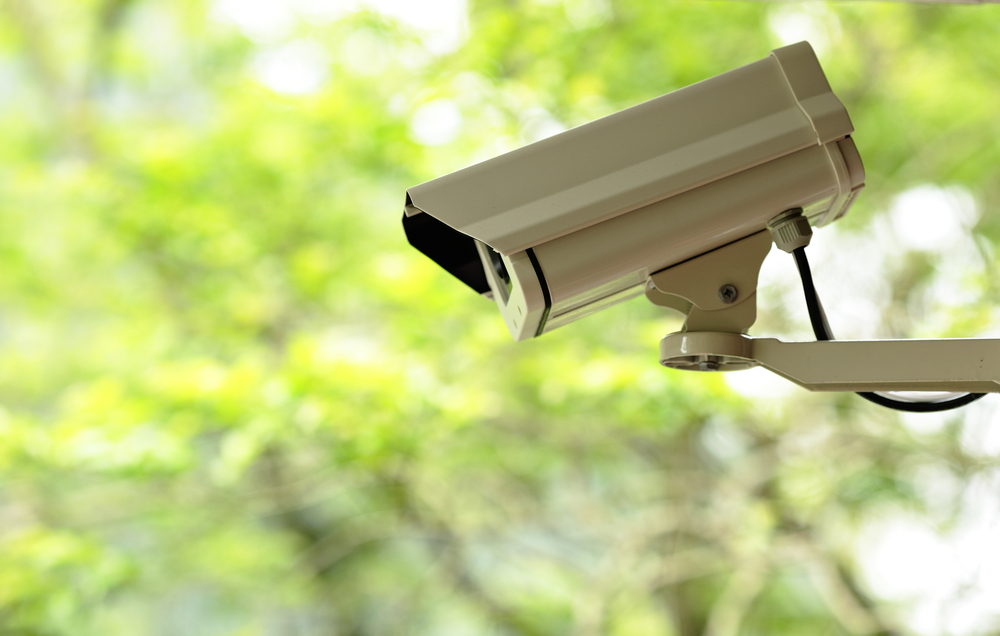
Photo by Shutterstock.In the future, don't expect any privacy. Every move, every purchase, even every thought -- as personality profiling becomes more sophisticated -- will be observed, logged, and analyzed. Big Brother will certainly be watching us.
We might expect our shopping and showering behaviors to be tracked as part of our individual carbon budgets. As you drive around a city, your combined congestion and pollution charge could vary depending on which route you take, on the time of day, and on how much you add to local air pollution. Globally, important conservation sites might be guarded, not by fences or rangers, but by remote sensors and cameras, monitored by teams of volunteers on the other side of the planet.
On current trends, this surveillance society seems bound to happen. In some ways, it is already with us. The U.K. already has more CCTV cameras per capita than any European country -- an estimated 4 million in total -- and the government recently announced plans for radically increased internet surveillance in the Queen's Speech.
The cost of monitoring devices is tumbling, while the amount of data generated is exploding. Many of us carry location-aware devices around with us, leaving a digital trail of our movements. And nobody seems to care too much about the implications. While there was a fierce argument in the U.K. about the introduction of identity cards, most people seem happy to hand data about their daily lives to Google and Facebook, to transport authorities through travel cards like London's Oyster, or to retailers through loyalty schemes.
Given that more people want to catalogue the minutiae of their personal lives online -- that they actively want to be watched -- we may eventually see the disappearance of privacy as a concept …
What does this mean for sustainability? Will this monitoring capacity be used to improve stewardship of natural resources? Or to prompt more responsible lifestyle choices? Or will it result in a more passive population, for whom daily decisions are made by algorithms based on past personal preferences and current resource efficiency?

The key to turning urban youth into conservative crusaders? Food trucks
This solar panel printer can make 33 feet of solar cells per minute
Is the sharing economy skidding out?