<?xml version="1.0" encoding="UTF-8"?><rss version="2.0"
	xmlns:content="http://purl.org/rss/1.0/modules/content/"
	xmlns:wfw="http://wellformedweb.org/CommentAPI/"
	xmlns:dc="http://purl.org/dc/elements/1.1/"
	xmlns:atom="http://www.w3.org/2005/Atom"
	xmlns:sy="http://purl.org/rss/1.0/modules/syndication/"
	xmlns:slash="http://purl.org/rss/1.0/modules/slash/"
	xmlns:georss="http://www.georss.org/georss" xmlns:geo="http://www.w3.org/2003/01/geo/wgs84_pos#" xmlns:media="http://search.yahoo.com/mrss/"
	>

<channel>
	<title>Grist: Sean Casten</title>
	<atom:link href="http://grist.org/author/sean-casten/feed/" rel="self" type="application/rss+xml" />
	<link>http://grist.org</link>
	<description>Environmental News, Commentary, Advice</description>
	<lastBuildDate>Fri, 24 May 2013 06:05:00 +0000</lastBuildDate>
	<language>en</language>
	<sy:updatePeriod>hourly</sy:updatePeriod>
	<sy:updateFrequency>1</sy:updateFrequency>

	<generator>http://wordpress.com/</generator>
<cloud domain='grist.org' port='80' path='/?rsscloud=notify' registerProcedure='' protocol='http-post' />
<image>
		<url>http://1.gravatar.com/blavatar/330e84b0272aae748d059cd70e3f8f8d?s=96&#038;d=http%3A%2F%2Fs2.wp.com%2Fi%2Fbuttonw-com.png</url>
		<title>Grist: Sean Casten</title>
		<link>http://grist.org</link>
	</image>
	<atom:link rel="search" type="application/opensearchdescription+xml" href="http://grist.org/osd.xml" title="Grist" />
	<atom:link rel='hub' href='http://grist.org/?pushpress=hub'/>

			<item>
			<title>Solar grows up &#8212; now what?</title>
			<link>http://grist.org/climate-energy/solar-grows-up-now-what/?utm_source=syndication&#038;utm_medium=rss&#038;utm_campaign=feed:seancasten</link>
			<comments>http://grist.org/climate-energy/solar-grows-up-now-what/#comments</comments>
			<dc:creator><![CDATA[Sean Casten]]></dc:creator>			<pubDate>Sat, 13 Apr 2013 04:00:05 +0000</pubDate>

					<category><![CDATA[Article]]></category>
		<category><![CDATA[Business & Technology]]></category>
		<category><![CDATA[Climate & Energy]]></category>

			<guid isPermaLink="false">http://grist.org/?p=170530</guid>

			<description><![CDATA[Solar has grown up and earned a seat at the big kids table. But that means the fights are going to get nastier.<img alt="" border="0" src="http://stats.wordpress.com/b.gif?host=grist.org&#038;blog=5104299&#038;post=170530&#038;subd=grist&#038;ref=&#038;feed=1" width="1" height="1" />]]></description>

			
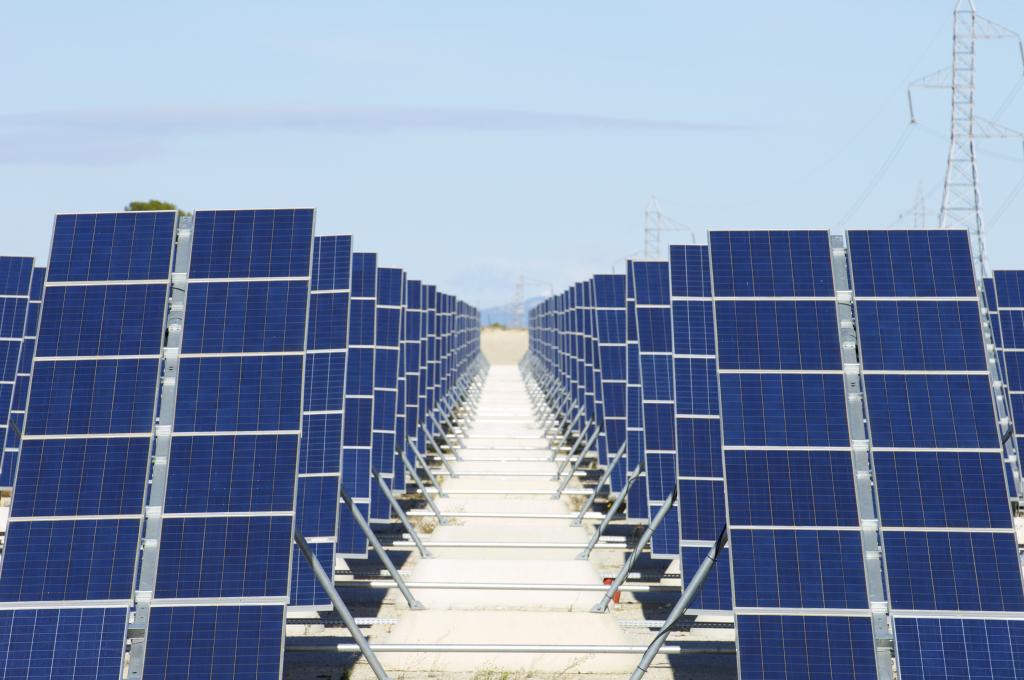
									<content:encoded><![CDATA[<img width="180" height="150" src="http://grist.files.wordpress.com/2013/04/shutterstock_65347237.jpg?w=180&amp;h=150&amp;crop=1" class="attachment-post-thumbnail wp-post-image" alt="solar panels" /> <p>Almost a decade ago, I was part of a group that lost a standby rate case with a Massachusetts utility, when the utility convinced the commission to approve a rate that would incentivize solar at the expense of combined heat and power (CHP). The package fractured the green coalition we’d assembled and the utility got to greenwash its terrible new rate. Yes, I’m still bitter.</p>
<p>When the dust settled, I told friends on the solar side of our group that they shouldn’t celebrate too hard. The message wasn’t that utilities liked solar, but that they liked technologies that didn’t eat into their sales. (At the time, there was 80 gigawatts of CHP deployed nationwide; solar capacity was basically zero.)</p>
<p>With the release <a href="http://www.eei.org/ourissues/finance/Documents/disruptivechallenges.pdf">this Edison Electric Institute (EEI) report</a>, it appears solar&#8217;s time may have come. The gist of the report (nicely summarized <a href="http://grist.org/climate-energy/solar-panels-could-destroy-u-s-utilities-according-to-u-s-utilities/?utm_source=syndication&amp;utm_medium=rss&amp;utm_campaign=feed:seancasten">here</a> and <a href="http://www.greentechmedia.com/articles/read/can-the-utility-industry-survive-the-energy-transition">here</a>) is that distributed energy resources generally, and solar specifically, are eating into utility profit margins and potentially compromising their ability to attract capital. Utilities should take action to stop it. Specifically, note these passages:</p>
<blockquote><p>[Utilities should encourage] an immediate focus on revising state and federal policies that do not align the interests of customers and investors, particularly revising utility tariff structures in order to eliminate cross subsidies (by non-DER participants) and utility investor cost-recovery uncertainties.</p>
<p>… utilities and financial managers of investments have a fiduciary responsibility to protect the value of invested capital. Prompt action to mitigate lost revenue, while protecting customers from cross-subsidization better aligns the interests of customers and investors.</p></blockquote>
<p>The first of these paragraphs is aimed at utility government-affairs departments. The second is aimed at regulators.  They both carry the same message: the interests of utility investors and customers are misaligned thanks to all these pro-efficiency, pro-renewable policies, and we better change course.  </p>
<p>The cleantech community should assume that this means a broader roll-out of the standby rates* that have been put to use so effectively over the past 30 years to slow the spread of CHP.</p>
<p><b>What are standby rates?</b></p>
<p>The costs associated with running an electric utility are dominated by large, fixed expenses that are invariant with sales: labor, maintenance, insurance, and &#8212; most significantly &#8212; capital recovery. If customers pay for power solely on the basis of variable rates (e.g. $/MWh of use), utilities could face significant under-collection and therefore falling returns on capital. However, the inverse is also true &#8212; if MWh sales rise, utilities generally see rising returns on equity from the same rate classification. For this reason, the ideal rate (from a utility investor perspective) is one that charges a high price on a marginal increase in sales, but allows a comparatively smaller loss in the event of a marginal reduction. A standby rate is basically a tool designed to deliver that outcome.</p>
<p>An example may be helpful. Suppose a utility has $1 million of fixed costs in a year and $1 million of variable costs. Against this base, suppose that their most recent rate case sets rates at $80/MWh on 27,500 MWh of annual sales. This yields $2.2 million in revenue on $2 million of expenses, or $200,000 of profit (9.1 percent of revenue).</p>
<p>If this utility’s sales were to fall by 10 percent, they would earn $1.98 million in revenue, but incur $1.9 million in expense, leaving just $80,000 of profit (4.0 percent). By contrast, if their sales rose by 10 percent, they would earn $2.42 million in revenue against $2.1 million in expense, leaving profits of $320,000 (13.2 percent). It should be pretty clear why utilities fear load loss.</p>
<p>This isn’t unique to utilities though &#8212; the basic math is true for any business with fixed expenses and variable revenues &#8212; and it&#8217;s not necessarily bad. Indeed, it works to the benefit of any growing business. For example, car dealers don’t require you to pay them for holding inventory whether you buy a car from them or not, even though they must absorb that cost if you don&#8217;t buy their product. (And even utility executives prefer to buy cars from dealers who are desperate to move their inventory as the result of this “flawed” pricing model.)</p>
<p>This is important because there is nothing inherently wrong with utilities trying to protect their downside risk &#8212; except for the fact that their monopoly control over the “last mile” removes the competitive discipline that might other penalize particularly egregious design. A car dealer who asked you to pay them $1,000/month for the privilege of maybe buying a car from them in the future would not last long, but a utility who profers the same rate &#8212; with the approval of their regulator &#8212; is effectively unchecked.  This is the ultimate problem that has slowed the deployment of CHP in the U.S.</p>
<p>So how do the rates work?  There are a lot of variants, but generically, they break electricity charges into a $/MWh payment and a $/MW payment, with the latter set to your peak demand over the prior year <em>plus</em> the nameplate of your onsite power plant. If your load goes up, you pay more in $/MW charges, but if your CHP plant permanently reduces your MW use, you still pay for the MW you’re not using. The net result is that the utility gets the financial upside of rising sales but puts a floor on the downside if sales fall. Heads I win, tails you lose.</p>
<p>There is a very close analogy here to banking regulation, in that both give executives the ability to make one-way bets, with society bearing all the downside risk. With respect to utilities, this means that a utility need not focus on making a competitive product: never mind the value proposition, just grow the sales volume. It also makes electric utilities perhaps the biggest institutional barrier to energy conservation. (Also like banking regulation, the public conversation places proportionally too much blame on the regulated entity and proportionally too little on the enabling regulator.)</p>
<p><b>Moving from CHP to EE and solar</b></p>
<p>Thus far, those utilities who have managed to get standby rates approved have done so primarily in order to thwart CHP deployment. That&#8217;s partly because it’s the gorilla in the unregulated room, but also because a rate that is truly designed to address fixed/variable cost recovery is politically untenable: a factory that cuts production and drops to 2 shifts/day imposes the same costs on a utility as a factory that installs CHP to produce a third of their power, but it’s hard to imagine a rate that forces the struggling factory to keep paying yesterday’s energy bill.</p>
<p>As such, these rates have generally focused narrowly on CHP (which is their Achilles heel, from a rate-equity perspective). This in turn has given a relative boost to non-CHP DER investments, like efficiency and solar, where the design of the rate causes their MWh savings to generate greater $/MWh savings. When you add on top of that the other EE/renewable-specific incentives (grants, tax credits, RECs, expedited interconnection, etc.) and the unsurprising result has been a preferential deployment of capital into those technologies and a rapid growth in their deployment &#8230; to a point where these technologies that utilities once could ignore are now eating into utility profits. Which brings us back to that EEI report.</p>
<p>So what should we assume happens next?  A few thoughts.</p>
<ol>
<li>Solar is no longer irrelevant to utility planning. It’s grown up and has earned a seat at the big kids table. But that also means the rules are going to change, and the fights are going to get nastier. The solar industry needs to plan accordingly.</li>
<li>To the extent that the utility deploys the same tools to block solar and efficiency that they’ve historically used against CHP, it should encourage greater coherence and less infighting amongst various green-energy advocacy groups &#8212; who, to date, have not earned a seat at the big-kids table that is Capitol Hill, in no small part because of their inability to form and hold coalitions.</li>
<li>Finally, there is going to be a need for creativity on clean energy rate design and incentive. Utility rates are flawed, but they are designed to solve real issues.  The current top-down grid regulatory model has no shortage of problems, but an anarchic bottom-up system would be worse.  In that vein, regulatory tools designed to deploy low levels of technologies that are too small to matter are almost certainly not the right tools to drive technology deployment and dispatch as those technologies become economically and operationally significant.</li>
</ol>
<p>More posts to follow on that last point.</p>
<p><em>* A semantic clarification.  “Standby rates” has a precise meaning referring to a rate that charges a customer for the service that the grid is providing as a “standby provider” in the event that their existing generator trips off line and they want backup supply.  However, the economic impact of standby rates to remove the economic incentives associated with energy conservation are common to a broader suite of structures including exit fees, demand ratchets and certain block pricing structures.  I’ve used “standby rates” herein in this more general sense.</em></p>
<br />Filed under: <a href="http://grist.org/article/?utm_source=syndication&amp;utm_medium=rss&amp;utm_campaign=feed:seancasten">Article</a>, <a href="http://grist.org/business-technology/?utm_source=syndication&amp;utm_medium=rss&amp;utm_campaign=feed:seancasten">Business &amp; Technology</a>, <a href="http://grist.org/climate-energy/?utm_source=syndication&amp;utm_medium=rss&amp;utm_campaign=feed:seancasten">Climate &amp; Energy</a>  <img alt="" border="0" src="http://stats.wordpress.com/b.gif?host=grist.org&#038;blog=5104299&#038;post=170530&#038;subd=grist&#038;ref=&#038;feed=1" width="1" height="1" />]]></content:encoded>


		<media:thumbnail url="http://grist.files.wordpress.com/2013/04/shutterstock_65347237.jpg?w=150" />
		<media:content url="http://grist.files.wordpress.com/2013/04/shutterstock_65347237.jpg?w=150" medium="image">
			<media:title type="html">solar panels</media:title>
		</media:content>

		<media:content url="http://2.gravatar.com/avatar/22ac997ce9e419dc0fef0bda6316ea16?s=96&#38;d=http%3A%2F%2F2.gravatar.com%2Favatar%2Fad516503a11cd5ca435acc9bb6523536%3Fs%3D96&#38;r=G" medium="image">
			<media:title type="html">seancasten</media:title>
		</media:content>

		</item>
			<item>
			<title>Thoughts on economic growth and energy slaves</title>
			<link>http://grist.org/article/thoughts-on-economic-growth-and-energy-slaves/?utm_source=syndication&#038;utm_medium=rss&#038;utm_campaign=feed:seancasten</link>
			<comments>http://grist.org/article/thoughts-on-economic-growth-and-energy-slaves/#comments</comments>
			<dc:creator><![CDATA[Sean Casten]]></dc:creator>			<pubDate>Wed, 10 Oct 2012 20:54:07 +0000</pubDate>

					<category><![CDATA[Article]]></category>
		<category><![CDATA[economics]]></category>
		<category><![CDATA[energy]]></category>

			<guid isPermaLink="false">http://grist.org/?p=112230</guid>

			<description><![CDATA[Increased access to energy seems responsible for much of the economic growth of the last two centuries. That raises an unsettling question about future growth.<img alt="" border="0" src="http://stats.wordpress.com/b.gif?host=grist.org&#038;blog=5104299&#038;post=112230&#038;subd=grist&#038;ref=&#038;feed=1" width="1" height="1" />]]></description>

			
									<content:encoded><![CDATA[ <p>I&#8217;ve lately become intrigued by the idea of &quot;<a href="http://www.eoht.info/page/Energy+slave">energy slaves</a>&quot; a deliberately unsettling way to highlight how unusual the last 200 years have been in terms of energy and economic growth.</p>
<p>Suppose you were a wealthy white farmer in the antebellum South and owned 10 slaves. Assume you have no other access to energy beyond their muscle power. If you monopolize the fruits of their collective labor, you get a 10x force multiplier: the output of 11 men, harnessed to the sole benefit of one. That means you churn butter ten times as fast, harvest cotton ten times as fast, and mill grain ten times as fast as your non-slave owning peers. </p>
<p>That, in a nutshell, was the economic case for slavery &#8212; not a moral justification, of course, but simply the reality of the pre-fossil fuel era. Economic well-being has always depended substantially on access to energy, and when all energy is derived from muscles, economic success depends on co-opting the muscles of others.  That&#8217;s why virtually all economically powerful nation states prior to 1800 depended substantially on coercive labor.</p>
<p>How much energy was available to the (free) population of the antebellum South? In 1860, the U.S. had just under <a href="http://civilwarcauses.org/stat.htm">4 million</a> slaves, working for about 8.5 million free residents of the south and border states, or 0.47 slaves/free southerner. However, only one third of southern families owned slaves. So let&#8217;s multiply our 0.47 by 3, to yield 1.4 energy-slaves per slave-owning family member. There were also almost <a href="http://www.civilwarhome.com/transcom.htm">3.4 million</a> horses, mules, and oxen in the south as of 1860, or 0.4 pack animals per free person. A horse can do the work of about 7 people, so figure an average slaveholder had 1.4 + (7 x 0.4) or 4.2 energy slave-equivalents per free person. Taking southern society as a whole, the free population had (3.4 x 7 + 4)/8.5, or 3.27 &quot;energy slaves&quot; a piece.</p>
<p>Now consider the present day. The U.S. population is 311 million. We use 100 quadrillion Btus (&quot;quads&quot;) of energy/year. Since a human requires 2,200 calories of food per day (1 food calorie = 3.97 Btus), our current energy use amounts to <em>100 energy slaves per capita</em>. </p>
<p>That is the extraordinary legacy of industrialization and fossil fuel extraction. We get 30 times the energy access of an 1860s plantation owner &#8230; and human rights, too.</p>
<p>
A 30-fold increase in per capita energy access, spread over 150 years, implies a compound annual growth rate of 2.3 percent.  During the same period, U.S. population grew tenfold while GDP grew from just under $<a href="http://www.usgovernmentrevenue.com/year_revenue_1860USmn_13ms1n#usgs302">4.4 billion</a> to $<a href="http://www.usgovernmentrevenue.com/year_revenue_2010USmn_13ms1n#usgs302">14.5 trillion</a>. Put another way, our per capita GDP grew from $138 to $47,057 &#8212; or 3.96 percent per year. </p>
<p>These (admittedly crude) calculations suggest that increased per-capita energy access may explain as much as 60 percent of the  growth in per-capita GDP  over the last 150 years. </p>
<p>Since those 150 years saw the fastest  rates of growth in  living standards and population in all of human history, this raises an obvious if unsettling question: Do the last two centuries reflect our species finally living up to our economic growth potential &#8230; or are they an anomaly driven by a temporary, unsustainable ramp up in mining activity?</p>
<br />Filed under: <a href="http://grist.org/article/?utm_source=syndication&amp;utm_medium=rss&amp;utm_campaign=feed:seancasten">Article</a>  <img alt="" border="0" src="http://stats.wordpress.com/b.gif?host=grist.org&#038;blog=5104299&#038;post=112230&#038;subd=grist&#038;ref=&#038;feed=1" width="1" height="1" />]]></content:encoded>


		<media:content url="http://2.gravatar.com/avatar/22ac997ce9e419dc0fef0bda6316ea16?s=96&#38;d=http%3A%2F%2F2.gravatar.com%2Favatar%2Fad516503a11cd5ca435acc9bb6523536%3Fs%3D96&#38;r=G" medium="image">
			<media:title type="html">seancasten</media:title>
		</media:content>

		</item>
			<item>
			<title>EPA&#8217;s Boiler MACT Is an Economic Growth Opportunity</title>
			<link>http://grist.org/article/epas-boiler-mact-is-an-economic-growth-opportunity/?utm_source=syndication&#038;utm_medium=rss&#038;utm_campaign=feed:seancasten</link>
			<comments>http://grist.org/article/epas-boiler-mact-is-an-economic-growth-opportunity/#comments</comments>
			<dc:creator><![CDATA[Sean Casten]]></dc:creator>			<pubDate>Fri, 15 Jun 2012 19:03:30 +0000</pubDate>

					<category><![CDATA[Article]]></category>

			<guid isPermaLink="false">http://grist.org/?p=112231</guid>

			<description><![CDATA[The new EPA air toxics standards, or “Boiler MACT” will tighten the pollution allowances for industrial (e.g., non-utility) coal boilers, and are widely and consistently being criticized as a threat to a still-fragile economy.  This criticism is coming from the usual corners (Inhofe, US Chamber of Commerce, etc.).  Meanwhile big-name engineering firms are turning out studies for affected industrials that say some variant of “you can install back end pollution controls that will reduce your fuel efficiency, you can switch your boiler to run on higher cost, cleaner fuels or you can shut down your manufacturing plant.” They’re all wrong.  &#8230;<img alt="" border="0" src="http://stats.wordpress.com/b.gif?host=grist.org&#038;blog=5104299&#038;post=112231&#038;subd=grist&#038;ref=&#038;feed=1" width="1" height="1" />]]></description>

			
									<content:encoded><![CDATA[ <p>The new <a href="http://www.epa.gov/airquality/combustion/docs/20111202overviewfs.pdf">EPA air toxics standards</a>, or “Boiler MACT” will tighten the pollution allowances for industrial (e.g., non-utility) coal boilers, and are widely and consistently being criticized as a threat to a still-fragile economy.  This criticism is coming from the usual corners (<a href="http://www.canadafreepress.com/index.php/article/42917">Inhofe</a>, <a href="http://www.scribd.com/doc/60485755/Boiler-MACT-Coalition-Letter-on-Senate-House-Bills">US Chamber of Commerce</a>, etc.).  Meanwhile big-name engineering firms are turning out studies for affected industrials that say some variant of “you can install back end pollution controls that will reduce your fuel efficiency, you can switch your boiler to run on higher cost, cleaner fuels or you can shut down your manufacturing plant.”</p>
<p><strong>They’re all wrong.</strong>  MACT compliance is actually an opportunity for economic growth and energy cost reduction, as an excuse to convert huge swathes of the economy to combined heat &amp; power (CHP).</p>
<p><a href="http://www.recycled-energy.com/">I’m</a> in the CHP industry, so you’d expect me to say that – but I only make money if I can save money for my customers, and there is a shocking disconnect between the opportunity that MACT presents to save money and the public narrative to the contrary.</p>
<p><strong>Simple Math</strong></p>
<p>Suppose that you are an industrial facility affected by the Boiler MACT rules and are unhappy with your options.  Several things are almost certainly true about you:</p>
<ol>
<li>You have a coal boiler.</li>
<li>Your boiler is probably producing over 100,000 lbs/hr of steam.  (It’s rare for coal boilers to be much smaller than that.)</li>
<li>Your boiler probably operates on a fairly continuous basis. (Big coal boilers are unlikely to be found in applications with frequent on/off cycles.)</li>
<li>Your boiler is old and inefficient. (Newer boilers are less likely to be out of compliance.)</li>
<li>You are probably burning higher cost, low-sulfur ‘compliance’ coal. (Many old boilers have shifted to these coals as a lower cost way to comply with sulfur regulations than installing back-end controls with high-sulfur fuel.)</li>
</ol>
<p>In other words, you have a large, round the clock steam flow and you make your steam in a pretty uneconomic fashion, using comparatively expensive fuel and a comparatively inefficient boiler.  Leaving environmental and political considerations aside, it’s reasonable to assume that your steam plant is not a source of great economic advantage, beyond the (non-trivial) presence of its air permit.</p>
<p>Compliance coals are currently running about $90/ton, or $3.60/MMBtu.  A typical affected boiler has an efficiency of around 75%, so that means that your cost of delivered steam is $3.60 / 75%, or $4.80/MMBtu.</p>
<p>There are additional costs of maintenance, fuel handling and ash disposal that will all drive the costs up farther, but for now, let’s ignore those and only look at fuel costs.</p>
<p>Now let’s look at a CHP approach.</p>
<p>For our simple math, let’s assume we replace the coal boiler with a standard, off the shelf gas turbine (essentially a jet engine on a skid).  For peak efficiency, pick a gas turbine sized to the thermal needs of the facility (e.g., choose one that generates an amount of exhaust heat equal to the industrial’s steam needs.)  Assume a typical gas turbine efficiency of 30% , and assume that of all the exhaust heat, only 75% is recoverable as steam.  Thus, for every 100 MMBtus of fuel burned, you produce:</p>
<ul>
<li>100 x 30% = 30 MMBtus of electricity, and;</li>
<li>100 x (1 – 30%) x 75% = 53 MMBtus of steam</li>
</ul>
<p>By sizing to recover all possible heat, the CHP plant achieves 83% overall efficiency, more than double the efficiency of the US power grid (just 33%).</p>
<p>To estimate economics, we have to make a few cost assumptions:</p>
<ol>
<li>Natural gas costs have been under $4/MMBtu for a long time now, but we have to assume over the life of the CHP plant that they may run higher.  Let’s assume $6/MMBtu for this analysis.</li>
<li>The US average retail power price is about <a href="http://www.eia.gov/electricity/monthly/epm_table_grapher.cfm?t=epmt_5_3">$100/MWh</a>.  This plant is also creating a host of societal advantages by virtue of its high efficiency, low CO<sub>2</sub> emissions per MWh and locally-generated power that can avoid line losses and provide a host of grid benefits.  Let’s ignore all those and assume that you can only earn $50/MWh for the power you generate.</li>
</ol>
<p>(Note: One may be able to do substantially better than both of these assumptions, but want to make the point that this makes sense even with pretty dire assumptions.)</p>
<p>Now let’s run the math:</p>
<table border="1" cellspacing="0" cellpadding="0">
<tbody>
<tr>
<td valign="top" width="152">Fuel Cost</td>
<td valign="top" width="465">$6/MMBtu<sub>fuel</sub> x 100 MMBtu<sub>fuel </sub>/ 53 MMBtu<sub>steam</sub></td>
<td valign="top" width="182">$11.32/MMBtu<sub>steam</sub></td>
</tr>
<tr>
<td valign="top" width="152">Electricity Credit</td>
<td valign="top" width="465">-$50/MWh x 1 MMBtu/3.413 MWh x 30 MMBtu<sub>elec</sub> / 53 MMBtu<sub>steam</sub></td>
<td valign="top" width="182">-$8.29/MMBtu<sub>steam</sub></td>
</tr>
<tr>
<td colspan="2" valign="top" width="617">Net Cost of Steam</td>
<td valign="top" width="182">$3.03/MMBtu<sub>steam</sub></td>
</tr>
</tbody>
</table>
<p>Remember our old, supposedly cheap coal boiler generated steam at $4.80/MMBtu.  So in the name of pollution control, <strong>we’ve reduced our steam costs by 37%.</strong>  Note further that (unlike back-end pollution controls) this approach eliminates 100% of the sulfur, mercury and particulate emissions and reduces CO<sub>2</sub> emissions.  And this is before taking into account the reduction in operating costs (much lower for gas turbines than coal boilers), before taking any credit for the economic advantages that derive from cleaner air and local power generation, with pretty conservative assumptions on energy costs and efficiencies.</p>
<p>To be sure, this does not include the added capital recovery expense innate to any replacement of an old, amortized asset.  But since the net result of the investment is a reduction in energy costs, it is a net gain to the overall economy, exactly contrary to the conventional wisdom.  (It’s worth noting that EPA and <a href="http://www1.eere.energy.gov/manufacturing/distributedenergy/boilermact.html">DOE</a> are working with <a href="http://ase.org/efficiencynews/statutes-and-market-signals-align-foster-growth-chp-us-manufacturing">trade associations</a> and <a href="http://insights.wri.org/news/2012/03/leading-renewal-american-manufacturing-ohios-combined-heat-and-power-program">states</a> to run a series of CHP-as-MACT-compliance workshops, but so far that hasn’t seemed to change the CW.)</p>
<p><strong>Challenges</strong></p>
<p>So what’s to stop this post (and the massive readership that will surely follow) from tipping the scales towards CHP?  Couple key things:</p>
<ol>
<li>An industrial that is considering an upgrade/modification to their boiler that includes becoming a power generator is generally pretty far out of their comfort zone.  That almost certainly means that third party developers need to play a role – but in too many states, it remains illegal for anyone but the utility to sell retail electricity, even if behind the meter.  This erects a big barrier, blocking market access to those with the necessary mix of capital and technical expertise.</li>
<li>Many industrials will have to pay standby and/or exit fees to their utility if they self-generate.  These are designed to erode the actual savings from CHP to a point where the CHP plant doesn’t get built, and generally succeed in that goal.</li>
<li>The 2005 Energy Policy Act effectively removed the ability of regulated utilities to secure certain cost recovery for long-term power purchase agreements from CHP plants.  This makes it difficult to secure financeable long-term contracts for power that is sold ‘to the grid’ for these facilities.</li>
<li>An investment in economically-disadvantageous, CO<sub>2</sub>-increasing, efficiency decreasing ‘tailpipe controls’ on an existing coal boiler is classified as a pollution control device that need not be permitted.  A new CHP plant will actually reduce more pollution, but is treated as a new combustion source that must first secure an air permit to operate, adding cost and complexity to what should be the environmentally-preferred path.</li>
</ol>
<p>Each of the challenges above describes a truly job-killing regulation.  It would be nice to see the fire of those who claim to put the economy before the environment focus their political and rhetorical guns at the repeal of those rules instead of MACT.</p>
<br />Filed under: <a href="http://grist.org/article/?utm_source=syndication&amp;utm_medium=rss&amp;utm_campaign=feed:seancasten">Article</a>  <img alt="" border="0" src="http://stats.wordpress.com/b.gif?host=grist.org&#038;blog=5104299&#038;post=112231&#038;subd=grist&#038;ref=&#038;feed=1" width="1" height="1" />]]></content:encoded>


		<media:content url="http://2.gravatar.com/avatar/22ac997ce9e419dc0fef0bda6316ea16?s=96&#38;d=http%3A%2F%2F2.gravatar.com%2Favatar%2Fad516503a11cd5ca435acc9bb6523536%3Fs%3D96&#38;r=G" medium="image">
			<media:title type="html">seancasten</media:title>
		</media:content>

		</item>
			<item>
			<title>How wind power fits into our energy diet</title>
			<link>http://grist.org/wind-power/how-wind-power-fits-into-our-energy-diet/?utm_source=syndication&#038;utm_medium=rss&#038;utm_campaign=feed:seancasten</link>
			<comments>http://grist.org/wind-power/how-wind-power-fits-into-our-energy-diet/#comments</comments>
			<dc:creator><![CDATA[Sean Casten]]></dc:creator>			<pubDate>Thu, 03 May 2012 23:24:05 +0000</pubDate>

					<category><![CDATA[Article]]></category>
		<category><![CDATA[Energy Policy]]></category>
		<category><![CDATA[Renewable Energy]]></category>
		<category><![CDATA[Wind Power]]></category>

			<guid isPermaLink="false">http://grist.org/?p=96450</guid>

			<description><![CDATA[Wind is a critical part of a clean and reliable energy future. But only in moderation, as part of a balanced grid diet.<img alt="" border="0" src="http://stats.wordpress.com/b.gif?host=grist.org&#038;blog=5104299&#038;post=96450&#038;subd=grist&#038;ref=&#038;feed=1" width="1" height="1" />]]></description>

			
									<content:encoded><![CDATA[ <figure id="attachment_49319" class="grist-img-container alignright" style="width:250px" ><img class="size-medium wp-image-49319 " title="windmills-flickr-stormcrypt-380x310.jpg" src="http://grist.files.wordpress.com/2011/11/windmills-flickr-stormcrypt-380x3101.jpg?w=250&#038;h=203" alt="" width="250" height="203" />Photo by stormcrypt.</figure>
<p>There’s a bunch of discussion right now on renewable electricity vs. baseload electricity. David Roberts gives a good German example <a href="http://grist.org/renewable-energy/why-germany-is-phasing-out-nuclear-power/?utm_source=syndication&amp;utm_medium=rss&amp;utm_campaign=feed:seancasten">here</a>. Chris Nelder goes so far as to suggest that thanks to renewables, &#8220;<a href="http://www.smartplanet.com/blog/energy-futurist/why-baseload-power-is-doomed/445">baseload is doomed</a>,&#8221; while John Farrell <a href="http://grist.org/renewable-energy/2011-11-28-americas-energy-future-ipads-v-typewriters-with-guns/?utm_source=syndication&amp;utm_medium=rss&amp;utm_campaign=feed:seancasten">suggests</a> that renewable energy is the new and sexy iPad, destined to replace the old baseload typewriter. Meanwhile, in utility land, we see issues like <a href="http://www.greentechmedia.com/articles/read/smackdown-wind-vs-washington-state-grid-operator-over-renewable-integration/">the one that took place in the Northwest last year</a>, with Bonneville Power Association (BPA) forcing the curtailment of wind turbines, on the claim that the grid could not readily accommodate the rising percentage of intermittent resources.</p>
<p>So is BPA just a Paleolithic typewriter sales rep, or are these smart writers missing something fundamental about the power grid? I suggest to you that both are right &#8212; but that the debate is focusing on the wrong axis. As evidence, consider that the percent of power generated from renewable energy in the U.S. today is virtually the same as the percent of power we generated from renewable energy 20 years ago. If something dramatic is happening in renewable energy that is disrupting the old paradigm, it hasn’t happened yet. So then why is there so much noise about the sudden challenge integrating renewable energy into our grid?<span id="more-96450"></span></p>
<p>The simple answer is that it’s easy to integrate renewable energy into the grid, and you’d be hard pressed to find anyone who disagrees. What’s hard to integrate is intermittent, non-dispatchable energy into the grid, which is only a small subset of renewable energy. Moreover, these resources don’t compete in any meaningful way with baseload assets &#8212; but they have big consequences on other intermittent dispatchable sources.</p>
<p>In other words, this is not a conversation about renewables or baseload. It is a conversation about wind.</p>
<p>Our electric system long ago learned to deal with demand volatility: You turn on your lights, turn off your TV, and the grid immediately adjusts the power output of some generator on the system. In most cases, this is done with intermittent, quick-dispatchable resources. Sometimes that’s hydro, but usually it’s a mix of engines and gas turbines that are cheap to install and capable of very rapid startups and shutdowns. Coal and nuclear (aka “baseload”) are neither cheap to install nor capable of rapid shifts in output, so really don’t serve this function except in extreme cases.</p>
<p>Historically, the U.S. renewable mix has been dominated by baseloaded, or, in the case of big hydro with upstream reservoir capacity, dispatchable sources. Those have proven fairly easy to integrate into the system; biomass and geothermal compete with coal and nuclear to serve the base demands of the system, and hydro swings, acting sometimes as a baseload resource and other times as an intermittent resource that can quickly swing capacity up or down.</p>
<p>What’s changed in recent years is wind &#8212; and in particular, large-scale wind farms that (at least proportionally) have come at the expense of virtually all other renewable sources. Over the last 20 years, there’s been very little growth in generation from renewables on a percent basis. What’s changed is the mix:</p>
<p><img class="alignnone" src="http://grist.files.wordpress.com/2012/05/casten-chart.png?w=507&#038;h=451" alt="" width="507" height="451" /></p>
<p>In 1989, the easy-to-integrate stuff (hydro, biomass, geothermal) accounted for 99 percent of the renewable mix. By 2010, they made up just 77 percent of the renewable mix, as wind has grown from essentially zero to 22 percent of total U.S. renewable generation.</p>
<p>This is a key point: Renewables are no more difficult to integrate into the grid than Indian food is difficult to integrate into a healthy diet. The challenge grid managers face is the rising concentration of wind within that mix. It is a deep-fried lamb samosa: really tasty and great in moderation, but hopefully not the biggest portion on your plate.</p>
<p>The challenge that wind has created for system managers is that it has introduced a whole new variable into system management &#8212; supply volatility. Loads (demand) are still tripping on and off with some degree of random fluctuation, but we now find ourselves with significant portions of the generation supply tripping on and off in random ways, at volumes that are really hard to handle. This <a href="http://www.nrel.gov/wind/systemsintegration/pdfs/2010/wwsis_final_report.pdf">National Renewable Energy Laboratory report</a> [PDF] suggests that by 2020, the variability of generation in the western U.S. could be 57 times greater than the variability of demand. That’s an enormous challenge.</p>
<p>To be clear, supply volatility isn’t hard in small doses. Every generation technology is subject to random, unplanned outages, and you cannot manage the grid without taking that potential into account. For big swaths of the U.S. power grid, we can accommodate much greater penetration of wind without any difficulty.</p>
<p>The challenge arises when the penetration of those resources within a certain control area exceeds the megawatt rating of the largest single generator in any given control area.</p>
<p>Since the grid has already been designed to accommodate an outage of their biggest generator, any system-wide reduction in wind turbine output below that level is already planned for. The issue arises when there is a statistical possibility of a regional weather-dependent outage that exceeds the size of that large generator.</p>
<p>This is a matter of law as much as a matter of technology. The North American Electric Reliability Corporation (NERC) requires grid managers to ensure that the probability of a blackout is less than one day in 10 years, and if a grid manager cannot accommodate swings that are within that statistical possibility (as regional wind variation most certainly is), they are in deep legal doo-doo.</p>
<p>Until recently, that hasn’t mattered much with respect to renewable integration, but the dramatic growth in wind has changed this dynamic. Nationally, wind contributes just 5 percent of total U.S. megawatt-hours, so there should be ample room to grow. But the NERC standards necessarily impose regional constraints; the stability of the system in Maine doesn’t make a lick of difference to the West Texas system operator, and the 5 percent of generation from wind is concentrated in a few local pockets. (More than half of all the wind generated in the U.S. in 2010 was in just five states: Texas, California, Iowa, Washington, and Minnesota.)</p>
<p>This <a href="http://transmission.bpa.gov/Business/Operations/Wind/baltwg.aspx">site</a> from BPA shows the realities facing a grid manager: Wind can account for 25 percent of their instantaneous generation. Since the total wind on the system can (and often does) go from full capacity to zero over fairly short intervals (and vice versa), they have to have some other resource in hand that can instantaneously &#8220;mirror&#8221; those swings &#8212; in their case, hydro plays that role, so long as reservoir capacity and aquaculture considerations allow.</p>
<p>BPA’s hydro capacity makes it an exceptional case, though; for most of the grid, the swing generator that can immediately dispatch up or down is a gas turbine. Also note that while much is made of wind’s potential to suddenly turn off, its ability to suddenly turn on must also be managed.</p>
<p>Outside of BPA, this means that utilities are today keeping a fleet of gas turbines running in hot standby, burning fuel but not generating power so they can instantly ramp up when the wind dies. At the same time, they’ve got gas turbines running full-throttle so they can instantly ramp <em>down</em> when the wind picks up. As a practical matter, this means that continued increases in the penetration of wind on the system must be accompanied by an increase in natural gas combustion (a point T. Boone Pickens keenly understands). This raises a whole host of challenges, not all of which are environmental. For starters, the natural gas transmission system is not designed for the same reliability levels that NERC demands of the power fleet, so an increase in the percentage of power we get from natural gas is implicitly reducing the overall reliability of the system.</p>
<p><strong>Solutions</strong></p>
<p>To be sure, these are solvable problems. If we could find the money and the political will, we could install lots of high-voltage direct current transmission and take advantage of the fact that the wind is always blowing somewhere. If we could invent low cost, high charge/discharge cycle energy storage we could eliminate the need for spin-up/spin-down generation, storing the output of wind farms until it can provide the most value to the grid.</p>
<p>Maybe those solutions will come to pass, but note that in both cases, their obstacles are financial, technological, and political (NIMBY, etc.). Perhaps we <em>should</em> solve those problems, but it’s not clear we can. It’s also not clear that the resources required to solve those problems are the most cost-effective route to a clean and renewable future. The fact that it may be possible to develop a nutritionally complete, healthy samosa doesn’t mean that should be a priority of our food industry.</p>
<p>The bottom line is that wind &#8212; just like any other power source &#8212; is <a href="http://blog.recycled-energy.com/2009/01/16/poison-is-dose-dependent/">dangerous at high doses</a>. Clean energy is perfectly compatible with a reliable electric grid, and wind is a critical part of a clean and reliable future. But only in moderation, as part of a balanced grid diet.</p>
<p>On the whole, this is a good thing. We have lots of history integrating clean energy into the U.S. power grid, and there is no reason we cannot continue to do so. But there are real dangers associated with an over-concentration on any single resource that we cannot ignore.</p>
<br />Filed under: <a href="http://grist.org/article/?utm_source=syndication&amp;utm_medium=rss&amp;utm_campaign=feed:seancasten">Article</a>, <a href="http://grist.org/energy-policy/?utm_source=syndication&amp;utm_medium=rss&amp;utm_campaign=feed:seancasten">Energy Policy</a>, <a href="http://grist.org/renewable-energy/?utm_source=syndication&amp;utm_medium=rss&amp;utm_campaign=feed:seancasten">Renewable Energy</a>, <a href="http://grist.org/wind-power/?utm_source=syndication&amp;utm_medium=rss&amp;utm_campaign=feed:seancasten">Wind Power</a>  <img alt="" border="0" src="http://stats.wordpress.com/b.gif?host=grist.org&#038;blog=5104299&#038;post=96450&#038;subd=grist&#038;ref=&#038;feed=1" width="1" height="1" />]]></content:encoded>


		<media:thumbnail url="http://grist.files.wordpress.com/2011/11/windmills-flickr-stormcrypt-380x3101.jpg?w=150" />
		<media:content url="http://grist.files.wordpress.com/2011/11/windmills-flickr-stormcrypt-380x3101.jpg?w=150" medium="image">
			<media:title type="html">windmills-flickr-stormcrypt-380x310.jpg</media:title>
		</media:content>

		<media:content url="http://0.gravatar.com/avatar/65e7ad82b361c47b027aee5c7403b683?s=96&#38;d=http%3A%2F%2F0.gravatar.com%2Favatar%2Fad516503a11cd5ca435acc9bb6523536%3Fs%3D96&#38;r=G" medium="image">
			<media:title type="html">gristadmin</media:title>
		</media:content>

		<media:content url="http://grist.files.wordpress.com/2011/11/windmills-flickr-stormcrypt-380x3101.jpg?w=250" medium="image">
			<media:title type="html">windmills-flickr-stormcrypt-380x310.jpg</media:title>
		</media:content>

		<media:content url="http://grist.files.wordpress.com/2012/05/casten-chart.png" medium="image" />

		</item>
			<item>
			<title>The U.S. electricity mix in 20 years: A prediction</title>
			<link>http://grist.org/article/2011-12-16-us-electricity-20-years-prediction/?utm_source=syndication&#038;utm_medium=rss&#038;utm_campaign=feed:seancasten</link>
			<comments>http://grist.org/article/2011-12-16-us-electricity-20-years-prediction/#comments</comments>
			<dc:creator><![CDATA[Sean Casten]]></dc:creator>			<pubDate>Mon, 19 Dec 2011 16:10:01 +0000</pubDate>

					<category><![CDATA[Climate & Energy]]></category>
		<category><![CDATA[Coal]]></category>
		<category><![CDATA[Energy Policy]]></category>
		<category><![CDATA[Natural Gas]]></category>
		<category><![CDATA[Nuclear]]></category>
		<category><![CDATA[Wind Power]]></category>
		<category><![CDATA[coal]]></category>
		<category><![CDATA[cogeneration]]></category>
		<category><![CDATA[electricity]]></category>
		<category><![CDATA[nuclear power]]></category>
		<category><![CDATA[production tax credits]]></category>
		<category><![CDATA[renewable energy standards]]></category>
		<category><![CDATA[wind power]]></category>

			<guid isPermaLink="false">http://www.grist.org/article/2011-12-16-us-electricity-20-years-prediction/</guid>

			<description><![CDATA[What will the U.S. power mix look like in 10 to 20 years? It&#8217;s impossible to predict for certain, of course, because there&#8217;s no way to know what regulators will do. Given the heavily regulated nature of the electric sector, even in so-called &#8220;deregulated&#8221; markets, surprises tend to come from regulatory reform, not innovation. (The U.S. electric grid has shown itself capable of rapid, large-scale transformation in response to regulations.) Nevertheless, there is insight to be gained from thinking through how the generation mix would evolve in the absence of regulatory reform. Despite the lengthy time required to design, finance, &#8230;<img alt="" border="0" src="http://stats.wordpress.com/b.gif?host=grist.org&#038;blog=5104299&#038;post=50251&#038;subd=grist&#038;ref=&#038;feed=1" width="1" height="1" />]]></description>

			
									<content:encoded><![CDATA[<img width="180" height="150" src="http://grist.files.wordpress.com/2011/12/powergrid-flickr-miketn-180x1503.jpg?w=180&amp;h=150&amp;crop=1" class="attachment-post-thumbnail wp-post-image" alt="powergrid-flickr-miketn-180x150.jpg" /> <p>What will the U.S. power mix look like in 10 to 20 years?</p>
<p>It&#8217;s impossible to predict for certain, of course, because there&#8217;s no way to know what regulators will do. Given the <a href="/article/2011-12-15-why-electricity-markets-will-never-be-totally-free-markets">heavily regulated</a> nature of the electric sector, even in so-called &#8220;deregulated&#8221; markets, surprises tend to come from regulatory reform, not innovation. (The U.S. electric grid <em>has</em> shown itself capable of <a href="/article/2009-07-01-how-fast-us-electric-sector">rapid, large-scale transformation</a> in response to regulations.)</p>
<p>Nevertheless, there is insight to be gained from thinking through how the generation mix would evolve in the absence of regulatory reform. Despite the lengthy time required to design, finance, and construct new generation facilities, it&#8217;s relatively easy to do so. The answers are not encouraging with regard to future grid reliability and price stability.</p>
<p><strong>U.S. generation investments, 1990-2010</strong></p>
<p>It takes one to two years to build a typical power plant (more like five for coal, and 10-20 for nuclear). There&#8217;s usually another year to fully commission and work out all the operating bugs. Add in a year or two on the front end to design and finance, and it&#8217;s safe to say that the generation mix for the next little while depends primarily on what&#8217;s already built.</p>
<p>Bearing in mind that we&#8217;re looking only at what has been built in response to the current regulatory environment, here are the top five sources of net capacity additions in the U.S. for the last 20 years. For context, the U.S. currently has about 1,000 gigawatts (GW) of installed capacity.</p>
<ol>
<li>Natural gas power plants: 315 GW </li>
<li>Wind turbines: 37 GW </li>
<li>Combined heat and power (CHP) plants: 36 GW </li>
<li>Coal power plants: 12 GW </li>
<li>Hydroelectric plants: 5 GW </li>
</ol>
<p>Every other generation source added less net capacity over the last 20 years than hydro&#8217;s 5 GW. (Nuclear actually lost 1 GW of capacity during that period.) In and of itself, this is fascinating. For all the talk about coal and nuclear, they are essentially yesterday&#8217;s technologies.</p>
<p>However, think about what this means from a grid stability perspective. For the last century, the baseload, high-capacity-factor generation that has formed the backbone of the U.S. power system has consisted of <a href="/natural-gas/2011-11-01-learning-from-history-or-why-us-electric-and-natural-gas-prices">coal, nuclear, and hydro</a>. Over the last 20 years, those three sources combined have added less total capacity to the grid than gas, wind, or CHP individually. Of those, only CHP is a true baseload resource. Remove spare capacity margin in the coal/nuclear/hydro fleet, throw a bit of demand growth into the mix, and we are on a course for price spikes and/or outages.</p>
<p><strong>U.S. electricity sources, 1990-2010</strong></p>
<p>Let&#8217;s look at the same history in terms of energy produced rather than capacity installed. Values shown are the relative change in billions of kilowatt-hours (kWh) generated over the interval shown; again, only the top five sources are listed.</p>
<table border="1" cellpadding="5" cellspacing="0">
<tbody>
<tr valign="top">
<td>&nbsp;</td>
<td colspan="2"><strong>1989-2000</strong></td>
<td colspan="2"><strong>2000 &#8211; 2010</strong></td>
<td colspan="2"><strong>1989 &#8211; 2010</strong></td>
</tr>
<tr valign="top">
<td>1.</td>
<td>Coal</td>
<td>357</td>
<td>Natural gas</td>
<td>377</td>
<td>Natural gas</td>
<td>509</td>
</tr>
<tr valign="top">
<td>2.</td>
<td>Nuclear</td>
<td>225</td>
<td>Wind</td>
<td>89</td>
<td>Nuclear</td>
<td>278</td>
</tr>
<tr valign="top">
<td>3.</td>
<td>Natural gas</td>
<td>133</td>
<td>Nuclear</td>
<td>53</td>
<td>Coal</td>
<td>245</td>
</tr>
<tr valign="top">
<td>4.</td>
<td>CHP</td>
<td>122</td>
<td>Other</td>
<td>6</td>
<td>CHP</td>
<td>123</td>
</tr>
<tr valign="top">
<td>5.</td>
<td>Biomass</td>
<td>14</td>
<td>Geothermal</td>
<td>2</td>
<td>Wind</td>
<td>93</td>
</tr>
</tbody>
</table>
<p>Several observations:</p>
<p>First, the significant contribution from coal and nuclear over the last 20 years is unsustainable in the absence of investments in new generation &#8212; which clearly isn&#8217;t happening. So long as the coal and nuclear fleet had unused capacity lying around, it could increase output without investment, but <a href="/article/beyond-coal">that gig is up</a>. Coal was the top source of generation from 1989 to 2000, and irrelevant in the subsequent decade. Nuclear didn&#8217;t fall quite as far, but is on the same trajectory.</p>
<p>Second, the &#8217;00s really sucked. Load growth fell so far that new generation from &#8220;other&#8221; cracked the top four &#8212; thus the breakout into two decades in the table above, to better show the recession-specific impacts on generation growth.</p>
<p>Third, note that of the top sources of new generation over the last decade, only gas and wind were also among the top sources of new capacity. The difference between the 1990s and 2000s is striking: Load growth in the first decade was dominated by historically baseloaded sources, but load growth in the second decade came almost entirely from historically intermittent sources. When the wind blows and gas is cheap, that&#8217;s fine, but if there&#8217;s anything absolutely certain about the future, it&#8217;s that weather and gas prices will be variable. We are rapidly losing the ability to mitigate that volatility.</p>
<p>The silver lining here should be CHP; uniquely among the sources on the list, it was one of the top sources of new capacity over the last 20 years, and is a baseload asset. So why did it disappear in the &#8217;00s as a source of new megawatt-hours (MWh)?</p>
<p>Here are the year-on-year capacity additions for wind and CHP:</p>
<p><span class="media" style=""><a href="http://grist.files.wordpress.com/2011/12/casten-graph-wind-chp.jpg"><img alt="Wind and CHP, 1990-2010" src="http://grist.files.wordpress.com/2011/12/casten-graph-wind-chp.jpg" width="620px" /></a><span class="caption">Click for larger version.</span></span></p>
<p>After gas, these are the two biggest sources of new capacity from 1990-2000, but it is the tale of two technologies and two decades. What happened?</p>
<p>I&#8217;ve not seen anyone look at this data before, so any effort to explain the transition is conjecture on my part. But here&#8217;s a couple guesses, based on my experience running CHP businesses during this time period and (at various times) raising equity from energy investors who spanned all generation technologies:</p>
<ol>
<li>For fueled CHP (e.g., excluding CHP from waste heat recovery), natural gas has long been the fuel of choice, because it&#8217;s so much easier to permit than oil or 	solid-fuel plants. When the &#8220;gas boom&#8221; took off in the 2000s (see the third graphic <a href="/natural-gas/2011-11-01-learning-from-history-or-why-us-electric-and-natural-gas-prices">here</a>), bringing billions of dollars of investment into gas-fired power plants, gas-fired CHP also took off. This accounts for almost all of the 2002-2003 spike in CHP deployments. When natural gas prices rose in response to all that new demand, investment in all gas-fired projects fell, explaining the 2004 crash.</li>
<p> 
<li>The 2005 Energy Bill (which was in the works through much of 2004) effectively killed the <a href="http://en.wikipedia.org/wiki/PURPA">Public Utility Regulatory Policies Act</a> (PURPA), which had for the previous 25 years required that utilities purchase all of the output of qualifying facilities (including CHP) under long-term contract. The 2005 &#8220;Boucher compromise&#8221; deemed that PURPA was no longer necessary in any competitive power market, defined to mean any jurisdiction with wholesale spot markets. The record shows how flawed that theory was &#8212; in the absence of long-term contracts, CHP didn&#8217;t get built.</li>
<p> 
<li>By contrast, just as the sun was setting on long-term contracts for CHP, it was rising on wind. The wind production tax credit (PTC) was first established in the 1992 EPACT, and a wave of states passed renewable portfolio standards (RPS) starting in the mid-1990s, mandating the purchase of renewable energy, typically under long-term RPS contract.</li>
</ol>
<p>For a brief period in the late &#8217;90s and early &#8217;00s, both CHP and wind had access to long-term energy off-take agreements. Cleantech investors pursued both. But in 2005, the relative risk profile shifted in wind&#8217;s favor and capital moved accordingly. That&#8217;s a lesson far too often lost on market purists who insist that the presence of spot markets is all you need to invest capital, and on policymakers who want to encourage private sector investment in a diverse set of generation technologies.</p>
<p><strong>So where will future kWh come from?</strong></p>
<p>The answer is fairly obvious: electric-only gas-fired power plants. We&#8217;ve built a ton of capacity that doesn&#8217;t run very often. So long as we can continue to ramp up natural gas production, we&#8217;re going to be generating a lot more power from natural gas 20 years from now than we are today.</p>
<p>The also obvious but more surprising answer is <em>not</em> coal and <em>not</em> nuclear. Yes, the existing assets will continue to run, but we&#8217;re not going to get much more output from those plants unless we build new plants, and the cost and schedule overruns innate to the modern coal/nuclear plant (not to mention pending environmental regulations) make it a virtual certainty that for the next 20 years, retirements of coal and nuclear will outpace additions. They will become proportionally less significant sources of the U.S. electricity mix.</p>
<p>Wind will continue to grow so long as we continue building new wind power plants. (Unlike gas, wind will generate at full capacity if built, so the only way to grow total output is to keep building.) Subject to preservation of PTCs and state renewable standards, investors will continue to finance new wind projects, but we&#8217;re already running into physical constraints on the amount of intermittent wind that local grids can handle. While those constraints could theoretically be solved with a massive investment in transmission, we&#8217;ve shown no ability to build transmission at any meaningful rate in the current regulatory structure. I don&#8217;t know where those limits lie, but recent announcements suggest that the <a href="http://seattletimes.nwsource.com/html/localnews/2016961290_windpower08m.html">Pacific Northwest</a> and <a href="http://www.energybiz.com/article/11/12/wind-leading-congestion&amp;utm_medium=eNL&amp;utm_campaign=EB_DAILY2&amp;utm_term=Original-Member">Midwest</a> are already at or near physical limits; if wind is to continue its growth, it will probably have to find ways to be deployed on less wind-intensive parts of the national power grid.</p>
<p>Absent changes to the current policy environment, it&#8217;s hard to make the case that anything else is going to be a meaningful contributor to new MWh. That&#8217;s not to say that there isn&#8217;t potential for other technologies, or that other technologies wouldn&#8217;t be better choices. It&#8217;s also not to say that there won&#8217;t be lots of people deploying lots of capital in solar, CHP, geothermal, and biomass over the next 20 years. Rather, it is to note that at a macro level, if we want those other sources to be among the top five sources of new capacity 20 years from now, we need a fundamental overhaul of electricity regulation.</p>
<p>The irony is that if we stay the current course, gas demand and electricity prices will rise and grid reliability will be compromised. All of that will increase the value proposition for other clean, local generation options. It would be nice to see that outcome result from proactive policy choices today instead of reactive markets 10 years from now.</p>
<br />Filed under: <a href="http://grist.org/climate-energy/?utm_source=syndication&amp;utm_medium=rss&amp;utm_campaign=feed:seancasten">Climate &amp; Energy</a>, <a href="http://grist.org/coal/?utm_source=syndication&amp;utm_medium=rss&amp;utm_campaign=feed:seancasten">Coal</a>, <a href="http://grist.org/energy-policy/?utm_source=syndication&amp;utm_medium=rss&amp;utm_campaign=feed:seancasten">Energy Policy</a>, <a href="http://grist.org/natural-gas/?utm_source=syndication&amp;utm_medium=rss&amp;utm_campaign=feed:seancasten">Natural Gas</a>, <a href="http://grist.org/nuclear/?utm_source=syndication&amp;utm_medium=rss&amp;utm_campaign=feed:seancasten">Nuclear</a>, <a href="http://grist.org/wind-power/?utm_source=syndication&amp;utm_medium=rss&amp;utm_campaign=feed:seancasten">Wind Power</a>  <img alt="" border="0" src="http://stats.wordpress.com/b.gif?host=grist.org&#038;blog=5104299&#038;post=50251&#038;subd=grist&#038;ref=&#038;feed=1" width="1" height="1" />]]></content:encoded>


		<media:thumbnail url="http://grist.files.wordpress.com/2011/12/powergrid-flickr-miketn-180x1503.jpg?w=150" />
		<media:content url="http://grist.files.wordpress.com/2011/12/powergrid-flickr-miketn-180x1503.jpg?w=150" medium="image">
			<media:title type="html">powergrid-flickr-miketn-180x150.jpg</media:title>
		</media:content>

		<media:content url="http://0.gravatar.com/avatar/65e7ad82b361c47b027aee5c7403b683?s=96&#38;d=http%3A%2F%2F0.gravatar.com%2Favatar%2Fad516503a11cd5ca435acc9bb6523536%3Fs%3D96&#38;r=G" medium="image">
			<media:title type="html">gristadmin</media:title>
		</media:content>

		<media:content url="http://grist.files.wordpress.com/2011/12/casten-graph-wind-chp.jpg" medium="image">
			<media:title type="html">Wind and CHP, 1990-2010</media:title>
		</media:content>

		</item>
			<item>
			<title>Why electricity markets will never be (totally) free</title>
			<link>http://grist.org/energy-policy/2011-12-15-why-electricity-markets-will-never-be-totally-free-markets/?utm_source=syndication&#038;utm_medium=rss&#038;utm_campaign=feed:seancasten</link>
			<comments>http://grist.org/energy-policy/2011-12-15-why-electricity-markets-will-never-be-totally-free-markets/#comments</comments>
			<dc:creator><![CDATA[Sean Casten]]></dc:creator>			<pubDate>Mon, 19 Dec 2011 06:44:59 +0000</pubDate>

					<category><![CDATA[Climate & Energy]]></category>
		<category><![CDATA[Energy Policy]]></category>
		<category><![CDATA[electricity]]></category>
		<category><![CDATA[market-based policy]]></category>
		<category><![CDATA[regulation]]></category>

			<guid isPermaLink="false">http://www.grist.org/article/2011-12-15-why-electricity-markets-will-never-be-totally-free-markets/</guid>

			<description><![CDATA[Over the past few years, the U.S. electricity grid has begun a massive, underappreciated, and largely unintentional transition away from coal to natural gas. Because nobody decided on a shift to gas, or directed such a shift, many people have mistaken the transition for the outcome of a &#8220;free market.&#8221; It&#8217;s an easy mistake to make, since electricity markets do bear some superficial resemblance to competitive markets; we have spot prices, liquid markets, and no central planner telling us what to do. However, the shifting power mix derives much more from regulatory choices than from markets. (For that reason, future &#8230;<img alt="" border="0" src="http://stats.wordpress.com/b.gif?host=grist.org&#038;blog=5104299&#038;post=50249&#038;subd=grist&#038;ref=&#038;feed=1" width="1" height="1" />]]></description>

			
									<content:encoded><![CDATA[<img width="180" height="150" src="http://grist.files.wordpress.com/2011/12/electric-grid_180x1503.jpg?w=180&amp;h=150&amp;crop=1" class="attachment-post-thumbnail wp-post-image" alt="electric-grid_180x150.jpg" /> <p>Over the past few years, the U.S. electricity grid has begun a massive, underappreciated, and largely unintentional transition away from coal to natural gas. Because  nobody <em>decided</em> on a shift to gas, or directed such a shift, many people have mistaken the transition for the outcome of a &#8220;free market.&#8221; It&#8217;s an easy mistake to make, since electricity markets do bear some superficial resemblance to competitive markets; we have spot prices, liquid markets, and no central planner telling us what to do.</p>
<p>However, <strong>the shifting power mix derives much more from regulatory choices than from markets</strong>. (For that reason,  future allocation decisions are much more predictable than we might care to admit.)  Moreover, we can reasonably assume that these extra-market forces will continue to play a critical role in asset deployment.</p>
<p>That stands in direct contrast to many of the claims of free-market advocates who assert that the current grid mix is a response to the deregulation of the 1990s.  I&#8217;ll address that in my next post, but first I want to address the core contradiction at the heart of &#8220;free electricity markets.&#8221;</p>
<p>First off, I should be clear: further deregulation of electricity markets is a good and necessary thing.  It remains far too difficult for electricity consumers and (unregulated) producers to independently enter into contracts with one another, and far too many of the services needed to ensure reliable, clean energy supplies are paid for via cross-subsidization rather than direct pricing.  It&#8217;s also worth noting that &#8220;deregulation&#8221; is not a synonym for &#8220;anarchy.&#8221;  Market oversight, contract law, and consumer protection agencies are all critical features of a competitive market.</p>
<p>However, <strong>full and total deregulation of electricity markets is probably impossible, and certainly amoral</strong>.</p>
<p>Consider, first, that the &#8220;last mile&#8221; of the distribution grid is never going to be subject to competition.  Someone needs to pay for the construction and maintenance of that grid in response to shifting patterns of generation and demand, but it can never be subject to competitive discipline.  Setting aside the question of whether we want to have a spiderweb of competing wires, an existing distribution infrastructure is a near-insurmountable barrier to market entry. As a practical matter, that means that a big chunk of  the system must secure investment and be operated independently of market forces.</p>
<p>Beyond the practical problems, though, consider the <em>moral</em> choices implicit in a truly competitive market.  If supply and demand are the only determinants of price, then economic signals can curtail supply &#8212; Apple is under no obligation to sell you an iPod at a price you can afford. But few Americans would tolerate a world where hospitals could have their electricity curtailed when prices rise, nor one in which rural customers are forced to choose between relocation and electricity access.</p>
<p>As long as we find those possibilities morally objectionable, we have to accept that our electric system will include supply mandates, price caps, and centralized  decisionmaking, which are inevitably in tension with perfectly efficient market operation.</p>
<p>That&#8217;s economically troubling, but it&#8217;s worth noting that the same challenges apply to lots of other public services.  Neither the police force nor the highway department would be more efficient if they were forced to fund their operations out of revenue from competitively provided services.  That&#8217;s not to say those agencies aren&#8217;t prone to waste and inefficiency &#8212; just that a market wouldn&#8217;t necessarily represent a better alternative.</p>
<p>The distinction is that the police and highway departments have never been run as for-profit enterprises, while the electric grid has.  So the problem is not that the electricity grid would be  improved if fully deregulated, but rather that <strong>parts of the electric system warrant full deregulation, while other parts would be better suited to fully regulated economic models</strong>.</p>
<p>For example, I have never heard a good reason why profit-seeking behavior by regulated monopolies leads to anything other than economic rents, raising the total cost of power.  The ability to seek uncapped profits in fully competitive markets where failure leads to insolvency is a good thing &#8212; but <em>only</em> if failure is punished.</p>
<p>So we should continue our quest for market efficiency in electric markets.  But we should also accept that certain parts of the system are never going to be subject to market forces; a certain level of inefficiency is inevitable.  The mix of assets on the grid at any given time will always reflect a combination of market and regulatory forces, and some degree of dumb investment will always result.  When that happens, we should try to fix the underlying regulatory problem &#8212; and never tolerate the lazy economist who confuses the existence of markets with their perfection.</p>
<br />Filed under: <a href="http://grist.org/climate-energy/?utm_source=syndication&amp;utm_medium=rss&amp;utm_campaign=feed:seancasten">Climate &amp; Energy</a>, <a href="http://grist.org/energy-policy/?utm_source=syndication&amp;utm_medium=rss&amp;utm_campaign=feed:seancasten">Energy Policy</a>  <img alt="" border="0" src="http://stats.wordpress.com/b.gif?host=grist.org&#038;blog=5104299&#038;post=50249&#038;subd=grist&#038;ref=&#038;feed=1" width="1" height="1" />]]></content:encoded>


		<media:thumbnail url="http://grist.files.wordpress.com/2011/12/electric-grid_180x1503.jpg?w=150" />
		<media:content url="http://grist.files.wordpress.com/2011/12/electric-grid_180x1503.jpg?w=150" medium="image">
			<media:title type="html">electric-grid_180x150.jpg</media:title>
		</media:content>

		<media:content url="http://0.gravatar.com/avatar/65e7ad82b361c47b027aee5c7403b683?s=96&#38;d=http%3A%2F%2F0.gravatar.com%2Favatar%2Fad516503a11cd5ca435acc9bb6523536%3Fs%3D96&#38;r=G" medium="image">
			<media:title type="html">gristadmin</media:title>
		</media:content>

		</item>
			<item>
			<title>Bonneville Power unfairly favored hydro over wind, rules FERC</title>
			<link>http://grist.org/wind-power/2011-12-09-ferc-rules-bpa-cant-curtail-contracted-wind-turbines/?utm_source=syndication&#038;utm_medium=rss&#038;utm_campaign=feed:seancasten</link>
			<comments>http://grist.org/wind-power/2011-12-09-ferc-rules-bpa-cant-curtail-contracted-wind-turbines/#comments</comments>
			<dc:creator><![CDATA[Sean Casten]]></dc:creator>			<pubDate>Sat, 10 Dec 2011 02:07:46 +0000</pubDate>

					<category><![CDATA[Climate & Energy]]></category>
		<category><![CDATA[Energy Policy]]></category>
		<category><![CDATA[Renewable Energy]]></category>
		<category><![CDATA[Wind Power]]></category>
		<category><![CDATA[BPA]]></category>
		<category><![CDATA[economics]]></category>
		<category><![CDATA[FERC]]></category>
		<category><![CDATA[hydro]]></category>
		<category><![CDATA[wind]]></category>

			<guid isPermaLink="false">http://www.grist.org/article/2011-12-09-ferc-rules-bpa-cant-curtail-contracted-wind-turbines/</guid>

			<description><![CDATA[Photo: Vlasta JuricekThe Federal Energy Regulatory Commission (FERC) has ruled that the Bonneville Power Association (BPA) unfairly discriminated against wind turbine owners when it curtailed the production of power from wind assets last spring in response to high hydro production. Wind owners are understandably happy, having argued that BPA was essentially favoring hydro over wind. The technical argument went like this: BPA entered into contracts to sell all of the power available from their generators; if BPA (or any other grid operator) has the ability to unilaterally curtail wind generation, it would reduce the effective value of future wind contracts &#8230;<img alt="" border="0" src="http://stats.wordpress.com/b.gif?host=grist.org&#038;blog=5104299&#038;post=50071&#038;subd=grist&#038;ref=&#038;feed=1" width="1" height="1" />]]></description>

			
									<content:encoded><![CDATA[ <p><span class="media mediaItem93893 alignright" style="float: right"><a href="http://www.flickr.com/photos/vlastula/327620886/in/photostream/"><img alt="wind turbines" src="http://grist.files.wordpress.com/2011/02/wind-turbines-flickr-vlasta-juricek.jpg" width="315px" /></a><span class="credit">Photo: <a href="http://www.flickr.com/photos/vlastula/327620886/in/photostream/">Vlasta Juricek</a></span></span>The Federal Energy Regulatory Commission (FERC) has ruled that the Bonneville Power Association (BPA) <a href="http://seattletimes.nwsource.com/html/localnews/2016961290_windpower08m.html">unfairly discriminated</a> against wind turbine owners when it curtailed the production of power from  wind assets last spring in response to high hydro production.</p>
<p>Wind owners are understandably happy, having argued that BPA was essentially favoring hydro over wind. The technical argument went like this:  BPA entered into contracts to sell all of the power  available from their generators; if BPA (or any other grid operator) has the ability to unilaterally curtail wind generation, it would reduce the effective value of future wind contracts and limit the ability to finance future wind projects.</p>
<p>Purely as a matter of contract law, it&#8217;s hard to argue with FERC&#8217;s decision. However, it strikes me that there are bigger issues at stake here than wind, hydro, and BPA &#8212; issues that potentially impact  <em>all</em> intermittent renewable contracts.</p>
<p>The Pacific Northwest has the highest penetration of renewables of any part of the country. The challenges they face integrating intermittent generators into their system are the challenges that much of the rest of the country will face as renewables continue their market penetration. Specific to BPA:</p>
<ol>
<li>There&#8217;s a lot of wind installed in the region, but it is extremely unreliable. From a system-planning perspective, BPA cannot afford to presume that the wind resource will be available during system peaks. See this <a href="http://transmission.bpa.gov/Business/Operations/Wind/baltwg.aspx">website</a>, updated every five minutes, showing BPA&#8217;s total load-serving obligation and the instantaneous output of the hydro, wind, and thermal capacity on the system. For all the value that fuel-free megawatt-hours bring, BPA must maintain generation able to ramp up at a moment&#8217;s notice to serve load, which wind cannot do.</li>
<li>The transmission system is not infinite, so when the total regional generation exceeds total regional demand plus export capacity, <em>something</em> has to be curtailed.</li>
<li>BPA has fairly limited flexibility to curtail power from hydro. To the extent that reservoirs are not full, they can shut down turbines and let reservoirs fill. However, once reservoirs are full (as occurs in wet springs), fish considerations come into play; they cannot simply spill any excess water over the dam.</li>
<li>When supply exceeds demand, the price of power falls to a point where it is uneconomic to operate any power plant. In an ideal market, no generator would run in that circumstance, but when many generators are operating under long-term, extra-market contracts (and/or receiving production tax credits in excess of power price that make them marginally profitable even at a slightly negative power price), &#8220;irrational&#8221; market behavior follows. The potential result is that the grid manager is either forced to &#8220;dump&#8221; power in resistor banks, or else pay customers to take it &#8212; both of which are decidedly suboptimal outcomes.</li>
</ol>
<p>Put all those pieces together and it&#8217;s not surprising that BPA would seek to curtail some  wind generation, nor that FERC would look askance at the contractual consequences of such action. My gut tells me that while this may be a near-term victory for wind, it may put an immediate constraint on the execution of new contracts that don&#8217;t include explicit curtailment rights. It will be very interesting to watch what follows, especially in light of other parts of the system (like West Texas) that are on a path towards similar physical constraints.</p>
<br />Filed under: <a href="http://grist.org/climate-energy/?utm_source=syndication&amp;utm_medium=rss&amp;utm_campaign=feed:seancasten">Climate &amp; Energy</a>, <a href="http://grist.org/energy-policy/?utm_source=syndication&amp;utm_medium=rss&amp;utm_campaign=feed:seancasten">Energy Policy</a>, <a href="http://grist.org/renewable-energy/?utm_source=syndication&amp;utm_medium=rss&amp;utm_campaign=feed:seancasten">Renewable Energy</a>, <a href="http://grist.org/wind-power/?utm_source=syndication&amp;utm_medium=rss&amp;utm_campaign=feed:seancasten">Wind Power</a>  <img alt="" border="0" src="http://stats.wordpress.com/b.gif?host=grist.org&#038;blog=5104299&#038;post=50071&#038;subd=grist&#038;ref=&#038;feed=1" width="1" height="1" />]]></content:encoded>


		<media:thumbnail url="http://grist.files.wordpress.com/2011/12/wind-turbines-flickr-vlasta-juricek-180x1503.jpg?w=150" />
		<media:content url="http://grist.files.wordpress.com/2011/12/wind-turbines-flickr-vlasta-juricek-180x1503.jpg?w=150" medium="image">
			<media:title type="html">wind-turbines-flickr-vlasta-juricek-180x150.jpg</media:title>
		</media:content>

		<media:content url="http://0.gravatar.com/avatar/65e7ad82b361c47b027aee5c7403b683?s=96&#38;d=http%3A%2F%2F0.gravatar.com%2Favatar%2Fad516503a11cd5ca435acc9bb6523536%3Fs%3D96&#38;r=G" medium="image">
			<media:title type="html">gristadmin</media:title>
		</media:content>

		<media:content url="http://grist.files.wordpress.com/2011/02/wind-turbines-flickr-vlasta-juricek.jpg" medium="image">
			<media:title type="html">wind turbines</media:title>
		</media:content>

		</item>
			<item>
			<title>The problem with renewables and &#8216;cost parity&#8217;</title>
			<link>http://grist.org/article/2011-11-23-the-problem-with-the-renewables-are-reaching-cost-parity-meme/?utm_source=syndication&#038;utm_medium=rss&#038;utm_campaign=feed:seancasten</link>
			<comments>http://grist.org/article/2011-11-23-the-problem-with-the-renewables-are-reaching-cost-parity-meme/#comments</comments>
			<dc:creator><![CDATA[Sean Casten]]></dc:creator>			<pubDate>Wed, 30 Nov 2011 19:00:09 +0000</pubDate>

					<category><![CDATA[Climate & Energy]]></category>
		<category><![CDATA[Energy Policy]]></category>
		<category><![CDATA[Renewable Energy]]></category>
		<category><![CDATA[economics]]></category>
		<category><![CDATA[electrical grid]]></category>
		<category><![CDATA[renewable electricity]]></category>

			<guid isPermaLink="false">http://www.grist.org/article/2011-11-23-the-problem-with-the-renewables-are-reaching-cost-parity-meme/</guid>

			<description><![CDATA[At what point do hamburgers reach cost parity with salad? Assume for a moment that this is a serious question and try to figure out how you&#8217;d answer it. What is the relevant metric of comparison? Cost per pound? Cost per calorie? Outside of a few rabid vegans, no one seriously tries to do that math, for self-evident reasons. But every time another story comes out about renewables nearing cost parity with fossil sources, that&#8217;s exactly what we do. The problem is the metric. Competing power generation technologies are typically compared on a dollar-per-megawatt-hour ($/MWh) basis, but &#8212; like the &#8230;<img alt="" border="0" src="http://stats.wordpress.com/b.gif?host=grist.org&#038;blog=5104299&#038;post=49839&#038;subd=grist&#038;ref=&#038;feed=1" width="1" height="1" />]]></description>

			
									<content:encoded><![CDATA[<img width="180" height="150" src="http://grist.files.wordpress.com/2011/11/scale-balance_180x1501.jpg?w=180&amp;h=150&amp;crop=1" class="attachment-post-thumbnail wp-post-image" alt="scale-balance_180x150.JPG" /> <p>At what point do hamburgers reach cost parity with  salad? Assume for a moment that this is a serious question and try to figure out how you&#8217;d answer it. What is the relevant metric of comparison? Cost per pound? Cost per calorie? Outside of a few rabid vegans, no one seriously tries to do that math, for self-evident reasons. But every time another story comes out about renewables nearing cost parity with fossil sources, that&#8217;s exactly what we do.</p>
<p>The problem is the metric. Competing power generation technologies are typically compared on a dollar-per-megawatt-hour ($/MWh) basis, but &#8212; like the cost per pound of your lunch &#8212; the fact that this number <em>can</em> be calculated doesn&#8217;t make it meaningful.</p>
<p><strong>Grid management 101</strong></p>
<p>Assume that you are a grid manager, tasked to provide the most reliable power at the lowest possible cost. In order to meet that goal, you have to have a diversity of sources that are connected to a grid of sufficient size and interconnectedness, so that when your customer decides to do laundry, there is cheap, available electricity in the dryer socket rather than a neighborhood blackout.</p>
<p>Since you cannot know before the fact <em></em>when that dryer is about to turn on, you have to build and manage your system to ensure that you have (a) a diversity of generation sources with uncorrelated failure modes, and (b) a robust distribution network that can move the generated electricity between any two nodes in the system.</p>
<p>The key point is that your needs do not depend primarily on the all-in price per MWh. Rather, they depend on a series of prior capital investments in assets that, in aggregate, are operating at less than full capacity, with the ability to ramp up on a moment&#8217;s notice. Moreover, while you want to have a supply of cheap MWh at the ready, you especially want them at the ready in locations where the grid is constrained, and at times that are coincident with system peak demand.</p>
<p>From a cost perspective, you need to invest capital in assets that may not run but can when called on. The investment of that capital has value  <em>even if the asset isn&#8217;t generating any MWh</em>. That&#8217;s why $/MWh a fundamentally flawed metric.</p>
<p><strong>Typical non-renewable contracts</strong></p>
<p>None of this is any news outside of the renewable industry, where power contracts typically include differential time of use pricing per MWh, pay a $/MWh capacity payment tied to actual availability during peak periods, and may include additional payments for a host of &#8220;ancillary services,&#8221; from voltage control to &#8220;spinning reserve&#8221; for systems that are willing to stay in &#8220;hot standby,&#8221; ready to ramp on a moment&#8217;s notice.</p>
<p>But intermittent renewable sources are typically denominated only in $/MWh, rarely even with time-of-use adjustments, much less capacity payments, for the simple reason that they can&#8217;t be reliably counted on to be there when most needed, so neither seller nor buyer will commit to a contract that requires them to do so. (Note that biomass and geothermal contracts often include these more sophisticated contract structures, for obvious reasons.)</p>
<p>That isn&#8217;t inherently bad or good &#8212; it just is. But it does mean that comparing the $/MWh cost of a wind turbine with high capital costs, low operating costs, and intermittent generation to the $/MWh cost of a gas turbine with low capital costs, high marginal costs, and the ability to instantaneously ramp output in response to system needs is irrelevant. The two generators are providing fundamentally different services. Even if broccoli were free, I&#8217;d still pay for the occasional hamburger and a bowl of cr&egrave;me brulee.</p>
<p>So now let&#8217;s put your grid manager hat back on, and suppose you manage a system with two power plants. One is renewable, one is fossil-fueled, and each  has the ability to generate 100 MWh/month. The renewable helped you meet your RPS targets, so you negotiated a contract that pays them to maximize their MWh output at a $100/MWh, per delivered MWh. The fossil plant, on the other hand, helped you maximize system reliability, so you negotiated a contract that pays them $5,000/month in exchange for guaranteeing availability during system peak and $70/MWh of delivered power. If both generators operate at full capacity all month, the renewable facility will cost $10,000 ($100/MWh x 100 MWh) while the fossil facility will cost $13,000 ($5,000 + $70/MWh x 100 MWh). So on an overall basis, the renewable is cheaper.</p>
<p>But that  has absolutely no relevance to how you operate your system, as you adjust to moment-to-moment fluctuations in demand. If, in the next hour, demand goes up by one megawatt, you can&#8217;t pull any more power out of the renewable plant unless it has spare capacity, so you may be forced to pull from the fossil facility. However, even if both have spare capacity, the fossil plant is still the lower marginal cost source ($70/MWh vs. $100/MWh). So if your goal is to minimize total costs, you run the plant that is more expensive on an all-in basis &#8212; proving the flaw in all-in cost comparisons.</p>
<p>This isn&#8217;t to suggest that the falling price of renewable electricity isn&#8217;t a good thing. Of course it is. But it can&#8217;t take the place of a balanced (grid) diet.</p>
<br />Filed under: <a href="http://grist.org/climate-energy/?utm_source=syndication&amp;utm_medium=rss&amp;utm_campaign=feed:seancasten">Climate &amp; Energy</a>, <a href="http://grist.org/energy-policy/?utm_source=syndication&amp;utm_medium=rss&amp;utm_campaign=feed:seancasten">Energy Policy</a>, <a href="http://grist.org/renewable-energy/?utm_source=syndication&amp;utm_medium=rss&amp;utm_campaign=feed:seancasten">Renewable Energy</a>  <img alt="" border="0" src="http://stats.wordpress.com/b.gif?host=grist.org&#038;blog=5104299&#038;post=49839&#038;subd=grist&#038;ref=&#038;feed=1" width="1" height="1" />]]></content:encoded>


		<media:thumbnail url="http://grist.files.wordpress.com/2011/11/scale-balance_180x1501.jpg?w=150" />
		<media:content url="http://grist.files.wordpress.com/2011/11/scale-balance_180x1501.jpg?w=150" medium="image">
			<media:title type="html">scale-balance_180x150.JPG</media:title>
		</media:content>

		<media:content url="http://0.gravatar.com/avatar/65e7ad82b361c47b027aee5c7403b683?s=96&#38;d=http%3A%2F%2F0.gravatar.com%2Favatar%2Fad516503a11cd5ca435acc9bb6523536%3Fs%3D96&#38;r=G" medium="image">
			<media:title type="html">gristadmin</media:title>
		</media:content>

		</item>
			<item>
			<title>Learning from history: Why natural gas prices will rise</title>
			<link>http://grist.org/natural-gas/2011-11-01-learning-from-history-or-why-us-electric-and-natural-gas-prices/?utm_source=syndication&#038;utm_medium=rss&#038;utm_campaign=feed:seancasten</link>
			<comments>http://grist.org/natural-gas/2011-11-01-learning-from-history-or-why-us-electric-and-natural-gas-prices/#comments</comments>
			<dc:creator><![CDATA[Sean Casten]]></dc:creator>			<pubDate>Thu, 03 Nov 2011 17:20:14 +0000</pubDate>

					<category><![CDATA[Climate & Energy]]></category>
		<category><![CDATA[Natural Gas]]></category>
		<category><![CDATA[coal]]></category>
		<category><![CDATA[electricity prices]]></category>
		<category><![CDATA[hydropower]]></category>
		<category><![CDATA[natural gas]]></category>
		<category><![CDATA[nuclear]]></category>

			<guid isPermaLink="false">http://www.grist.org/article/2011-11-01-learning-from-history-or-why-us-electric-and-natural-gas-prices/</guid>

			<description><![CDATA[Here&#8217;s the standard story about the U.S. power grid: It gets baseload supply from hydro, nuclear, and coal (in that order), using natural gas (and the occasional oil plant) as a swing producer to meet peak demands. Renewables play on the margin, but are neither big nor reliable enough to matter from a grid planning perspective. On average, that story is true. In recent years, however, a steadily larger portion of total U.S. power supply comes from sources that we historically think of as &#8220;intermittent&#8221; &#8212; namely, natural gas and renewables. Is that the beginning of a new paradigm (the &#8230;<img alt="" border="0" src="http://stats.wordpress.com/b.gif?host=grist.org&#038;blog=5104299&#038;post=49195&#038;subd=grist&#038;ref=&#038;feed=1" width="1" height="1" />]]></description>

			
									<content:encoded><![CDATA[<img width="180" height="150" src="http://grist.files.wordpress.com/2011/11/natural-gas-sign-180x1502.jpg?w=180&amp;h=150&amp;crop=1" class="attachment-post-thumbnail wp-post-image" alt="natural-gas-sign-180x150.jpg" /> <p>Here&#8217;s the standard story about the U.S. power grid: It gets  baseload supply from  hydro, nuclear, and coal  (in that order), using natural gas (and the occasional oil plant) as a swing producer to meet peak demands. Renewables play on the margin, but are neither big nor reliable enough to matter from a grid planning perspective.</p>
<p>On average, that story is true. In recent years, however, a steadily larger portion of total U.S. power supply comes from sources that we historically think of as &#8220;intermittent&#8221; &#8212; namely, natural gas and renewables. Is that the beginning of a new paradigm (the dream of both the renewable and natural gas communities) or an unsustainable deviation from the average (the dream of the coal industry)? To answer that question, we must review a bit of history.</p>
<p>The chart below shows the percent of total U.S. power  that came from the &#8220;baseload triumvirate&#8221; of coal, nuclear, and hydro (C-N-H) from 1949-2010, plus the percentages that came from natural gas, oil, and other renewables over the same period.</p>
<p><span class="media mediaItem alignleft" style="float: left"><img alt="Chart." src="http://grist.files.wordpress.com/2011/11/fig1-sean-casten.jpg" width="620px" /></span></p>
<p>Several observations, working backward in time:</p>
<p>First, notice that since 1985, we&#8217;ve fallen from relying on C-N-H for 85 percent of our electricity to just 70 percent. That&#8217;s a direct result of the fact that nuclear and coal power plants are  cost-prohibitive to build in a post-Clean Air Act, post-Seabrook world. And so we haven&#8217;t built any &#8212; we&#8217;ve just maxed out the ones we already have. This, in a nutshell, is why the coal industry is so grumpy  lately.</p>
<p>Second, virtually all of the recent fall-off in C-N-H production has been matched by an increase in natural gas-fired power. Gas, not wind, has been the biggest beneficiary. However, it&#8217;s worth noting that the growth in gas generation has been the result of lots and lots of new natural gas power plants getting built. The natural gas fleet has gotten much bigger, but in terms of <em>capacity factor</em> &#8212; that is, the number of MWh  the  fleet generates in a given year relative to its theoretical maximum &#8212; the fleet struggles to stay above 25 percent, which interestingly enough is about the same as the wind fleet:</p>
<p><span class="media mediaItem alignleft" style="float: left"><img alt="Chart." src="http://grist.files.wordpress.com/2011/11/fig2-sean-casten.jpg" width="620px" /></span></p>
<p>Now compare the 20-year period from 1990-2010 with the 20 year period from 1950-1970. They look remarkably similar, with C-N-H falling from ~80 to 70 percent and natural gas rising from ~10-20 percent. Indeed, the only significant distinction between the two eras is in oil-fired generation, within which there are lessons for the current gas boom.</p>
<p>1950-1970 was the era of cheap oil. OPEC price shocks hadn&#8217;t happened yet and &#8212; hard as it is to imagine today &#8212; many utilities were actively converting their coal plants to oil in the name of cost conservation. (See, for example, <a href="http://www.firstlightpower.com/generation/mttom.asp">here</a>, or this <a href="http://www.fundinguniverse.com/company-histories/National-Grid-USA-company-History.html">history of National Grid</a>.) Needless to say, that turned out to be a bad idea when oil prices spiked in the &#8217;70s. Lots of oil plants were converted back to coal and, luckily for electric costs, lots of nuclear plants were coming online. Nuclear didn&#8217;t yet have its (soon to come) history of cost overruns to prevent regulators from approving further investments. The result was a fairly rapid transition away from oil and gas, increasing our dependency on C-N-H.</p>
<p>Now, fast-forward to the present. Much like in the 1960s, we&#8217;re becoming ever less dependent on C-N-H and ever more dependent on natural gas to meet our electricity demands. Where we once believed that oil would forever be cheap, we now believe that natural gas will forever be cheap. That seems <a href="/natural-gas/2011-04-29-doe-shocker-the-future-will-be-like-the-past-but-moreso">unlikely</a>.</p>
<p>Perhaps the biggest difference between the two eras is that, while the 1960s saw a steady addition to the U.S. baseload C-N-H fleet, our recent additions have been only to historically non-baseload sources:</p>
<p><span class="media mediaItem alignleft" style="float: left"><img alt="Chart." src="http://grist.files.wordpress.com/2011/11/fig3-sean-casten.jpg" width="620px" /></span></p>
<p>As a result, when economics drove us away from oil in the 1970s, we had the option to fall back on lower (marginal) cost power generation sources. If history repeats itself, we won&#8217;t have that luxury this time. In other words, don&#8217;t get complacent about the recent downturn in natural gas and electric prices. It can&#8217;t last.</p>
<br />Filed under: <a href="http://grist.org/climate-energy/?utm_source=syndication&amp;utm_medium=rss&amp;utm_campaign=feed:seancasten">Climate &amp; Energy</a>, <a href="http://grist.org/natural-gas/?utm_source=syndication&amp;utm_medium=rss&amp;utm_campaign=feed:seancasten">Natural Gas</a>  <img alt="" border="0" src="http://stats.wordpress.com/b.gif?host=grist.org&#038;blog=5104299&#038;post=49195&#038;subd=grist&#038;ref=&#038;feed=1" width="1" height="1" />]]></content:encoded>


		<media:thumbnail url="http://grist.files.wordpress.com/2011/11/natural-gas-sign-180x1502.jpg?w=150" />
		<media:content url="http://grist.files.wordpress.com/2011/11/natural-gas-sign-180x1502.jpg?w=150" medium="image">
			<media:title type="html">natural-gas-sign-180x150.jpg</media:title>
		</media:content>

		<media:content url="http://0.gravatar.com/avatar/65e7ad82b361c47b027aee5c7403b683?s=96&#38;d=http%3A%2F%2F0.gravatar.com%2Favatar%2Fad516503a11cd5ca435acc9bb6523536%3Fs%3D96&#38;r=G" medium="image">
			<media:title type="html">gristadmin</media:title>
		</media:content>

		<media:content url="http://grist.files.wordpress.com/2011/11/fig1-sean-casten.jpg" medium="image">
			<media:title type="html">Chart.</media:title>
		</media:content>

		<media:content url="http://grist.files.wordpress.com/2011/11/fig2-sean-casten.jpg" medium="image">
			<media:title type="html">Chart.</media:title>
		</media:content>

		<media:content url="http://grist.files.wordpress.com/2011/11/fig3-sean-casten.jpg" medium="image">
			<media:title type="html">Chart.</media:title>
		</media:content>

		</item>
			<item>
			<title>Growing Midwest and Appalachian efficiency markets</title>
			<link>http://grist.org/article/2011-07-22-growing-midwest-and-appalachian-efficiency-markets/?utm_source=syndication&#038;utm_medium=rss&#038;utm_campaign=feed:seancasten</link>
			<comments>http://grist.org/article/2011-07-22-growing-midwest-and-appalachian-efficiency-markets/#comments</comments>
			<dc:creator><![CDATA[Sean Casten]]></dc:creator>			<pubDate>Sat, 23 Jul 2011 06:08:58 +0000</pubDate>

					<category><![CDATA[Article]]></category>
		<category><![CDATA[electricity prices]]></category>
		<category><![CDATA[energy efficiency]]></category>

			<guid isPermaLink="false">http://www.grist.org/?p=46553</guid>

			<description><![CDATA[Like boiling frogs, it&#8217;s the rate of change that matters when it comes to energy efficiency investments. Consumers who have grown accustomed to $4 gasoline are much less likely to buy a hybrid car than ones who just saw their gasoline price double from $1 to $2 between fill-ups. This is the silver lining of the current spike in energy costs &#8212; lots of homes and businesses are finding economic and psychological reasons to invest in efficiency in the current economic environment who might not have before. The flip side is also true: when energy prices are stable or falling &#8230;<img alt="" border="0" src="http://stats.wordpress.com/b.gif?host=grist.org&#038;blog=5104299&#038;post=46553&#038;subd=grist&#038;ref=&#038;feed=1" width="1" height="1" />]]></description>

			
									<content:encoded><![CDATA[ <p>Like boiling frogs, it&#8217;s the rate of change that matters when it comes to energy efficiency investments. Consumers who have grown accustomed to $4 gasoline are much less likely to buy a hybrid car than ones who just saw their gasoline price double from $1 to $2 between fill-ups.</p>
<p>This is the silver lining of the current spike in energy costs &#8212; lots of homes and businesses are finding economic and psychological reasons to invest in efficiency in the current economic environment who might not have before.</p>
<p>The flip side is also true: when energy prices are stable or falling for long periods of time, we tend to get complacent. That&#8217;s why 20 years of steadily falling energy prices led to Hummers in 2000. It&#8217;s also why energy-intensive industrials build their factories in areas that have historically had stable energy costs.</p>
<p>Which brings me to this fun little chart. On the y-axis is the percent increase in nominal electricity costs from 1990 &#8211; 2000. On the x-axis, the percent increase in nominal energy costs from 2000 &#8211; 2009 (the most recent full year with state-level data available.)</p>
<p>Retail Electric Rate Inflation: 1990s vs 2000s</p>
<p><span class="media mediaItem alignleft" style="float:left;"><img alt="Chart." src="http://grist.files.wordpress.com/2011/07/figure-casten.jpg" width="620px" /></span></p>
<p>Source: DOE/EIA</p>
<p>First, let&#8217;s state the obvious &#8212; electricity rates are rising faster than they used to. With the exception of Hawaii, every state in the country has seen their retail electricity prices rise faster in the last 10 years than they did in the prior 10 years. (And with 50 percent price inflation in Hawaii during the last decade, that &#8220;reduction&#8221; in inflation is of trivial significance.)</p>
<p>The more interesting insight is on the left side of the chart. For big chunks of Appalachia and the Midwest, electricity prices were falling (even in nominal terms) through the 1990s and have since risen by 20 &#8211; 60 percent. The downside is that lots of folks in those parts of the country feel like frogs in rapidly boiling pots. The upside though is that the capital allocation decisions made as recently as 10 years ago are now wildly out of date. My prediction, consistent with some trends we&#8217;re seeing in our business is that lots of folks in the middle of the country are going to start looking a lot harder at efficiency and conservation &#8212; and in many cases, already are. Since that&#8217;s where most of our big energy consumers live, that&#8217;s good news.</p>
<br />Filed under: <a href="http://grist.org/article/?utm_source=syndication&amp;utm_medium=rss&amp;utm_campaign=feed:seancasten">Article</a>  <img alt="" border="0" src="http://stats.wordpress.com/b.gif?host=grist.org&#038;blog=5104299&#038;post=46553&#038;subd=grist&#038;ref=&#038;feed=1" width="1" height="1" />]]></content:encoded>


		<media:content url="http://0.gravatar.com/avatar/65e7ad82b361c47b027aee5c7403b683?s=96&#38;d=http%3A%2F%2F0.gravatar.com%2Favatar%2Fad516503a11cd5ca435acc9bb6523536%3Fs%3D96&#38;r=G" medium="image">
			<media:title type="html">gristadmin</media:title>
		</media:content>

		<media:content url="http://grist.files.wordpress.com/2011/07/figure-casten.jpg" medium="image">
			<media:title type="html">Chart.</media:title>
		</media:content>

		</item>
	</channel>
</rss>