Skip to content Skip to site navigation

Susie Cagle's Posts

Comments

Even the Tea Party is pissed about the ‘Monsanto Protection Act’

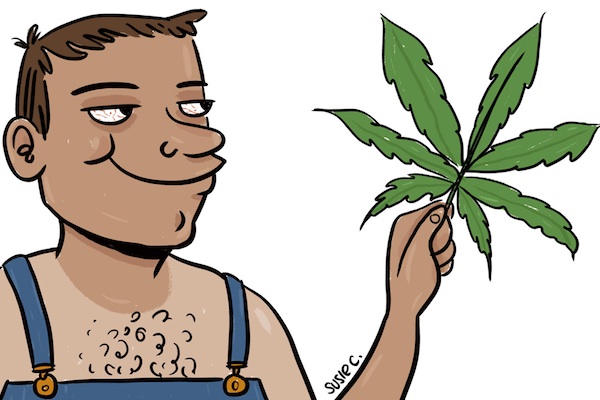
Everybody’s gotta pitch in to bring down Hulk, er, Monsanto.
Denis Giles
Everybody’s gotta pitch in to bring down Hulk, er, Monsanto.

Feeling angry about the "Monsanto Protection Act"? You know, the sneakily passed piece of legislation that allows GMO crops to be planted even in defiance of a court order? Well, you’re not alone! The law is so scary that it's inspiring outrage from the far right.

It’s always a delight to see the left and right agree on anything, and when it comes to fighting genetically modified giant Monsanto, it may well take just that kind of a passionate coalition to get anything done.

But it’s not the GMO issue that’s turning Tea Party Patriot Dustin Siggins’ stomach — it’s the precedent this could set for other corporations that might want legal immunity. From Siggins' blog:

Read more: Food, Politics

Comments

All those fracking jobs come with an increased risk of lung cancer

Indeed.
chriswaits

While all the damage hydraulic fracturing could do to the Earth is pretty well-covered, we mostly overlook the risks it poses to fracking workers. Each well requires thousands of tons of fracking sand full of fine silica, which can penetrate lungs and lead to incurable silicosis and even lung cancer.

To find out how much those frackers were at risk, Eric Esswein, a workplace safety and exposure expert with the National Institute for Occupational Safety and Health (NIOSH), strapped on a face mask and dug in. NPR reports:

He and his colleagues visited 11 fracking sites in five states: Arkansas, Colorado, North Dakota, Pennsylvania and Texas. At every site, the researchers found high levels of silica in the air. It turned out that 79 percent of the collected samples exceeded the recommended exposure limit set by Esswein's agency.

There were some controls in place, says Esswein, who notes that "at every site that we went to, workers wore respirators."

But about one-third of the air samples they collected had such high levels of silica, the type of respirators typically worn wouldn't offer enough protection. ...

Read more: Climate & Energy

Comments

Sandy refugees set to be booted from NYC hotels

Coming up on the six-month anniversary of Superstorm Sandy, New York City is ready to move on. But more than 2,000 Sandy refugees still living in the city's hotels are not -- since they're, you know, homeless.

staten island new dorp sandy
John de Guzman
This is no longer a housing option -- and soon a hotel might not be either.

According to the city's Department of Homeless Services, upwards of 900 displaced families are living in more than 45 different hotels throughout the five boroughs. Since last October, more than 3,000 storm-swept families have spent one or more nights in a hotel through a city program, which is slated to end on April 30. A separate FEMA program does not yet have an end date.

"We're trying to get people focused on the future," Homeless Services commissioner Seth Diamond told The Wall Street Journal. That would be a future in which they might not have anywhere to live, apparently. Diamond said the city would be placing some people in public housing units, while others might receive federal Section 8 vouchers. Everyone else would apparently be on their own, with some potentially having to leave the city altogether.

From The New York Times:

Some housing experts and elected officials said the city’s reliance on hotels underscored how federal and local disaster planning had to be revised to include more emergency rental assistance.

“Why are we spending money on hotels instead of helping families pay the rent?” asked Rosanne Haggerty, president of Community Solutions, a nonprofit organization in New York that works to end homelessness. She added, “For a fraction of the cost, families could be in a stable situation and getting a running start in putting their lives together.”

The damage from Hurricane Sandy revealed how many residents of coastal areas in New York, especially in Brooklyn and Queens, were renters with low incomes.

Comments

Gene discovery could breed veggies for a warmer planet

Image (1) lettuce_425.jpg for post 35082The nearly $2 billion lettuce industries of California and Arizona are likely to get mighty wilted as temperatures in those hot states continue to rise. But science is here to save the day -- with GMOs.

A research team with USDA and National Science Foundation funding has identified a lettuce gene and enzyme that make the plants stop germinating when it's too hot -- so now scientists hope to tweak those lettuces to grow even when they naturally wouldn't. Currently growers have to cool soil and seeds with extra cool water, at great expense. The study, published in the journal The Planet Cell, was a collaboration between scientists at India's Ranga Agricultural University, the University of California at Davis, and scientists from Arcadia Biosciences.

Comments

Tar Sands Blockade wins sponsorship deal from Kryptonite bike locks

Disturbed by the recent tar-sands spills in Minnesota and Arkansas, Kryptonite lock company has decided to step up its efforts to protect the planet.

Today, the company offered corporate sponsorship to any of the Keystone XL pipeline protesters who raised the bar by chaining themselves to tar-sands equipment over the last year. (Needless to say, they've been burning through a lot of locks.)

13-04-01tarsandsbikelock
Laura Borealis

"The people at Kryptonite have a pure passion for creating the best security in the world. And that includes creating security for the planet," the company said in a statement. “We recognized the blockaders for their creative use of our product, and we wanted to encourage more of their important work. Plus, Kryptonite's reinforced, anodyzed steel design resists removal 50 percent longer than competitors and is guaranteed to frustrate law enforcement.”

They may seem like odd bedfellows, but Kryptonite's products have already helped activists disrupt energy conferences and slow down pipeline construction.

Read more: Politics

Comments

National Farmworker Awareness Week highlights a dirty labor plight

Hey, remember how God made a farmer?  This week it's time to pay some respect to the folks who actually do most of that farming work.

Caglefarmworkergraph - header
The vast majority of our stateside fruits and vegetables are handpicked by more than 3 million migrant and seasonal farmworkers. Without those farmworkers, we'd be very hungry. But as a whole those workers are treated like hell: They're underpaid, underinsured, and undereducated. About half of them are undocumented, and only about a third are U.S. citizens. These workers bear the brunt of our food system with their bodies, but only California requires that they get water and bathroom breaks. On average, one farmworker dies on the job every day in the U.S., and laborers can be as young as 12 -- legally.

Read more: Food

Comments

Local schmocal: Why small-scale solutions won’t save the world

I have a confession: I’m a cynic when it comes to living small. I like to garden and ride bikes; I buy local whenever I can. But I don’t think my personal lifestyle choices are going to save the world -- and neither will yours.

Cagle Sisyphusworld
Susie Cagle

I’m not alone. Just ask Greg Sharzer, a frustrated Marxist activist with a PhD in Political Science from York University who also enjoys cycling and Fair Trade coffee. Sharzer’s book No Local: Why Small-Scale Alternatives Won’t Change the World is a bucket of ice water on fresh-faced progressive localism, and an affront to the concept of micro solutions altogether. Localism is a survival strategy, Sharzer writes, not a movement, and not a solution.

Localism says we can change how we act within capitalism. If consumers don’t like a commodity, they can demonstrate their commitment to a better one. Choose to support ethical, small-scale businesses, and little by little the excesses of economic growth will disappear. Community gardening, farmers’ markets, and biodiesel cooperatives will change the entrenched power of agribusiness, for example.

For Sharzer, progressive localism and small acts come from a place of "deep pessimism," a sense that the problems are just too big to tackle. He criticizes lifestyle localism for seeking to model behavior for others while not confronting the powers that made us all oil-addicts in the first place.

It's not that micro solutions are wrong, per se. It's just that they aren't solutions. Buying local organic veggies -- or better yet, growing your own -- is great, but it's not a replacement for fighting for the rights of the people who pick the fields for 10 cents per head of lettuce.

Read more: Living

Comments

Frackers dodge responsibility for earthquakes, science be damned

cracked concrete
Shutterstock

We've known for a couple of years that fracking for oil and gas has been linked to some sizable earthquakes. The shaking doesn't actually come from the high-pressure fracking itself, but from the injection of tons of post-frack dirty wastewater into disposal wells. Only Ohio requires a risk assessment for quakes around the state's injection wells.

Mother Jones digs into this story, speaking with numerous scientists who agree: Frack the earth and it will frack you back. "There is no shortage of evidence," writes reporter Michael Behar.

Between 1972 and 2008, the USGS recorded just a few earthquakes a year in Oklahoma. In 2008, there were more than a dozen; nearly 50 occurred in 2009. In 2010, the number exploded to more than 1,000. These so-called "earthquake swarms" are occurring in other places where the ground is not supposed to move. There have been abrupt upticks in both the size and frequency of quakes in Arkansas, Colorado, Ohio, and Texas. Scientists investigating these anomalies are coming to the same conclusion: The quakes are linked to injection wells. Into most of them goes wastewater from hydraulic fracking, while some ... are filled with leftover fluid from dewatering operations.

Flatter states are more susceptible to fracking-related quakes -- as MoJo puts it, "a stone makes a bigger splash when it's hurled into a glassy pond than a river of raging whitewater." (But pretty please don't take that as an invitation to drill California to shaky bits.)

The least surprising part of all this? That the industry is reluctant to accept that it might be responsible for tearing peoples' houses down -- or at least that it doesn't want to talk to lefty magazines about it.

Some scientists are concerned that industry and government officials don't want to work with them on the issue.

Comments

Flies that eat organic live longer, make more fly babies

Scientists may be split on whether organic foods are better for human health. But a new study published in PLOS ONE presents evidence that organic foods help you live longer and make more babies -- if you're a fruit fly.

Maybe organic food just puts flies in the mood?
T. Chapman
Maybe organic food just puts flies in the mood?

Researchers at Southern Methodist University fed fruit flies extracts of organic or conventional versions of bananas, potatoes, raisins, or soybeans from a Whole Foods in Texas. (Unlike those organic-loving rats, the flies didn't get to choose their foods.)

Read more: Food

Comments

Climate change is killing the corn cob pipe

Add another item to the list of things climate change will kill! But this one makes me a little gleeful.

NPR reports that "corn cob pipes have made a comeback in recent years" (which, what?), but now higher temperatures and drought are severely cutting into the supply of this "natural product."

13-03-26corncobpipe
ilmo joe
Read more: Climate & Energy, Living
Don't miss a green thing!
Get Grist in your inbox every morning.