Skip to content Skip to site navigation

Tom Laskawy's Posts

Comments

MRSA MRSA me: Getting the facts about the superbug in pork

Methicillin-resistant Staphylococcus aureus (MRSA). (Photo by the National Institute of Allergy and Infectious Diseases.)

A few weeks back, we reported on a study out of the University of Iowa that tested supermarket pork for antibiotic-resistant Staph bacteria (aka MRSA). The researchers found MRSA at the same rate for conventionally raised meat and for meat raised without antibiotics. In her well-respected WIRED blog on the topic, Superbug, Maryn Mckenna summed up the media response to the news like this:

There’s just as much resistant bacteria on drug-free meat as there is on conventional meat, so why spend the money — or raise the alarm over farm antibiotic use?

But she disputed that conclusion:

My takeaway is that, in its underlying data, the study proves what campaigners against ag antibiotic use keep saying: that once you use antibiotics indiscriminately and drive the emergence of resistant organisms, you have no way of predicting where that resistance DNA will end up.

For most of us, any sign of MRSA in our food is pretty creepy. (Although the bacteria doesn’t make it through the cooking process, meat can still be what scientists call a “vector,” or a mode of transmission, when we handle it). So we tracked down McKenna, who is also a columnist and contributing editor for Scientific American and the author of Superbug: The Fatal Menace of MRSA. Her take on the research may surprise you.

Comments

Monsanto’s new seeds could be a tech dead end

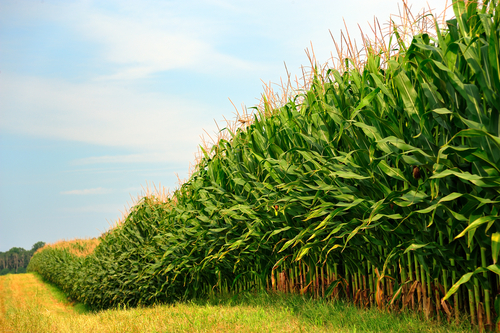
planting cornThis is how corn is planted on industrial-sized farms. (Photo by Minnemom.)

When I wrote recently about the next generation of genetically engineered seeds, I was in truth referring to the next next generation. The fact is that the next actual generation of seeds is already out of the lab and poised for approval by the USDA.

And I’m not talking about Monsanto’s recently approved “drought-tolerant” seeds, which the USDA itself has observed are no more drought-tolerant than existing conventional hybrids.

No, the “exciting” new seeds are simply resistant to more than one kind of pesticide. Rather than resisting Monsanto’s glyphosate-based Roundup alone, they will now also be resistant to Dow AgroScience’s pesticide 2,4-D .

Comments

Why does agriculture keep getting a climate pass?

Last year's flooding on the Mississippi River has been linked to climate change. (Photo by the USDA.)

While the topic of climate change in this country often feels like the truth that dare not speak its name, there is no escaping what Grist's own David Roberts refers to as its "brutal logic." The planet will warm no matter how international climate negotiations -- the latest round having just occurred in Durban, South Africa -- play out.

It's because of that inevitable warming that Britain's chief scientist, John Beddington, along with an international group of scientists, have taken to the pages of Science magazine this month to ask climate negotiators to stop ignoring agriculture.

Agriculture has been hovering just on the margins of climate change policy. Of course, that's no coincidence. Precise measurement of the climate impact of many industrial farming practices remains difficult and controversial, and the U.S. in particular has resisted any attempts to formalize the agricultural sector's obligation to climate mitigation.

Comments

A farm bill in 2012? Don’t hold your breath

The “smoking ruins” of the "Secret Farm Bill" aren’t a very fun place to be. Your tour of the site includes proposed cuts to conservation programs, reductions in federal nutrition programs, and problematic expansions of crop insurance, including the creation of a controversial new subsidy known as “shallow loss insurance” that would guarantee farmer income in the event of small drops in sky-high commodity prices. There’s also all that exhausting post-hype fallout raining down. Those motivated souls who paid attention to the Secret Farm Bill late last year are understandably reluctant to re-enter the area.

It’s time to ask: What are the chances that any of this will come to pass as scheduled this year? Certainly, legislators are hard at work. Sen. Kent Conrad (D-N.D.), architect of the shallow loss program, is already out among agribusiness folks flogging the idea once again. Meanwhile, a confident Sen. Debbie Stabenow (D-Mich.), Senate Agriculture Committee chair, said in a speech recently that she will have a bill ready for a vote in “the first half of this year.”

Read more: Farm Bill, Food

Comments

Meating halfway: Americans opt for less

meat shoppingPhoto: This Year's Love In a New York Times op-ed, Mark Bittman flagged this story from the Daily Livestock Report that notes the USDA is now projecting that U.S meat consumption will continue to drop, representing a 12 percent decrease from 2007. While American beef consumption has been dropping for some time, the story says chicken and even pork are now suffering a similar fate.

The Daily Livestock Report, a trade paper, pins the blame on rising feed prices (thank you, ethanol), growing exports -- which reduce domestic supply -- and, remarkably, "the fruition of 30-40 years of government policy." The paper continues:

If the federal government and its agencies decide to wage war on a product and continue that war for long enough, it will eventually have an impact. And the feds have indeed waged war on meat protein consumption for many years.

Comments

The next generation of GMOs could be especially dangerous

Are there GMOs in your breakfast?Did a recent scientific study just change the way we should think about the safety of genetically modified foods? According to Ari Levaux at theAtlantic, the answer is a resounding yes. The study in question, performed by researchers at China's Nanjing University and published in the journal Cell Research, found that a form of genetic material -- called microRNA -- from conventional rice survived the human digestive process and proceeded to affect cholesterol function in humans. Levaux argues that this new study "reveals a pathway by which genetically modified (GM) foods might influence human health" …

Comments

What the Times’ organic tomato story missed: Golf courses

Resorts in Baja use around 70 percent of the available water.Photo: habo_73A recent New York Times article about organic tomatoes grown in the Los Cabos region of Baja California raised the question about whether "large-scale" export-oriented organic agriculture can truly be sustainable. According to reporter Elisabeth Rosenthal, the answer is no. She writes: The explosive growth in the commercial cultivation of organic tomatoes here, for example, is putting stress on the water table. In some areas, wells have run dry this year, meaning that small subsistence farmers cannot grow crops. And the organic tomatoes end up in an energy-intensive global …

Read more: Food

Comments

Comments

The Big Apple takes a bite out of childhood obesity

New York City appears to have won a skirmish in its war on childhood obesity. According to a new report out from the Centers for Disease Control (CDC), between 2006 and 2011, the obesity rate among children ages 5-14 in New York City dropped by over 5 percent. Obesity is, of course, not so much an ill in itself as a cause of major health problems like heart disease, diabetes, and even some kinds of cancers -- diseases from which kids are by no means immune. And it's also worth remembering that obesity is not the same as being overweight. …

Read more: Food

Comments

A dollar badly spent: New facts on processed food in school lunches

Photo: USDA I want to draw attention to an eye-opening investigative report on school lunch that has gotten a bit lost in the holiday shuffle. In a collaboration between The New York Times and the Investigative Fund, reporter Lucy Komisar delved into the billion-dollar business of the national school lunch program and found some unsettling news. Komisar looked at two less-examined aspects of the school lunch program. The first is the practice of taking up to $1 billion of "surplus" fruits, vegetables, and meats that the USDA supplies to the program and, rather than cooking them into healthy meals, turning them …

Read more: Food, School Lunches
Don't miss a green thing!
Get Grist in your inbox every morning.