Grist is proud to present the Change Gang — profiles of people who are leading change on the ground toward a more sustainable society and a greener planet. Some we’ve written about before; some are new to our pages. Some you’ll have heard of; most you probably won’t. Know someone we should add to the Change Gang? Tell us why.
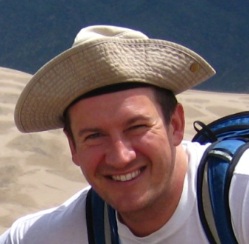
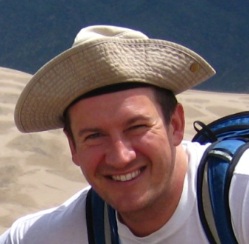
Most visionary startup entrepreneurs who aim to leverage the power of the internet to achieve progressive social change content themselves with trying to solve just one big problem. But Tim Whitley, the founder of COTAP.org — Carbon Offsets To Alleviate Poverty — is going double or nothing. His goal is to tackle climate change and the worst poverty in the world, simultaneously.
The scheme is simple in concept, if a bit gnarly to work out, technically. Individuals use the COTAP platform to buy carbon offsets. COTAP uses that money to pay some of the poorest people in the world to plant trees as part of carefully monitored agro-forestry projects. The trees, eventually, account for the carbon dioxide emission reductions. The model is similar to that employed by the microfinance lender Kiva.org, except that instead of aggregating funds to make loans directly to the specific people a lender chooses, COTAP aggregates funds to pay wages to people whose labor helps combat the challenge of climate change.
Whitley, who is based in Oakland, Calif., embraces the Kiva comparison. He’d love to have people refer to COTAP as the Kiva of emissions reductions. And even though the site only launched in September 2011, he jokes that maybe some day it will be Kiva that will be dubbed “the COTAP of loans.”
By 2015, says Whitley in a soft-spoken Virginia drawl, “I think I can get a quarter-million offsetters, and I think I can be doing $50 million a year. With at least half of that going to the poorest people in the world.”
Whitley acknowledges that for many environmental groups, carbon offsets have a bad name, particularly in the context of agro-forestry projects in the developing world. Under the cover of theoretically reducing carbon dioxide emissions, for example, a monoculture eucalyptus plantation that displaces indigenous residents of the rainforest can wreak enormous social and environmental damage. Too often, says Whitley, people “treat forestry in least developed countries as just another opportunity for resource extraction.”
“There needs to be an entity that views that traditional capitalist approach angrily, but calmly,” says Whitley, who cites his background as a compliance officer at the Sierra Club and the California Affordable Housing Initiatives as giving him precisely the kind of skills necessary to make a project like COTAP work. Projects need to be vetted. Donors need to be sure their money is going where it is supposed to go. Emissions reductions need to be proven.
“I’ve got a bit of bird-dog in me,” says Whitley, alluding to the determined focus typical of the popular hunting breed. “COTAP’s goals might seem all very nice and flowery, but I view it very much as a compliance game. You can lead with human impact stories and it is intellectually interesting and meaningful and all that. But it is going to take a fairly sophisticated back-end platform, and a lot of reporting and operations and structure, to make it work.”
Some might argue that attempting to tackle both climate change and poverty is akin to Don Quixote simultaneously tilting at a whole field full of windmills. But it’s precisely the combination of goals, argues Whitley, that will be the key to his project’s success.
One of the big drawbacks to forestry-related carbon offset programs is that tallying up the benefits, in the form of actual carbon reductions, is painfully slow. Trees, after all, take a long time to grow. Donors lose patience or look for quicker fixes. But when you go after two birds at once with one crowd-sourced stone (and a relentless bird-dog), you double the incentive to participate. You create, as Whitley puts it, the chance to do “wicked cool business stuff for good.”