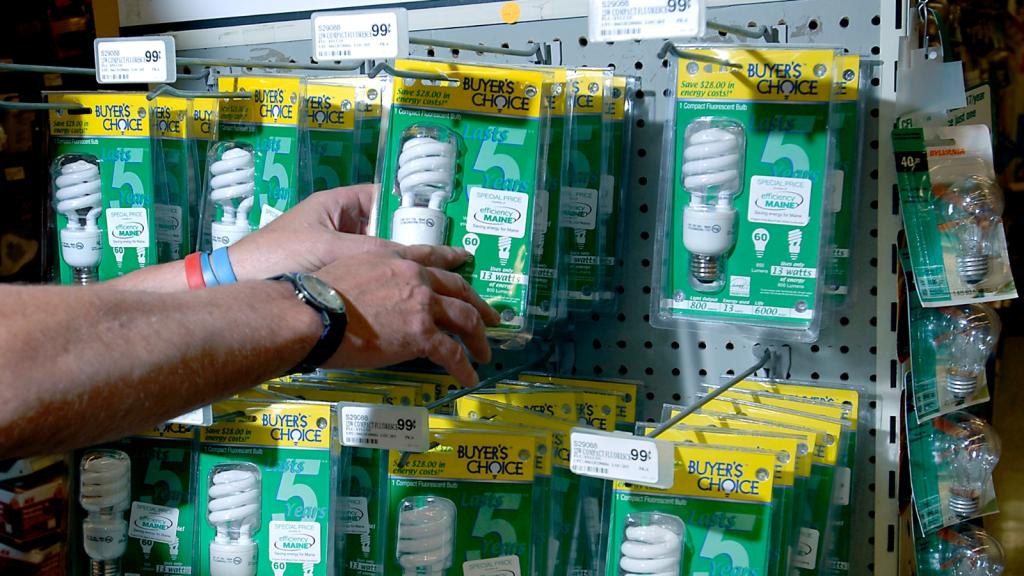
In the next decade, over 300 gigawatts of unsubsidized solar energy could be deployed across the United States, generating electricity for the same or less than retail electricity prices. But many utilities remain blissfully unaware of the coming solar storm or how to handle it, as evidenced by a Public Utility Commission hearing in Minnesota last fall. In October, the Xcel Energy presented their long term planning process (called an Integrated Resource Plan) to the Commission and the public. In their plan, the state’s largest electric utility indicated an interest in adding 20 megawatts (MW) of solar power to their …
Contributors
300 Reasons Utilities Should Do These 3 Things For Distributed Solar
The Energy Game is Rigged: Fossil Fuel Subsidies Topped $620 Billion in 2011
By Emily E. Adams The energy game is rigged in favor of fossil fuels because we omit the environmental and health costs of burning coal, oil, and natural gas from their prices. Subsidies manipulate the game even further. According to conservative estimates from the Global Subsidies Initiative and the International Energy Agency (IEA), governments around the world spent more than $620 billion to subsidize fossil fuel energy in 2011: some $100 billion for production and $523 billion for consumption. This was 20 percent higher than in 2010, largely because of higher world oil prices. Of the $523 billion that supported …
Senators send pro-Keystone XL letter, once again drenched with oil money
Well, here we are again. Only mere days after the biggest rally and march in support of climate action and against the Keystone XL pipeline in US history, another letter has been sent by a group of Senators calling for approval of the troublesome (to say the least) Keystone XL tar sands pipeline, this time spear-headed by Senators Baucus and Hoeven. And once again it’s clear there’s dirty energy money behind it. At this point, you likely know the drill. Every election cycle, Big Oil pays into campaigns heftily in order to try to curry favors and influence in Washington, and the …
Put Your Money Where Your Future Is: College Students Lead the Way on Fossil Fuel Divestment
While I loved every one of the thousands of faces I saw at Sunday's massive Forward on Climate rally in Washington, D.C., I was especially inspired by the huge number of young people who trekked in from across the nation, carrying signs and banners, chanting and cheering along with the speakers. Amid the crowd close to 50,000, I even bumped into some students from my alma mater, the University of Tennessee, representing the student environmental group I co-founded there twenty years ago, Students Promoting Environmental Action in Knoxville. SPEAK brought 30 students to the rally, and few of them snapped …
You have no idea what that fish you’re eating is, so don’t pretend

"Man, Europe," we think, shaking our heads with superiority. "Those weirdos are eating horse instead of beef. What a mixed-up, topsy-turvy continent." Shrugging, we then pick up our fish sandwiches from McDonald's or, if you're fancy, throw a little snapper on the grill.
And that's when the Fates play their little tricks. From The New York Times:
That tempting seafood delight glistening on the ice at the market, or sizzling at the restaurant table in its aromatic jacket of garlic and ginger? It may not be at all what you think, or indeed even close, according to a big new study of fish bought and genetically tested in 12 parts of the country -- in restaurants, markets and sushi bars -- by a nonprofit ocean protection group, Oceana.
In the 120 samples labeled red snapper and bought for testing nationwide, for example, 28 different species of fish were found, including 17 that were not even in the snapper family, according to the study, which was released Thursday.
The study also contained surprises about where consumers were most likely to be misled -- sushi bars topped the list in every city studied -- while grocery stores were most likely to be selling fish honestly. Restaurants ranked in the middle.

This is not news in the sense that it is new. We've noted fish fraud a few times before. It is however news in the sense that 1) it is a new study conducted by Oceana (available here [PDF]) and 2) it considered new types of fish and 3) it was in the newspaper.
Local food a growing trend for land trusts
When a land trust in Grayslake, Illinois, made a strategic decision in 2005 to include farmland in its list of property types to preserve, it joined scores of traditional ‘woods and waters’ trusts across the U.S. which are increasingly preserving agricultural lands and building local food systems.
While it made sense strategically, since much of the county’s remaining forested and open land has already been conserved, it was also right on mission for Conserve Lake County (CLC). As they got into it, the CLC leadership realized that they didn’t want to convert purchased farms to natural uses, though, but rather to keep them in farming.

Yet the conventional corn and soybean farming practiced widely in the region was not on-mission, given the known impacts of those practices. “That sent us searching for a different kind of farming more in keeping with our mission of improving land and water health,” explained Steve Barg, CLC’s Executive Director. Because their preserved agricultural lands are farmed more sustainably, they were then pulled into the nascent food system conversation in the county and are now leading efforts to develop its local food economy.
While land trusts that specialize in farmland, like American Farmland Trust, have been around a long time, this trend of conventional land trusts wading into food systems work is much newer, and it’s growing. Statistics shared by the Land Trust Alliance (LTA), found that of 912 member trusts surveyed in 2010, 22% reported that farm and ranch preservation was “very important,” and 39% said it was “extremely important.” Well over half of the LTA members, then, are strongly invested in this work (for more stats, see American Farmland Trust’s 2012 survey of land trusts that specifically work to preserve farms and ranches).
When asked about the interest, Rob Aldrich, Director of Communications for the LTA, said he’s been watching it trend steadily upward since the early 2000s, and sees land trusts getting involved all along the spectrum of activities within the new food movement. One of his favorite examples is Massachusetts Audubon, “…a land conservation organization dedicated to saving bird habitat, which is now doing community gardening in some of their sanctuaries. Why? Because that’s what their communities need, and they want to use their resources to address community needs that also blend with their mission.”

And Mass Audubon isn’t alone: the biggest and oldest land trust in the state, The Trustees of Reservations, employs an Agriculture Program Director to manage its ag-strategy and farm-holdings. The LTA’s Aldrich plans a special feature on the whole topic of land trusts in the food system for the summer issue of his organization’s member magazine, Saving Land.
Back in Illinois, the most visible example of CLC’s efforts, beside Prairie Crossing (a 669-acre Chicago subdivision that devotes 100 acres to food production: see “Farming the ‘burbs”) and the fact that around 25% of its portfolio is now agricultural land, is the nascent Casey Farm Center for Land Health, a 34-acre farm CLC also now owns. It will use part of the farmhouse for educational purposes and lease the rest to a young couple for raising chickens and produce. A renovation of the 140 year-old dairy barn to make it friendly for food processing is just being finished.
We Need Climate CHANGE
“The government can’t change the weather,” said Florida Senator Marco Rubio last week, describing his opposition to President Obama’s State of the Union call-to-action on climate change policy. Given the staggering costs of droughts, heat waves, and super storms, it would seem our political leaders would come quickly to some consensus on these seemingly urgent issues and take some kind of concerted action. So where do our political leaders get their information that has instead led to partisan gridlock? President Obama appears to be relying on facts, as he said in his speech. “The 12 hottest years on record have …
How a City Can Get More Clean, Local Energy
Like many cities attempting to solve climate change at a local level, Minneapolis is finding the prospect more challenging that it may have imagined. The lion's share of emissions (two-thirds in the case of Minneapolis) come from electricity and gas sold by two monopoly, corporate utilities. Minnesota's state-level policy is helping: a renewable energy standard pushes the electric utility to 30% clean energy by 2020 and a conservation standard aims to reduce the growth in energy consumption. But state (and federal) policies aren't enough, and Minneapolis has had no leverage to force its utilities to de-carbonize. But an opportunity is …
Wind Surpasses Nuclear in China
By J. Matthew Roney Wind has overtaken nuclear as an electricity source in China. In 2012, wind farms generated 2 percent more electricity than nuclear power plants did, a gap that will likely widen dramatically over the next few years as wind surges ahead. Since 2007, nuclear power generation has risen by 10 percent annually, compared with wind’s explosive growth of 80 percent per year. Before the March 2011 nuclear disaster in Japan, China had 10,200 megawatts of installed nuclear capacity. With 28,000 megawatts then under construction at 29 nuclear reactors—19 of which had begun construction since 2009—officials were confident …
Our Lunch Counter Moment
“Dark and cold we may be, but this Is no winter now. The frozen misery Of centuries breaks, cracks, begins to move; The thunder is the thunder of the floes, The thaw, the flood, the upstart Spring. Thank God our time is now when wrong Comes up to face us everywhere, Never to leave us till we take The longest stride of soul we ever took. Affairs are now soul size.” -Christopher Fry, A Sleep of Prisoners Rev. Lennox Yearwood, leader of the Hip Hop Caucus and the MC at yesterday’s massive Forward on Climate rally in Washington, D.C., talks …