Skip to content Skip to site navigation

Contributors

Comments

Colorado’s Community Solar Program Allots 9 Megawatts in 30 Minutes

When you subtract out shady roofs, renters, and other factors, only about 25% of Americans have a place to install solar power.  With the high upfront cost of a complete system, the potential solar universe shrinks further. That changes with “community solar.” After a long wait on the state’s Public Utilities Commission to finalize the rules, Colorado’s “community solar gardens” program (my summary here) sold out in 30 minutes when it opened two months ago, testament to the pent-up demand for solar among who don’t own a sunny roof.  The program allows individuals to subscribe or buy shares in a …

Read more: Uncategorized

Comments

VIDEO: Romney confronted in Ohio, “Do you still think the rising of the seas is funny?”

At a campaign event today in Etna, Ohio, Gov. Romney was asked, “Do you still think the rising of the seas is funny?” Romney responded, “I never imagined such a thing is funny,” despite using rising sea levels as a punchline in his speech to the Republican National Convention.

Read more: Uncategorized

Comments

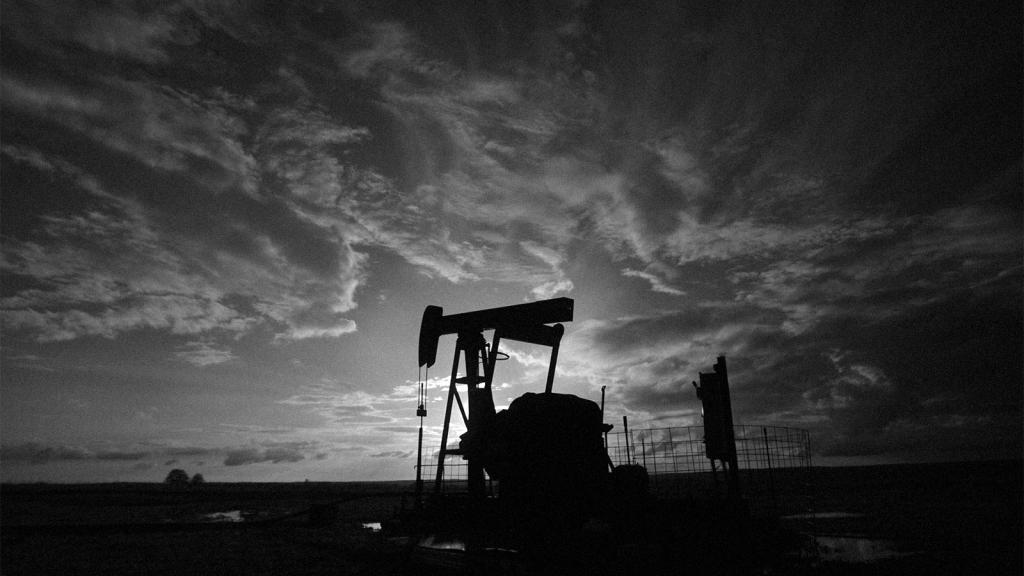
Tar-sands oil is looking riskier, thanks in part to Keystone protests

According to The Wall Street Journal, tapping into Alberta's tar sands is starting to look like a much riskier business proposal.

Amid rising costs, gyrating prices and a burst of supply competition down south, Canadian oil companies are rethinking investment in one of North America's earliest and fastest-growing "unconventional" oil frontiers -- Alberta's oil sands. ...

The slowdown so far is limited, affecting only the industry's most expensive segment, which mines and upgrades bitumen into a low-sulphur, synthetic crude. Still, it underscores the extent to which today's booming North American energy-production growth remains at the mercy of market forces, which often reward higher output with lower prices. That dynamic can sap fresh investment incentives, especially in the case of the capital-intensive energy industry.

Let's take a look at that "burst of supply competition down south." As we noted last week, the massive spike in U.S. oil production has reversed the flow of crude -- quite literally in the case of a pipeline near Corpus Christi. But moreover:

[P]rices for synthetic crude have been buffeted by a flood of new production in the middle of the continent, especially in North Dakota. Producers there are using the same sort of drilling technology that [natural] gas producers have used to unlock fresh supplies of oil. The crude is similar in grade to Canada's synthetic oil, putting the two blends in competition with each other to find refinery buyers. At the same time, limited pipeline capacity has bottled up Canadian supplies, exacerbating price swings and threatening lower prices to come.

This is putting some big expansion plans up north on the back burner.

You read that? "Limited pipeline capacity." In the last two paragraphs of the article, they say the words you've been waiting for.

Comments

Clean Energy on the Ballot: Fossil Fuel Companies Spending Big to Defeat Michigan Initiative

With Election Day just around the corner, I know many of you will be thinking about clean energy, climate change, and coal pollution when you cast your ballots. I have to admit, I'm a little jealous of my friends in Michigan who get to vote on a fantastic opportunity for more clean energy in their state. Unfortunately, big fossil fuel companies are spending big at the eleventh hour to try and stand in the way of a clean energy future for Michigan -- and the nation. Proposal 3, which will be on the Michigan ballot next Tuesday, calls for 25 …

Read more: Uncategorized

Comments

Factory farms raise a stink — and they might raise your blood pressure too

Shutterstock

CAFOs stink. In addition to being crowded, dirty, inhumane, and brimming with antibiotic-resistant bacteria, CAFOs, or concentrated animal feeding operations, produce thousands of gallons of liquid waste with a stench that wafts through the air in the surrounding communities practically daily.

These odors are nasty and hard to live with, but new science suggests they also might put the bodies of those living near them in a state of stress that could have frightening effects on their blood pressure.

A study released last week out of the University of North Carolina-Chapel Hill, and published in Environmental Health Perspectives, asked 101 residents of towns in close proximity to large, industrial swine operations to sit outdoors for 10 minutes a day and record the level of hog odor on a 9-point scale. Then they were also asked to measure their blood pressure twice on portable digital devices. As a result, the researchers found a strong correlation between the days when the subjects reported strong odors and regular stress-induced blood pressure spikes.

The study’s lead researcher, Steve Wing, has already looked into some of the more well-known downsides to living near a CAFO. Last year, he released a related study finding that North Carolina residents who live in areas near big hog farms experienced eye irritation, wheezing, chest tightness, shortness of breath, sore throats, and nausea.

Read more: Food

Comments

The sound of silence: Why Bloomberg had to endorse Obama

Manhattan's trademark is its busyness, its height, its scale. Manhattan, apart from the city at large and apart from nearly everywhere else in the world, is a symbol of mania, a thicket of stacks of people working and living. Manhattan is a target center of information and culture that thrives on a million overlapping pulses that build and cancel like ripples. There is nowhere like it. Usually.

I used to live near Chinatown, just above downtown Manhattan at the island's lower tip. Chinatown is mostly low buildings, three or four stories, meaning that its activity spills onto the streets. Vendors and hustlers and tourists crowd sidewalks, bargaining and buying and trying frustratedly to get by. Many of the residents of Chinatown are poor; our apartment just off Canal Street was directly above an apartment of the same size that housed four times as many people, in little cubbies carved up with hanging sheets. Chinatown is a particular reflection of the hecticness of Manhattan, its own flavor of urgency.

Today, when I walked through, three days after Sandy, it was quiet. Walking down the Bowery -- a street whose poverty is so well-established as to give it a patina of hipness -- I passed fewer and fewer people, and the people I passed were obviously poorer and poorer. At the lip of Chinatown, down where the Manhattan Bridge arrives from Brooklyn, there was almost no one. Just a few people crossing the street and, as at every corner, cops directing traffic in lieu of working stoplights. The usual streetside salespeople were mostly gone, the deep storefronts either gated or dark.

As I kept heading south, I finally came upon a long line of people standing behind a barricade. Aware of reports of long waits for transit, I naively asked one of the cops standing at the head of the line near a small bus if the people were waiting for a shuttle to Brooklyn. No, she replied. They're waiting for food and water.

Comments

How Archaic Utility Rules Stall Local Solar [Infographic]

Many people expect that solar power will dramatically expand once it bursts through the cost barrier and becomes less expensive than grid electricity.  But archaic utility rules can effectively cap local solar development at just 15% of peak demand.  Fortunately, pioneering states like Hawaii and California are exploring ways to lift the cap and bring utility rules into the 21st century.

Read more: Uncategorized

Comments

The Great Transition, Part II: Building a Wind-Centered Economy

By Lester R. Brown In the race to transition from fossil fuels to renewable sources of energy and avoid runaway climate change, wind has opened a wide lead on both solar and geothermal energy. Solar panels, with a capacity totaling 70,000 megawatts, and geothermal power plants, with a capacity of some 11,000 megawatts, are generating electricity around the world. The total capacity for the world’s wind farms, now generating power in about 80 countries, is near 240,000 megawatts. China and the United States are in the lead. Over the past decade, world wind electric generating capacity grew at nearly 30 …

Read more: Uncategorized

Comments

Romney doesn’t want to talk about preparing for or responding to Sandy

Pat Williams

What do you say if you're Mitt Romney? What do you say today, one week until the most important Election Day of your life, with the East Coast -- including swing states -- still trying to figure out what the hell hit it last night?

Mitt Romney is on record mocking rising ocean levels.

Mitt Romney is on record suggesting that emergency management services shouldn't be the province of the president. In fact, he thinks they should fall to private companies, which can then make a little money off the deal.

Comments

Superstorm Sandy

Much of New Jersey, New York City and elsewhere definitely got hit very hard by Superstorm Hurricane Sandy yesterday: several feet of sand covering roads close to the ocean in Point Pleasant and probably elsewhere—50 or so homes burned down in Queens—extensive flooding of the lower Manhattan NYC subways—7 million or more customers without power—blizzard conditions in the Appalachians—and much more, without question. I live in NJ, about 12 miles west of Manhattan. We didn’t get much rain but we did get very high winds, probably 80 mph or so, and as my wife and I huddled together on the …

Read more: Uncategorized
Don't miss a green thing!
Get Grist in your inbox every morning.