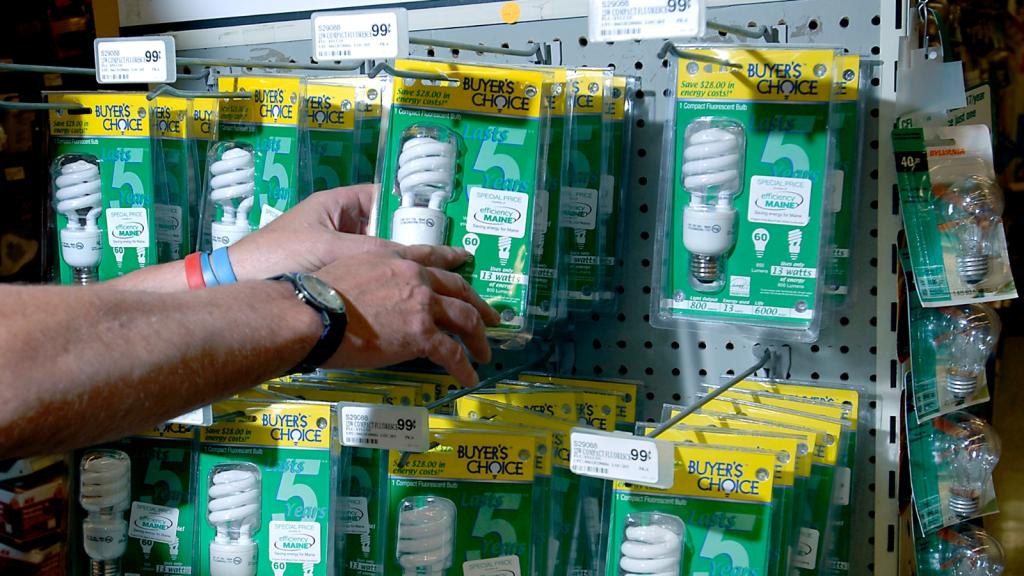
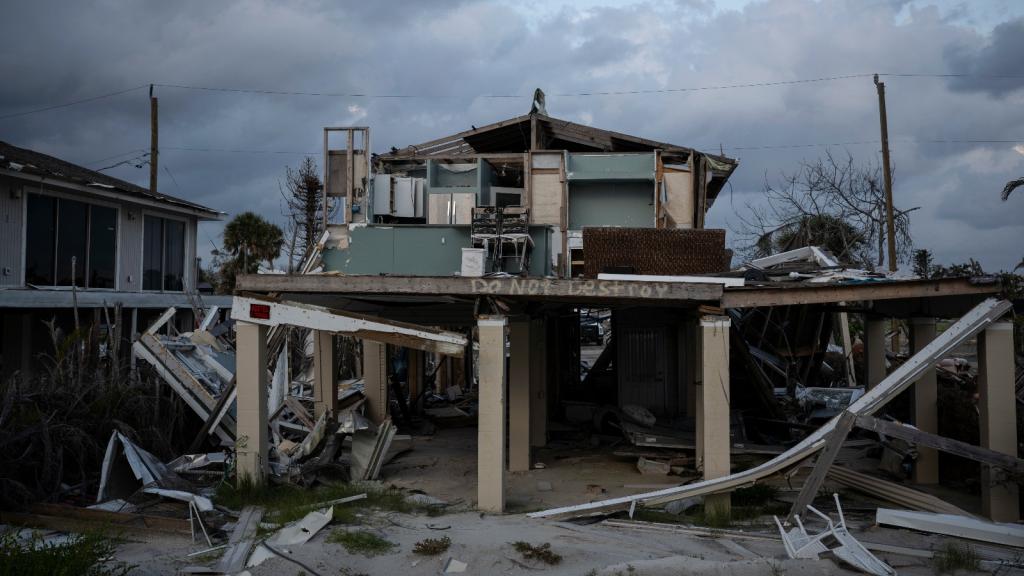
Between medical costs and lost productivity for parents, environmental illnesses in children cost $76.6 billion annually, says a new study in Health Affairs. That’s the cost of all illnesses that are correlated with exposure to pollutants and toxins. (Some of the associations are better-documented than others, but many -- like lead poisoning, which costs $50.9 billion annually -- are well-established.) What could we get if we weren’t spending that money? Well, you could buy a private island in the Florida keys ($18 million) and sit on it in your diamond-encrusted bra ($3 million), reading your Gutenberg Bible ($35 million) and …
Republican debate: Present Pawlenty vs. Past Pawlenty on cap-and-trade
Tim Pawlenty may have once promoted cap-and-trade as a response to climate change, but now he considers that choice a "battle scar.” Because nothing’s more traumatic than caving to peer pressure. "We all [have ‘clunkers’ on our records], and that's one of mine," he said last night at the first debate in the Republican primary. "I just admit it. I don't try to duck it, bob it, weave it, try to explain it away." He does, however, reverse course, backpedal, disown, and disinherit it. Pawlenty has been particularly vocal about disowning cap-and-trade in recent months, perhaps because he's a bit …
Critical List: House Republicans demand offshore drilling; climate change eating away at food supply
The House voted yesterday to fast-track new offshore drilling lease sales in the Gulf of Mexico and off the coast of Virginia. Look for $0.99 gas within a few weeks. As a group, the drilling bill's primary sponsors raked in more than $8.8 million in donations from the oil and gas industry. Climate change is damaging the world's food supply, according to a new study by Stanford researchers. Over the past 30 years, they found, corn production dropped nearly 4 percent and wheat production dropped 5.5 percent. President Obama will tour an Indiana plant that makes hybrid vehicle technology this …
Rwanda to power itself with plentiful, domestic geothermal energy
If the first thing you think of when I say "Rwanda" is "Don Cheadle looking worried while a radio booms 'Hutu Power!' in a basso profundo," it's time you updated your thinking. The country is currently looking into meeting its need for electricity by tapping into the hot rocks that underlie much of the country, which is in Africa's geologically active Rift Valley. While countries like India try to fuel their growth with the kind of fossil fuels that destroy air quality and are going to run out anyway, Rwanda is taking a cue from its neighbor, Kenya, which estimates …
Offshore wind power to explode to 17 times its current capacity in just six years
Offshore wind will reach 70.1 GW of capacity by 2017, says Pike Research. That's 17 times its current capacity, which is 4.1 GW, and amounts to several times the current maximum solar capacity of the most solared-out country in the world, Germany. Europe is currently in the lead on offshore power, but by 2017, China will pull even. (The U.S. will be in the mix somewhere too, if we can get those Nantucket swells to settle down.) We’re mostly talking about ocean wind farms, but a portion of this new capacity will come from freshwater offshore installations, such as in …
How the internet is saving the physical world by making it disappear
In 2009, a study by researchers at Carnegie Mellon and Stanford made the case that the switch to downloading music from transporting physical CDs had significantly reduced the carbon footprint of Americans' music consumption. That's just one of countless examples of "ephemeralization," which is the process by which new, post industrial-revolution technology tends to lead to our owning and transporting less stuff, not more. (The term was coined by noted genius/loony Buckminster Fuller, who also brought us “tensegrity.”) Princeton Ph.D. candidate Timothy B. Lee argues that this process is happening to countless goods and services, including "typewriters, newspapers, magazines, books, maps, cameras, film …
This Sunday, get Mother Earth a big bouquet of youth activism
Okay, normally it makes me throw up in my mouth a little to say "Mother Earth," but 16-year-old environmental activist Alec Loorz is just too cute, and he's helping to organize worldwide youth marches for the environment on Mother's Day. So the joke is inevitable. Your fault, adorable activist teen! Anyway, if you're looking for something green to do with your mom, there's probably a march in your town, and if there's not, you can start one! (Some of the marches aren't actually this Sunday, because of scheduling conflicts.) Here's the marches' raison d'etre, and if this doesn't make you pump your …
Watch Amtrak’s coverage shrink over time
Amtrak just had its 40th birthday, and like many 40-year-olds, it is a diminished version of what it once was. It's still hanging on, and some lines have even been restored over time, in part thanks to the efforts of the National Association of Railroad Passengers (who made these maps for Greater Greater Washington). But is it any wonder more people don't take rail, when coverage has shrunk like a scrotum in a cold pool?
Low-fat ice cream, celery more or less the same food
Yes, that Mexican-flavored shredded cheese mix, found right next to the Kraft singles, makes awesome quesadillas. But little strands of cheese curds are not meant to remain so sedately separate from each other, even as they are tossed into plastic bags and shipped across the country. So how do big food companies keep shredded cheese from clumping into a gooey mess? They add wood. Technically, the ingredient is powdered cellulose. Cellulose is the stuff that makes up the walls of plant cells, and it apparently has additional properties, like keeping cheese from clumping, thickening jam, and making low-fat ice cream …
How humans are forcing other species to evolve
Presumably everybody knows the basic depressing mechanisms of natural selection: In response to a cruel and unforgiving environment, those creatures that can adapt best or are already best-suited survive to reproduce, and everyone else dies horribly. It's all red-in-tooth-and-claw-y, and humans are well out of it, right? Yeah, well, about that: Turns out that now we've become the cruel and unforgiving environment. Whoops. An article (behind a reg wall, so we'll give you the highlights) in this month's New Scientist collects the effects humanity has had on shaping our fellow creatures: Tuskless elephants: In Zambia, the proportion of tuskless female …

The key to turning urban youth into conservative crusaders? Food trucks
This solar panel printer can make 33 feet of solar cells per minute
Is the sharing economy skidding out?