Skip to content Skip to site navigation

Greenie Pig

Comments

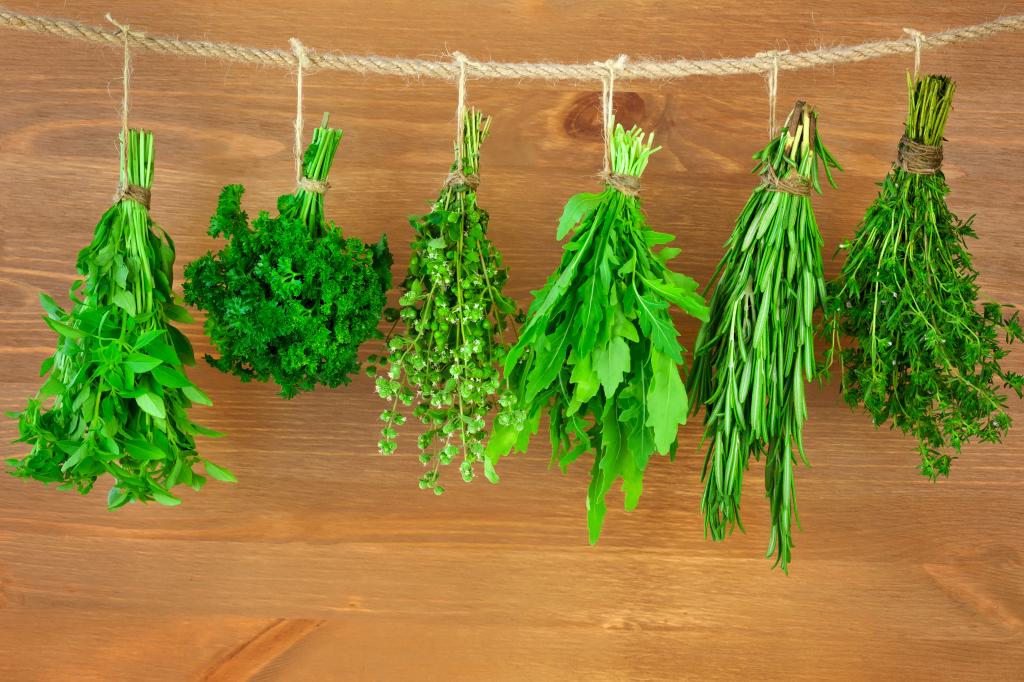
Unleash your inner seed demon: Three easy ways to grow herbs at home

seedling
Shutterstock

They’re up.

I repeat: They are up. My fragile seeds have sprouted into tiny proto-herbs. Miniature leaves unfold by the hour; little stems reach toward the sun. It’s alive, I tell you! I have created life!

Forgive me for going a bit mad with power -- I’m just so excited that my very first foray into growing from seed is actually working so far. Sure, I’ve managed to keep a series of windowsill plants alive in pots over the past few years (bless you, you affable succulents). But I bought all of them as hearty young plants, already strong and bushy and requiring little more than water from me. It’s like adopting a high-achieving college kid -- with all the hard work already done, you can’t exactly call yourself parent of the year.

But my recent seed-bombing expedition awakened something in me. I haven’t yet seen any sprouts from the secret seed bomb I snuck into a corner of my backyard -- my cue to check on the seed-filled clay capsules I lobbed into vacant lots (maybe the dry spell of the past few weeks is to blame?). So while I’m waiting for my guerrilla gardening luck to kick in, I decided to try growing herbs from seed for the first time.

Read more: Food, Living

Comments

What I learned from a month of eating vegan

vegetable face plate
Shutterstock

A little more than a month ago, I expanded Team Greenie Pig to four and set out on a month-long challenge to eliminate animal products from our diets. Would we discover an entirely new way of eating? Experience a miraculous increase in vitality? Or crash and burn spectacularly over an irresistible salumi plate? And would any of us end up converting wholly to veganism?

One thing we all agreed on: We learned a lot. Now it’s your turn: I encourage -- nay, dare -- you to try the vegan experiment yourself. It’s challenging, surprising, and utterly worthwhile. But before you do, here are some of those lessons we learned along the way.

It’s hard.

Surprise, surprise: Departing from the eating and cooking habits you’ve developed over decades -- particularly if you developed them in contemporary, fast-food-lovin’, steak-and-potatoes-havin’, pizza-partyin’ America -- is challenging. I normally eat meat sparingly and front-load my plate with veggies anyway, and still I found the strict vegan thing to be hard.

It’s the little things: I missed butter and cheese (way more than meat). A bunch of my favorite whole-grain products were blacklisted for their honey content. I struggled with suddenly becoming the “difficult" guest at dinner parties and evenings out. Convenience foods got a whole lot less convenient. And eating well requires research: “The real start-up cost to veganism is a massive increase in the amount of time it takes to evaluate, plan, and execute great food,” notes my fellow vegan-for-a-month, Matt.

I’m sure this gets easier with practice. But insisting that a paradigm shift in dietary habits isn’t hard is a real disservice to anyone who’s struggling to adjust to it.

But not that hard.

Read more: Food, Living

Comments

A newbie vegan asks: Should you fake your steak?

Tofurky time!
Jon Starbuck
Tofurky time!

There comes a time in every would-be vegan’s life when the question arises: to fake it or not to fake it? I’m talking about meat, and not meat meat, you guys -- fake meat: various slurries concocted from beans, soy, mushrooms, and vital wheat gluten and shaped to resemble burgers, hot dogs, meat loaves, and sausages. And we mustn’t forget the other substitutes, either: vegan mayonnaises, butters, eggs, milks, and (shudder) cheeses.

So, to fake it or not to fake it? Do I need them as a protein source? Do they taste remotely like my ham ‘n’ eggs from the days of yore? Or is that missing the point of these convenience foods entirely?

Before I set out with three friends to eat a strictly vegan diet for a month, my position on fake animal products was mixed at best. I’ve been known to order a veggie burger just because I didn’t feel like beef that day, and I actually like pretty much every variety of milk substitute out there. But imposter hot dogs? Tofurky? What’s the point? I’d rather just enjoy the essence of grains, beans, and fungi for themselves. Otherwise, if you’ll pardon the expression, it’s like putting lipstick on a pig, then also putting that pig in a pair of Spanx and a sequined dress and making her trot around on Dancing with the Stars. Is it any wonder if she doesn’t make the final round?

Read more: Food, Living

Comments

Resistance was futile: True confessions of a fallen vegan

I could walk away right now. On the other hand...
Shutterstock
I could walk away right now. On the other hand ...

Over the past 20 days, my vegan challenge team and I have had a fantastic time. Everything is great. Everyone’s feeling fine. No worries. OK, I’ll check back in next week.

Ha! Not so fast. Did you really think four people doing the vegan equivalent of zero to 60 in six seconds wouldn't run into a few potholes? Week three of our monthlong vegan experiment brought frustration, temptation, and outright rebellion for Laura, Matt, Ted, and me. Deep-seated weaknesses were exposed. Closely held beliefs were tested. In other words: Things got real.

Not that the exercise has been all struggle -- far from it. Among the top benefits for all four of us: the expansion of our cooking and dining horizons. Who knew cheeseless pizza could be so satisfying? It probably wouldn't have occurred to me to try it without being compelled to, but yum. Laura and Matt found vegan enlightenment in a pine-nut spread. “Thinking of it as a cheese replacement is no good,” Laura warned us. “But as a pine-nut spread that’s delicious on everything, très wonderful.” Other surprises: portobello burgers with guacamole, non-dairy chocolate shakes, and vegan carrot cake that was pronounced “the best I’ve ever had” by four out of four samplers.

At a happy hour the other day, after I explained why I wouldn't be joining the group in an oyster slurp, an acquaintance asked if I felt any different after 20 days off the animal train. “You know, not really,” I told her -- a sentiment Ted, Laura, and Matt generally echo. Our energy levels are pretty much the same; the shiny vitality of our hair remains stable (although skin clarity has dipped noticeably for two of us since this shindig began -- who knew?).

But that’s the sunny side of the story. Four of us pledged to eat vegan for 30 days, but only one -- just one proud, lonely paragon of discipline -- remains pure. What brought the rest of us down?

INATTENTION

Read more: Food, Living

Comments

Diary of a one-month vegan

oranges eyes
Shutterstock

Day 1: The month-long vegan experiment -- wherein I, my fiancé, and two friends try to strip all animal products from our diets (for several reasons, primary among them “just to see what it’s like”) -- is off to a running start with a three-bean salad (green, kidney, cannellini) from my new vegan cookbook for dinner. Yum!

Days 2 & 3: Strange side effect of the new diet: dramatic hunger spikes. Usually, my desire to feed unfolds like this: Hmm, I’m sort of hungry. I guess I could eat anytime. OK, now the ole stomach is really rumbling. This process typically unfolds over several hours.

Now? On a Hunger Scale of 1 to 10, I go from a 3 to OH MY GOD I WILL CHEW OFF MY OWN ARM IF YOU DON’T GIVE ME THAT CARROT RIGHT THIS SECOND in about 10 minutes. I've been trying to get enough calories and pay attention to protein, but clearly something is off.

Ted and I also sample a few local veg joints. At the first, we try vegan pizza (read: no cheese) and a dense, tomato-saucy pasta. At the second, we feast on Thai curry and stir-fry, both starring tofu. “Best Thai I've had in the city,” Ted declares.

Good thing, too, because he’s off to a rougher start than I am. He suffered a major blow on morning 2 when he realized his favorite meat alternative, MorningStar Farms Sausage Links, contain eggs and therefore couldn't shepherd him through the month. “Vegetarians always ask if you’d be willing to kill your own meat,” he mused. “I’d say, hell yes! Right now, I’d wrestle a deer to the ground and stab it to death with its own antler.”

Read more: Food, Living

Comments

Drop the hammer: How to botch a simple DIY gardening project – and find a better way

woman with hammer and nail
Shutterstock

I’ve got the home improvement bug. See, we’re moving -- nothing major, just across town -- but our new place finally boasts some shared garden space in the backyard. After years of yearning for an outlet for my green thumb, I’ll finally be able to dig into the soil and call forth a cornucopia of vegetables. In fact, I thought, why don’t I celebrate my first real garden with a nice building project?

I’m not much of a carpenter, true. But isn’t that what community is for? Seattle has several tool libraries where you can borrow drills and saws and all kinds of stuff more immediately recognizable to me as horror-movie torture devices than whatever they’re actually meant to be. And this town is bursting with eco-friendly gardeners. Surely someone can give me some tips. I can totally build something cool -- I just need to pick a project.

Luckily, I discovered just the ticket: a volunteer-led, community-based skills workshop right here in town. Among tutorials as diverse as soapmaking, backyard goat care, and mushroom cultivation, I found the perfect class: how to build a cold frame from recycled materials. A cold frame, for those of you who don’t know, is kind of like a mini greenhouse -- a glass-topped, open-bottom box that shelters tender seedlings or allows you to start cold-tolerant plants, like cabbage or kale, early in the season.

A DIY garden accessory! Recycled! Perfect! So last weekend, I attended the workshop, taught by a local farmer who wore an air of assured experience in organic plant cultivation and a hemp necklace. After witnessing him whip up the cold frame in less than an hour, I’d like to pass along the lessons I learned. (Actual results may vary.)

Read more: Food, Living

Comments

Glam locks: The not-so-secret secret to naturally gorgeous hair

Now these folks knew how to sell some shampoo. Click to embiggen.

Dear treehugging friends: If only you guys had an ounce of marketing savvy. You could have tuned me into a green practice, plus saved me years of too-flat, uninspiring hair, and buckets of cash to boot. I know some of you have been washing your hair with baking soda and finishing it with a vinegar rinse for years, yet the only pitch I’ve ever heard on this practice is a limp, “It’s good for the environment!” Well, next time, try this instead:

Want to know the secret to shiny, voluminous, all-around gorgeous hair? It’s a specially formulated treatment guaranteed to take your coif to entirely new levels of excellence. We’re talking cascading waves of Penelope Cruz-level excellence. Try the BSV Treatment -- you’d pay upwards of $20 for it at a salon -- and see for yourself.

That’s a little more like it, eh? If I’d heard that, I wouldn’t have brushed off the idea of baking soda-vinegaring my hair so easily. The reasoning is sound: desire to avoid the chemicals packed into everyday commercial toiletries*, reduce plastic-bottle purchases, and old-fashioned thriftiness. Still, to a populace raised on the importance of lather-rinse-repeat, it sounds weird. When an old friend from grad school mentioned over lunch that lately she’d been cleansing with nothing but the baking soda-vinegar combo, I thought, What a nut. What’s next, homemade lemon-juice deodorant? Except her hair did look pretty sleek and luxurious.

So when I ran across yet another reference to the BSV hair-care regimen in a book about ecologically friendly home practices, I knew I had to try it. Advocates swear that baking soda naturally strips oil, softens, and removes weird buildup from whatever other crap you’ve been putting in your hair. The vinegar rinse is credited with adding shine, detangling, and clarifying. I’ve already learned firsthand about the magic that good old sodium bicarbonate can work on your kitchen counter and laundry basket. Why not on my head, too?

Read more: Living

Comments

The Greenie Pig’s guide to a cleaner, more sustainable 2013

If you're gonna go green, you might as well have some fun with it.
Shutterstock
If you're gonna go green, you might as well have some fun with it.

Each year, the New Year’s holiday brings us more than just a gingerbread hangover and a metric ton of empty champagne bottles -- it serves up a natural opportunity to pause and take stock of our lives. It’s that special time of year when we look back at where we've been and make plans for a brighter future. And it’s no different for the Greenie Pig.

You see, I've learned a thing or two from this year’s worth of green living challenges -- lessons that I've boiled down into five simple guidelines for a cleaner, more sustainable 2013. I think they’ll help me as I embark on another year of eco-experimentation -- and I hope they’ll help you on your own green lifestyle quests.

Read more: Living

Comments

Tales of a crafty Christmas

She knew that invited her boyfriend to the family Christmas party was risky, but just how risky she couldn't have known...
Shutterstock
She knew that inviting her boyfriend to the family Christmas party was risky ...

Every Christmas Eve for as long as I can remember, my extended family has gathered ’round the tree for a grab bag gift exchange. And every year, competition for the year’s hottest items -- garlic choppers, wine glasses, tasteful volumes of nude art photography -- is fierce. In a cheerful nod to the season of selflessness and giving, when your turn comes up you can either open a new present or steal an opened one from someone else.

This year was no different, save one twist: This year, we’d decided, all the gifts would be homemade. Because aren’t gifts that involved someone accidentally bashing his thumb with a hammer just that much more meaningful?

Curiosity had reached fever pitch by the time we circled up last Monday night, rum punch in hand. Would this handmade decree bear fruit in the form of 12 packages of Christmas fudge -- an easy-to-make option for pretty much everyone? Or would my relatives, inspired by this new challenge, reveal hidden talents and reach a level of DIY glory heretofore only seen in Martha Stewart publications?

Given the evidence at hand -- some of the gifts piled in the center of our circle were impressively big and bulky -- I suspected we all might be in for a treat. But I had no idea just how amazing it would be.

Read more: Living

Comments

This year, make it a DIY Christmas

If all else fails, bake.
Shutterstock
If all else fails, bake.

This holiday season, talk of having a “minimalist Christmas” or participating in Buy Nothing Christmas seems to be all over the place (maybe it’s the economy? An attempted Scrooge coup?). And I’m happy to report that my family continues to be on-trend. Last year, we were all about un-wrapping gifts, a practice just poised on the brink of widespread adoption. And months ago, we decided to switch up our usual store-bought grab-bag presents for all homemade goodies instead.

Usually, our extended-family grab bag works thusly: Each participant brings a crowd-pleasing gift, typically under a predetermined price cap, to place ’neath the Christmas tree. We draw numbers, then, when your number is up, you choose between unwrapping a new present or stealing an opened one from a cousin or uncle (how festive!). If your present is stolen, you get to open or steal another, so in the end, everyone has something -- and incidentally, you don’t age into this grab bag until you graduate from college, so the kids still get their toys.

This is a fun system, and we’ve always been able to count on a good haul of wine glasses, board games, tree ornaments, and kitchen gizmos. Last year, I got a salad bowl that looks like an alien.

Shift the GiftThis year will be a little different. In one small way, we decided to reduce the glut of Christmas consumerism -- by making everything ourselves. This, we thought, would result in more thoughtful, meaningful gifts, gifts that have been labored over and loved, gifts that will mean so much more than a mini-blender ever could.

That, or we’ll all just get a shitload of Christmas cookies.

Read more: Living
Don't miss a green thing!
Get Grist in your inbox every morning.