The first signs of trouble are subtle.
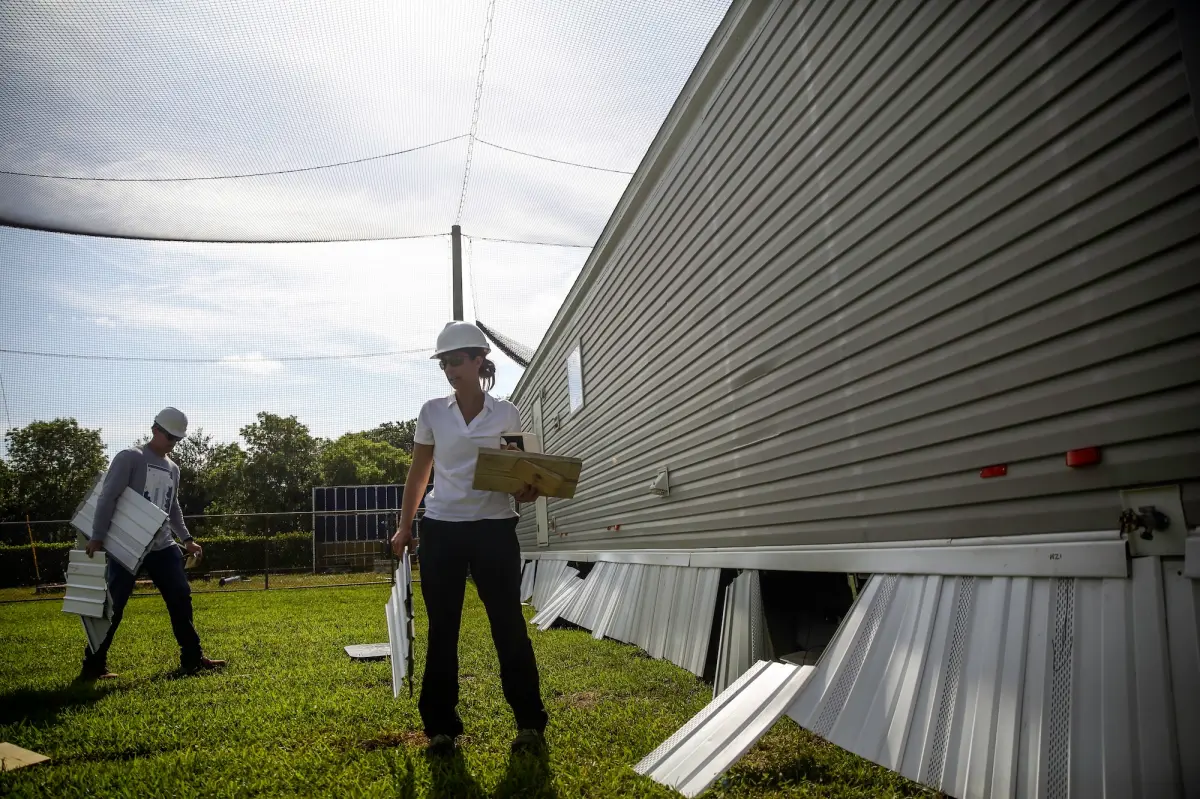
The vinyl skirting flutters. Siding near the roofline pulls away. Then the 12 massive fans arrayed across the 14-foot-high Wall of Wind accelerate in unison, forcing air across the laboratory at highway speeds. The manufactured home begins to shudder on its supports. A roar fills the testing facility.
The engineers keep cranking up the fans.
Hundreds of pressure sensors dot the structure, but some of what the researchers are learning in this laboratory at Florida International University can be seen with the naked eye. As the wind pushes against the walls and over the roof, a window blows out. The house strains against the steel straps and anchors holding it down. They begin to snap.
The last three break in unison. The entire structure pitches back, then overturns.
That i... Read more