Rewriting the Climate Story: 10 years of solutions
Solutions aren’t going anywhere. This year, we’re elevating them in more places than ever.
Sure, the outlook for climate solutions has clouded a bit recently. But rest assured, solutions aren’t going anywhere, in the wider world or at Grist.
For 10 years, Grist’s list has highlighted people from across the country who are working on solutions you likely weren’t aware of — people who are quietly changing our future. We’ve profiled 500 “Fixers” doing unusual and interesting work, fighting on behalf of their communities, inventing new ways of doing things, and showcasing the diverse and creative ways of addressing the climate crisis.
This year, as climate action faces stronger headwinds than ever, we’re checking back in with those leaders to see what they’re working on now, what challenges they’ve encountered, and what’s still giving them hope. We’ll explore those questions in Q&As on Grist and social media, and host Fixers in events throughout the year, from San Francisco to Boston and online. Stay tuned here to join us live, virtually or in person, and to find inspiration to keep your own hope alive.
Melanie Allen
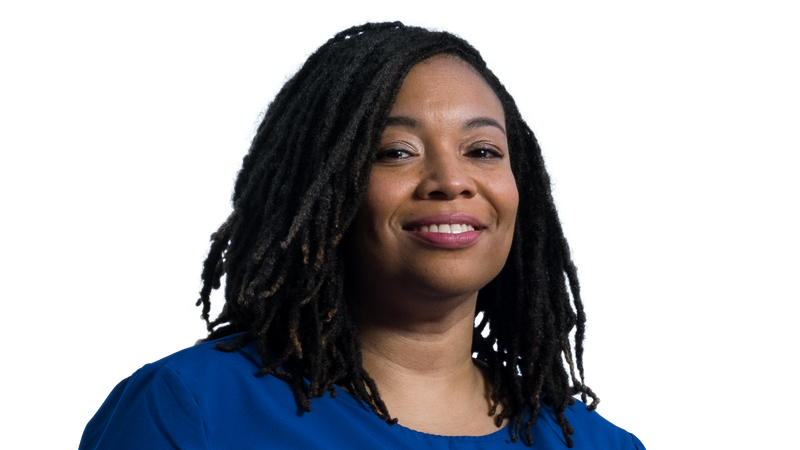
Melanie Allen is CEO of the Hive Fund for Climate and Gender Justice. The Hive Fund supports groups working to accelerate the clean energy transition across the South — in ways that center justice, redistribute power, and create healthier, safer, and more prosperous communities.
What originally led you to work on climate solutions?
Like many people in this movement, I came to environmental justice through the lens of public health. As a young person, I got really sick and was diagnosed with a chronic illness. That eventually led me into advocacy around making sure all people could have access to health care.
Over time, it became clear that many of these challenges weren’t just about health care access. They were shaped by environmental conditions like air pollution, water quality, and housing. That realization fundamentally shifted how I understood the work. I began to see environmental issues as deeply connected not only to public health, but also to economic justice and the broader conditions that allow communities to thrive, and that holistic lens has stayed with me ever since.
How have you seen things change over the past 5 to 10 years?
The last decade has shown that, when the conditions are right, even institutions many thought were immutable can change. We saw this during the early days of COVID, when funders streamlined processes to move money faster, and again in the summer of 2020, when many introduced practices centered on racial justice.
But it shouldn’t take a crisis to move organizations to operate in ways that are more equitable and work better for all of us. And the rollback of much of that progress is a reminder that shifts driven by external pressure alone rarely hold. For change to endure, it has to go deeper — not just at the level of institutional practices, but into an organization’s values and how it understands its mission.
What has also become clear is that no matter how conditions shift, frontline and grassroots groups find ways to hold the line. At the end of the day, this work is about things most people want: lower energy bills, cleaner air and water, and communities that can truly thrive.
What challenges (foreseeable and unforeseen) have you encountered in your work?
One of the most persistent challenges in this work is a mismatch between where the need and opportunity are greatest, and where resources actually flow. We’ve seen this play out in the South for decades. Southern states account for nearly 40 percent of the nation’s climate pollution, yet groups in this region receive only less than a quarter of U.S. regional climate funding.
This gap reflects longstanding assumptions in philanthropy about where change is possible and whose leadership is worth investing in. But Southern groups have shown that when they’re well resourced, they can and do win. In the past year alone, we’ve seen Hive Fund grantee partners stop polluting projects, secure major public and municipal investments in clean energy, and build coalitions that cut across partisan divides.
Yet climate philanthropy continues to underinvest in the region. If funders can close this gap, it’s one of the most powerful levers we have to slow pollution, accelerate clean energy, and build the people power needed for long-term climate progress.
What solutions excite you, or what gives you the most hope within your current field?
What’s most exciting to me right now is seeing communities get creative about meeting the need for affordable, reliable, and scalable clean energy. Supporting communities to be the architects and builders of new possibilities and new futures is something we’ve been really intentional about at Hive Fund.
Communities most impacted by climate and environmental injustice have long been forced to spend limited resources fighting harm and resisting injustice. That work is essential and will continue, but what’s often missing is support for people to not only fight, but also to imagine and create what comes next.
(This interview was conducted over email and lightly edited for clarity and length.)
Benji Backer

Benji Backer is the founder and CEO of Nature Is Nonpartisan, a nonprofit dedicated to protecting public lands and pursuing environmental action across party lines. The organization emphasizes natural climate solutions, aiming to build a movement that makes it easy and fun to take action for the protection of nature.
What originally led you to work in the climate and environmental movement?
I grew up in Wisconsin, where snowy winters have become increasingly rare, invasive species have become a major issue, wildlife populations are out of balance, and ecosystems (like our prairies and the Mississippi River) have become significantly damaged. From childhood until today, I’ve watched the environment worsen in front of my eyes. Additionally, I’m an avid hiker, camper, and skier, so fighting for these places means a lot to me. As someone who has a background in politics, I thought this issue was the best way to bring Americans together again. Talking one-on-one with people across the spectrum offers great hope, as there is far more alignment than people realize.
How have you seen things change over the past 5 to 10 years?
The issue has become more polarizing than I’ve ever seen it. People feel really divided on this issue, believing it is more partisan than ever before, and understandably so. But in the hearts of most Americans, they actually largely want the same things when it comes to environmental protection, which makes this work really frustrating yet also hopeful.
As environmental advocates, there’s just so much outside our control. Between the mass media’s incentive to divide us, the ever-changing social media algorithms, and worsening global and national events (wars, the economy, etc.), focus on the environment has decreased for nearly every voter, making it difficult to rally and reach people. Additionally, the loudest voices in the country are increasingly the most hateful, which makes it hard to create a narrative.
What’s your best piece of advice for staying motivated and making a difference?
“This too shall pass.” Everything we’re seeing right now is temporary, and we need to build for when the moment is right for us again. Outside of social media and the political landscape, when I talk to everyday people from all walks of life, I’m reminded that the army of Americans who stand together on this still exists, and that we can — and will — absolutely win again. Giving up is what they want us to do. Being divided is what they want us to be. And we must be better than that. The world needs it.
What solutions excite you, or what gives you the most hope within your current field?
We’re launching entertaining, informative content like “The Firepit,” which is our YouTube show where two unlikely allies who are well-known and respected in their fields sit over a campfire to talk about environmental issues and the world at large. We want to educate and activate Americans in a way that makes environmental action engaging, uplifting, and impactful.
I think the most immediate opportunity is rallying people around nature and conservation — natural climate solutions — which is exciting because that’s what most people’s connection to climate and the environment is. That’s what people want to fight for. Nature isn’t just the grandiose mountains out West or a lavish beach vacation — it’s the river in your town, the trees in your neighborhood, the air we breathe, and the water we drink. It’s personal to everyone, and it’s worth fighting for every time.
(This interview was conducted over email and lightly edited for clarity and length.)
Gaurab Basu
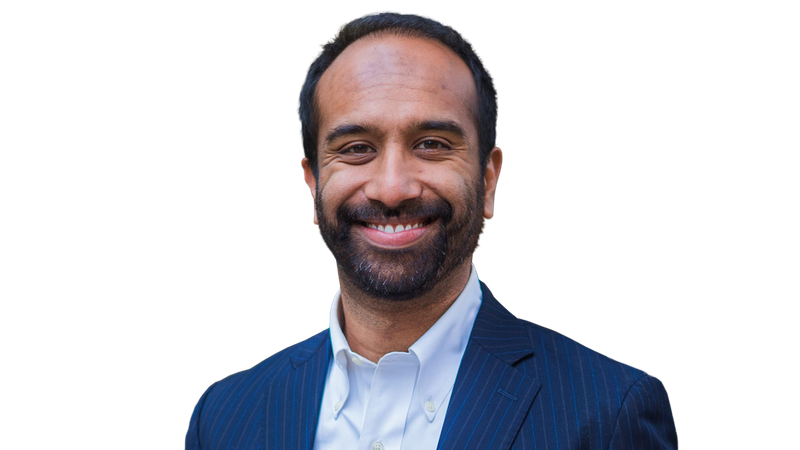
Gaurab Basu is a primary care physician and an assistant professor at Brigham and Women’s Hospital, Harvard Medical School, and the Harvard T.H. Chan School of Public Health. He is a leader in integrating climate education into medical curriculum, and studies the health impacts of climate change and the health benefits of climate solutions, in the U.S. and overseas.
What originally led you to work on climate solutions?
The U.N. IPCC report in 2018 was a catalytic moment for me. I had been spending my career studying global health inequity around the world, and how social systems in the U.S. impacted health and disease. This report made it clear that climate change was at the heart of everything I cared about in my professional and personal life. It fundamentally changed me, my understanding of the world, and my sense of responsibility. From that time on, I worked to incorporate climate solutions into all facets of my work.
How have you seen climate action change over the past five to 10 years?
We created an unprecedented movement for climate action in recent years. I’ve never seen so many people passionate about protecting our planet — and anchoring in our responsibility to protect people’s health and the vitality of future generations. We’ve made a lot of progress in explaining to people that climate change is a health issue.
At the same time, we have seen an unprecedented rejection and destruction of science and an extraordinary regression on the progress we were making. So much of what I have taken for granted — funding for science, medicine, and international aid — it’s made me appreciate how extraordinary the progress and gains we have made through these funding streams have truly been. I have no illusions of the challenges ahead of us, but I believe deeply that we can catalyze a new era in which we once again fund science, create durable policy, and take pride in protecting the planet and people. So many people are putting their heads down and pushing forward, in spite of the challenges.
What’s your best advice for staying motivated and making a difference?
One of the projects I am working on right now that I care most about is in the Indian Sundarbans, a region that has beautiful ecology, including being a part of the largest continuous mangrove forests in the world. But it’s extremely poor, and being hit harder and harder by cyclones like Cyclone Amphan. They are clear-eyed about the tremendous challenges that face them — they know their home is changing, that floods are impacting their farmlands and threatening distressed migration and impacting health, education, nutrition, and gender equity. But they remain a vibrant, courageous community, ready to face the challenges with determination. I want to channel that clarity of purpose and courage in my own work, dig in, and continue to try my very best to be of service to the world for the rest of my life.
Who or what inspires you and gives you hope?
I see the ways that solar and batteries are profoundly decreasing emissions in California. I’ve been following Bill McKibben’s message of just how transformative solar has become in the clean energy transition. I’m also watching Pakistan exponentially increase solar on its grid. So many developing countries are switching to EVs faster than we ever could have imagined.
I’m inspired by organizations like the Environmental League of Massachusetts, where I am on the board. It’s a state organization that is fighting the headwinds from the pullback of federal policy, but just continues to push forward.
There are going to be times that are very, very hard, and we are in one of them. And we have to keep going with passion, dogged determination, and belief that we can make the impossible possible.
(This interview was conducted over email and lightly edited for clarity and length.)
Jerome Foster II
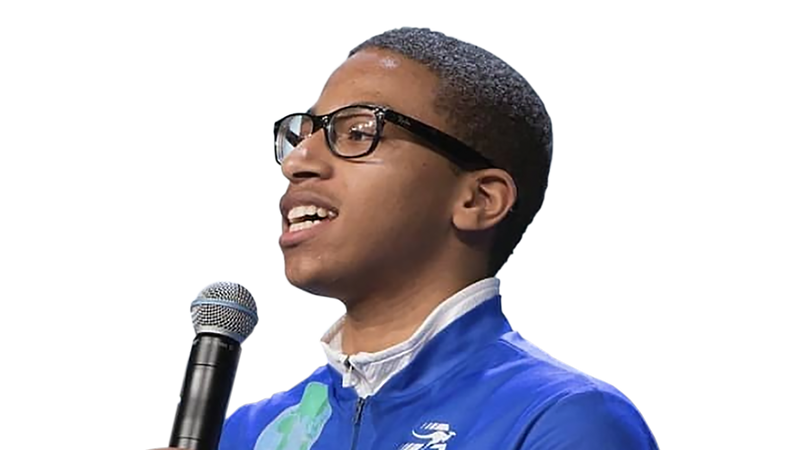
Jerome Foster II is an environmental justice activist, public speaker, and consultant. In the leadup to the 2020 election, he founded OneMillionOfUs to mobilize young voters — and at 18, he became the youngest person ever to advise the White House when he joined the Biden administration’s Environmental Justice Advisory Council. More recently, he co-founded and co-leads an art and civic engagement organization called WaicUp.
What originally led you to work on climate solutions and advocacy?
When I was younger, I used to look up at the stars going to bed at my grandma’s house, wondering what was out there. A curiosity about the stars dominated much of my childhood leading me to libraries, where I spent hours reading about astrophysics, learning about galaxies, black holes, and distant planets. The more I understood the vastness of the universe, the more I realized how special Earth is, how unique it is in its ability to support life. But as I continued learning, I also became aware of how fragile our planet is, especially facing the realities of the climate crisis. This knowledge shifted my perspective from exploring space to understanding the urgent need to protect our planet from the environmental challenges we now face.
How have you seen things change over the past 5 to 10 years?
When I began organizing climate strikes, young people were engaged in what was essentially a legitimacy struggle, arguing for a seat at the table of policy deliberation. That argument has been largely won. The creation of the American Climate Corps, which provided over 20,000 paid opportunities in its inaugural year, represents a concrete institutionalization of youth-centered climate action. That is not symbolic. That is infrastructure.
However, I would be doing a disservice to the complexity of this moment if I did not also note what the 2025 Los Angeles wildfires clarified for me: that policy is not merely formulated in federal advisory chambers, it is stress-tested on the ground, in communities experiencing acute climate impacts in real time. That realization fundamentally reoriented my work from federal advisory to frontline engagement.
What’s your best piece of advice for staying motivated and making a difference?
Proximity. The farther one is from the human consequences of the crisis, the more abstract, and therefore the more negotiable, the work becomes. I would counsel any leader or policymaker to resist the comfortable distance of the institutional vantage point and to remain, as John Lewis described it, in “good trouble,” close to the communities most affected, accountable to their experience and needed investment.
I would also offer a more structural observation: Social change does not follow a linear trajectory visible in real time. The mechanisms of transformation operate beneath the surface, accumulating incrementally, often without immediate evidence of progress. Lewis himself did not live to see the full scope of what his work made possible. The appropriate frame is not short-term measurability, but long-term commitment.
The university tour I am conducting ahead of the 2026 midterms reflects this philosophy. Young voters are not disengaged — they are, in many cases, waiting to be taken seriously as political agents. The work of motivation is, in large part, the work of recognition and responsiveness.
Who or what inspires you, in your own work and beyond?
John Lewis remains the most formative intellectual and moral influence on my approach to advocacy. His core premise — that one undertakes principled action regardless of whether one will witness its fruits — is not merely inspirational rhetoric. It is a functional theory of social change, to plant seeds for a tree we may never sit in the shade of.
Beyond that, I draw considerable energy from the young people I encounter on this university tour. They are analytically rigorous, morally serious, and politically ready in ways that are frequently underestimated by institutional actors. I do not approach these engagements as a lecturer dispensing knowledge, I approach them as a participant in a political formation that is still taking shape. The coalition necessary to not only advise the government, but eventually to lead it, is being assembled in those auditoriums. That is not a metaphor. That is an organizational reality I find genuinely galvanizing.
(This interview was conducted over email and lightly edited for clarity and length.)
Leo Goldsmith

Leo Goldsmith is a doctoral candidate at the Yale School of the Environment. His research is focused on climate health equity, exploring the intersections of race and ethnicity, LGBTQIA+ status, and disability. They contributed to the most recent National Climate Assessment in 2023, marking the first time the report included specific mention of LGBTQ+ populations.
What originally led you to work in the field of climate solutions and research?
I started out my academic career in environmental justice research and practice. As a queer and transgender scholar, I realized that sexual orientation and gender identity were missing from classes I took and research articles I read during graduate school. Sexual and gender minorities experience systemic discrimination, political exclusion, and targeting — similar to populations that were already known to be disproportionately impacted by climate change.
I had great mentors who encouraged and supported me in exploring these emerging ideas. Now, I am pivoting to intersectional research based on feedback from community events, fellow colleagues, and my own growing understanding of the gaps in this field. In addition, there is much advocacy, policy change, and research that needs to be done and I want to be among the many academics and advocates who are actively fighting for a better world.
What challenges (foreseeable and unforeseen) have you encountered in your work?
I often have to piece together different methodologies, methods, and frameworks in order to analyze the hypotheses I am most interested in. In addition, data availability is a huge challenge. Many datasets do not collect disaggregated sexual orientation, gender identity, or disability data and especially not related to climate data. Although I have met many supportive people, the current state of funding for any research focusing on marginalized communities, especially related to climate change and public health, is quite limited. I am currently using publicly available federal data for the research questions I am addressing in my dissertation, but I worry about the ability to continue this work in the future.
What’s your best piece of advice for staying motivated and making a difference?
My best piece of advice is to stay creative and connect with others! For the longest time, I felt that there was so much to do and so little time and therefore I could not do anything but work. I now realize that taking the time to do the hobbies that bring you joy and finding ways to be social allows one to recharge and give space to reflect on why you are doing the work in the first place. I have been learning how to play the piano which has been a dream of mine since I was a kid. I also like to draw, hike, and explore new hobbies.
What solutions excite you, or what gives you the most hope within your current field?
The solutions that excite me the most are the ones where people can come together from civil society, academia, NGOs, and government to identify and ideate for a better future.
I have seen policy change due to the research published in the past five years. For example, a policy paper called “Amplified Harm: LGBTQ+ Disaster Displacement” led to the introduction and passing of California Senate Bill 990, which calls for the inclusion of LGBTQ+ people in the state emergency plan and implementation.
Since the passing of SB 990, Pomona Valley Pride and Equality California organized three implementation workshops alongside California’s Office of Emergency Services’ Listos campaign. These workshops focused on identifying the best practices that state and local governments can use when addressing the needs of LGBTQ+ communities during disasters. These moments are the ones that push these conversations forward, change the narrative from “victim” to agents of change, and identify community solutions to better address disproportionate impacts on marginalized communities.
(This interview was conducted over email and lightly edited for clarity and length.)
Emily Graslie
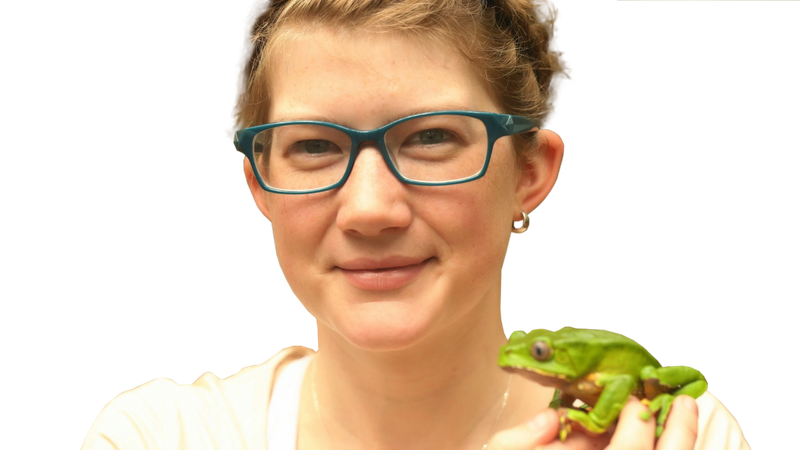
Emily Graslie is an independent science communicator and digital media producer. Her Youtube show, The Brain Scoop, breaks down science topics for hundreds of thousands of viewers. She has worked with a number of organizations (recently including the Great Lakes chapter of the Audubon society and the state tourism board of Montana) to make engaging videos about their research, education, and conservation efforts.
What originally led you to work in the climate space?
As a non-scientist myself (I studied art and history in college), I never really felt like there was a place for me in the world of science or conservation. During the end of college I got involved with the campus natural history museum with the goal of creating artwork about the collections, but soon realized there was a major gap when it came to museums and scientists sharing their work broadly. That was a gap I was uniquely able to fill, as someone interested in being an informational conduit for others.
How have you seen things change over the past 5 to 10 years?
Well, climate-wise, it’s become incredibly apparent that our world is undergoing unprecedented and likely irreversible changes. As I’ve learned more about deep time and the many phases our planet has gone through over the last 4.56+ billion years, it’s astonishing to realize the human-influenced environmental catastrophes we’re experiencing are happening on a scale unlike anything Earth has ever before endured. So, that’s terrifying.
But on the bright side, there are also way more people involved in climate and environmental sciences, and awareness of these issues is way more pervasive than it was 10+ years ago when I started in the YouTube / digital media space. Social media gets a lot of (warranted) flack for all of its ills and detriments, but these platforms have established and facilitated incredible connections around the world. Creating and participating in online spaces is a powerful way to fight overwhelming feelings of isolation and hopelessness when it comes to facing an oftentimes daunting future.
What challenges (foreseeable and unforeseen) have you encountered in your work?
The stakes feel much higher today than they were when I started my career during the starry-eyed Obama era. I saw a meme about how we thought becoming science educators was going to be similar to Bill Nye conducting whimsical experiments — not convincing people that the world isn’t flat, it is older than 6,000 years, and climate change is real. Add on the prevalence of harassment that women content creators face, and there’s a real weariness that has culminated over the years and resulted in various stages of burnout. And yet … Nearly 15 years later, I’m still in the field, and still feeling as strongly and passionately about this work as ever.
What’s your best piece of advice for staying motivated and making a difference?
Find like-minded people and communities that leave you feeling inspired, not tired. Working in the climate / environment space can be emotionally draining, so it’s imperative to surround yourself with those who share your passion and can support you fundamentally as a person. And get a hobby completely outside of your profession. I play violin in a professional symphony orchestra outside of Chicago. It’s glorious to have a space a few hours every week where the focus is on creating something beautiful with a group of incredibly talented musicians.
(This interview was conducted over email and lightly edited for clarity and length.)
Roishetta Ozane

Roishetta Ozane is the founder and director of the Vessel Project of Louisiana, a grassroots mutual aid and environmental justice organization. She is also the co-director of the Gulf South Fossil Finance Hub. Her work focuses on championing the rights of Black, Indigenous, and other communities of color “in advocating for clean air, clean water, and sustainable living free from the burdens of fossil fuel development.”
What originally led you to work in the field of climate solutions, and how have you seen the movement shift?
My journey into the climate and justice space started with a deep recognition of the inequities faced by marginalized communities, like mine. I realized that our communities often bear the brunt of environmental degradation, and I felt compelled to fight for our rights and to demand accountability from those in power.
Over the past five years, I’ve seen a significant shift in awareness and activism surrounding climate justice. More people are understanding that climate change isn’t just an environmental issue but a social justice issue that intersects with race, class, and economic inequality. There’s been a growing movement that amplifies the voices of those who are most affected, which is incredibly encouraging.
However, the path hasn’t been without its challenges. We face both foreseeable issues, like pushback from industries resistant to change, and unforeseen ones, such as the complexities of policy changes and navigating funding disparities. It can feel like an uphill battle at times, but it also strengthens our resolve.
What advice do you have for staying motivated to make a difference?
My best piece of advice for staying motivated is to remember why you started — and to find community among fellow advocates. Surround yourself with those who share your vision and passion. It can make all the difference.
What solutions excite you, and what gives you the most hope?
What excites me most are grassroots solutions that empower communities. Initiatives focused on renewable energy, community gardens, and local advocacy are gaining momentum and show real promise for sustainable change. It gives me hope to see communities taking charge of their futures.
Outside of my field, my faith in God keeps me grounded and keeps me going. My children and grandson are why I do this. As a relative of activist Fannie Lou Hamer and growing up watching my grandmother Georgia Sibley be a community organizer herself, I was born into this. I draw inspiration from various movements and organizations that champion equity and justice, like those advocating for social justice and racial equality. I’m also watching trends in sustainable technology and community empowerment that have the potential to bridge gaps and foster collaboration across sectors.
(This interview was conducted over email and lightly edited for clarity and length.)
Nick Tilsen
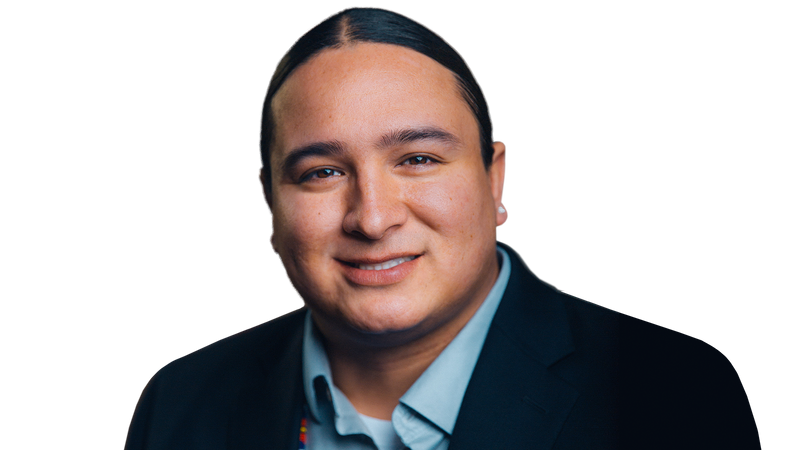
Nick Tilsen is the founder and CEO of NDN Collective, a national, Indigenous-led advocacy organization that “bolsters the ability of Indigenous peoples, communities, and nations to exercise our inherent right to self-determination, while fostering a world that is built on a foundation of justice and equity for all people and Mother Earth.”
What originally led you to work on climate solutions?
I’ve been connected to the climate justice fight since before I was born. My parents met at the 1973 Occupation of Wounded Knee, where Native people were demanding the U.S. government stop violating their own treaties by desecrating our rightful land. Indigenous peoples have been stewarding our land sustainably for centuries, and have been fighting against environmental destruction since the U.S. government slaughtered millions of buffalo as part of their strategy to eradicate us. Our peoples hold a vast amount of traditional ecological knowledge that mainstream climate groups are finally beginning to take seriously.
Our message remains that landback is a necessary solution to the climate crisis, and should be centered in every climate organization’s mission. The more power Indigenous people have over our lands and waterways and can protect them from extractive industries, the better and safer our shared planet is for everyone.
How have you seen climate action change over the past five to 10 years? What challenges have you encountered?
While Indigenous people have been ringing the alarm on climate change for many decades, most people began understanding the urgency and importance of developing alternatives to the extractive economy within the last decade or so, once folks started seeing material impacts to their lives.
From flooding and fires in the colonized kingdom of Hawai‘i, to the disastrous rains in Alaska, wildfires sweeping the plains, smoky orange skies in California, a hurricane devastating Western North Carolina — more and more people are regularly facing climate disaster.
Under the Biden administration we saw the largest ever climate investment in history, a victory which was the result of decades of Black and brown frontline organizers working tirelessly and strategically to make the climate crisis a national priority.
When Trump took office, climate groups, programs, and efforts were totally gutted, with federal funding swiftly pulled out from under them. Many philanthropic organizations have followed suit, tightening their grip around their money rather than releasing it to the frontline organizations fighting to protect all of us. NDN Collective’s budget was rapidly cut in half.
Despite an enormous funding and resourcing gap, we will continue to fight because our great -grandchildren are asking us to. The central problem is colonialism, which manifests itself in countless daily challenges, both ongoing and still emerging. We see colonialism show up in insidious ways, even within climate justice and environmental spaces.
In the last five years alone, hundreds of Indigenous people have been killed for protecting Mother Earth — from forest defender Tortuguita in Atlanta, to Eduardo Mendúa in Ecuador, to Mãe Bernadete in Brazil, and many more. We honor their lives by continuing the work.
What’s your best piece of advice for staying motivated?
It is important to stay grounded in your purpose. We didn’t sign up to do this work because it is easy or popular. We do this work because it is necessary, because it is what the people need and what Mother Earth needs. Sometimes that means our work gets lifted up as a shining example — and other times, that means it gets attacked.
The other piece of advice I would offer is that you must have a strong belief in radical possibility. When doing this work, we need a steadfast vision — if we don’t have a vision of what is possible in the world, then it is really hard to keep fighting for a better one. So you need that vision of what you want the future to look like — and then be audacious enough to go after it.
What solutions excite you, or what gives you the most hope within your field?
Our movement is strong, and we are telling our own stories in our own way. Our youth are learning our traditions and languages, keeping our ceremonies alive, and bringing invaluable insight and energy to movement spaces. Because we maintain and use our spiritual power, we have made impossible things happen.
Indigenous people are building sustainable food systems across Turtle Island — from revitalizing buffalo corridors, to having access to spearfishing in Wisconsin, to rebuilding traditional eel harvesting practices, to running a school in South Dakota centered around our interconnectedness to everything, and more.
We have the solutions. I remain steadfast in my belief that the best days are ahead of us.
(This interview was conducted over email and lightly edited for clarity and length.)
Reverse Course!
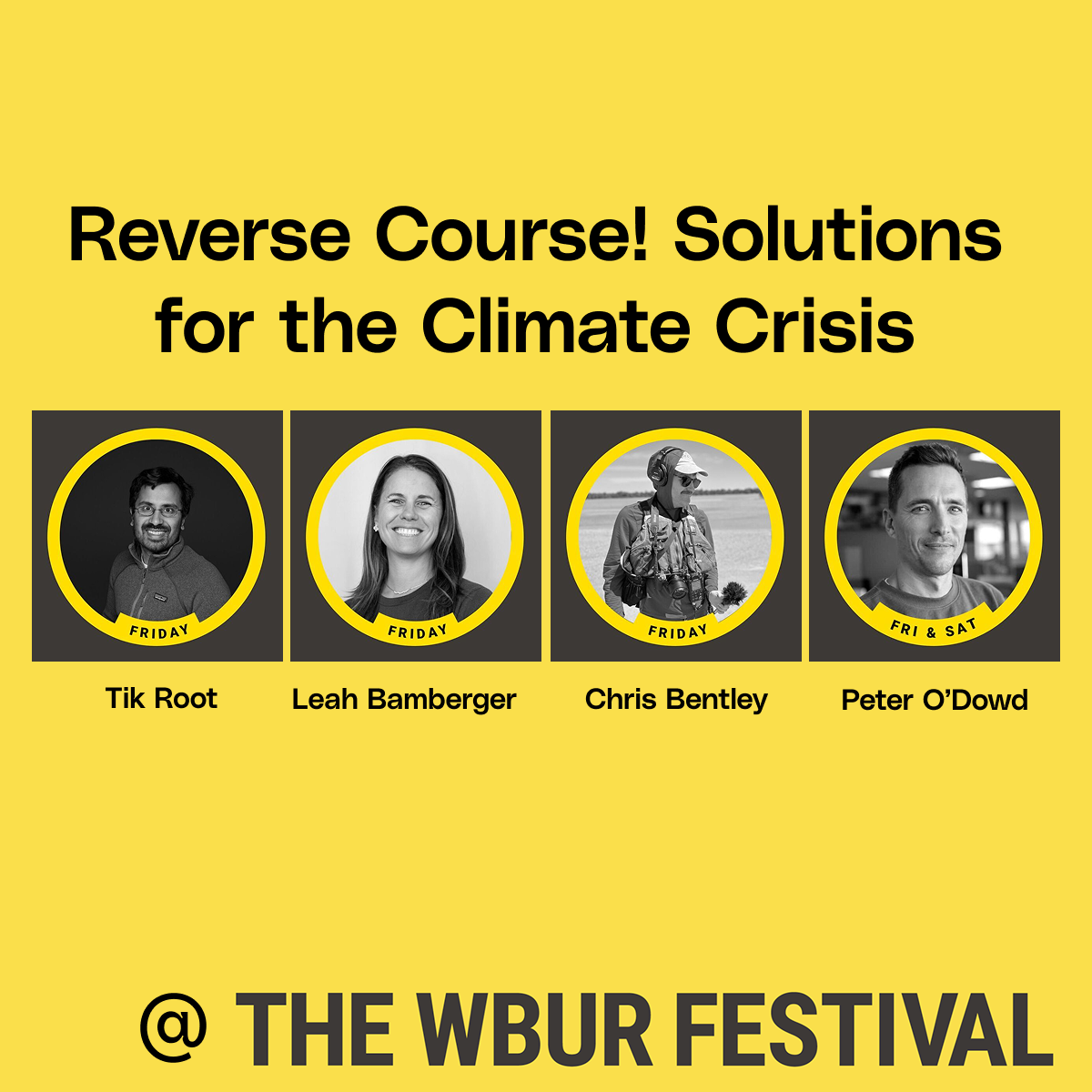
Join Grist and WBUR’s Here & Now at the WBUR Festival in Boston to look at innovative climate solutions and explore how individuals are making a difference in their communities.
A conversation hosted by Here & Now’s host and correspondent will feature Grist senior staff writer Tik Root, who covers the economics of climate change, and Leah Bamberger, a global sustainability leader currently serving as senior sustainability manager at Textron. Leah’s career includes launching Northeastern University’s first sustainability office and decarbonization strategy, and spearheading the City of Providence’s nationally recognized Climate Justice Plan.
Featuring:
- Tik Root — Senior staff writer, Grist
- Leah Bamberger — Senior sustainability manager, Trexton
- Chris Bentley — Podcast host, producer, reporter, Here & Now, WBUR
- Peter O’Dowd — Host-correspondent, Here & Now, WBUR
Details:
🗓️ Friday May 29, 2026 4:15 p.m. – 5:00 p.m. EDT
📍WBUR CitySpace, 890 Commonwealth Ave., Boston, MA
🎟️ This event is part of the WBUR Festival
Sponsored by Woods Hole Oceanographic Institution. Presented by WBUR Festival in partnership with Grist.
Amy Bowers Cordalis: “I got to blow up a dam”
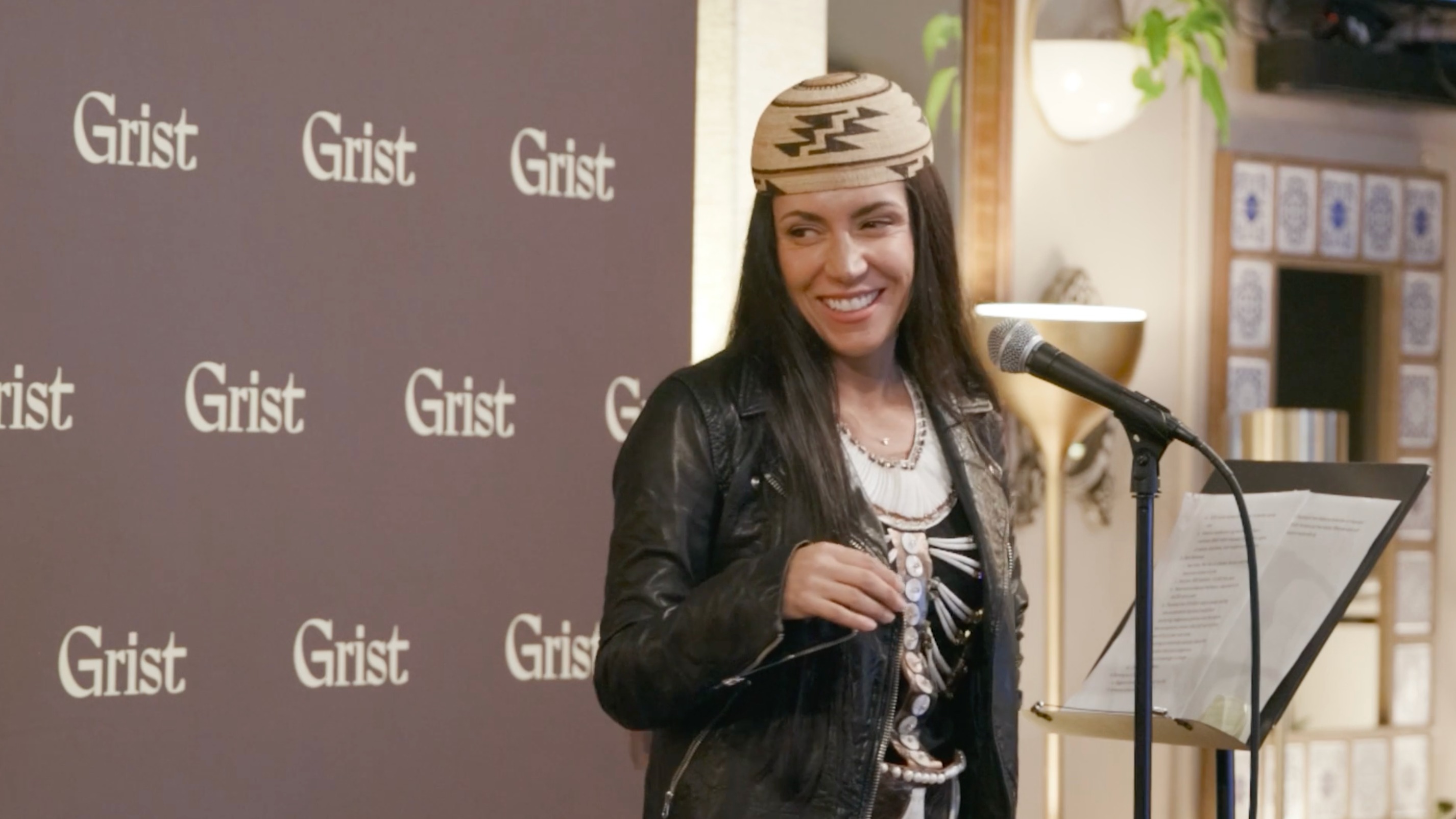
Amy Bowers Cordalis is a Yurok tribal member and attorney. She’s also a fisherwoman, civil rights activist, and conservationist. She is the co-founder of the Indigenous conservation group Ridges to Riffles, and author of the memoir, The Water Remembers. And she served as general counsel for the Yurok tribe, representing them through the Klamath Dam removal, which is what she joined Grist’s recent San Francisco event to discuss.
At Turning the Tide: Stories of Climate Solutions, a live Grist event held during San Francisco Climate Week, speakers including Cordalis shared their real life experiences of turning points that drove climate impact.
For Cordalis, one of those moments was quite explosive: “I got to blow up a dam!” But the path to the largest dam removal and salmon restoration project in U.S. history was also pragmatic — “at the end of the day, dam removal was profitable” — and deeply emotional. Remembering the day the Iron Gate Dam came down, Cordalis read from her memoir, “I stood arm in arm with Ashley, my sister, in tears. Our family had waited generations to reconnect this river.”
She sees the incredible achievement as evidence of a key principle: “There’s a way to do business, but equally value the rights of nature and Indigenous peoples. We don’t have to continue to accept the destruction of the environment or our human rights for progress. We just don’t.”
Watch the full video of the event, including Cordalis’ story, or read the transcript of her story (lightly edited for clarity) below.
Amy Bowers Cordalis: I’m really excited tonight to talk about the world’s largest salmon restoration project in history in your backyard. I was asked to talk about some moments that I knew my work had made a difference. And so I’m gonna highlight three moments: One is administrative, one is historic, and one is quite explosive.
And I want to acknowledge that these moments are not just mine. They are shared moments with the toughest people I know, which are the Indigenous peoples of the Klamath Basins and the tribal leaders there. All the moments that I’ll share, all the work that we have done has been led by these powerful people who went into places that they felt like they weren’t allowed for a long time and they didn’t have money to go. But they had a big heart, and we as Indigenous peoples had a duty to protect the world, to be stewards, and try to restore balance, and that’s what led us here.
So without further ado, I will start with my first moment, and I’m gonna read from my book, and this is really — this was one of the most powerful moments of my life.
It was 2024, and we were gathered at the base of Iron Gate Dam, which is the lowest dam on the river. We were gathered there to watch the river reconnect:
Then it happened. An excavator scooped up a large pile of red rock, lifted its arm, dumped the load, and then repeated. Then the sparkle of water appeared where only red rock had been. It was so small, it looked like a lone star above a night sky over a big city. It was barely visible, but the crowd knew it was water and gasped. Here it comes, hollered Karuk tribal member, Leif Hillman, who had been the leader of the Klamath Dam removal grassroots campaign and a former vice chair of the Karuk Nation. The excavator took a few more scoops, lowering the level of Iron Gate Dam and widening the water’s path. Gradually, the water moved further downriver over the dam. The water remembered how to flow and where to go. It slowly saturated the remaining part of the dam, heading toward the downriver channel. Finally, downriver and upriver reconnected through a brilliant stream of prosperity when the water met at the base of Iron Gate Dam for the first time in 100 years. The river was free.
The crowd roared and cheered. I stood arm in arm with Ashley, my sister, in tears. Our family had waited generations to reconnect this river. We were the lucky generation to watch it happen.
Molli Myers, Karuk tribal member and grassroots leader, whom I co-founded R2R with, hugged her colleagues in gratitude. Brian Johnson, Trout Unlimited California director and KRC board president, who had fought 20 years for dam removal, cried. Later that day, past Yurok leaders, including Auntie Sue and her husband Uncle Leonard, and my boys, came to witness. Looking down at the former Iron Gate Dam site, Uncle declared: (He has this accent too) “It was like the goddamn dams were never even there.” (That’s how he talks.)
Indeed, the dams were hardly there when considered in the time scale of the river’s life. I woke up that morning to a dammed river and fell asleep that night to a river that flowed freely for the first time in 100 years. I slept well. I expect all the dedicated people who worked on Klamath Dam removal for decades rested well too. On September 30, 2024, the Klamath River’s journey toward restoration reached a powerful milestone, the removal of all four dams. More than 441 feet of steel, rock, concrete, clay, and rebar from four different dams was removed. With Iron Gate alone, one million cubic yards of dam removal material was removed in 25,000 truckloads. This material that once blocked the river’s flows was recycled, returned to the earth, or repurposed.
Dam removal was completed on time, within budget, and consistent with the terms of our permits. With their removal, the river began to heal, restoring balance and the life ways of all those dependent upon its vitality.
Three days after Iron Gate Dam was removed, the salmon came home. Three days. The brightest minds of the scientific community for 20 years studied how long it would take the salmon to come home. They said 10 years, 20 years.
Three days. The salmon remembered. So how did we get there? And that leads me to my second moment, my administrative moment.
I co-founded Ridges to Riffles Indigenous Conservation Group to move money and power to better serve the river and the Indigenous peoples and the salmon on the Klamath. My dad has this saying: You can’t keep putting your hand in the mousetrap and expect a different outcome. And I took that as, we can’t keep doing things the same way and expect the different outcome, right?
And so I co-founded Ridges to Riffles so that I could organize in a different way and get a different outcome. That was 2020, and by then we already had a settlement agreement, but things were really on the rocks, and we were able to make an amendment to the settlement agreement that took us to dam removal. The result, historic. A $500 million settlement agreement that equally valued the rights of nature, Indigenous peoples, and business.
At the end of the day, dam removal was profitable. And I think that’s a really important message for us all to know is that there’s a way to do business, but equally value the rights of nature and Indigenous peoples. We don’t have to continue to accept the destruction of the environment or our human rights for progress. We just don’t.
This is the model that the Klamath has shown us, and already we’re working on the Eel River, the Snake River, to do similar types of projects, and I think this is something that could be applied around the globe.
So the settlement agreement was how it all worked. But a year later, the river is fiercer, cleaner, colder, and smells sweeter than I have ever known it to be. It is remarkable. Many people thought that the river wouldn’t heal, but its recovery has been so fast. So the first year, about 7,000 salmon came back and passed the former dam sites. Last year, over 13,000 salmon came back and went further into the 400 miles of spawning habitat that they had been denied.
And I’m really happy to report that just a few weeks ago, baby salmon were spotted out migrating from behind the former dam site. So what that means is that they, and I don’t use this word, they have recolonized. They are back.
Also, fun fact, salmon only go backwards, baby salmon only go backwards on their out migrating trip. So we have spotted salmon going in reverse to the ocean. So a life cycle has started, and we’re really excited about that.
The reservoirs. There were 2,000 acres of reservoirs. And those reservoirs produced methane equivalent to 64,000 cars a year on the road. And what’s interesting is that we didn’t know that. But we teamed up with Patagonia, and a report came out recently that told us all about this. So we can’t look at hydropower as just green. We can’t.
Now that that’s gone, the area where the reservoirs once were, the river drained, it went back into its river bed, and we are restoring the area around the bed of the river. The Yurok tribe is leading these efforts and has planted 20 billion native seeds. It’s remarkable. It’s so beautiful. And with that, plants and animals are coming back, food and medicine that anchor Indigenous cultures into the future. It is awesome.
These new ecosystems have the potential to prevent over 800 metric tons of CO2 a year over time. Also a climate solution.
And then the other cool thing that’s happening is that a lot of this land is now being returned to its original stewards, the Shasta Indian Nation.
So that leads me to my third point, third moment:
5, 4, 3, 2, 1 … Fire in the hole. [EXPLOSION]
I got to blow up a dam. So, dreams come true. What else do you say?
On the Klamath, this historic effort is reminding us of a very important truth: Humans can heal nature. And when we do, it works with us too. So I invite you all to continue this work. It’s not too late. We don’t have to move to outer space.
Turning the Tide
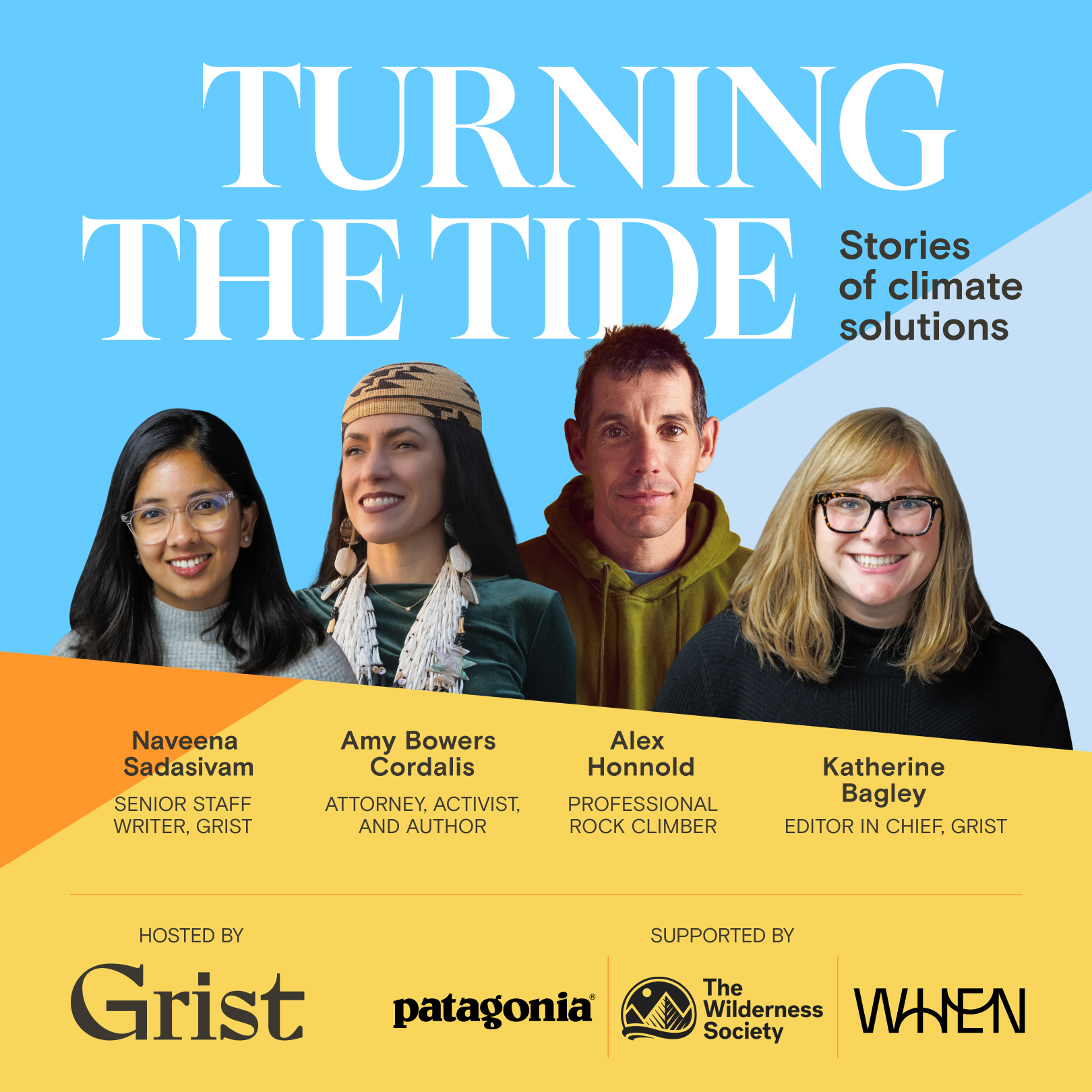
Climate solutions don’t start with policy — they start with people.
They’re sparked by lived experience, shaped by place, and carried forward by voices that turn urgency into action.
At San Francisco climate week, Grist hosted an evening where climate impact steps off the page and into real life. Through powerful storytelling and conversation, hear from leaders who are redefining environmental journalism, advancing justice, and driving bold solutions for our shared future.
Featuring:
- Amy Bowers Cordalis, Yurok attorney, activist, and Executive Director of Ridges to Riffles
- Naveena Sadasivam, Senior Staff Writer, Grist
- Alex Honnold, professional climber, environmental advocate, and founder of the Honnold Foundation, in conversation with Katherine Bagley, Editor-in-Chief, Grist
Explore why lived experience remains one of the most powerful catalysts for climate solutions — and how storytelling can help turn the tide.
Watch the full event here:
Supported by Patagonia, The Wilderness Society, and WHEN Justice.
UN Conference Takes on Climate
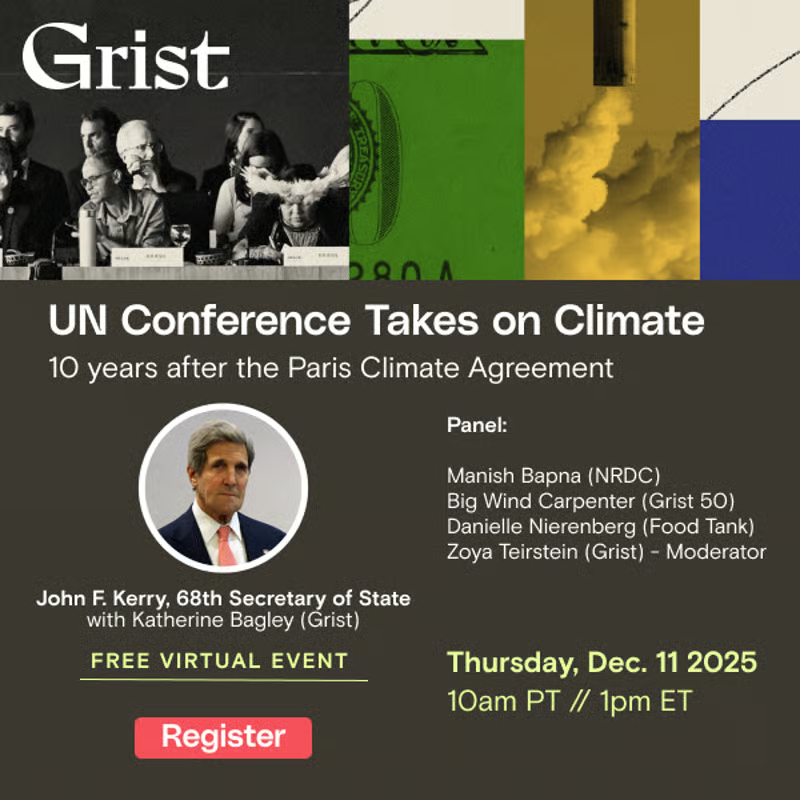
Delegates from around the world gathered at the 30th annual United Nations Conference of the Parties (COP30) in Belém, Brazil to negotiate how the world can help halt climate change, prepare for its coming effects, and how to pay for it. Hear from three climate leaders who attended this global conference and learn about the outcomes of countries negotiating over billions of dollars in climate mitigation (decreasing carbon emissions to avoid global repercussions) and adaptation (building infrastructure and support for the poorest and most vulnerable countries to the effects of climate change).
Plus, a special conversation between John F. Kerry, 68th Secretary of State, and Grist’s editor-in-chief Katherine Bagley exploring what the world has accomplished since 2015, where momentum has stalled, and how nations can strengthen their commitments to meet the urgent demands of our warming planet.
Featuring:
- John F. Kerry, 68th Secretary of State
- Manish Bapna (President & Chief Executive Officer, NRDC)
- Big Wind Carpenter (Tribal Engagement Coordinator, Wyoming Outdoor Council)
- Danielle Nierenberg (President, Food Tank)
- Zoya Teirstein (Senior Staff Writer, Grist)
- Moderated by Katherine Bagley (Editor-in-Chief, Grist)
Watch the full event here:
The Water Remembers
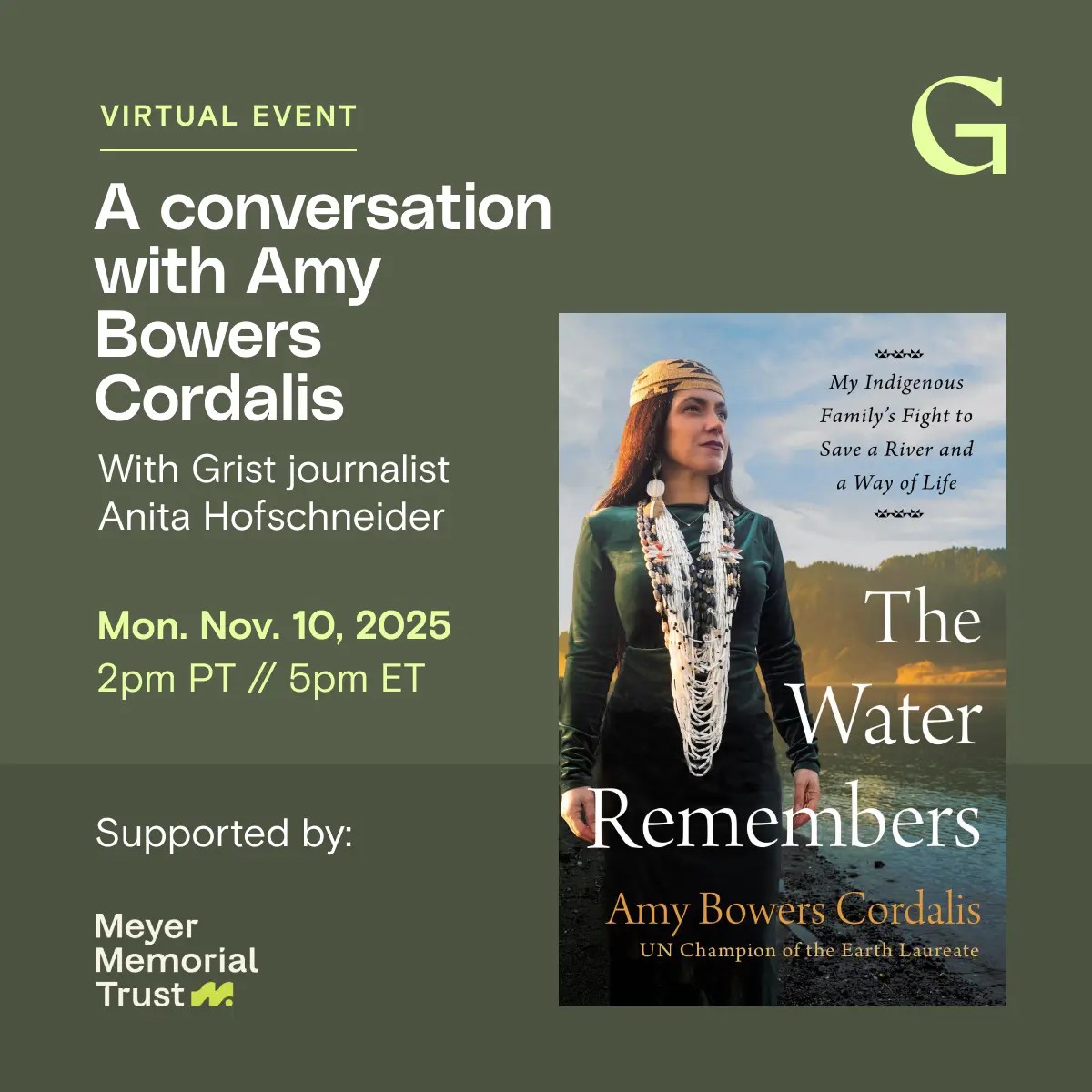
In 2024, the largest dam removal project in U.S. history was completed on the Klamath River—a moment decades in the making, led by Indigenous communities fighting to restore their lands, waters, and way of life. This event marks an environmental victory for the tribal nations along the river that was generations in the making.
Grist Senior Staff Writer Anita Hofschneider hosted Yurok attorney, activist, and author Amy Bowers Cordalis for a conversation that illustrates what the success of the Klamath dam removal campaign can teach us about how to achieve Indigenous environmental justice. The conversation will explore the significance of the Klamath dam removal for Indigenous peoples and the climate, building upon Grist’s in-depth series, How the Klamath Dams Came Down and Bowers Cordalis’s memoir, The Water Remembers: My Indigenous Family’s Fight to Save a River and a Way of Life.
Watch the full event (in two parts) here:
Purchase a copy of The Water Remembers: My Indigenous Family’s Fight to Save a River and a Way of Life from Native-owned Birchbark Books here.
The event was supported by Meyer Memorial Trust.
Climate Changemakers
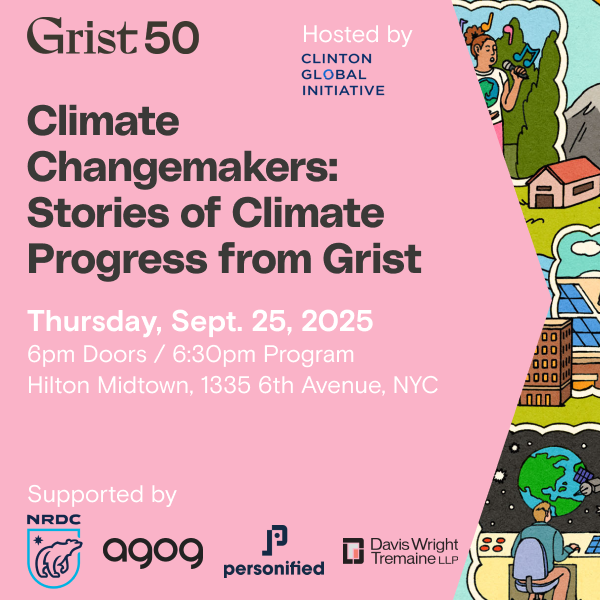
Experience powerful, personal stories from Fixers past and present, as well as Grist journalists who report on the people, policies, and ideas driving climate progress. Through these stories, this event spotlighted the real-world ways that bold ideas can turn into impact.
Speakers also reflected on Grist’s 25-year journey as the nation’s only independent newsroom reporting solely on climate change, and celebrated the people and ideas driving meaningful change in climate solutions.
Featured speakers:
- Katie Meyers, Appalachia Regional Reporter, Grist
- Nathaniel Smith, Founder and Chief Equity Officer, Partnership for Southern Equity
- Chip Giller, Cofounder and Executive Director, Agog
- Vienna Teng, Songwriter and Climate Organizer
Watch the full event here:
This event was presented in partnership with Back Pocket Media and supported by NRDC, Agog, Personified Tech, and Davis Wright Tremaine, and Clinton Global Initiative.
Join Grist’s flagship storytelling event and a day of climate solutions in New York.
Ayana Elizabeth Johnson: “Working on climate solutions should be delightful”
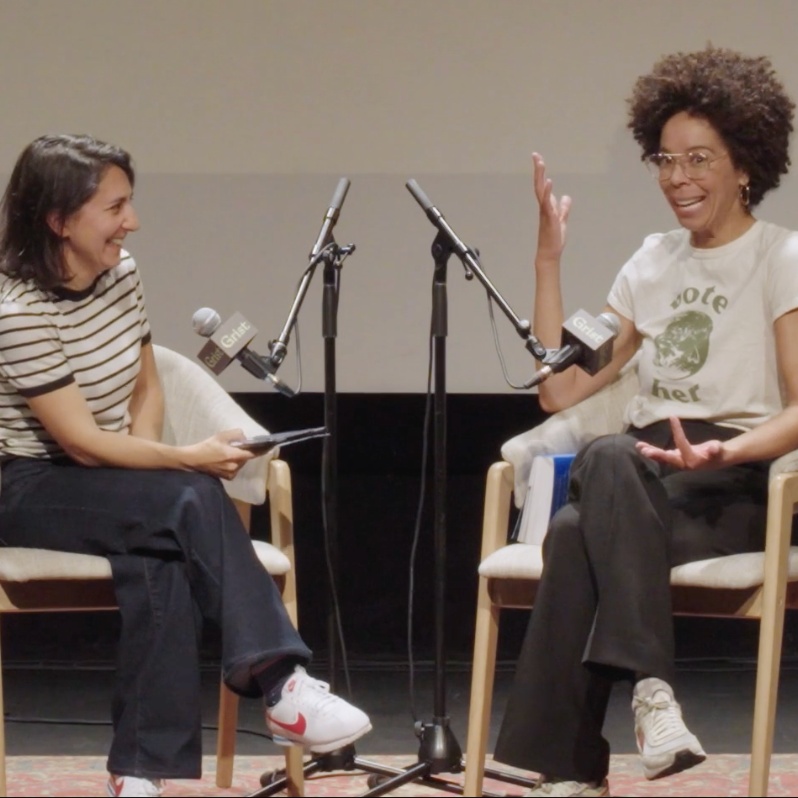
Climate change is terrible. But working on the solutions could be delightful.
At Climate Week NYC, Grist hosted a live Science Friday taping with Ayana Elizabeth Johnson. In this clip, with host Flora Lichtman, Ayana talks about why we need to do a better job explaining that climate solutions can be fun and gratifying, and pitches a new tagline for climate work.
This event was supported by NRDC, The Wilderness Society, Alnoba Lewis Family Foundation, and University of Washington College of the Environment.
Watch a recording of the full event below.
Steph Speirs: “The durable solution is to not be alone”
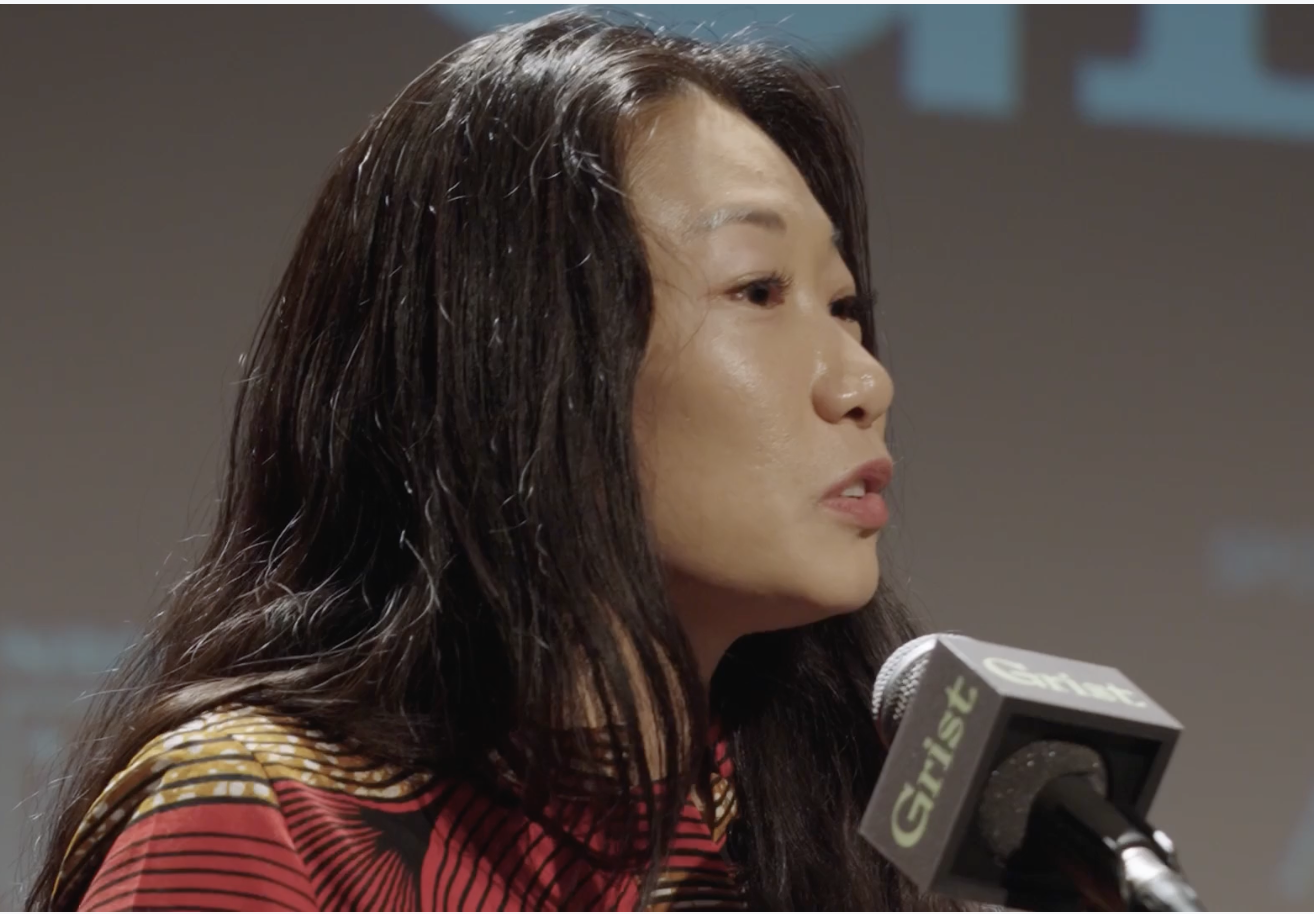
At Climate Week NYC, Grist’s event featured live storytelling from Fixers, sharing the lessons they’ve learned about what it takes to keep going in climate work.
Steph Speirs talked about an encounter with an agitated shark, and the surprising parallels the scary encounter shares with her experiences as a female founder.
“When it comes to how to swim with aggressive sharks,” she said, “sure, acting like a predator is a temporary solution, but the durable solution is to not be alone. When it comes to the very real threats in the world right now, community has always been and will always be the answer.”
Watch a recording of the full event below.
This event was supported by NRDC, The Wilderness Society, Alnoba Lewis Family Foundation, and University of Washington College of the Environment.
Jerome Foster II: “A tree doesn’t choose between its canopy and its roots.”
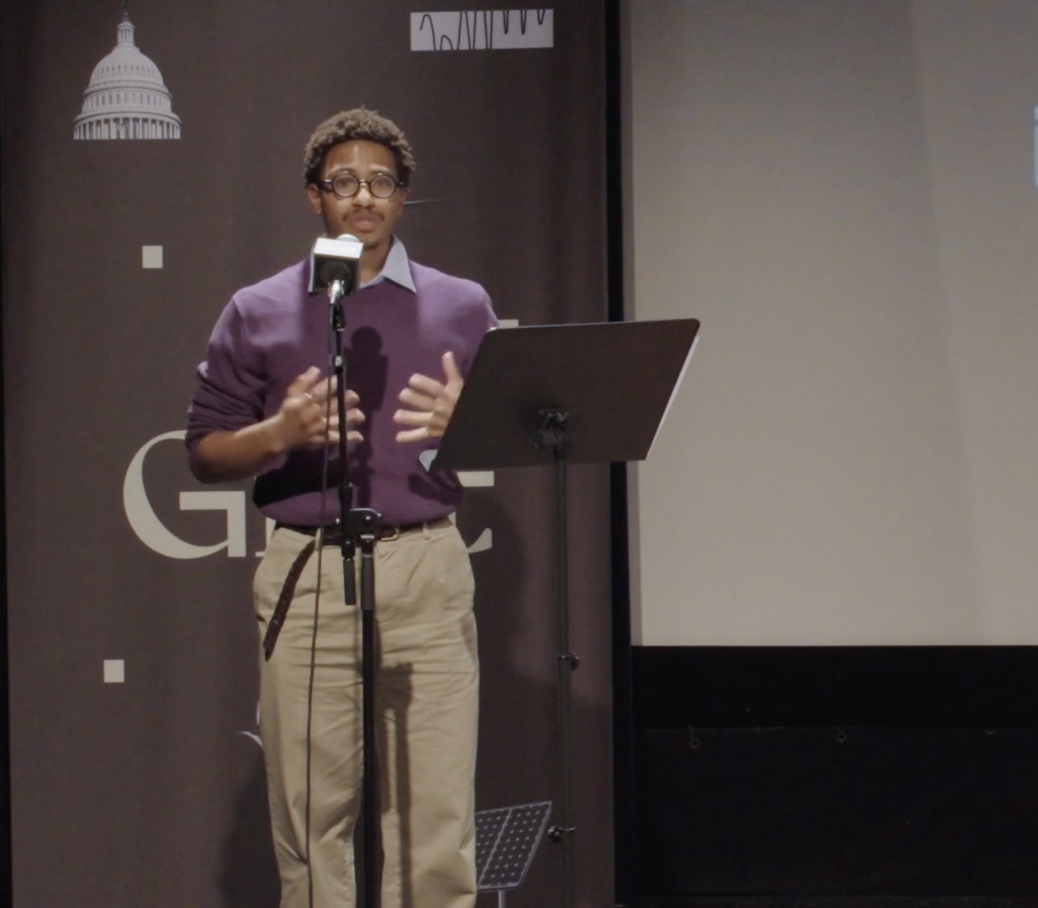
At Climate Week NYC, Grist’s event featured live storytelling from Fixers, sharing the lessons they’ve learned about what it takes to keep going in climate work.
Jerome Foster II talked about the difficult decision he faced while serving as an advisor to President Biden when the administration approved the Willow oil drilling project in Alaska. As a longtime organizer of weekly climate strikes, Foster had to choose whether to join the protesters outside the White House, knowing that doing so might threaten his position inside the White House.
He recounts weighing that decision. Ultimately, he said, he did choose to join the protest and rather than undermine his authority with his colleagues, it strengthened his voice. “The seat and the streets were never two stories. A tree doesn’t choose between its canopy and its roots.”
Watch a recording of the full event below.
This event was supported by NRDC, The Wilderness Society, Alnoba Lewis Family Foundation, and University of Washington College of the Environment.
Jessie Bluedorn: “Be willing to tell your personal story even when it feels vulnerable”
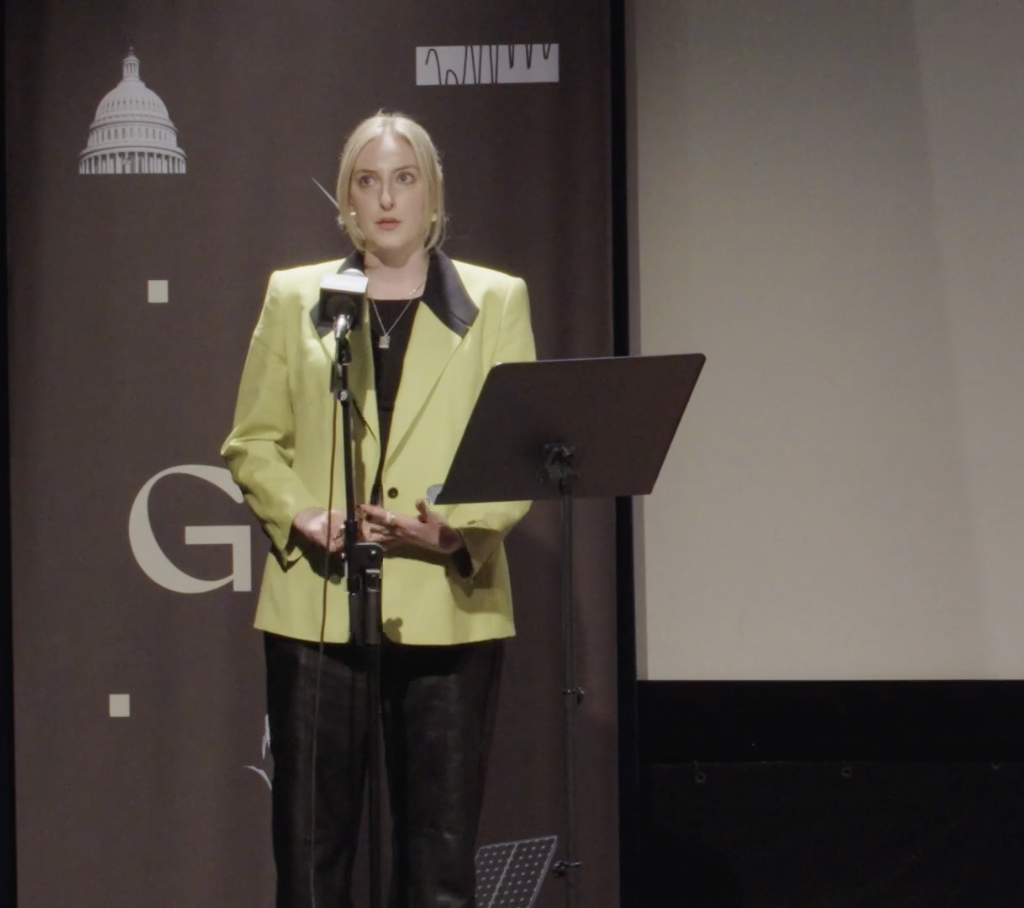
At Climate Week NYC, Grist’s event featured live storytelling from Fixers, sharing the lessons they’ve learned about what it takes to keep going in climate work.
Jessie Bluedorn described the moment she found out she was inheriting a trust fund. “I felt overwhelmed,” she said, “and it didn’t feel right to have so much when the world was on fire, metaphorically and literally. Like any good Millennial, I took to Google.com for answers. Who could I talk to about this? What are the right next steps?”
Jessie went on to explain how she landed on her approach to philanthropy — one focused on scaling up wealth redistribution, and leaning into humor.
Watch a recording of the full event below.
This event was supported by NRDC, The Wilderness Society, Alnoba Lewis Family Foundation, and University of Washington College of the Environment.
How Can Cites Be Green and Affordable?
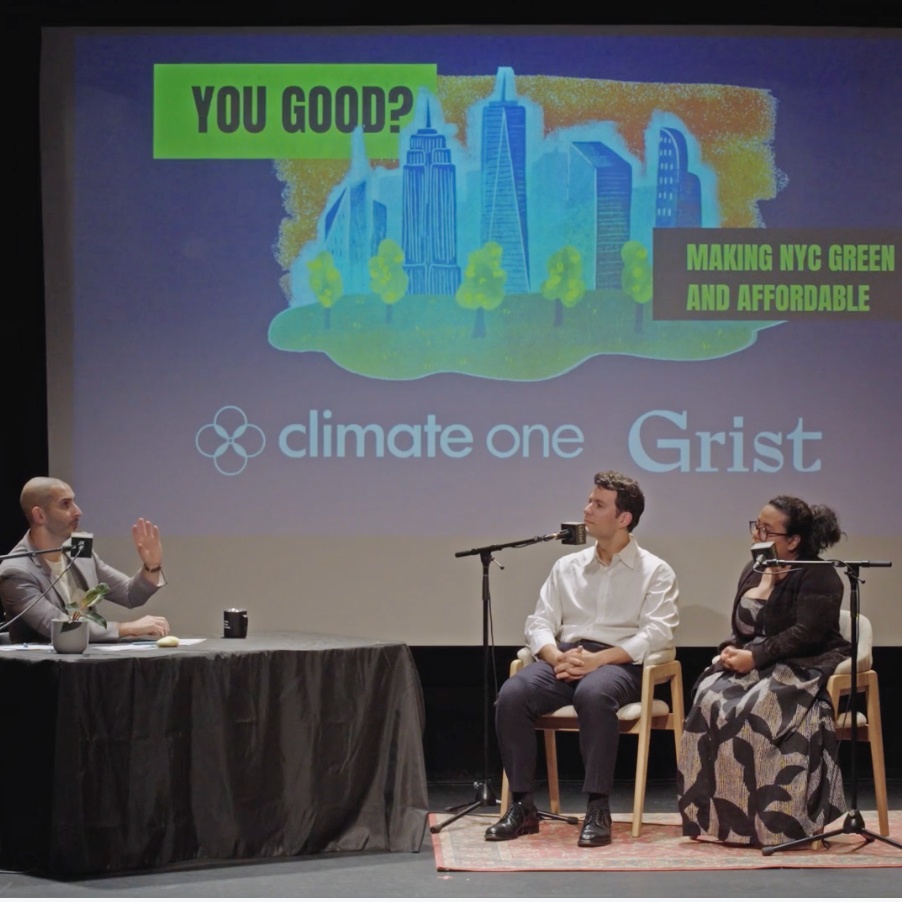
At a live recording of the Climate One talk show and podcast, part of Grist’s Climate Week NYC event series, the conversation focused on how climate, decarbonization and affordability collide. New York has some of the most ambitious climate goals in the country, and some of the highest costs of living. What does it take to make life better for New Yorkers while keeping costs and carbon down? And what lessons can New York’s leaders share with leaders elsewhere?
Hosted by Kousha Navidar with Climate One, the event featured lively discussions with New York’s Chief Climate Officer Louise Yeung, grassroots leader Daphany Rose Sanchez (G50 ‘19), and Grist reporter Jake Bittle.
Watch the full video of the event below.
Rewriting the Climate Story: 10 Years of Solutions
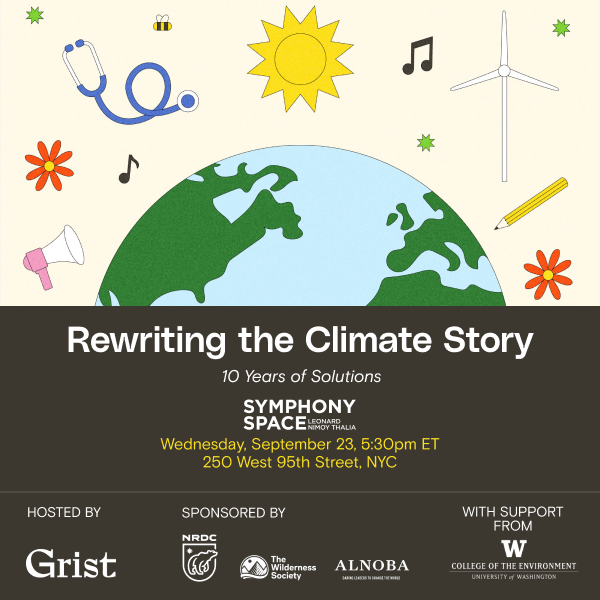
Grist tackled the biggest topics in climate at this year’s Climate Week NYC. Live at Symphony Space’s Leonard Nimoy Thalia, Grist’s storytelling event celebrated, amplified, and reflected on the stories of five Fixers from across the decade of the Grist 50 list: Ayana Elizabeth Johnson (G50 ‘18) and Flora Lichtman (G50 ‘16) in a live recording of a special episode for Science Friday, along with stories told by Jerome Foster II (G50 ‘20), Steph Speirs (G50 ‘17), and Jessie Bluedorn (G50 ‘25).
Couldn’t make it in person? Watch a recording of the full event below.
This event was supported by NRDC, The Wilderness Society, Alnoba Lewis Family Foundation, and University of Washington College of the Environment.