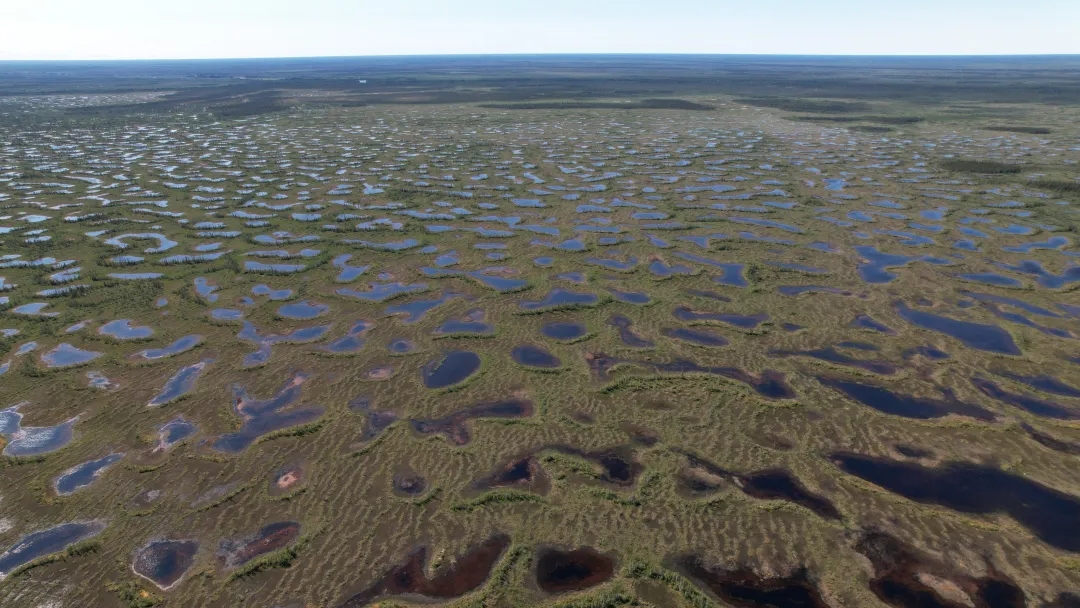
The largest herds of caribou in the world make their homes here. Polar bears give birth to cubs in dens dug into this soil, some of them more than 200 years old. And birds like the Arctic tern fly north every summer, some from as far south as Antarctica, to breed and lay their eggs.
The Hudson Bay peatlands in northern Canada, a 90-million-acre area stretching from northern Manitoba to Quebec, are a haven for biodiversity, home to more than 1,000 species of plants and 175 species of birds. But the secret of this unique ecosystem lies below the surface, in a buildup of water-saturated mosses called peat.
Though it looks like little more than fibrous dirt, peat has near-magical properties.
Acidic and anaerobic, it can preserve artifacts, food, and even human remains for centuries or more. And because the process of decomposition slows down in such environments, they trap carbon dioxide and keep it out of the atmosphere, slowing the process of climate change.
Read more