Articles by Sarah Laskow
Sarah Laskow is a reporter based in New York City who covers environment, energy, and sustainability issues, among other things.
All Articles
-
![]()
![]()
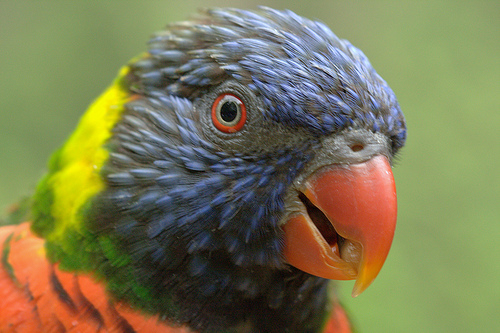
Do Australian lorikeets have a drinking problem or a mysterious disease problem?
Red-collared lorikeets—a type of parrot—show up every year in Australia acting like they've been hitting the fermented fruit juice a little too hard. Locals report symptoms like "falling over" and "difficulty flying" and "running into things" and "act[ing] friendlier than normal," which will be familiar to anyone who’s ever gone to college. (Don’t ask about “difficulty flying.” That was a bad night.)
Ok, but less funny ... -
Critical List: EPA’s greenhouse report comes in for criticism; motorcycles are gross
The EPA and its inspector general disagree over what qualifies as a "scientific assessment." The EPA has concluded that greenhouse gases are dangerous; the IG now says that the assessment didn’t go through sufficient peer review. This is actually about the review of the relevant “technical support document,” not about the scientific findings, but tell that to Republicans.
The DOE gave a $737 million loan guarantee to a solar-tower project in Nevada, which had better the hell not fail now.
Motorcycles are more fuel efficient, but their tailpipe emissions contain nasty stuff. -
![]()
![]()
Beauty and the Beastly BPA-Soaked Soup
Disney princess-mania can strike 3 to 5-year-old children at any time. That’s bad enough for kids (and mostly their parents), but now these bedazzled damsels are harming all children in a whole new way -- by enticing them to ingest high levels of BPA.
Campbell's has been using Disney princesses and other Disney characters to sell kid-targeted food. Cartoon labels and "cool shapes" -- i.e. noodles that are supposedly, though unidentifiably, made to look like kids’ favorite characters -- help entice "healthy kids" into eating chicken in salty chicken broth. And of all the soups tested for BPA in a recent study, the Disney Princess Cool Shapes soup scored the worst.
-
![]()
![]()
Local dressing is the new local eating
The wool and cotton for all of the clothes in Rebecca Burgess' closet was grown within 150 miles of her home in the Bay Area. The wool was spun there, too; the dyes were grown there; the sweaters were knitted there. In fact, the clothes were entirely locally sourced from what Burgess calls her local "fibershed" — the network of farmers, millers, weavers, designers, dyers, knitters, and seamstresses that it takes to make clothes.