Daniel J. Weiss' posts RSS feed


Comments

The ‘war on coal’ is a myth

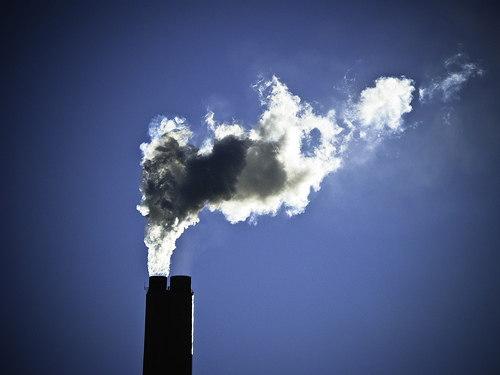
Photo by Nick Humphries.

A version of this post originally appeared on Climate Progress.

Big polluters and their congressional allies have created a new straw man to knock down with the invention of the so-called “war on coal.” It is a multimillion-dollar disinformation campaign funded by Big Coal polluters to protect their profits and distract Americans from the deadly effects of air pollution on public health.

However, with the number of coal jobs in key coal states actually on the rise since 2009, it’s more like peacetime prosperity than war in coal country. The War on Coal is nothing more than a new shiny object, designed by big polluters to distract Americans from the real war -- the polluters’ attacks on their health -- and the truth.

Coal companies and dirty utilities claim that long-overdue requirements to reduce mercury, arsenic, smog, acid rain, and carbon pollution from power plants will kill jobs. In West Virginia, however, coal mining employment was higher in 2011 than at any time over the last 17 years. Federal jobs statistics also show modest coal mining job growth in coal states like Virginia and Pennsylvania.

this story continues
Read more: Article, Coal
 

Comments

Senators take emergency oil reserve hostage to force Keystone approval

Will the GOP ever stop pushing Keystone XL? (Photo by truthout.)

Cross-posted from Climate Progress.

Republican congressional leaders have failed to force President Obama to approve the Keystone XL pipeline. But that’s not stopping them from trying over and over again, taking hostages in the process.

First they used the payroll tax cut extension as a vehicle to force a decision on the pipeline in 60 days, even before the final route was identified. Obama was forced to reject the permit because there was no time to assess its potential pollution.

This week, several senators took a different hostage: our emergency oil supply. On Feb. 13, Sens. David Vitter (R-La.), John Hoevan (R-N.D.), and Richard Lugar (R-Ind.) introduced the Strategic Petroleum Supplies Act, S. 2100, that would prevent Obama from selling oil from the Strategic Petroleum Reserve (SPR) unless Keystone is approved:

this story continues
Read more: Oil, Politics
 

Comments

Time for an oil change: Americans strongly oppose fossil fuel subsidies

Cross-posted from Climate Progress.

As part of the fiscal year 2013 budget [PDF] released on Feb. 13, President Obama proposed to eliminate $40 billion in tax breaks for oil and gas producers over the next 10 years. Yesterday, the Yale Project on Climate Change reiterated its recent finding that Americans of all political stripes oppose subsidies for “coal, oil, and natural gas companies.” They oppose these subsidies by 70 percent to 30 percent -- better than two to one. Republicans oppose these subsidies by 67 percent to 34 percent (reflects rounding of percentages).

this story continues
 

Comments

11 important clean energy provisions in Obama’s budget proposal

Nice work on this one, Barack. (Photo by the White House.)

Cross-posted from Climate Progress.

President Obama’s proposed 2013 budget invests in clean energy to help power the engine of economic growth. The budget would direct funds to efficiency and renewable electricity technologies to create jobs and boost domestic manufacturing, and would also make manufacturing more efficient. The cleaner energy that will result from these investments will reduce pollution and protect public health. In addition, the budget would make taxes fairer by eliminating $40 billion in unnecessary breaks for big oil companies, which made record profits in 2011.

This clean energy vision would benefit middle-class Americans and the rest of the 99%. It is a stark contrast to the “drill, baby, drill” policies promoted by the American Petroleum Institute and other Big Oil allies.

Here are 11 important clean energy provisions in the president’s proposed 2013 budget:

this story continues
 

Comments

Big Oil’s banner year: Higher prices, record profits, less oil

Cross-posted from the Center for American Progress. This post was coauthored by Jackie Weidman and Rebecca Leber.

General economic theory holds that companies will produce more of a good if its price is higher, or if it receives subsidies. Funny that these rules didn’t seem to apply to Big Oil in 2011, when the highest oil price since 1864 and $2 billion in subsidies to the five largest oil companies -- BP, Chevron, ConocoPhillips, ExxonMobil, and Royal Dutch Shell -- yielded lower oil production than in 2010. But these five oil companies combined made a record-high $137 billion in profits in 2011 -- up 75 percent from 2010 -- and have made more than $1 trillion in profits from 2001 through 2011.[1] This exceeds the previous record of $136 billion in profits in 2008.

this story continues
Read more: Article, Oil
 

Comments

Obama proposes new emissions standards on eve of U.N. meeting

New vehicle emissions standards: Good call, Obama.Photo: The White HouseCross-posted from Climate Progress. This is a revision of an earlier article to reflect the evolving international climate negotiations. This post was coauthored by Andrew Light and Jackie Weidman. The 17th Conference of the Parties (COP17) to the United Nations Framework Convention on Climate Change (UNFCCC) begins today in Durban, South Africa. In advance of the meeting, some nations have legitimately criticized the United States for its lack of leadership in the development of a climate agreement that puts the world on the path to reducing the carbon and other pollution responsible for …

this story continues
 

Comments

Poor little Big Coal says EPA smog standards too expensive

Big Coal feels sorry for itself, not the kids getting sick from air pollution. Cross-posted from the Center for American Progress. This post was coauthored by Matthew Kasper, an energy intern at the Center for American Progress. By Dec. 16, the Environmental Protection Agency (EPA) will promulgate its final rule requiring coal-fired power plants to reduce their emissions of mercury, arsenic, acid gases, and other toxic chemicals. The EPA notes that these safeguards will prevent 17,000 premature deaths annually [PDF], as well as prevent 12,000 hospital visits and 120,000 cases of aggravated asthma. The economic benefits could outweigh the costs …

this story continues
 

Comments

Jon Huntsman’s energy plan shoots blanks

Jon Huntsman.Photo: Gage SkidmoreCross-posted from Climate Progress. Presidential candidate, former ambassador to China, and former Utah Gov. Jon Huntsman received attention for his willingness to accept scientists' verdict that carbon dioxide and other pollutants generated by humans are responsible for climate change. While 98 of 100 climate scientists agree that global warming is real, he is the only one out of nine Republican presidential candidates to say so. Nonetheless, his energy plan presented at a speech delivered on Tuesday in New Hampshire would increase global warming pollution. The other elements of the plan increase fossil fuel production and consumption, and …

this story continues
 

Comments

Big Oil's mountain of cash

Cross-posted from the Center for American Progress. This post was coauthored by Valeri Vasquez, special assistant for energy policy at the Center for American Progress. On Sept. 19, President Barack Obama announced his plan to reduce the deficit by $4 trillion over the next 12 years, including raising $1.5 trillion by closing special interest loopholes and other revenue raisers. This includes eliminating $41 billion in tax loopholes for the oil and gas industry [PDF, p. 63] over the next decade. Big Oil is predictably opposed to losing its unnecessary tax breaks. The American Petroleum Institute, or API, the oil industry's …

this story continues
Read more: Climate & Energy, Oil
 

Comments

Top 10 American vacation spots House bill could ruin

Cross-posted from Climate Progress. This post was coauthored by Arpita Bhattacharyya, special assistant to distinguished senior fellow Carol Browner at the Center for American Progress. Checking pollution advisories could become a vital part of your pre-travel planning, along with checking the weather and stopping the mail, if the House of Representatives votes for more than 40 pollution provisions this week. Simply put, the House could put future vacations at risk in order to keep Big Oil and coal interests happy. It plans to vote on the Interior Environment FY 2012 Appropriations bill, H.R. 2584, which is chock full of provisions that …

this story continues

Daniel J. Weiss RSS feed

Daniel J. Weiss is a Senior Fellow and the Director of Climate Strategy at American Progress, where he leads the Center's clean energy and climate advocacy campaign. Before coming to American Progress, he spent 25 years working with environmental advocacy organizations and political campaigns.

Advertisement
Advertisement
advertising