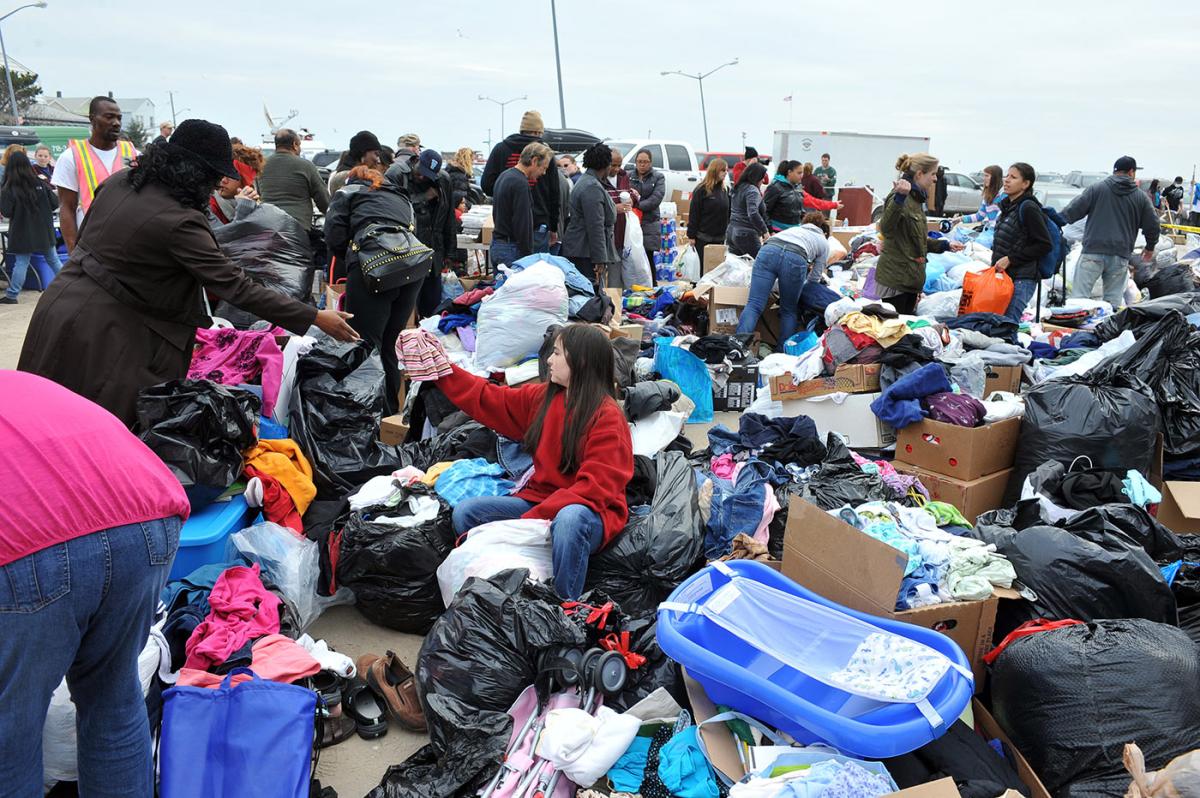
Anton Oparin / ShutterstockVictims of Hurricane Sandy receive aid in Queens. Expect more scenes like this in the future.
Ask Andrew Guzman, a professor of international law at U.C. Berkeley, why he decided to write a book about climate change, and he says it’s simple: It’s the biggest issue of our time.
“If I didn’t write about it,” he says, “for my grandkids, I’d sound like somebody who wasn’t interested in Nazi Germany in 1939.”
Guzman doesn’t want to be painted as an alarmist. That’s why, for the book, Overheated: The Human Cost of Climate Change, he assumes that we will see a modest (and increasingly optimistic) 2 degrees C of warming. You know, so as to stay on the conservative side of things.
Susie Cagle
But it turns out that 2 degrees is enough to sound some serious fucking alarm bells.
Guzman’s main goal, he says, was to look at the social, economic, and political costs of global warming. Most books focus on physical and environmental changes. Guzman wanted to examine human consequences.
Guzman spends a significant... Read more