Skip to content Skip to site navigation

Michael T. Klare's Posts

Comments

Obama’s Keystone XL decision could doom the tar sands … or the planet

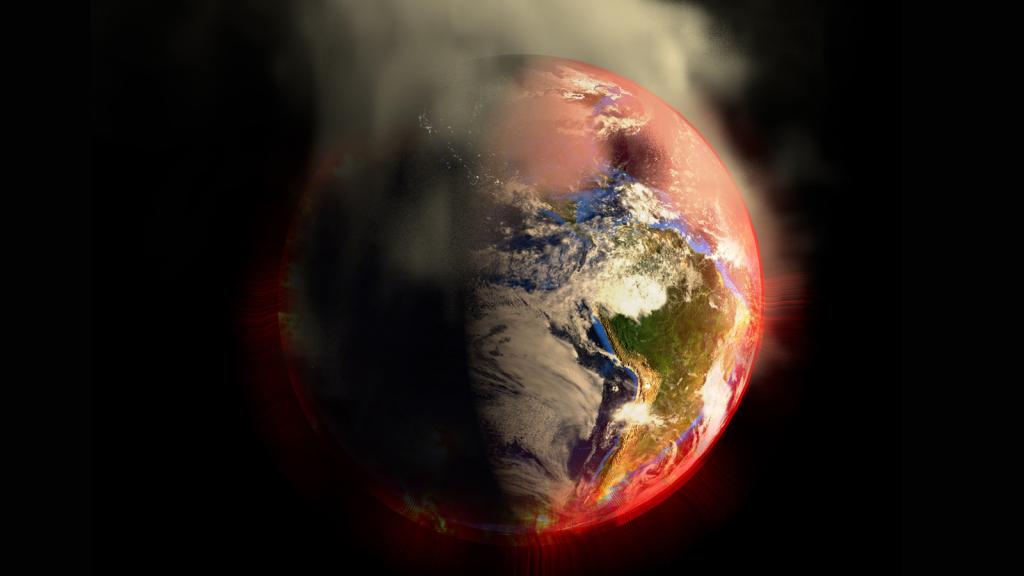
burning-earth
Shutterstock

Presidential decisions often turn out to be far less significant than imagined, but every now and then what a president decides actually determines how the world turns. Such is the case with the Keystone XL pipeline, which, if built, is slated to bring some of the “dirtiest,” carbon-rich oil on the planet from Alberta, Canada, to refineries on the U.S. Gulf Coast. In the near future, President Obama is expected to give its construction a definitive thumbs up or thumbs down, and the decision he makes could prove far more important than anyone imagines. It could determine the fate of the Canadian tar-sands industry and, with it, the future well-being of the planet. If that sounds overly dramatic, let me explain.

Sometimes, what starts out as a minor skirmish can wind up determining the outcome of a war -- and that seems to be the case when it comes to the mounting battle over the Keystone XL pipeline. If given the go-ahead by President Obama, it will daily carry more than 700,000 barrels of tar-sands oil to those Gulf Coast refineries, providing a desperately needed boost to the Canadian energy industry. If Obama says no, the Canadians (and their American backers) will encounter possibly insuperable difficulties in exporting their heavy crude oil, discouraging further investment and putting the industry’s future in doubt.

The battle over Keystone XL was initially joined in the summer of 2011, when environmental writer and climate activist Bill McKibben and 350.org, which he helped found, organized a series of non-violent anti-pipeline protests in front of the White House to highlight the links between tar-sands production and the accelerating pace of climate change. At the same time, farmers and politicians in Nebraska, through which the pipeline is set to pass, expressed grave concern about its threat to that state’s crucial aquifers. After all, tar-sands crude is highly corrosive, and leaks are a notable risk.

In mid-January 2012, in response to those concerns, other worries about the pipeline, and perhaps a looming presidential campaign season, Obama postponed a decision on completing the controversial project. (He, not Congress, has the final say, since it will cross an international boundary.) Now, he must decide on a suggested new route that will, supposedly, take Keystone XL around those aquifers and so reduce the threat to Nebraska’s water supplies.

Ever since the president postponed the decision on whether to proceed, powerful forces in the energy industry and government have been mobilizing to press ever harder for its approval. Its supporters argue vociferously that the pipeline will bring jobs to America and enhance the nation’s “energy security” by lessening its reliance on Middle Eastern oil suppliers. Their true aim, however, is far simpler: to save the tar-sands industry (and many billions of dollars in U.S. investments) from possible disaster.

Just how critical the fight over Keystone has become in the eyes of the industry is suggested by a recent pro-pipeline editorial in the trade publication Oil & Gas Journal:

Controversy over the Keystone XL project leaves no room for compromise. Fundamental views about the future of energy are in conflict. Approval of the project would acknowledge the rich potential of the next generation of fossil energy and encourage its development. Rejection would foreclose much of that potential in deference to an energy utopia few Americans support when they learn how much it costs.

Opponents of Keystone XL, who are planning a mass demonstration at the White House on Feb. 17, have also come to view the pipeline battle in epic terms. “Alberta’s tar sands are the continent’s biggest carbon bomb,” McKibben wrote at TomDispatch. “If you could burn all the oil in those tar sands, you’d run the atmosphere’s concentration of carbon dioxide from its current 390 parts per million (enough to cause the climate havoc we’re currently seeing) to nearly 600 parts per million, which would mean if not hell, then at least a world with a similar temperature.” Halting Keystone would not by itself prevent those high concentrations, he argued, but would impede the production of tar sands, stop that “carbon bomb” from further heating the atmosphere, and create space for a transition to renewables. “Stopping Keystone will buy time,” he says, “and hopefully that time will be used for the planet to come to its senses around climate change.”

Comments

A new ‘golden age of oil’ in the U.S.? Don’t believe it

Extreme energy: maybe not worth the risk?

Last winter, fossil-fuel enthusiasts began trumpeting the dawn of a new “golden age of oil” that would kick-start the American economy, generate millions of new jobs, and free this country from its dependence on imported petroleum. Ed Morse, head commodities analyst at Citibank, was typical. In the Wall Street Journal he crowed, “The United States has become the fastest-growing oil and gas producer in the world, and is likely to remain so for the rest of this decade and into the 2020s.”

Once this surge in U.S. energy production was linked to a predicted boom in energy from Canada’s tar-sands reserves, the results seemed obvious and uncontestable. “North America,” he announced, “is becoming the new Middle East.” Many other analysts have elaborated similarly on this rosy scenario, which now provides the foundation for Mitt Romney’s plan to achieve “energy independence” by 2020.

By employing impressive new technologies -- notably deepwater drilling and hydraulic fracturing (or fracking) -- energy companies were said to be on the verge of unlocking vast new stores of oil in Alaska, the Gulf of Mexico, and shale formations across the United States. “A ‘Great Revival’ in U.S. oil production is taking shape -- a major break from the near 40-year trend of falling output,” James Burkhard of IHS Cambridge Energy Research Associates (CERA) told the Senate Committee on Energy and Natural Resources [PDF] in January 2012.

Increased output was also predicted elsewhere in the Western Hemisphere, especially Canada and Brazil. “The outline of a new world oil map is emerging, and it is centered not on the Middle East but on the Western Hemisphere,” Daniel Yergin, chair of CERA, wrote in the Washington Post. “The new energy axis runs from Alberta, Canada, down through North Dakota and South Texas ... to huge offshore oil deposits found near Brazil.”

Extreme oil

It turns out, however, that the future may prove far more recalcitrant than these prophets of an American energy cornucopia imagine. To reach their ambitious targets, energy firms will have to overcome severe geological and environmental barriers -- and recent developments suggest that they are going to have a tough time doing so.

Comments

The hunger wars in our future: Heat, drought, rising food costs, and global unrest

The mass unrest of the Arab Spring was triggered in part by rising food prices. In Algeria (above), the government slashed food prices in response to protests. (Photo by Magharebia.)

The Great Drought of 2012 has yet to come to an end, but we already know that its consequences will be severe. With more than one-half of America’s counties designated as drought disaster areas, the 2012 harvest of corn, soybeans, and other food staples is guaranteed to fall far short of predictions. This, in turn, will boost food prices domestically and abroad, causing increased misery for farmers and low-income Americans and far greater hardship for poor people in countries that rely on imported U.S. grains.

This, however, is just the beginning of the likely consequences: If history is any guide, rising food prices of this sort will also lead to widespread social unrest and violent conflict.

Food -- affordable food -- is essential to human survival and well-being. Take that away, and people become anxious, desperate, and angry. In the United States, food represents only about 13 percent of the average household budget, a relatively small share, so a boost in food prices in 2013 will probably not prove overly taxing for most middle- and upper-income families. It could, however, produce considerable hardship for poor and unemployed Americans with limited resources. “You are talking about a real bite out of family budgets,” commented Ernie Gross, an agricultural economist at Omaha’s Creighton University. This could add to the discontent already evident in depressed and high-unemployment areas, perhaps prompting an intensified backlash against incumbent politicians and other forms of dissent and unrest.

It is in the international arena, however, that the Great Drought is likely to have its most devastating effects. Because so many nations depend on grain imports from the U.S. to supplement their own harvests, and because intense drought and floods are damaging crops elsewhere as well, food supplies are expected to shrink and prices to rise across the planet. “What happens to the U.S. supply has immense impact around the world,” says Robert Thompson, a food expert at the Chicago Council on Global Affairs. As the crops most affected by the drought, corn and soybeans, disappear from world markets, he noted, the price of all grains, including wheat, is likely to soar, causing immense hardship to those who already have trouble affording enough food to feed their families.

Comments

Comments

America and oil: declining together?

This essay was originally published on TomDispatch and is republished here with Tom’s kind permission. America and Oil. It's like bacon and eggs, Batman and Robin. As the old song lyric went, you can't have one without the other. Once upon a time, it was also a surefire formula for national greatness and global preeminence. Now, it's a guarantee of a trip to hell in a handbasket. The Chinese know it. Does Washington? America's rise to economic and military supremacy was fueled in no small measure by its control over the world's supply of oil. Oil powered the country's first …

Read more: Climate & Energy, Oil

Comments

Prepare for a world energy war

World powers will duke it out over fuel sources. This essay was originally published on TomDispatch and is republished here with Tom's kind permission. A 30-year war for energy preeminence? You wouldn't wish it even on a desperate planet. But that's where we're headed and there's no turning back. From 1618 to 1648, Europe was engulfed in a series of intensely brutal conflicts known collectively as the Thirty Years' War. It was, in part, a struggle between an imperial system of governance and the emerging nation-state. Indeed, many historians believe that the modern international system of nation-states was crystallized in …

Read more: Climate & Energy

Comments

Three energy developments that are changing your life — and not in a good way

This essay was originally published on TomDispatch and is republished here with Tom's kind permission. Here's the good news about energy: Thanks to rising oil prices and deteriorating economic conditions worldwide, the International Energy Agency (IEA) reports that global oil demand will not grow this year as much as once assumed, which may provide some temporary price relief at the gas pump. In its May "Oil Market Report," the IEA reduced its 2011 estimate for global oil consumption by 190,000 barrels per day, pegging it at 89.2 million barrels daily. As a result, retail prices may not reach the stratospheric …

Comments

The planet strikes back: Why we underestimate the Earth and overestimate ourselves

The Earth may look glum, but it's not to be messed with.Photo: John LeGearThis essay was originally published on TomDispatch and is republished here with Tom's kind permission. In his 2010 book Eaarth: Making a Life on a Tough New Planet, environmental scholar and activist Bill McKibben writes of a planet so devastated by global warming that it's no longer recognizable as the Earth we once inhabited. This is a planet, he predicts, of "melting poles and dying forests and a heaving, corrosive sea, raked by winds, strafed by storms, scorched by heat." Altered as it is from the world …

Comments

The collapse of the old oil order

No matter what comes of the protests in Iran, it's unlikely that the country's oil output will rise significantly.Photo: Hamed SaberThis essay was originally published on TomDispatch and is republished here with Tom's kind permission. Whatever the outcome of the protests, uprisings, and rebellions now sweeping the Middle East, one thing is guaranteed: The world of oil will be permanently transformed. Consider everything that's now happening as just the first tremor of an oilquake that will shake our world to its core. For a century stretching back to the discovery of oil in southwestern Persia before World War I, Western …

Comments

Rising commodity prices and extreme weather events threaten global stability

This essay was originally published on TomDispatch and is republished here with Tom's kind permission. Get ready for a rocky year. From now on, rising prices, powerful storms, severe droughts and floods, and other unexpected events are likely to play havoc with the fabric of global society, producing chaos and political unrest. Start with a simple fact: The prices of basic food staples are already approaching or exceeding their 2008 peaks, that year when deadly riots erupted in dozens of countries around the world. It's not surprising then that food and energy experts are beginning to warn that 2011 could …

Don't miss a green thing!
Get Grist in your inbox every morning.