The environmental movement’s challenge isn’t energy, it’s power.
Power is what prompts political change. Shifts in power, application of power. Not necessarily power on Capitol Hill, but at least enough power to force Capitol Hill to act. Environmentalists lack the power necessary to effect any major change because there are only a few environmental champions in positions of power in the United States: a few in the private sector, a few in Congress, a very few in the administration, almost no one in the media.
In order to make change, the movement needs to build political power. But instead it’s consumed with building energy in an already-energetic base.
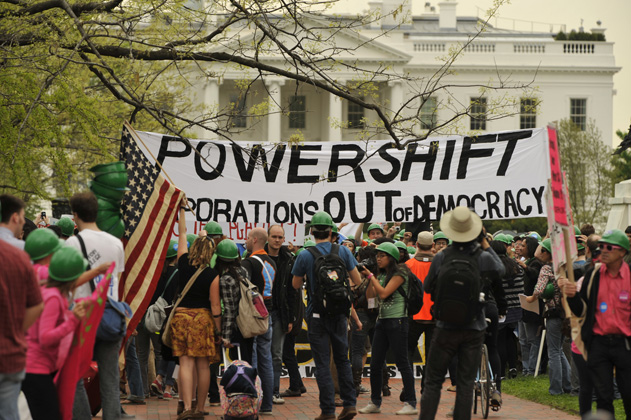
Young people protest during Powershift 2011.
As David Roberts notes here and as I’ve noted before, passion and energy are critical to change. Without passion and a desire to make the status quo snap, nothing happens. But that passion has to exist within the powerful. And right now it doesn’t.
Last weekend, tens of thousands of protestors met on the Mall in Washington, D.C., to demand that the president rej... Read more