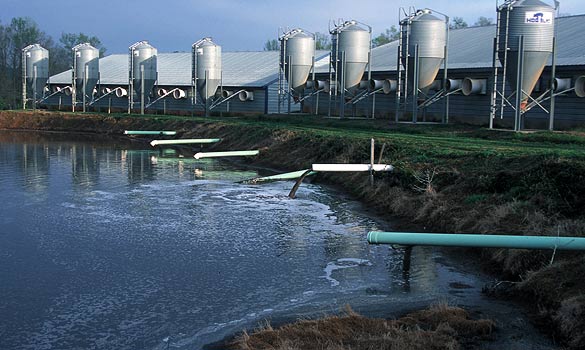
A CAFO manure lagoon. (Photo by Jeff Vanugam.)
One of the biggest water polluters in our country is the factory farm. In 2008, a Government Accountability Office report panned the U.S. Environmental Protection Agency (EPA) for failing to know where most of these farms were located, let alone if they were releasing their manure into rivers, lakes, and streams.
So in early 2011, the EPA announced a rule asking such farms, known as Concentrated Animal Feeding Operations or CAFOs, to submit basic information, like their address and how many animals they have, to the agency. On Friday, July 20, EPA quietly announced it was withdrawing that rule, planning instead to try to collect the data from the existing records held by states, even though it has tried that before, with poor results.
In trying to understand why the EPA would back off such a seemingly innocuous yet important data collection project, I imagined myself inside a meeting of EPA clean water officials as they made the decision to withdraw the rule.
Setting: A 10-top table in a soulless gray-hued conference room, Federal Triangle, Washington... Read more