Aqqaluk Lynge was 19 years old when an American B-52 bomber carrying four thermonuclear weapons as well as conventional bombs crashed off the northwest coast of Greenland, the island where Lynge was born and raised. That was January 1968, and the plane was headed to Thule Air Force Base, a U.S. military installation in Greenland, now known as Pituffik Space Base. When the plane hit the Arctic waters, the conventional bombs detonated but the nuclear weapons did not.
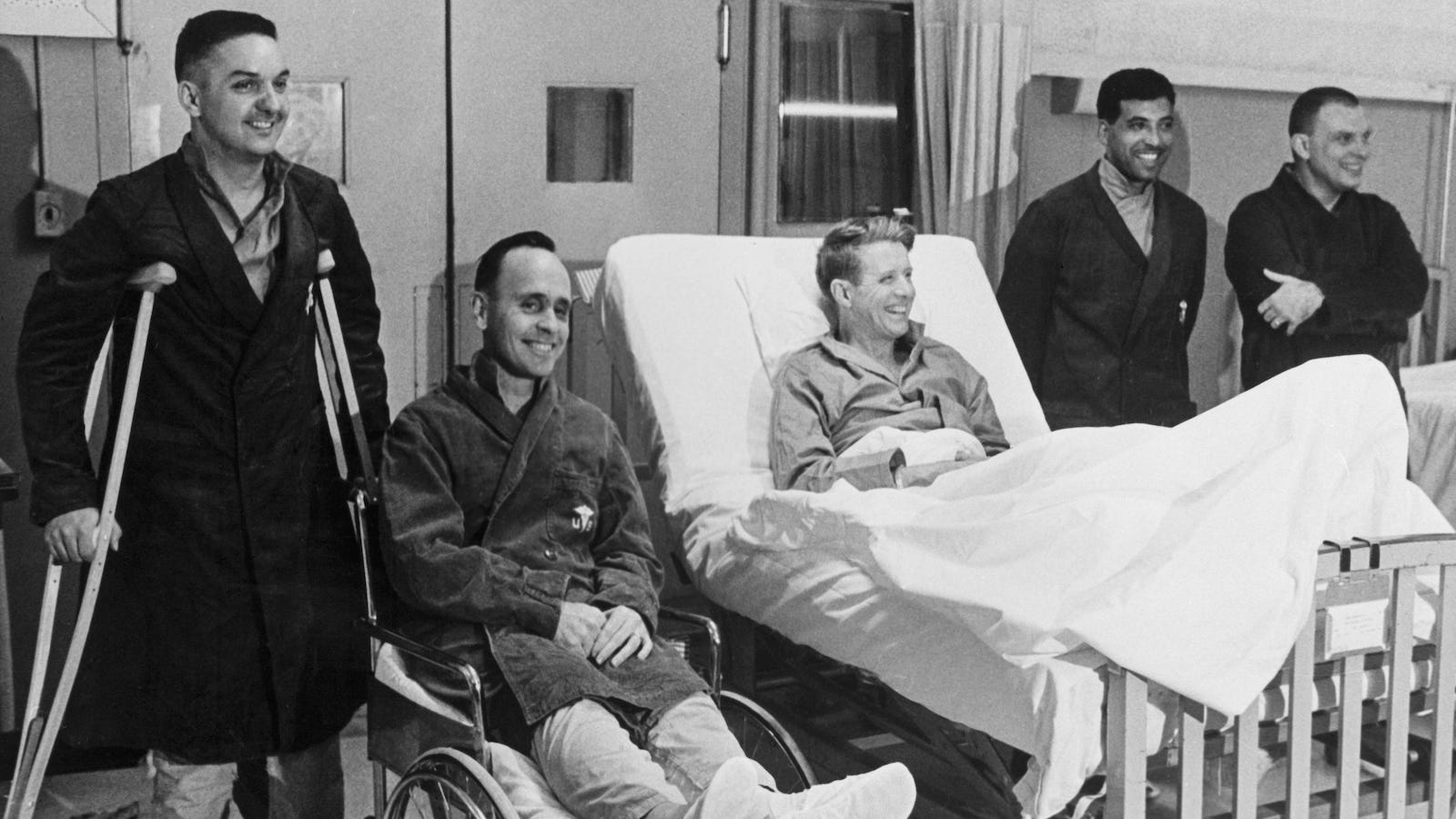
Six American military personnel parachuted from the plane before it crashed, shivering on the frozen ground before Inuit dog sled teams found them and saved their lives. One service member trapped on floating ice 6 miles from Thule survived the negative 21-degree Fahrenheit weather by wrapping himself in his parachute.
Now, aged 78, Lynge wonders if the United States remembers that Inuit dogsleds saved American lives. Or the fact that Greenlanders fought for the U.S. in Afghanistan as enlisted members of the Danish military, dying at the second-highest rate of any country besides the U.S. That U.S. Air Force base is still operational and 150 American military personnel are currently stationed there. “Why should a friend for so many years be treated like this?” Lynge said. “We need support from democratic-minded people in the United States.”

President Donald Trump has demanded that the United States acquire Greenland and said that control of the island is necessary for national and international security. He has threatened European allies with tariffs and even hinted at seizing Greenland by force. On Wednesday, Trump backtracked on both threats and said he’d reached a “framework of a future deal with respect to Greenland” without giving any details; however Trump’s behavior over the island has already undermined America’s relationship with Europe by threatening longstanding alliances.
Less publicized is how Trump’s threats have refocused attention on the United States’ relationship and history with Indigenous peoples: Greenland is 90 percent Inuit and has maintained its traditions, language, knowledge, and land despite centuries of colonial rule, and is viewed as a model of Indigenous self-determination and sovereignty.
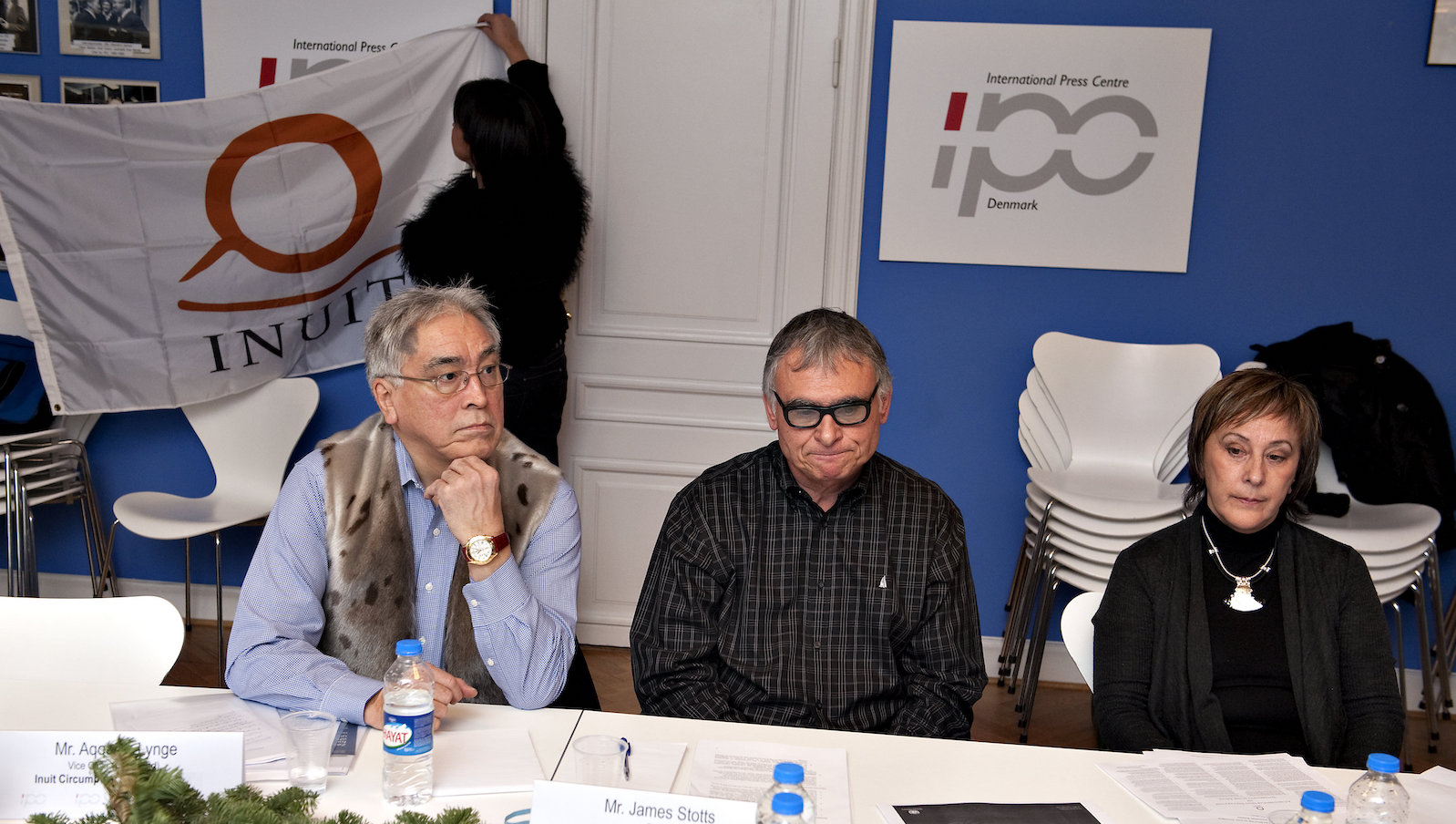
Lynge, who is Inuit, is part of that history. He co-founded the Inuit Ataqatigiit, a democratic socialist party in Greenland that advocates for independence. He helped lead the Inuit Circumpolar Council, an organization that represents Indigenous peoples in the Arctic. And he’s a former member of the Greenlandic Parliament, as well as the U.N. Permanent Forum on Indigenous Issues, which helps advise the U.N. Economic and Social Council on issues related to Indigenous peoples.
Greenland is still part of the Kingdom of Denmark, a colonial relationship that’s existed since the 18th century, but thanks to the work of people like Lynge, the island has achieved a level of political independence that many Indigenous peoples aspire to. “The extensive self-governance of Greenland is an inspiring example of the implementation of Indigenous self-determination for many Indigenous Peoples worldwide,” said the United Nations special rapporteur on the rights of Indigenous peoples, José Francisco Calí Tzay, in 2023.
Yet despite the still-strong presence of Inuit peoples in Greenland, Stefan Aune, a historian and the author of the book Indian Wars Everywhere, said he’s been struck by how much Trump’s threats have been framed as conflict between the U.S. and Denmark or the U.S. and European countries, ignoring the presence of Indigenous peoples. “This really kind of evokes the way the history of North America often gets narrated, which is a kind of imperial squabble between the British, the French, and the Spanish, and then later the United States, despite the fact that there’s all these different Native nations that play a really equally important role in the war, the politics, the economics, and the diplomacy on the continent,” Aune said. “So there’s definitely a parallel there.”
Aune is among many experts who see Trump’s policies and rhetoric as echoes of historical entitlement to Native land reframed as a defensive struggle against Indigenous nations or other threats. “The iconic image of this is the surrounded wagon train, which you can see in all kinds of art, paintings, and then later movies and television and video games,” Aune said. “Settler colonialism consistently gets reframed as a defensive struggle rather than an invasion.”
Peter Mancall, a historian and author of the book Contested Continent, said he was struck by how quickly Trump pivoted from the security reasons to capture Venezuela’s president to his plans to sell 50 million barrels of Venezuelan oil. “The rapid pivot from the pretext of the invasion to the extraction of resources [in Venezuela] was quicker than anything I had seen in the early American period,” he said. “We’ve seen this before, and it has often had catastrophic consequences for Indigenous peoples as well as deleterious impacts on various environments.”
Jonathan Kamakawiwoʻole Osorio, the dean of Hawaiʻinuiākea School of Hawaiian Knowledge at the University of Hawaiʻi, sees parallels to the U.S. overthrow of the Hawaiian Kingdom, which he wrote about in his book Dismembering Lāhui. In the late 1800s, the U.S. was motivated to annex Hawai’i in order to cement economic control over the islands’ sugar plantations and to establish military control over Pearl Harbor.
“The fact that the president of the United States no longer feels that it’s necessary to justify imperialism in any other way except that ‘We need it’ is deeply revealing and clarifying,” Osorio said. “When you remove all of the pretext and you realize that all this has ever been about has been the acquisition of opportunities and other peoples and other peoples’ countries … it’s never been any different.”
Greenland is three times the size of Texas and home to about 56,000 people. The island has 39 of the 50 minerals that the U.S. considers to be critical for military technology and the U.S. economy, many of which are used for clean energy technology like electric vehicle batteries. Investors are hoping that melting ice caps due to climate change will make it easier for companies to mine minerals like gallium, which can be used to create computer chips.
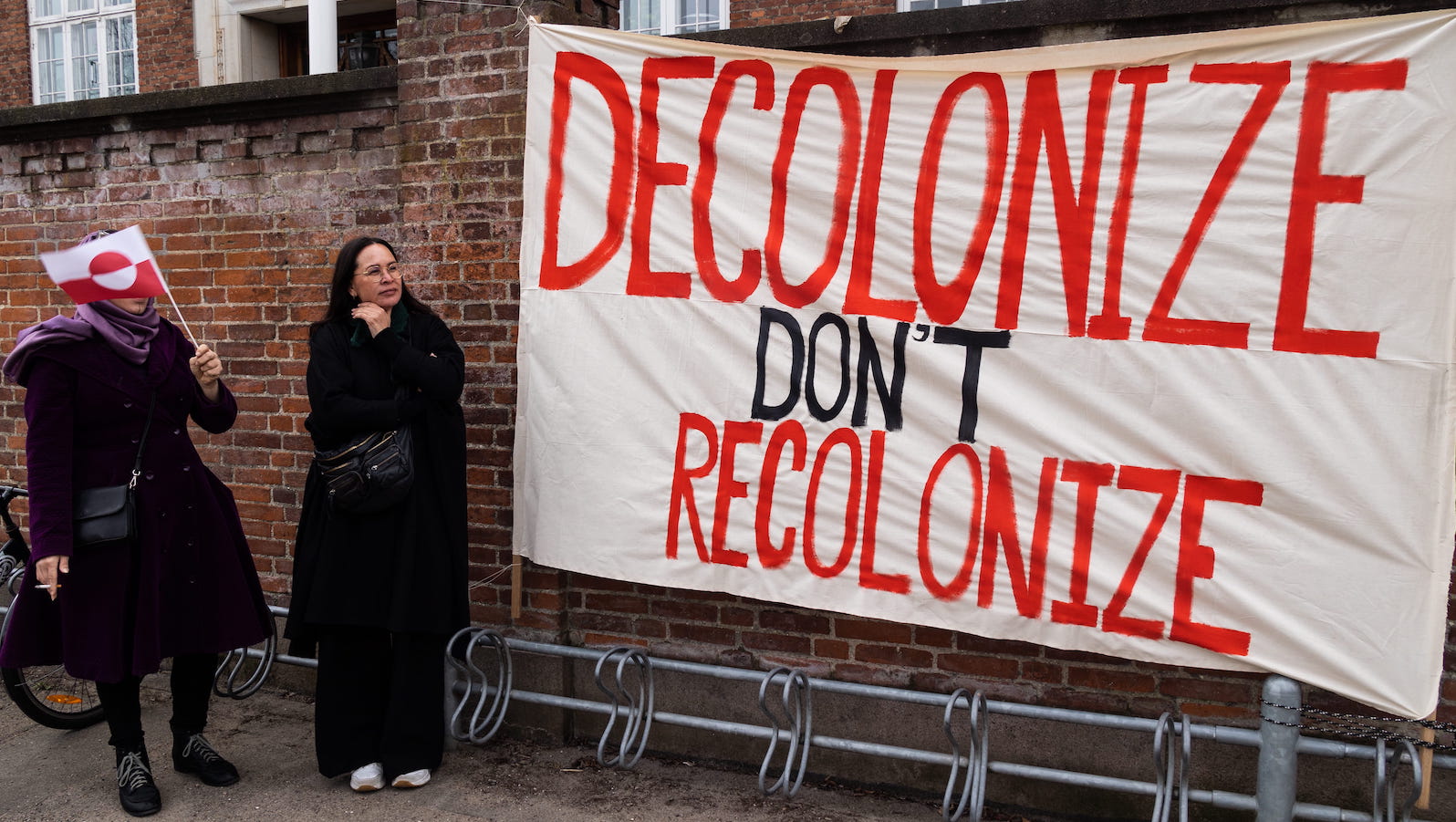
Kristian Tuxen Ladegaard Berg / SOPA Images / LightRocket via Getty Images
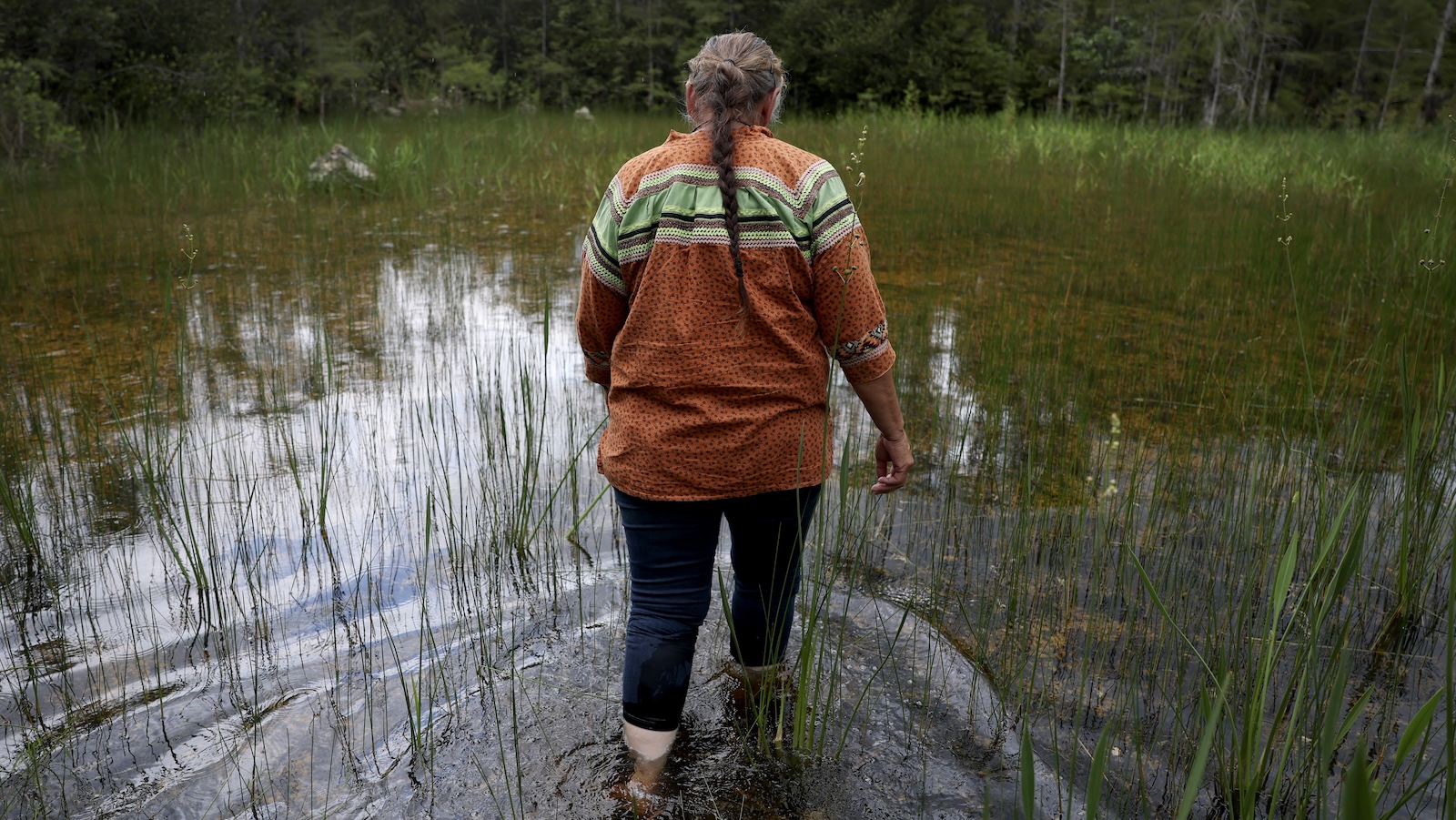
But Paul Bierman, a geoscientist who has studied ice sheets in Greenland, is skeptical. He said melting permafrost has led to cratering on U.S. Air Force runways and thinks mining infrastructure would face similar challenges. “If you’ve ever stood next to a melting glacier, you’re not putting a mine there. The ice is literally melting below your feet. It’s crumbling, it’s collapsing,” he said. “The idea that we’re going to walk in and in a year, start up mines and have minerals coming out and be rich, it’s a complete and utter fantasy. It doesn’t match the reality of being on the ground.”
That hasn’t stopped wealthy investors from yearning to profit from Greenland, from billionaire Ronald Lauder to Peter Thiel. Bierman said the greater risk to humanity is allowing climate change — which Trump has called a hoax — to continue to melt ice caps and inundate low-lying cities like Jakarta, eventually dislocating an anticipated half a billion people. “Compared to the value of strategic minerals in Greenland, it’s orders of magnitude more in damages from letting the ice melt,” said Bierman, who wrote a book on Greenland called When The Ice Is Gone.
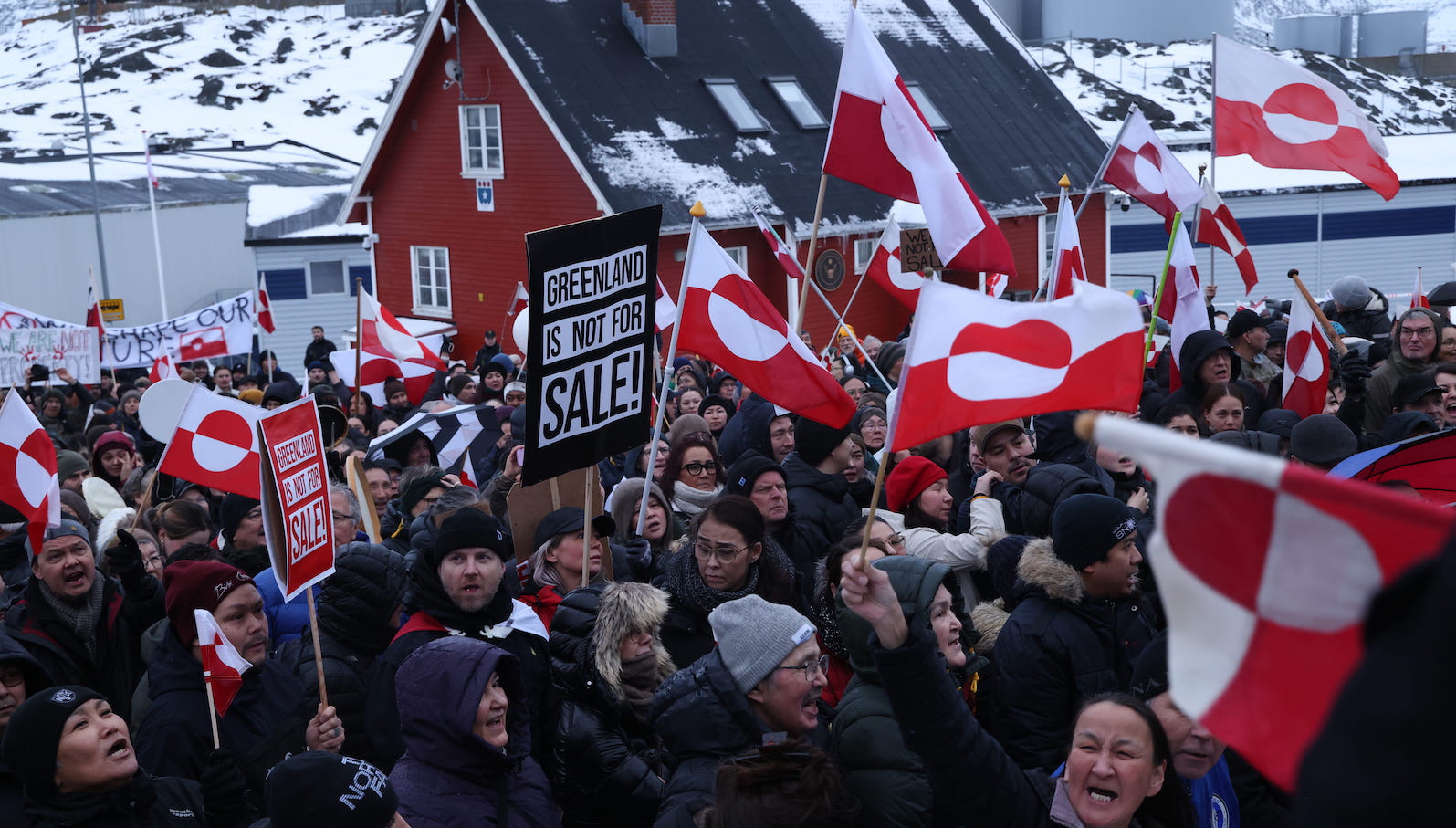
Denmark has recognized Greenland as self-governing with a right to its own mineral resources, and Greenlanders have been extremely clear about their desire to maintain their sovereignty, as well as their affiliation with Denmark. “It is our country,” Lynge said. “No one can take it.”
Since World War II, Greenland has been a close military ally of the U.S., hosting not just Pituffik Space Base — which displaced an Inuit village — but also more than 20 American military bases that were eventually abandoned. Treaties dating back to 1941 give the U.S. enormous sway over what its military can do on the island and prevents other militaries from operating there, even though Trump has repeatedly claimed that Russia and China are doing so.
“[According to an] agreement from 1951, the United States is free to do what they want, and from 2014, they can do that by talking to us and the Danes,” said Lynge from Greenland. “The U.S. is the only military presence here in Greenland, so what’s the problem?”

After two centuries of colonial rule, in the 1960s, Denmark began taking steps to limit Inuit population growth by inserting intrauterine devices in about 4,500 women, including girls as young as 12 years old. The Danish government apologized last year and agreed to compensate the women who sued, arguing the government violated their human rights. The population limitation process was extremely effective, dropping birth rates substantially among Indigenous families and causing permanent infertility among some women. Denmark also has a decades-long history of removing Inuit children from their homes against their parents’ will, with research as recent as 2022 showing that Inuit children are seven times more likely to be removed from their parents’ homes than Danish children. In 2023, the U.N. Special Rapporteur on the Rights of Indigenous Peoples issued a report on the status of Greenland that said Denmark needs to implement many reforms to fully respect Indigenous rights, including embracing a reconciliation process to address historical trauma.
Despite these traumas, and perhaps motivated by them, Greenland’s independence movement has gained ground in recent decades, securing several major wins. In 1979, more than 70 percent of Greenland’s mostly Inuit residents voted in favor of more independence from Denmark. The referendum made the island a “constituent country” of the Kingdom of Denmark, rather than just a colony, and gave Greenlanders control over domestic policies such as their education, environment, health, and fisheries. The law also established the Greenlandic Parliament.

Kristian Tuxen Ladegaard Berg / NurPhoto via Getty Images
In 2008, more than three-fourths of Greenlanders again voted in favor of self-governance, expanding their control over the police and courts and giving Greenland more of a say over foreign policy. The law also made Kalaallisut, an Inuit language of Greenland, the official language of the country, and restored Greenland’s control over its mineral and oil revenue, with provisions for remitting some funding to Denmark. It also established a pathway to full independence, without a specific timeline, as the move would require support from both Greenland and Denmark.
Political leaders in Greenland have continued to explore the possibility of full independence, drafting a potential constitution as recently as 2023, and last year, polls showed that most people in Greenland wanted independence from Denmark, although voters differed on how and when it should happen. The vast majority, 85 percent, oppose any type of union with the U.S.
“They serve as a model for how to practice self-governance,” said Gunn-Britt Retter, the head of the Arctic and environmental unit of the Saami Council, which represents Indigenous Saami people in Europe. The council has come out in support of Greenland against Trump’s threats, and has been a longtime ally of theirs in the fight for climate action and Indigenous rights internationally. She added that the idea of the U.S. buying Greenland from Denmark makes no sense. “You can’t buy something that is stolen.”
To Lynge, Trump’s threats are not only misinformed, but also threaten the political autonomy that he has spent his lifetime building. And he doesn’t think Greenlanders are the only people at risk.
“We are in the middle of a situation in the world where small nations like us would be crushed if we don’t do anything,” Lynge said. “If the world allows what is happening right now, it will continue and destroy the world order as we know it.”
A message from
Your support keeps our climate news free.
Grist is the only award-winning newsroom focused on exploring equitable solutions to climate change. It’s vital reporting made entirely possible by loyal readers like you.
At Grist, we don’t believe in paywalls. Instead, we rely on our readers to pitch in what they can so that we can continue bringing you our solution-based climate news. Donate today to keep our site free.