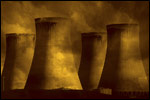
One of the most frustrating things about the renewed debate over nuclear power is that it has basically been forced into the public sphere by brute force of cash. The Nuclear Energy Institute can afford to hire high-profile shills; they can blitz the press until they get some prominent placement.
They get to set the terms of the debate. We’re stuck arguing "nukes good" or "nukes bad." That makes public acceptance of nukes inevitable, since the "nukes bad" crowd can always be cast as obstructionists standing in the way of progress.
What’s missing? A big-money push behind the positive green alternative: Energy efficiency standards, carbon taxes, incentives for clean energy, smarter land-use policy, smarter agricultural policy, etc.
Why is there no big-money push? Because no big, consolidated industry stands to make money off it. Certainly money could be made, but for the short- to mid-term it will be scattered, distributed, small-scale money.
These green strategies serve the public good, not the corporate good, and thus are at a heavy disadvantage in our corporate-dominated political and media system. They have no big-money backing, and thus have no effective advocates.
So the corporate "solutions" dominate the debate.
(The same is true, to some extent, for biofuels. How did ethanol come to serve as a stand-in for energy independence? Because Big Agribusiness and Big Oil both stand to profit, and congressfolk from agricultural states stand to benefit from the rush of subsidies.)
A message from
Your support keeps our climate news free.
Grist is the only award-winning newsroom focused on exploring equitable solutions to climate change. It’s vital reporting made entirely possible by loyal readers like you.
At Grist, we don’t believe in paywalls. Instead, we rely on our readers to pitch in what they can so that we can continue bringing you our solution-based climate news. Donate today to keep our site free.