Uncategorized
All Stories
-
Raising rates to afford cheap coal
"It allows us to continue to use coal, even though the cost of coal is going up."
-- Jeri Matheney, corporate communications manager for Appalachian Power, defending his utility's request for a substantial rate hike in West Virginia
-
Authors of economic collapse advise us to stick with coal
The Competitive Enterprise Institute, a right-wing think tank, has announced it is holding a counter-protest to the Capitol Climate Action, the biggest civil disobedience on climate issues in U.S. history. They're calling it the "Celebrate Coal! and Keep Energy Affordable" rally.
A better name might be the "Celebrate 24,000 Dead Americans!" rally, because that's how many people toxic pollution from coal-fired power plants kills every year, costing Americans $167 billion in additional health care costs.
Other titles CEI could have chosen:
Celebrate Unemployment! Coal kills jobs. Investments in energy efficiency create more than twice the number of jobs as investments in coal, according to the latest numbers from Professor Robert Pollin and Heidi Garrett-Peltier at the University of Massachusetts. Every dollar sunk into a coal plant, even if it's spent making it marginally cleaner, is a job creation dollar almost half wasted. New coal plants are so expensive that they actually cost jobs.
Celebrate Economic Collapse! As the biggest U.S. source of global warming pollution, coal is a major contributor to the $271 billion annual drag on the economy global warming is projected to cause by 2025 (it's already causing a multi-billion drag). Unless we solve the climate crisis, it's going to be that much harder to overcome our economic woes.
Celebrate Weather Disasters! Expect more intense (and possibly more frequent) hurricanes like Katrina and Rita in a global warming world -- and many more climate refugees.
Celebrate Species Extinction! According to the journal Nature, "New analyses suggest that 15-37% of a sample of 1,103 land plants and animals would eventually become extinct as a result of climate changes expected by 2050."
Celebrate Mercury Poisoning! Coal-fired power plants are the largest source of man-made mercury pollution. Mercury from coal pollution can interfere with the development of babies' brains and neurological systems. One in six babies born in America (as well as Jeremy Piven) have elevated levels of mercury in their blood, putting them at risk of learning disabilities, developmental delays, and problems with fine motor coordination.
If it was up to CEI, we would still have lead in our gasoline, no seatbelts in our cars, and more pesticides in children's food. These are the guys who backed deregulation of Wall Street CEO's -- and are now opposing action on climate to get the economy back on track.
If Congress listens to CEI and Big Coal, we won't be able to solve global warming, switch to clean energy, and create the millions of green jobs we need to put people back to work and restore prosperity.
You can help make sure they don't by signing up for the Capitol Climate Action here.
-
The Washington Post lets George Will reassert all his climate falsehoods plus some new ones
[The NYT's Andy Revkin has a very good debunking of Will with detailed comments from leading cryosphere experts, "Experts: Big Flaw in Will's Ice Assertions." Sadly, Andy continues his refusal to correct the harm he did to Gore by equating him with Will. In a day or two, I will attempt to untarnish Gore's reputation to make clear that he did nothing whatsoever wrong -- intentionally or unintentionally -- as opposed to Will who has done multiple things wrong intentionally.]
"When a reputable newspaper lies, it poisons the community; every newspaper story becomes suspect," declared a New York Times editorial. "Great publications magnify the voice of any single writer. Thus, when their editors or publishers want or need to know a source for what they print, they have to know it and be able to assure the community or the courts that they do. Where this is not now the rule, let this sad affair at least have the good effect of making it the rule." That editorial was published on April 17, 1981 about the transgressions of a Washington Post reporter named Janet Cooke [who fabricated a story, which the Post later submitted for a Pulitzer Prize "despite the growing signs of problems" with the story's veracity].
Incomprehensibly, the Washington Post -- after being roundly criticized for having senior editors and fact-checkers (and then their ombudsman!) sign off on (and then defend) George Will's error-riddled global warming column -- has allowed George Will to reassert in a new column (here) that every single one of his falsehoods was factual. [For a point-by-point debunking of the original February 15 piece, see CP and Wonk Room [PDF] and this joint letter to WP].
And in what seems to be Alice-in-Wonderland journalism, a senior editor at the Washington Post now asserts it is perfectly reasonable for a non-scientist Post writer to reinterpret a prestigious source's scientific data to support his or her conclusion -- after those sources have repeatedly stated that their data is consistent with the exact opposite conclusion and without telling readers of that disagreement. And not only did Will do that multiple times in his first piece -- the Post still let him do it again after he was called on it by multiple writers (see Washington Monthly and here).
Much as I would like to spend my time writing about the strategies needed to prevent business-as-usual warming of 5°C to 7°C, both of my parents were award-winning professional journalists, and I think this story is simply too important not to focus a maximum spotlight on.
I will go through Will's new and old falsehoods at length here because, as I noted above, the NYT editorialized on the Post's infamous Janet Cooke scandal, "When a reputable newspaper lies, it poisons the community; every newspaper story becomes suspect." Just as with the Janet Cooke scandal, this is about a major Washington Post writer fabricating and misusing sources.
Media Matters saw Will's column in advance and debunked it here, showing how Will doubled down on his previous global warming distortions and cited a document on sea ice trends as evidence against human-caused global warming when that "document actually states that the sea ice data are consistent with the outcomes projected by climate-change models." And Will cited the U.N. World Meteorological Organization [WMO] -- with no source citation -- saying "there has been no recorded global warming for more than a decade," when, as Media Matters showed, as recently as January 7, Agence France-Presse quoted WMO secretary general Michel Jarraud as saying, "The major trend is unmistakably one of warming." I have similar quotes from WMO in my original post.
The abuse of sources in Will's columns -- signed off on and defended by the Post's editors (and ombudsman) should be a cautionary tale equal to the Janet Cooke story. One can only assume, sadly, that given the controversy, Will's new piece was as at least as fact-checked as the original, which, according to the Washington Post ombudsman was "checked by people he [Will] personally employs, as well as two editors at the Washington Post Writers Group, which syndicates Will; our op-ed page editor; and two copy editors" (see here).
And yet the fact-checkers let through a lie so egregious that it would seem to utterly vitiate the credibility of the Post all by itself. Will was allowed to publish the following statement:
-
Friday music blogging: Dark Was The Night
ListenPlay "Hey, Snow White," by The New PornographersThe Red Hot Organization is a nonprofit devoted to battling AIDS by mobilizing pop culture. Among other things, this has meant a long series of music compilations featuring popular artists.
Most pop music compilations tend to be less exciting than they sound at first blush, but Red Hot's have been unusually high quality, certainly well above the genre's average.
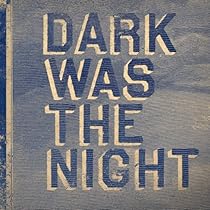 The latest is Dark Was the Night, a compilation of cover songs and unreleased tracks from a who's who of indie luminaries, from The National to Iron and Wine, The Decemberists, Feist, Sufjan Stevens, Arcade Fire, and on and on. It's excellent.
Tough to pick a track, but what the hell, here's The New Pornographers covering a song by Destroyer, a band led by Canadian artist Dan Bejar, also known as a prominent member of ... The New Pornographers.
-
Why not medium-speed rail?
The always-excellent Sam Smith, a keen observer of politics and society as a journalist for over 50 years, introduces an outstanding long piece on the high-speed rail money in the stimulus:
There's nothing wrong with high speed rail except that when your country is really hurting, when your rail system largely falls behind other countries' because of lack of tracks rather than lack of velocity, and when high speed rail appeals more to bankers than to folks scared of foreclosing homes, it's a strange transit program to feature in something called a stimulus bill.
One might even call it an $8 billion earmark. -
There are four climate lobbyists for every member of Congress
Given that climate legislation will touch every sector of the economy -- and ultimately generate hundreds of billions of dollars from the sale of emissions allowances -- it is no surprise that everyone is bringing on hired guns.
But Washington, D.C. is turning into the Wild West, into Deadwood, as an important new Center for Public Integrity analysis (see here) of Senate lobbying disclosure forms makes clear:
More than 770 companies and interest groups hired an estimated 2,340 lobbyists to influence federal policy on climate change in the past year, as the issue gathered momentum and came to a vote on Capitol Hill. That's an increase of more than 300 percent in the number of lobbyists on climate change in just five years, and means that Washington can now boast more than four climate lobbyists for every member of Congress. It also means that 15 percent of all Washington lobbyists spent at least some of their time on global warming in 2008.
The Center for Public Integrity has a great chart that breaks down the lobbyists by sector (see here).
And many of these 2,340 lobbyists are quite senior and influential:
-
Public education: done and done!
This was done in Chicago, allegedly one of America's greenest cities:
It's from Johnson Controls, which has some great stuff on efficiency on its website.
-
Question for the day
Say I have 10 dog turds on my lawn. I want them all off.
One neighborhood teen says he'll scoop up all my turds, at $10 bucks an hour. I calculate it will take him about 5 hours to do it, so roughly $5 a turd, though I can't be certain about the exact per-turd cost.
Another teen says he'll scoop turds for $4 a piece, but he only has three or four hours to spare, so my rough estimate is that he'll get to 6-8 turds, though I can't be certain about the exact number of turds that will be removed.
Which is the more efficient turd-removal strategy?
-
Anti-coal campaign gets some good news, but battle is far from won
We'll still be protesting on Monday in D.C., but it looks like the protest may be half victory party too!
Late Thursday, Senate Majority Leader Harry Reid and House Speaker Nancy Pelosi sent a letter off to the Capitol Architect -- the guy in charge of buildings and grounds, as well as the century-old, mainly-coal-fired power plant that Congress owns and which is located just a few blocks from the fancy dome and the National Mall. The two leaders told him to stop shoveling coal into the power plant's boiler and finish the switch to natural gas.
Now, it just so happens that this is the same coal plant targeted for the first mass civil disobedience in the history of the American climate movement. When Wendell Berry and I sent out one of many invitations to this gathering last fall, we stressed that it was going to be a Very Serious Event; among other things, everyone was supposed to wear dress clothes. That was mostly, I think, because we wanted the home viewing audience to be reminded of something important: the crazies and loons and nutballs are not the people in the streets demanding an end to the carbon age. We're the sane ones, the conservatives seeking to preserve a planet something like the one we were born on to. The radicals are the guys who want to double the carbon content of the atmosphere and see what happens.
But now our sobriety will be sorely tested. It didn't take much of a push to convince Congress that the time for change had come. It's an almost giddy feeling -- sort of like what most of America felt on election night when the voters actually chose to elect the smart guy. It feels like the system is working (sort of) the way it's supposed to.
Not, of course, that Reid's and Pelosi's decision accomplishes all that much by itself. This is one small power plant. We need to start shutting down the whole vast coal archipelago that provides half the nation's electricity. That's going to be a tough, grinding job that requires a huge movement. And it's somehow going to have to stretch around the world, to China and India and everywhere else where coal is commonplace. (That's why we've got 350.org up and running; we're not going to solve this one city at a time).
But hey, starting Opening Day with a no-hitter is pretty darned good. Shutting down a coal-fired power plant before you even have a protest should give us some momentum to build on. Come on down Monday for the party; it's going to be a good one.
Bill McKibben is co-founder of 350.org, and author most recently of Deep Economy.
-
Why I'm joining 2,000 people for a global warming mass arrest on Monday
On Monday, I'm going to get arrested just two blocks from the U.S. Capitol building. I'll peacefully block the entrance to an energy plant that burns raw coal to partially power Congress. My motivation is global warming. My colleagues in civil disobedience will include the poet Wendell Berry, country western signer Kathy Mattea, and Yale University dean Gus Speth.
Up to 2,000 other people from across the country will risk arrest, too. We'll all be demanding strong federal action to phase out coal combustion and other fossil fuels nationwide that threaten our vulnerable climate.
This mass arrest might seem symbolic and radical to many Americans. Symbolic because it's purposefully organized amid the iconic images of Washington, D.C. And radical because, well, isn't getting locked up kind of out there? And isn't global warming kind of vague and distant?
But I live five subway stops from the U.S. Capitol. My home is right here. There's nothing symbolic -- for me -- about trying to keep the tidal Potomac River out of my living room and off the National Mall where my son takes school trips. There's nothing symbolic about fighting for homeowner's insurance in a region where Allstate and other insurers have already begun to pull out due to bigger Atlantic hurricanes. And what's vague about the local plant species like deadnettles and Bluebells that now bloom four to six weeks earlier in D.C.-area gardens thanks to dramatic warming.

