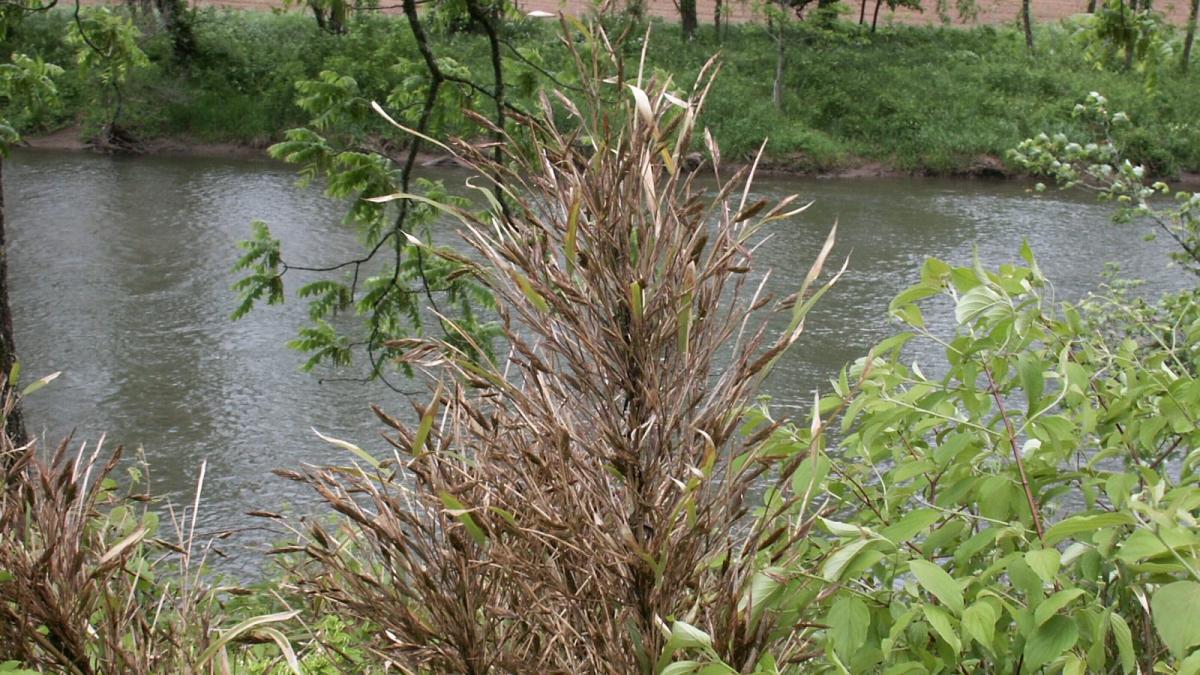
In early 2024, Michael Fedoroff trekked out to Tuckabum Creek in York County, Alabama. The environmental anthropologist was there to help plant 300 stalks of rivercane, a bamboo plant native to North America, on an eroded, degraded strip of wetland: a “gnarly” and “wicked” area, according to Fedoroff. If successful, this planting would be the largest cane restoration project in Alabama history. He and his team got the stalks into the ground, buttressed them with hay, left, and hoped for the best.
A few days later, rains swept through the area and the river rose by 9 feet. “We were terrified,” said Fedoroff. He and his team raced back to the site, expecting to find bare dirt. Instead, they found that the rivercane had survived — and so, crucially, had the stream bank.
Rivercane used to line the streams, rivers, and bogs of the Southeast from the Blue Ridge Mountains down to the Mississippi Delta. Thick yellow stalks and feathery leaves reached as high as 20 feet into the sky, so dense that riders on horseback would travel around rather than venturing through.... Read more
