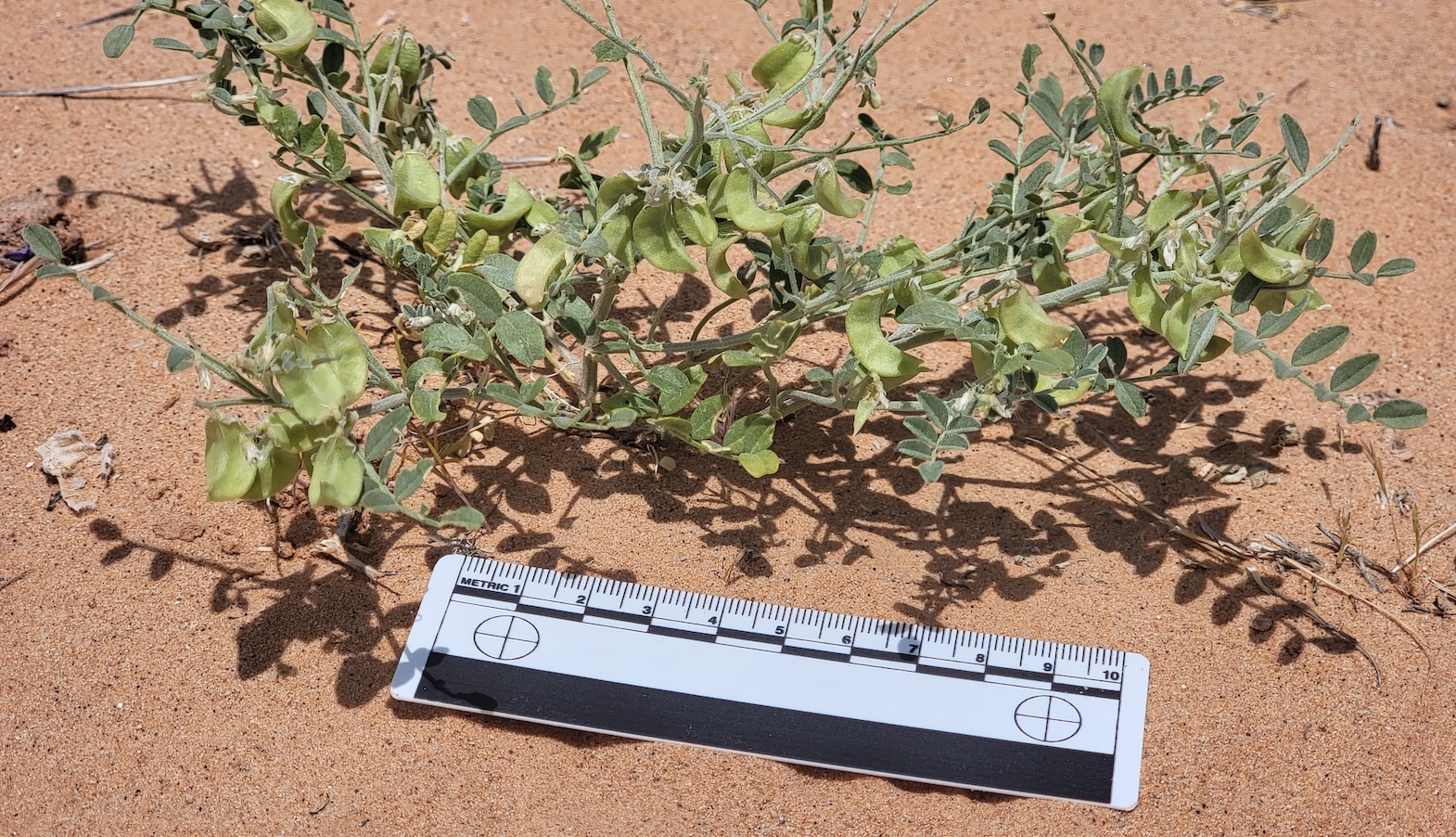
The ostensibly barren Mojave Desert is in fact teeming with plants and animals, including a rare species known as the threecorner milkvetch. It’s a member of the pea family, splaying across the ground instead of climbing up a garden trellis. Given the harsh desert conditions, it waits until the arrival of rains to burst from the earth — flowering, fruiting, and reproducing.
Though hardy, the threecorner milkvetch — which is under consideration for listing under the Endangered Species Act — and its fellow species in the Mojave are still sensitive to disturbance, like when solar farms literally break ground. Traditionally, energy companies “blade and grade” habitats, meaning they cut out vegetation and even out the soil, which disrupts the seed banks stored within the ground.
In the desert outside of Las Vegas, the Gemini Solar Project took a gentler approach, instead trying to preserve the ecosystem. According to a new study, it paid off for the threecorner milkvetch: Before the development, scientists found 12 plants on the site, and afterward in 2024 found 93, signifying that the seeds survived construction. Compared to a nearby plot of land, the plants at Gemini grew wider and taller, and produced more flowers and fruits. That might be because the solar panels shade the soil, slowing evaporation, which makes more water available to the plants to grow big and strong. “So you just have the potential for a lot more plants,” said Tiffany Pereira, an ecologist at the Desert Research Institute and lead author of the paper, which was published late last year. “There’s seedlings of so many other species coming up as well. And so the fact that seed bank survived is phenomenal.”
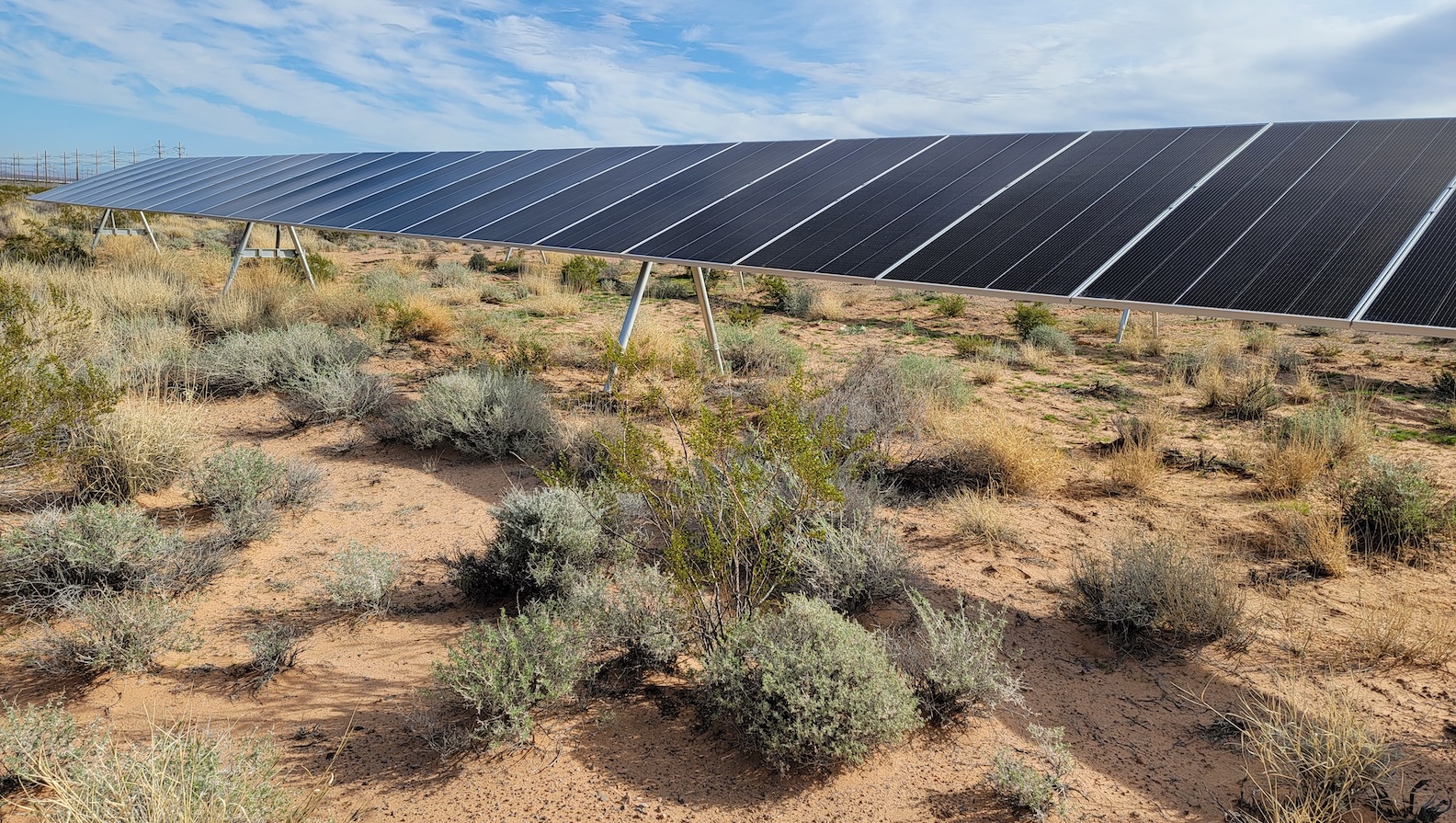
It’s yet more evidence that solar farms can be built in ways that minimize disturbances to ecosystems. (The company behind the Gemini project, Primergy, did not respond to requests for comment.) This technique is called ecovoltaics: Instead of blade-and-grade, facilities are built with native species in mind. To give the ecosystem a boost, for instance, a crew can seed the soils with native grasses and flowers. “Some of those seed mixes do quite well at solar facilities, and they attract pollinators, birds, and other wildlife as a result,” said Lee Walston, an ecologist at Argonne National Laboratory who wasn’t involved in the new paper. “Sort of asking that umbrella, Field of Dreams, question, right: If you build it, will they come?”
In Minnesota, at least, the answer is yes. Walston led a study of two solar sites on converted cropland there, observing the growth of biodiversity over the course of five years. The researchers found that the number of unique flowering plant species increased sevenfold, and the abundance of insect pollinators tripled. Native bees alone increased by 20 times. In a follow-on study across a dozen solar sites, grassland birds flocked to the areas, likely attracted by the abundance of insects — same goes for bats. Birds could also nest among the panels, hiding from predators. “We’ve seen positive outcomes, sort of across the board,” Walston said. “Anytime that you’re seeing increases in insect prey, you’ve got at least a really strong potential for also seeing greater bird activity and bat activity, as they are attracted to those sites.”
Such a significant boost to biodiversity is not a given, though. Certain plant species will need more or less shade from the panels: In the Mojave, Pereira only found one threecorner milkvetch, for example, growing directly under a panel. The rest were popping up in the sunnier spaces between them. Young plants of other species, by contrast, might prefer shadier spots, because too much sunlight can stress them.
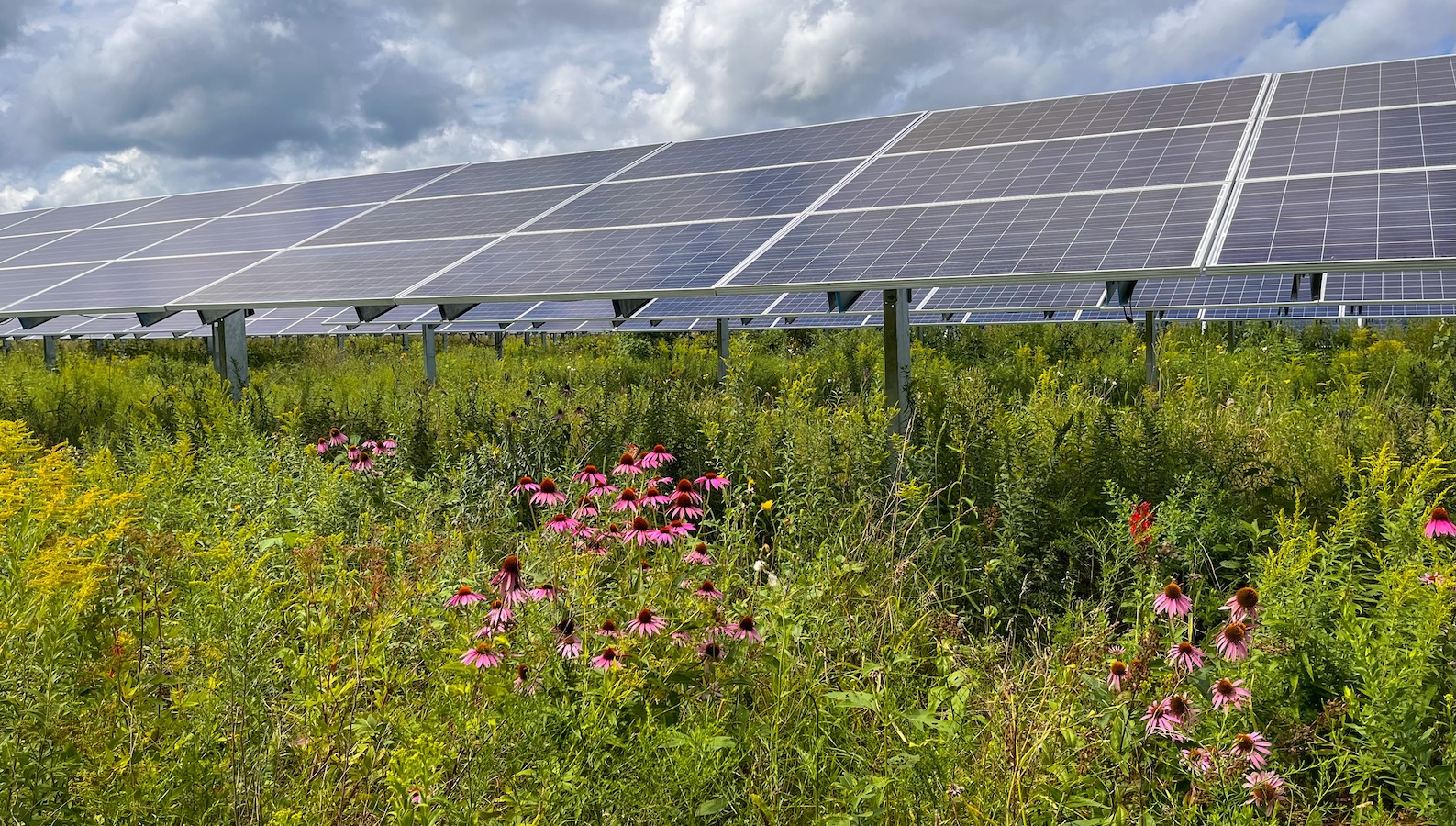
Panel height is a major factor, too: Taller ones let bigger plant species grow to their full potential — but the higher the supports, the more a solar company must spend on materials. A facility might also set a specific height to accommodate livestock like sheep and goats, used for “conservation grazing” to clear out invasive weeds, which in turn reduces the fire risk of dead plants. “We’re trying to work with developers,” Walston said, “to say, ‘OK, well, if all you can do is 2 feet, what might be the best mix of seed mixes and management styles that could really optimize the habitat?’”
That mowing might sound destructive, but it mimics the natural order of things, as grazers like deer and buffalo, in addition to wildfires, have historically served the same purpose. Ecovoltaics can also return former agricultural fields to more of their natural state. “I think there is real potential for solar farms to be especially good for biodiversity in prairie ecosystems, since prairies evolved over time to require repeated disturbance,” said Johanna Neumann, senior director of the Campaign for 100% Renewable Energy at the nonprofit Environment America, who wasn’t involved in the new research.
The blade-and-grade alternative, on the other hand, doesn’t just disrupt a habitat. With native plant species cleared out, the earth loses the root structures that keep soils from blowing away. Then, opportunistic and fast-growing invasive species can take over, muscling out the natives. And their flowers might not be as enticing for indigenous pollinators like bumblebees.
Just as endemic plants can grow among solar panels, so too can crops, a technique known as agrivoltaics. Researchers are finding, for example, that things like cucumbers grow like crazy on rooftops. The panels create a unique microclimate that keeps crops from getting too hot in the summer and too cold in the winter, and uses about one-third of the water compared to growing in full sun. Now scientists are trying to figure out which crops — especially high-value ones that can make up the cost of installing solar — will do the best growing under panels, both on rooftops and on the ground. “If you’re going to grow something, you want to grow something that a potential farmer could sell for decent profit,” said horticulturist Jennifer Bousselot, who studies rooftop agrivoltaics at Colorado State University but wasn’t involved in the new paper. “You name the crop, and there’s interest.”
All told, ecovoltaics and agrivoltaics have the potential to bolster biodiversity and the food supply while generating clean electricity. “Rather than a moonscape of invasive species and dust blowing into cities, why not strive for something better?” Pereira said. “It’s a wild and beautiful place that we live in, and it’s our job to look out for these species as well.”
A message from
Your support keeps our climate news free.
Grist is the only award-winning newsroom focused on exploring equitable solutions to climate change. It’s vital reporting made entirely possible by loyal readers like you.
At Grist, we don’t believe in paywalls. Instead, we rely on our readers to pitch in what they can so that we can continue bringing you our solution-based climate news. Donate today to keep our site free.