Hey there,
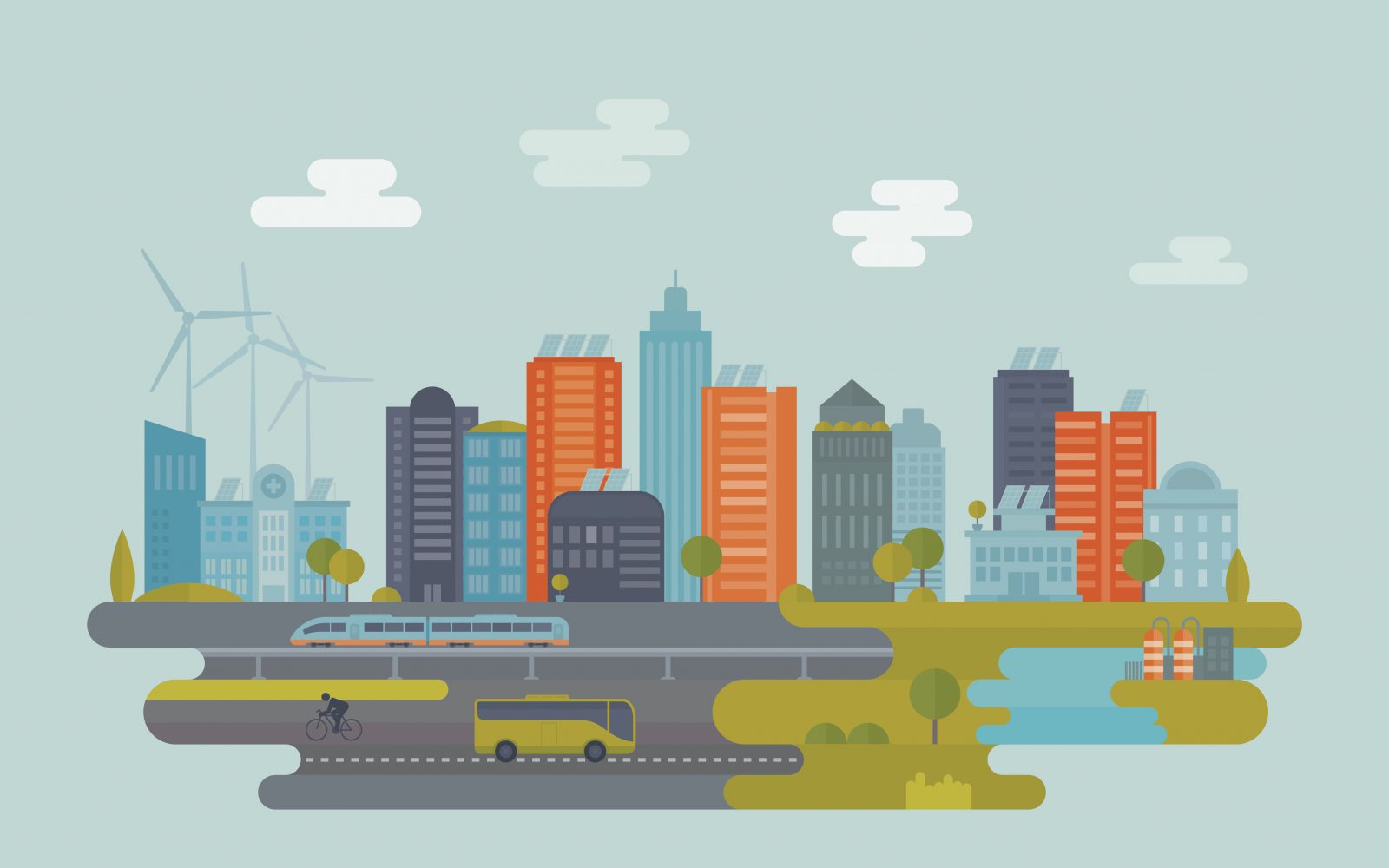
We’re seeing so many radical shifts in our society this year, it’s hard to keep up with it all. One thing I’ve been following closely, as a lifelong and diehard mobility geek, is the changes in the transportation sector.
In the past few months, we’ve been on a wild ride. During the lockdown, emissions tumbled and skies cleared as 50 percent of the world’s population was asked to stay home. Cities around the world gave cars the boot, closing streets to make room for recreation and physical distancing and seizing parking spaces for outdoor dining and other uses. But this good news for climate and clean air was countered by a plunge in bus and subway use, with transit systems in Boston, Chicago, and other cities seeing ridership drops of 85 to 95 percent.
Transportation isn’t just a way to get from here to there. It’s one of the fundamental ways we define ourselves, as individuals and as a society. We can choose to cloister ourselves in private cars that belch noxious fumes or we can go another route: carpool, ride-share, hop on the bus, ride a bike, grab the train, or even — as I did once upon a time in the pre-COVID days — commute by ferry. Public transit links people to jobs, to opportunities, and to each other. When we go places in the company of others, we become part of something greater than ourselves.
The stories in this week’s note all point us in the direction of a better future. I hope you enjoy them — and if you have a chance, let me know how your wild ride is going these days.
— Chip, Grist and Fix founder
Your new hero

How can we return to commuting with confidence in the wake of COVID-19? Urban planner and 2019 Grist Fixer Alvaro S. Sanchez of Oakland has more than a few ideas. From eliminating bus fares for students, seniors, and other low-income riders to expanding ride-share services to creating roles for “attendants” who can hand out PPE and monitor crowding, Sanchez says opportunities abound for cities to make the transit landscape more safe, affordable, and efficient for all.
As a first-generation immigrant and community activist, Sanchez is especially sensitive to the connections between transportation, equity, and justice. “In the context of COVID,” he says, “we should be asking, ‘Who are the most vulnerable people using these services, and how can we make it the most accessible for them?’”
Your reading list

With cities everywhere taking new steps to make space for pedestrians, I thought it was high time to revisit The Last Great Walk. This engaging book, written by journalist (and sometime Grist contributor) Wayne Curtis, is the compelling story of a cross-country journey made on foot in 1909. But Curtis gives us much more than that, as he delves into everything from evolutionary biology to car-centric urban design. All told, it leaves you with the tiniest shred of hope.
Your pick-me-up
- Microtransit is gaining speed. Cities from Abu Dhabi to Los Angeles are embracing microtransit apps, which make public transit available for people when and where they need it. “Imagine Uber and a city bus had a baby,” said one company rep. We can’t unsee that.
- Subways and buses are being exonerated. Despite the anxiety of — well, pretty much everyone everywhere — new research indicates that public transportation did not accelerate the spread of COVID-19. All aboard!
- Electric vehicles will get a Lyft. The ride-sharing company Lyft will switch to an electric fleet by 2030, a move that should lower emissions and bring down operating costs, and might even represent a win for social justice.
- If you build it, they will bike. A former New York City traffic commissioner is calling for a $100 million bridge to connect midtown Manhattan to Queens. It would be the first new bridge to Manhattan in decades — and (sensing a theme yet?) it’d be for bikes and pedestrians only.
- We just wanted to say Boulevard Périphérique. Paris Mayor Anne Hidalgo is calling for permanent car-free streets, dedicated lanes for zero-emission vehicles, lower speed limits, and a reinvention of the aforementioned B.P., the traffic-clogged ring road serving Paris since 1973.
Your next move
- Push for a cleaner transportation system. Primary-care physician Gaurab Basu prescribes a climate-friendly transportation system as a public-health solution. Do as the good doctor says: Whether you’re submitting comments on a transportation and climate initiative in Northeast and Mid-Atlantic states or defending (a controversial!) high-speed rail in California, chances are there’s a transit system near you that needs your support.
- Be a cycle-path, bus to move, or … enter-train yourself? If your town or city is opening up, check out this whizbang app that collects in one place information about local bikeshares and scooter-shares, real-time transit schedules, and (if you must) details about ride-hailing services.
- Bike for justice. The first Ride for Racial Justice was organized last weekend in Denver and led to similar rides in other parts of the country. Organizers hope to expand to other cities soon.
- Pump it up. Sometimes our main excuse for not pedaling the streets comes down to this — we’ve got a flat tire. Get off the couch! Here’s our handy guide to solving that problem.
Your weekend plans
Supercoloring.com
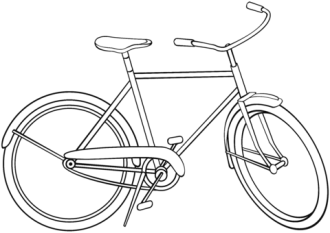
Remember when “adult coloring” was a huge thing, and then it was so passé, and now . . . eh, who can keep up. We deem it OK again. Because in these trying times, we think it could be mighty relaxing to grab your favorite colored pencils, crayons, or markers — or the nearest chewed-up pen — and lend some sweet hues to your favorite bike, bus, train, subway, or ferry. Public transit plus meditative artmaking equals one sweet Saturday.