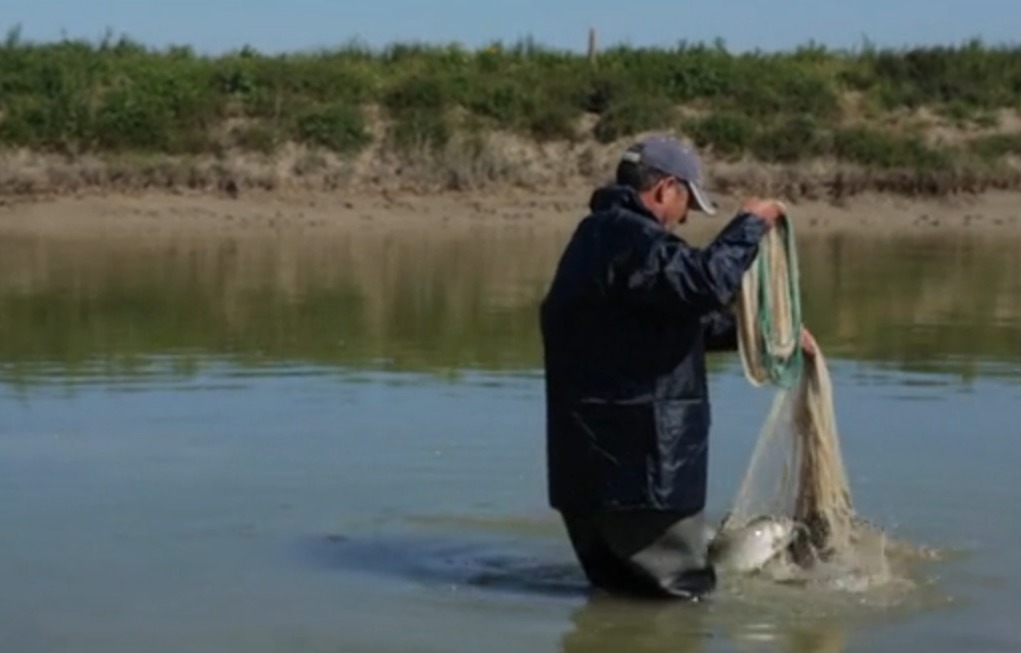
Veta La Palma takes sustainable fish farming to a whole new level. In 1982, the company bought up marshlands adjacent to the Guadalquivir River in Southern Spain. The land had been drained to raise cattle, which destroyed the natural habitat and decimated the local bird population. Veta La Palma re-flooded the area and went to work restoring the wetlands.
Now, the company’s aquaculture farm uses natural filtration to clean the water, and encourages biodiversity — even that of predators. “They take about 20 percent of our annual yield,” farmer and biologist Miguel Medialdea told TIME Magazine as a bird scooped up a sea bass. “But that just shows the whole system is working.”
Inspired by chef Dan Barber’s TED talk on the subject, we made the trek out one windy afternoon to learn about this holistic approach to growing fish.
[vimeo http://vimeo.com/69471242]
A message from
Your support keeps our climate news free.
Grist is the only award-winning newsroom focused on exploring equitable solutions to climate change. It’s vital reporting made entirely possible by loyal readers like you.
At Grist, we don’t believe in paywalls. Instead, we rely on our readers to pitch in what they can so that we can continue bringing you our solution-based climate news. Donate today to keep our site free.