This story is part of the Grist series Flood. Retreat. Repeat, an exploration of how communities are changing before, during, and after managed retreat.
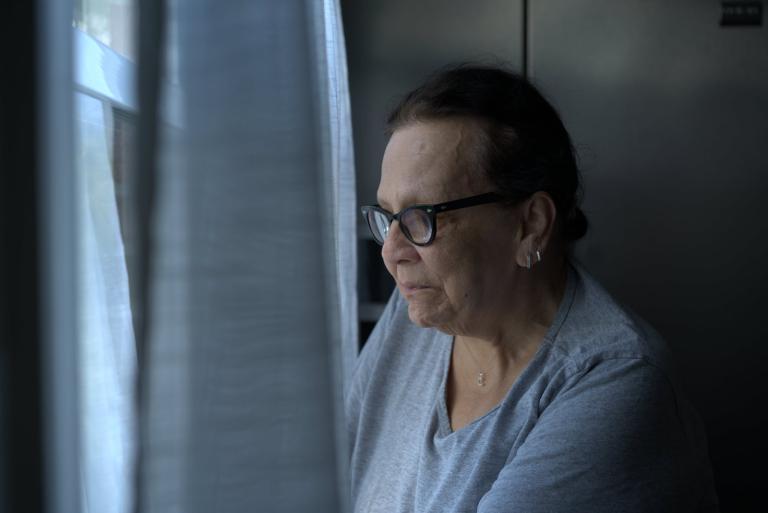
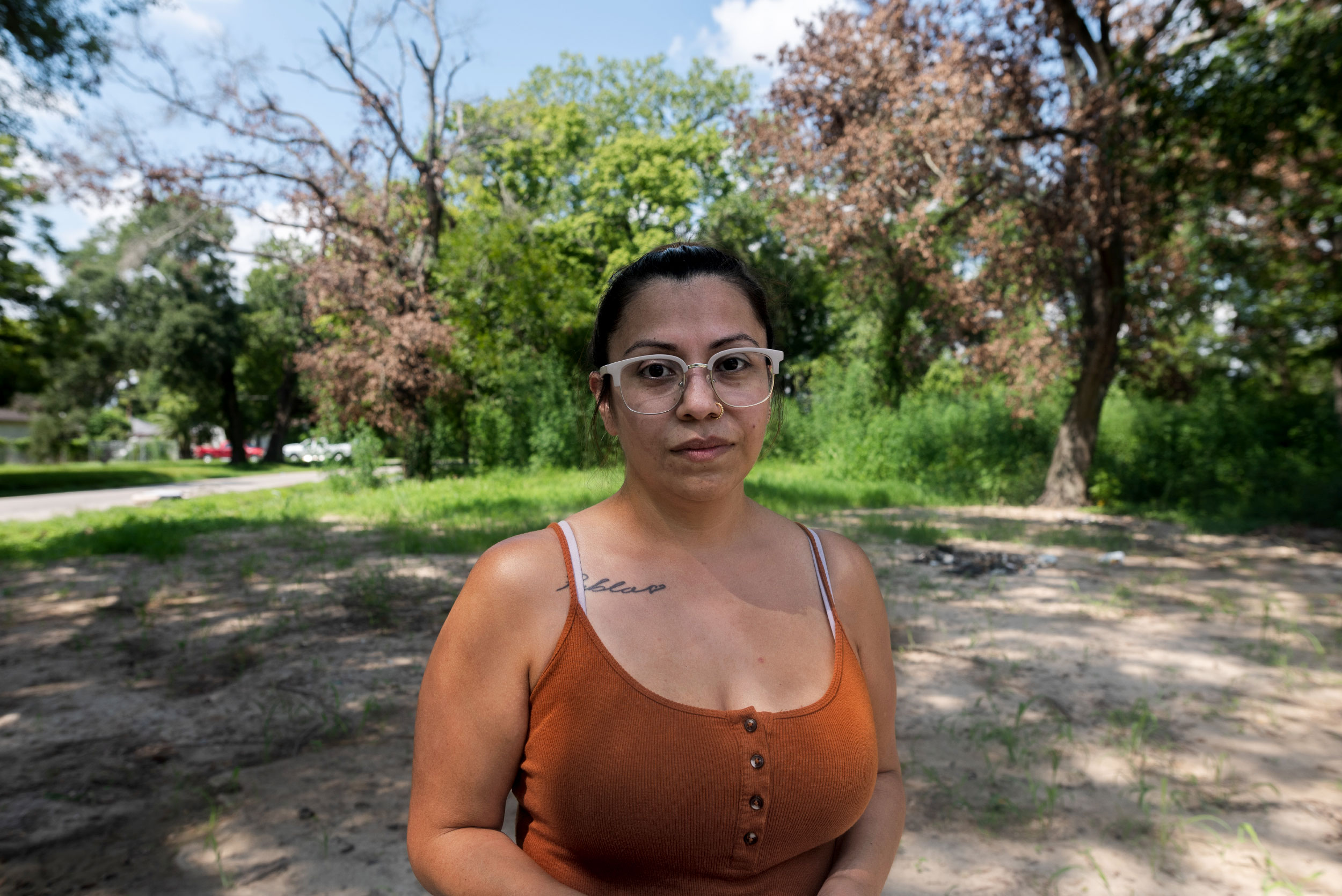
Dolores Mendoza lived in the Houston neighborhood of Allen Field for most of her life. Once, when her daughter was young, she moved to a north Houston suburb not far away, so her daughter could grow up with safer streets and better schools. “I hated it,” she said flatly, remembering her attempt to leave. “I didn’t know my neighbors — there are 100 houses and you don’t know anyone.” She came back within a year.
In this corner of unincorporated Harris County, 13 of her closest neighbors are also her family: her mom, aunts and uncles, cousins, siblings. Her parents and grandparents both met in the neighborhood, got married, and stayed here. “I have my maternal family on one street, and my paternal family on the other,” she said, laughing. Her memories of growing up include bike rides through the streets from one friend or cousin’s house to the next.
But her upbringing was also punctuated by intense floods that put her neighborhood underwater over and over again — to name a few, tropical Storm Allison in 2001, Harvey in 2017, and Imelda in 2019. When it flooded during Mendoza’s childhood, the neighborhood kids would put on floaties and swim through the knee-deep or occasionally waist-high waters. Her kids have grown up with the same memories.
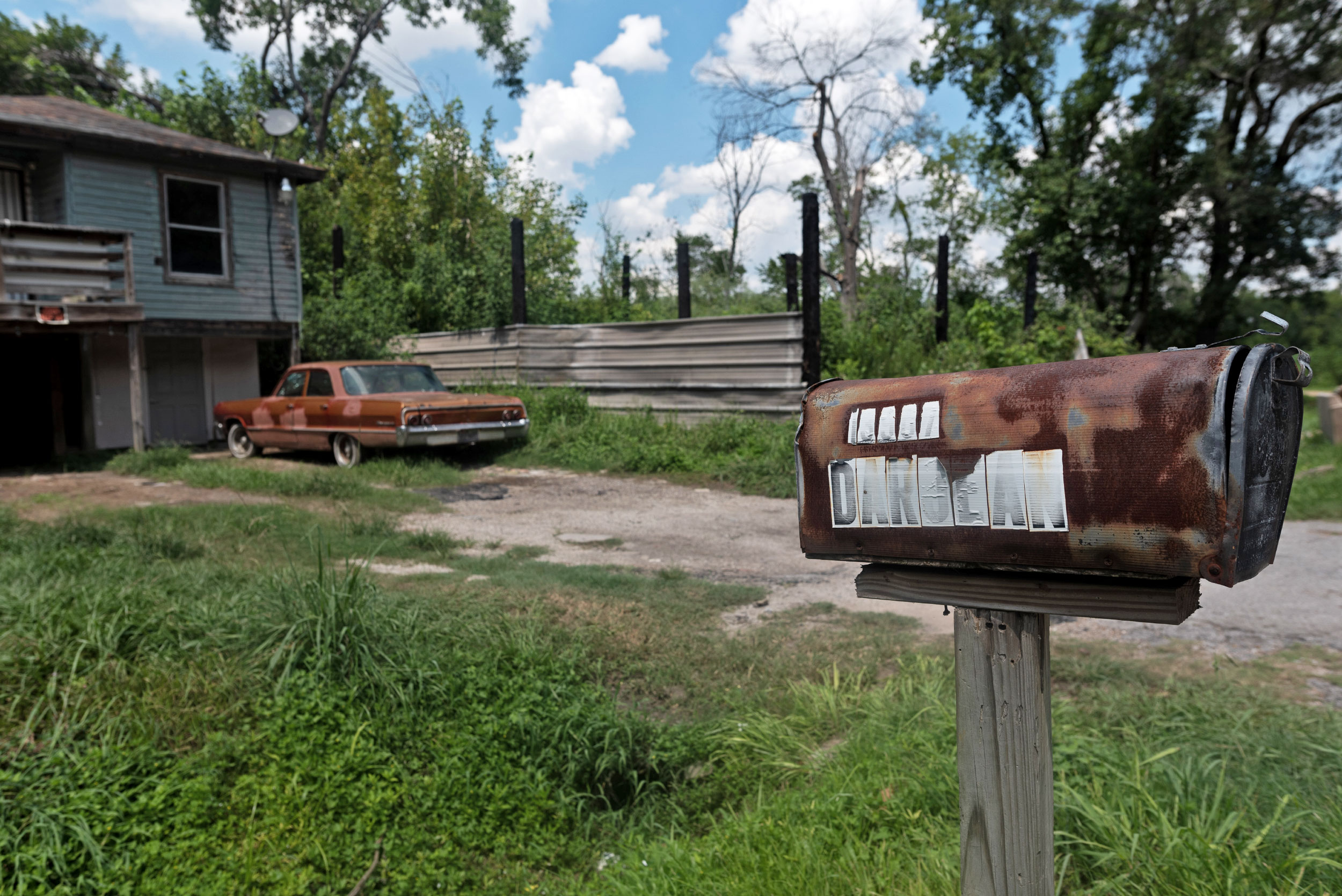
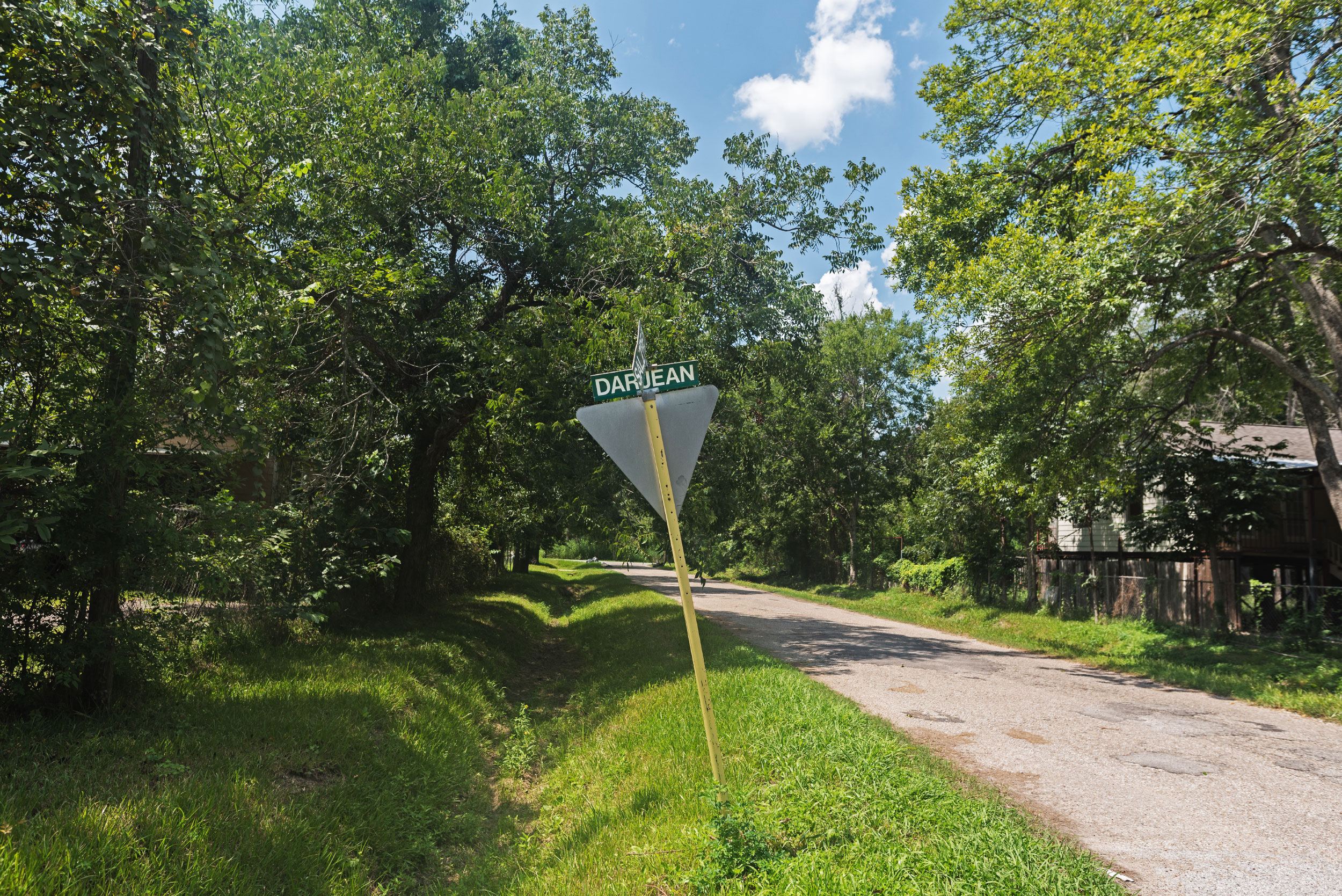
The community sits behind Greens Bayou, a small river that meanders through northern Harris County before emptying into the Houston Ship Channel. Overgrown grassy ditches bursting with yellow wildflowers line Darjean Street, the small road that Mendoza grew up on. The channels are meant to funnel flood waters away when it rains and the river overflows. But more often than not, when a storm comes, Allen Field still floods.
With each storm, families in Allen Field rebuild homes and raise them higher off the ground to avoid floodwaters in the next one. Despite the repeated disasters, most families haven’t left the neighborhood. They know exactly who to call for help during a crisis, and who to trust afterwards as they put their lives back together.
But in recent years, flooding in Allen Field has gotten worse and more dangerous as climate change feeds stronger storms and new developments further upstream reshape the area’s floodplains. Mendoza remembers vividly when Hurricane Harvey dumped more than 60 inches of rain on the region in 2017. That was the first time that the floodwaters were chest deep. “You couldn’t even see the street signs,” she said. Her home, which had been elevated 6 feet above ground after Allison, took on several inches of water and the roof started to leak.
For decades, Harris County, home to Houston and its surrounding towns, had a buyout program operating in Allen Field and other neighborhoods in the northeast pocket of the city: Residents could sell their houses to the county at market value and get assistance to move out of the floodplain. The house would be demolished and the lot underneath it restored as a greenspace that could absorb flood waters.
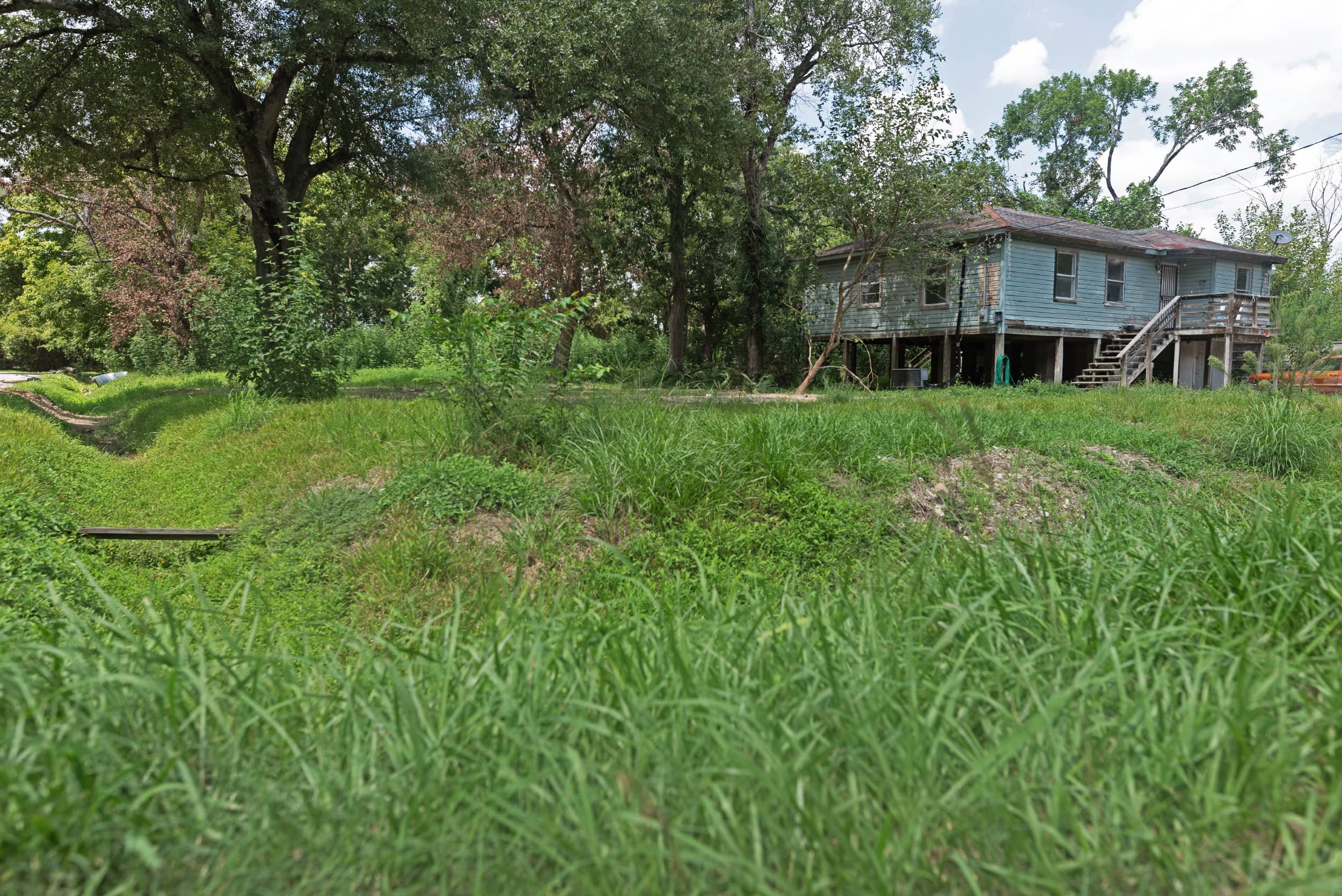
“A lot of areas were developed within the county that should never have been developed — areas that we now know are several feet deep in the floodplain,” said James Wade, Harris County Flood Control District’s property acquisitions manager.
Because the buyout was funded through the Federal Emergency Management Agency, or FEMA, it had to be voluntary. The county couldn’t force anyone to move if they didn’t want to. Between Hurricane Allison in 2001 and Hurricane Harvey in 2017, only a handful of homeowners sold their properties. Year after year, most families chose to stay and rebuild.
“I just want to make sure [the county] is going to take care of everybody.”
Dolores Mendoza
But in 2020, the county chose to make the buyout in Allen Field — and six other neighborhoods — mandatory. The county had just gotten federal relief dollars for Hurricane Harvey from the Department of Housing and Urban Development, or HUD, giving it a bigger budget to execute buyouts. “These particular communities … have flooded about 12 times in the past 40 years,” said Christy Lambright, the director of Disaster Recovery & Resiliency Planning at the Harris County Community Services Department. “We couldn’t build anything that would save these communities. There’s no detention pond we can build, no widening of the bayou that we can do — we need that land to save the neighboring neighborhoods.”
But the decision has left residents of Allen Field and several other Harris County areas scrambling to navigate a complex buyout process while also trying to preserve and protect the community that they’ve lived in for generations.
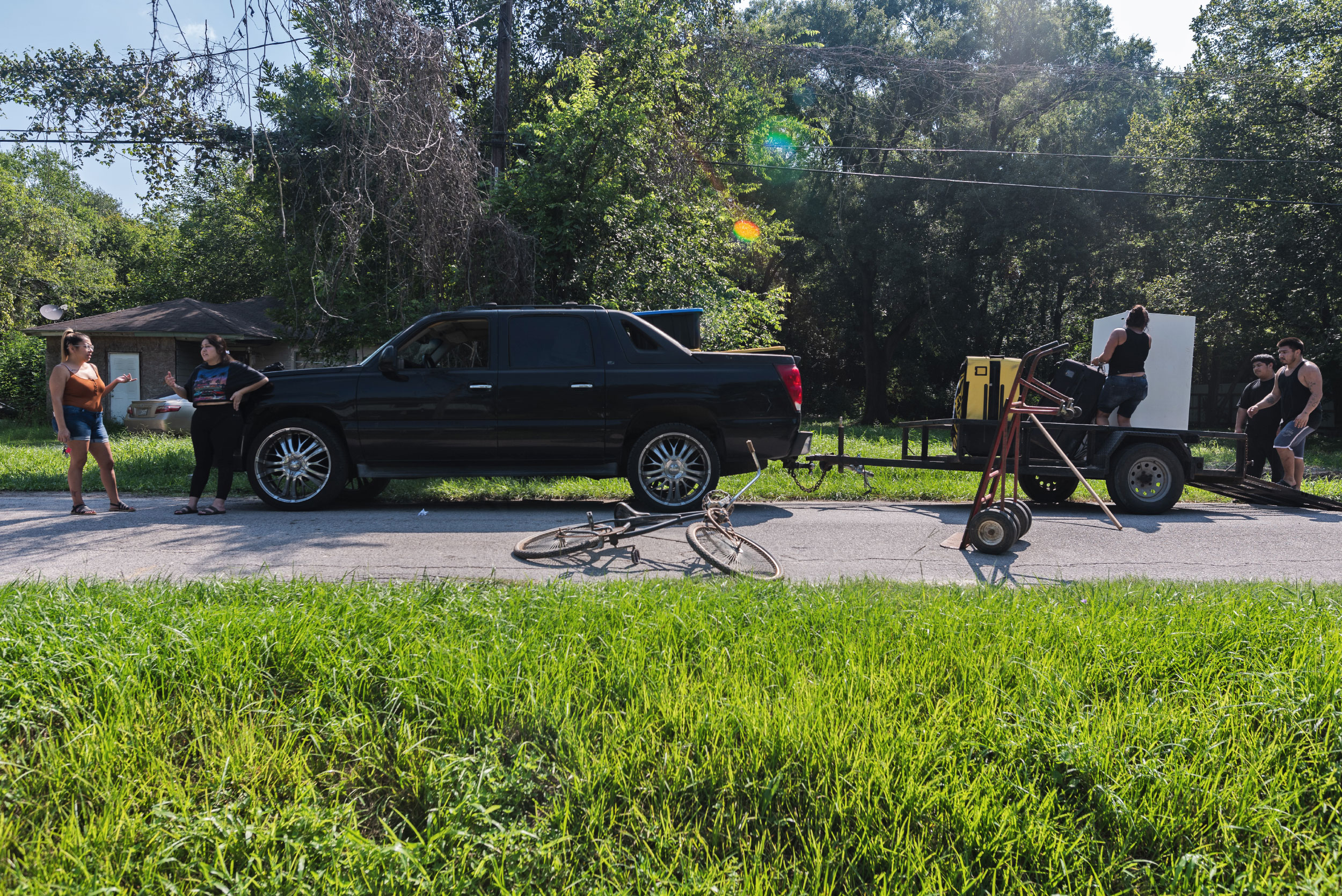
Last December, Mendoza was among the first in the neighborhood to move out through the mandatory buyout. It took nearly two years for the sale of her house to go through. The county paid out the sale price of her new home in Kingwood, 15 miles away, but she had to unexpectedly pay thousands of dollars in closing fees out of pocket. Her property taxes and homeowner association fees are also seven times higher now.
Mendoza counts herself lucky that she can afford those extra expenses on her salary as a credit controller. But she worries that some of her neighbors — the older folks, the ones who don’t speak English fluently, or those on fixed incomes — will have a harder time going through the process. Others are losing not only their homes, but their businesses as well — and don’t feel that they’re being fairly compensated. And, of course, there are some losses that can’t be quantified: Decades-long friendships and relationships will change as neighbors move further away from each other.
“I just want to make sure [the county] is going to take care of everybody,” Mendoza said. Early on, she remembers telling the county officials handling her case, “Use me as your guinea pig and figure this shit out before you go deal with everyone else.”
The federal government has been subsidizing flood control buyouts in some form since as far back as the 1930s and 40s. By the mid 1990s, Congress moved the program under FEMA, and a state and federal partnership model funds the program nationwide.
Today, Harris County is the largest recipient of federal dollars for buyouts. According to a report from Rice Univeristy’s Kinder Institute for Urban Research, between 1985 and 2017, the county spent $342 million to acquire over 3,100 properties. The money was allocated from federal agencies, like FEMA, HUD, and the Army Corps of Engineers, as well as local funding sources.
“The program really started as a rural program to help farmers whose farms kept flooding,” said Jim Elliott, a researcher at Rice University who focuses on inequities in disasters and recovery. “There’s been a sort of policy creep as the [program] has moved into cities,”
Buyouts are now a major climate adaptation policy to get people out of harm’s way. FEMA estimates that nearly 13 million Americans live within a floodplain — though some scientists place that number closer to 40 million using more up-to-date flood maps. As climate change makes extreme weather more severe and more frequent, buying out these homes should reduce the risks that people face, and lower the costs of repetitive payouts from insurance companies, including the National Flood Insurance Program, which is billions of dollars in debt. The program has paid out more money to residents in Harris County than any other area in the country.
But such programs often deepen existing social inequalities. In 2021, Elliot and a team of researchers found that wealthier, whiter neighborhoods were able to maintain social ties and social capital after a buyout. Households resettled closer to each other and the amenities they enjoyed. But lower income areas saw the opposite effect: They resettled further from each other, and the benefits of their social ties were weakened.
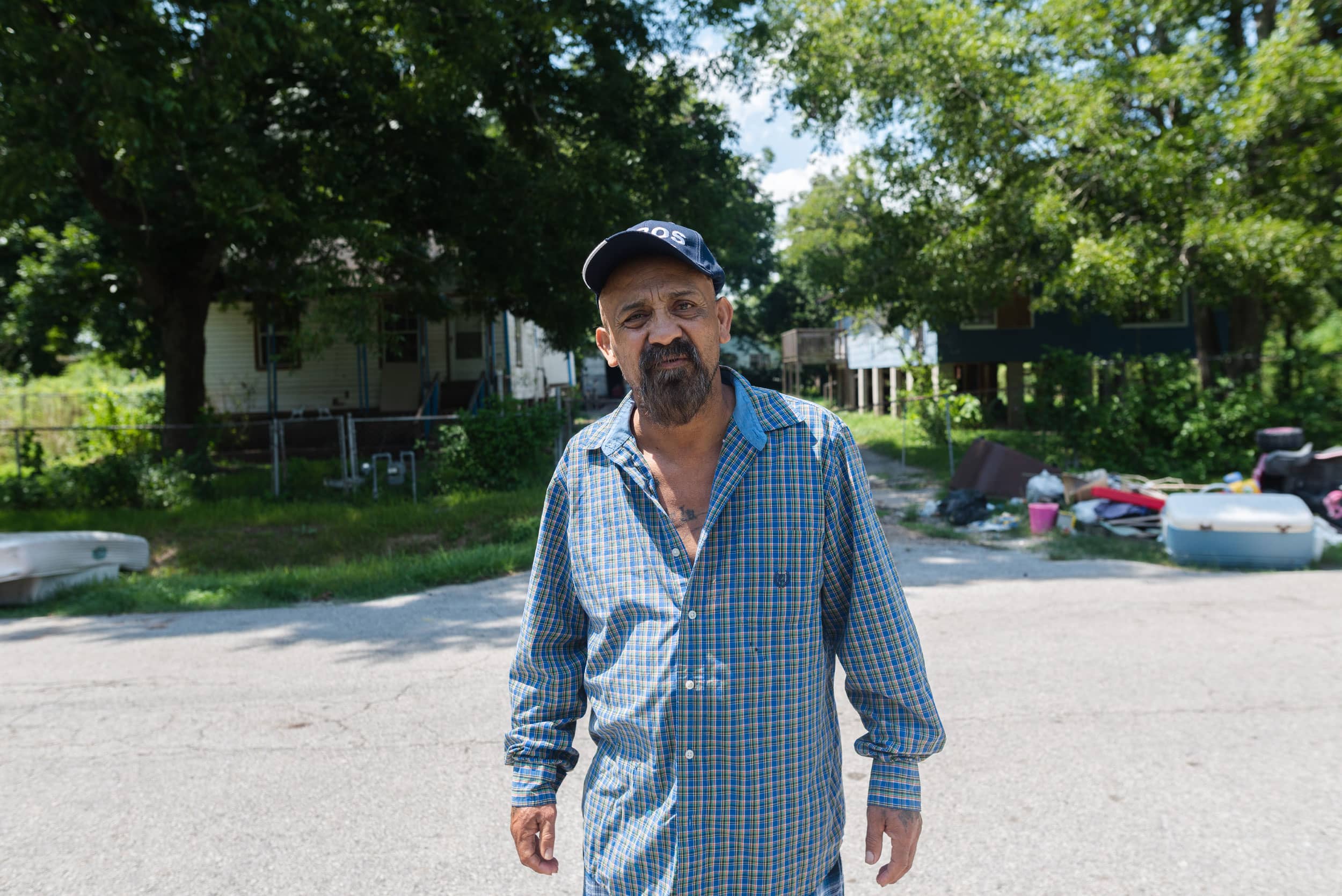
Antonio Medal stands in front of his Allen Field home, which originally belonged to his father. Most of his family is now scattered due to the county’s mandatory buyout program. Grist/Jacque Jackson
“Flood control experts measure success by how many homes they buy out. People in a community measure success by how much they’re able to maintain the community,” Elliott said. “So, who has to give up that social value to adjust to climate change?” In Harris County, there’s evidence that, over and over again, it is low-income communities and communities of color.
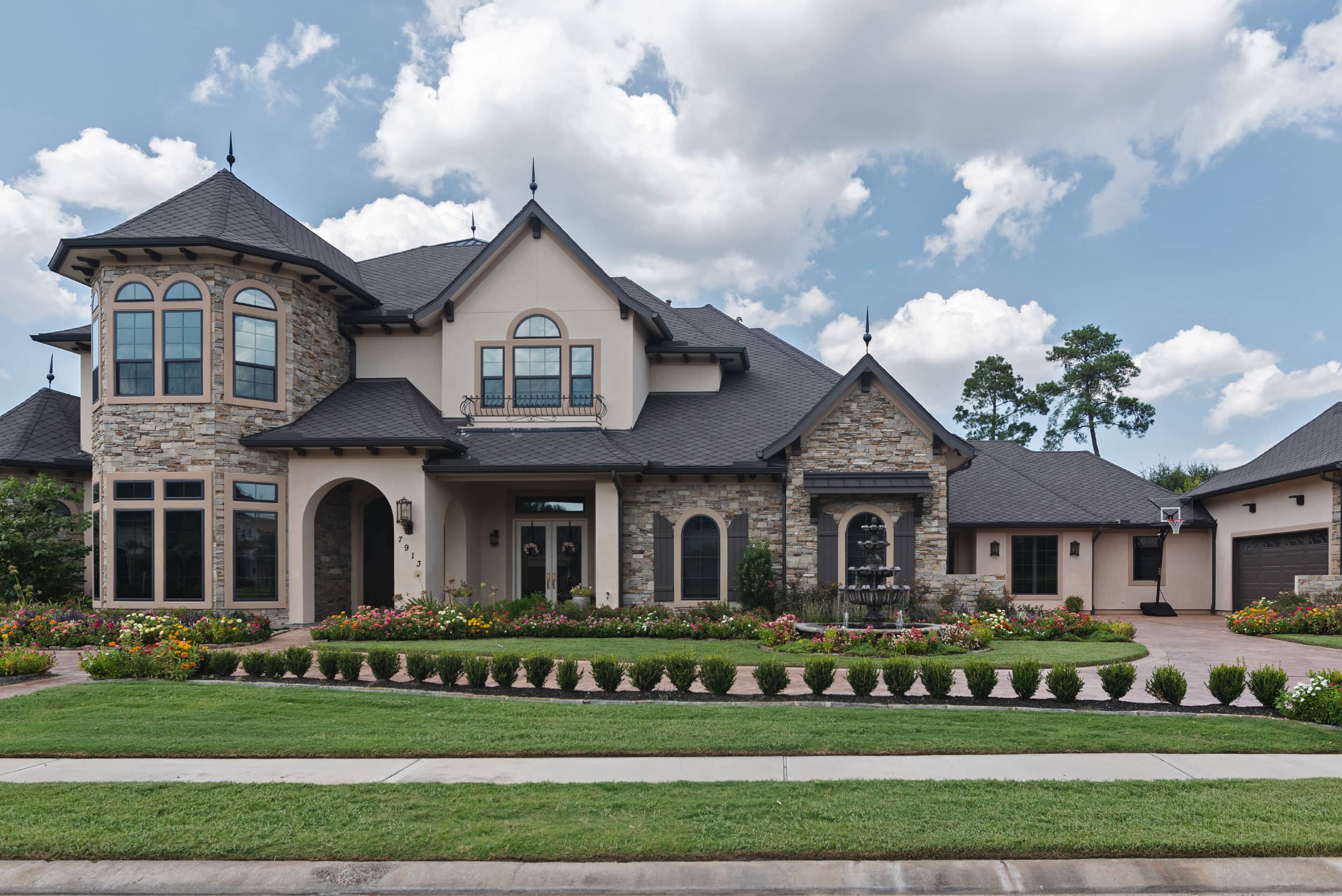
Mendoza’s house cost the county about $60,000 to purchase. It has about the same flood potential as houses in the wealthier, whiter Fall Creek neighborhood of Humble, also located along Greens Bayou, that cost more than 10 times as much. But only Allen Field, which is majority Black and Latino, is being forced to participate in a buyout.
When asked about these inequities — historical and present — and the flood control district’s responsibility to address them, Wade, from the Harris County Flood Control District, said that the agency has not unfairly targeted low-income neighborhoods for buyouts. HUD requires that certain grants benefit low- to moderate-income areas.
“From the flood control perspective, we’re just interested in relocating people out of harm’s way and getting them to higher ground — regardless of race, ethnicity, and income level,” Wade said. “I know in Texas, we’re very big on property rights. But at what point does the government become negligible for allowing folks to live in harm’s way?” Lambright echoes that thought. “We did not enter into this thinking it was going to be an easy task,” she said. “This river is never going to stop flowing. It’s going to take out the road, it’s going to be detrimental to homes. There was no way that Harris County could ignore this issue.” And despite the influx of funding from HUD post-Harvey, it still falls short. There are far more communities in harm’s way that haven’t been given a path out of the floodplain at all.
Some residents in Allen Field welcome the buyout. Lena Apodaca has lived in the neighborhood for four decades. Her husband passed away in 2019 and since then she’s lived alone in the house he left her. “I’m not fighting it,” she said. “I don’t want to go through another flood by myself.” Apodaca describes herself as old-school: She doesn’t have a smartphone or a computer. She’s filled out all the paperwork the county needs to approve the sale by hand, and she’s been waiting ever since. “Last year, that was the last time I heard from them,” she said. “I tried calling them, no answer, no nothing.”
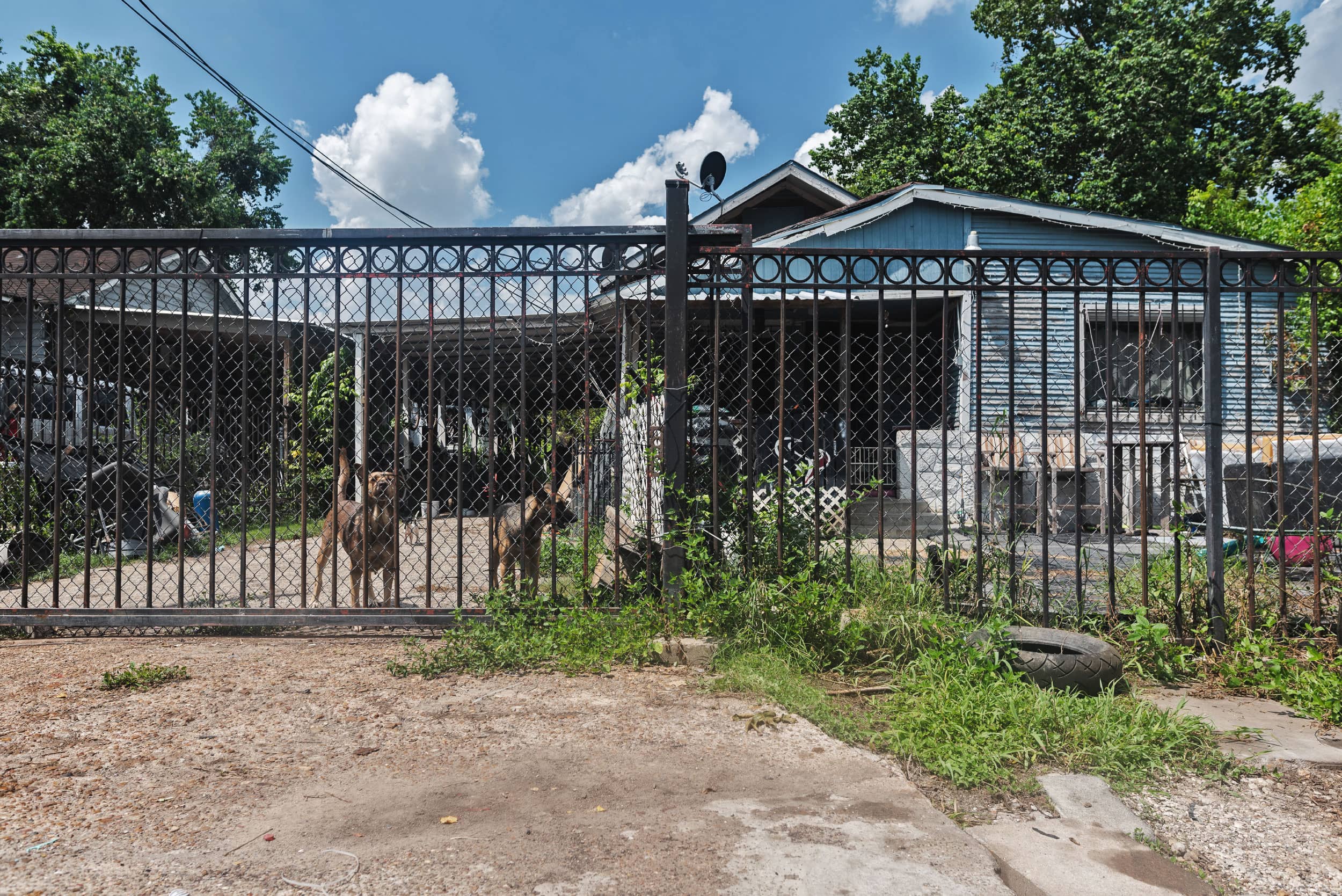
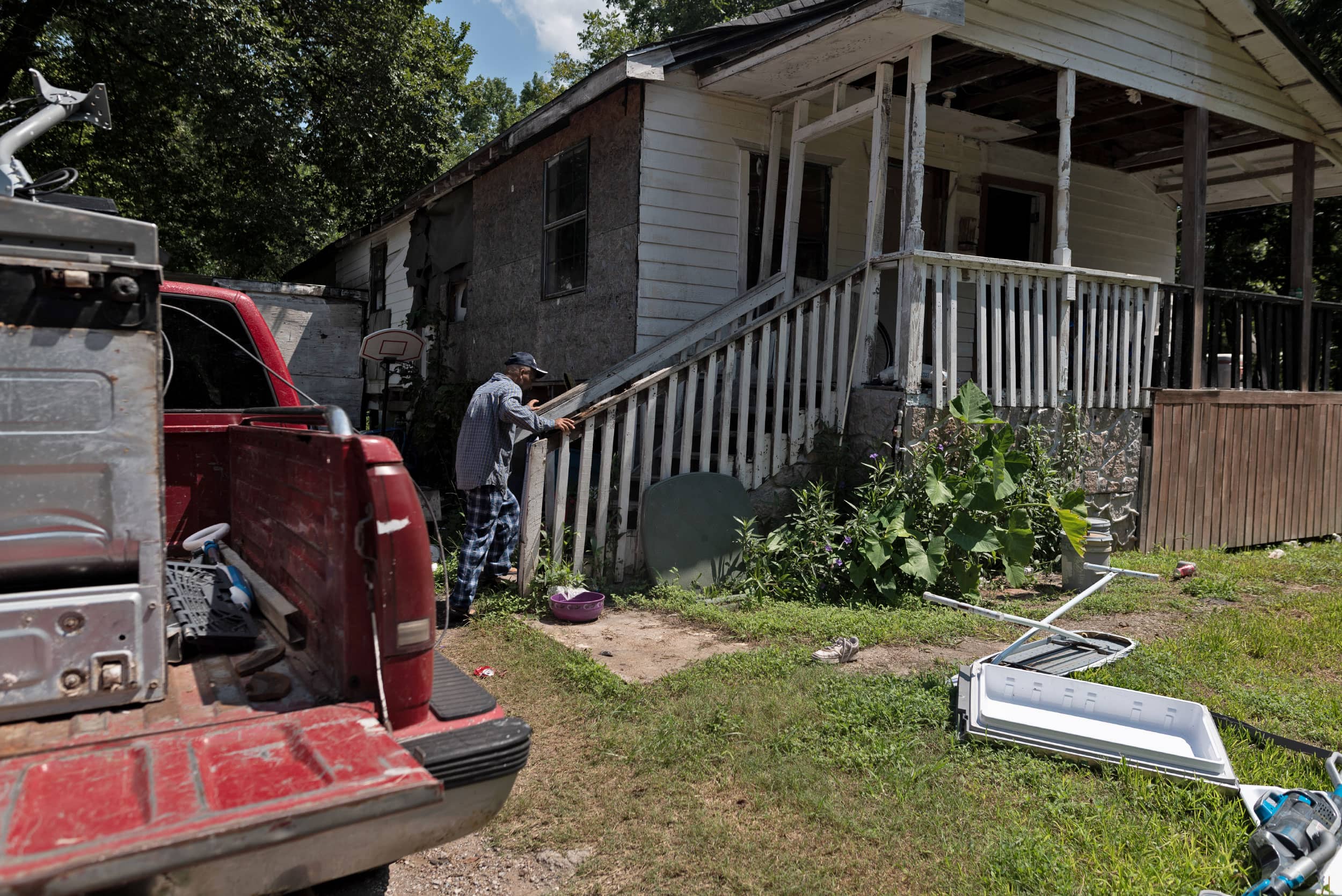
In February 2021, a record-breaking winter cold snap gripped Texas; as temperatures dipped into the single digits, millions of Texans lost power. In Lena’s house, the pipes froze and burst, and she didn’t have running water. The county has cautioned against making repairs to homes because those costs won’t be reflected in the sale price. But Apodaca’s sons helped her replace the pipes anyway — if they hadn’t, she would have been without running water for more than a year now. Others have decided it’s not worth sinking more money into their houses. So they’ve lived without kitchens or a spare bathroom since the freeze. At Mendoza’s mother’s house, an entire back room seeps every time it rains, the smell of mildew permeating the walls.
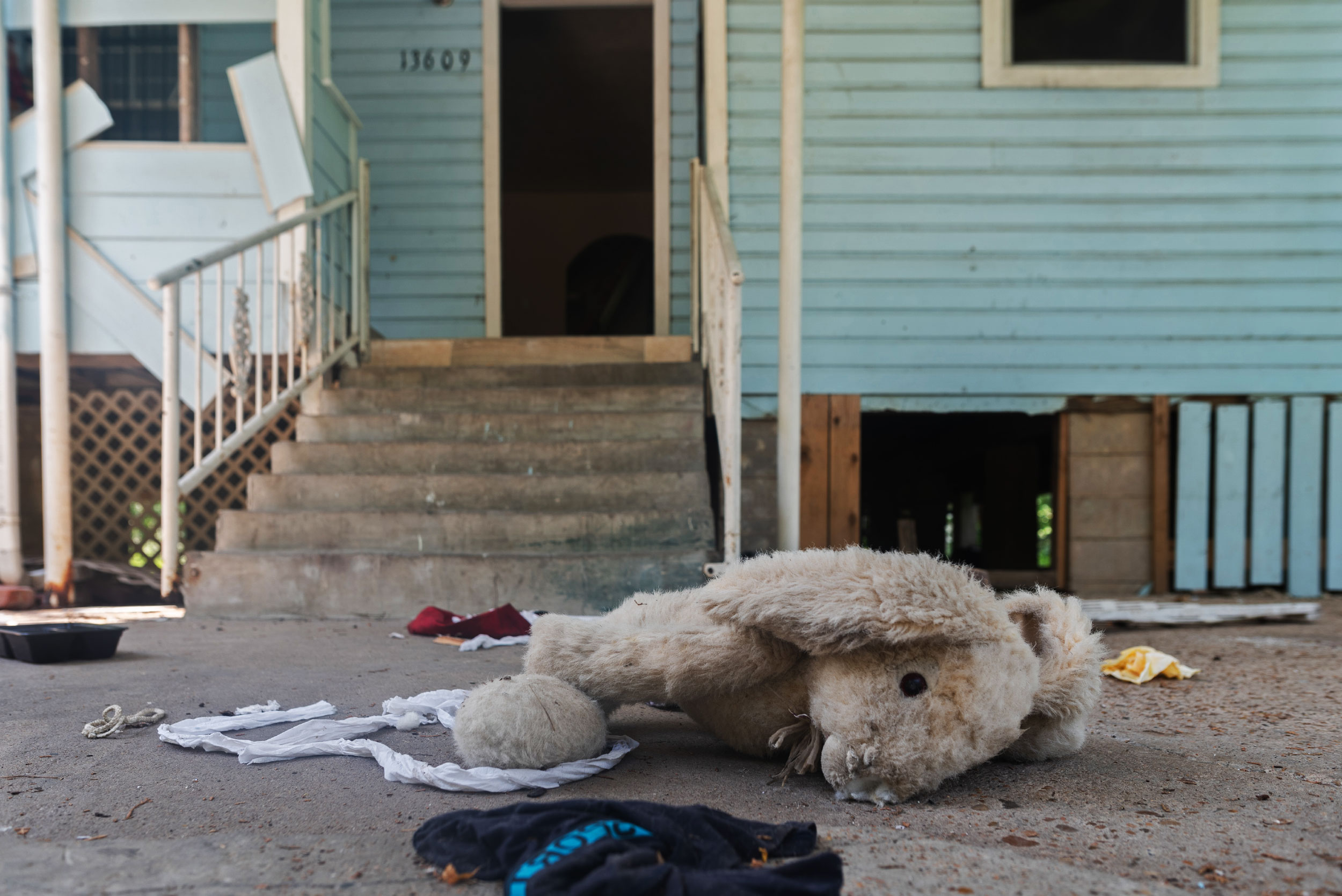
But other Allen Field residents contend that a buyout program shouldn’t have been their only option. Their neighborhood has long been neglected for infrastructure improvements. Property values are far lower to begin with precisely because they don’t benefit from public services: There were no street lights in Allen Field until a few years ago. The ditches that the neighborhood relies on for flood control are inadequate for today’s climate change-fueled storms, and it’s difficult to get anyone from the county to maintain them so that they work properly during even a light rainfall. Mendoza can’t recall a time when anyone from the outside came to save them from rising flood waters. “We take care of ourselves here,” she said. “[First responders] don’t come out to this area.”
Of the seven areas that are facing a mandatory buyout in the county, six are located along Greens Bayou, which caused some of the worst flooding in Harris County during Hurricane Harvey. The watershed and its tributaries encompass more than 200 square miles across north Houston, an area that’s home to some 600,000 people. According to a 2018 report from Rice University’s Baker Institute for Public Policy, Greens Bayou caused 24,000 homes to flood during Hurricane Harvey, roughly 16 percent of all the homes damaged in the county by the storm.
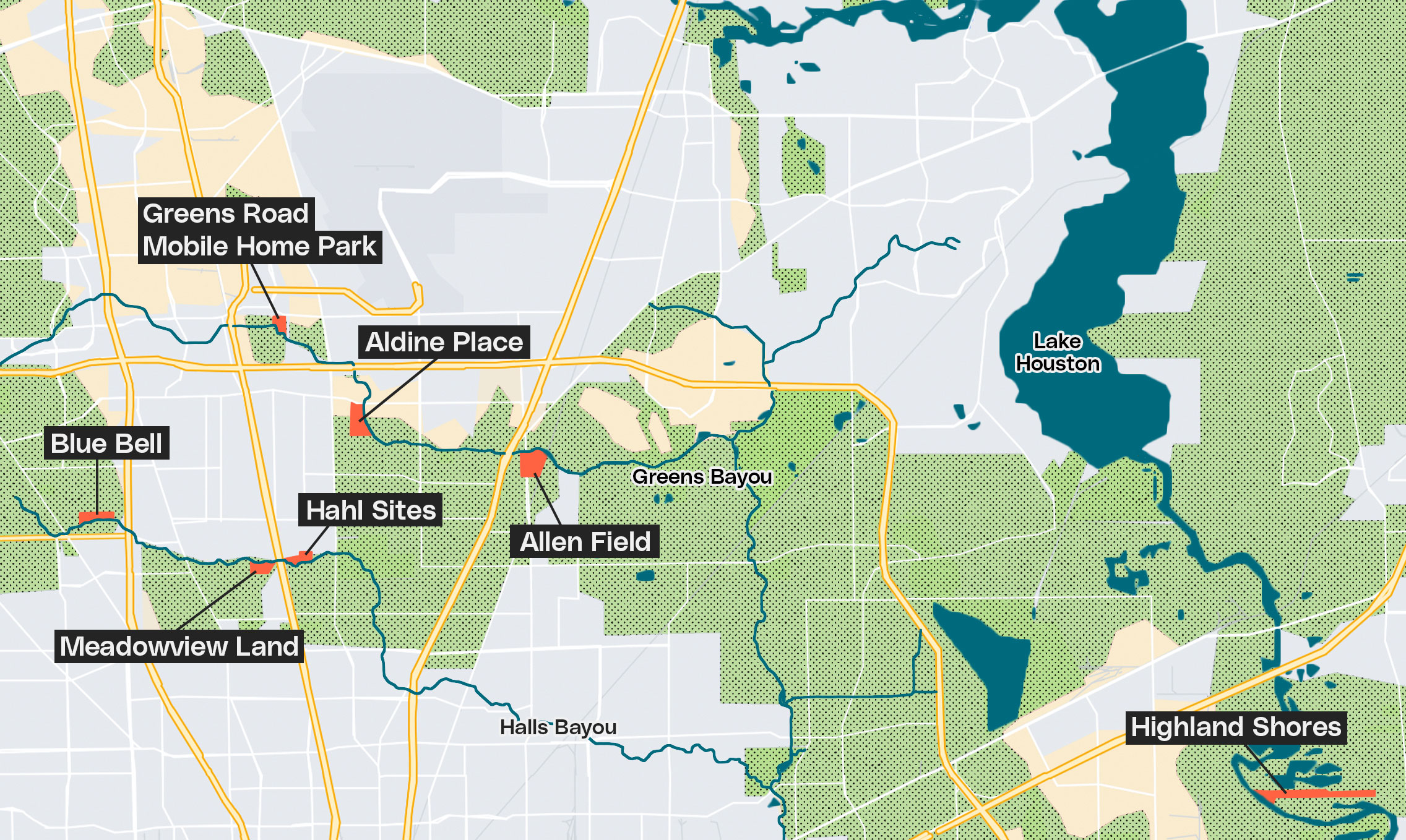
But the city and state have largely avoided funding flood control projects along the bayou because, according to the same report, a high concentration of low-income neighborhoods with low property values border it, making it difficult to justify the cost using federal standards.
“The property value measure is inherently inequitable, and frankly racist,” said Maddie Sloan, the disaster recovery director at Texas Appleseed, a nonprofit advocacy group. “Many of these communities are also historical communities of color that people have a deep investment in, and it can feel like an attack on those communities.”
In 2018, Harris County passed a $2.5 billion bond with the promise of righting some of the inequities in Harris County’s flood infrastructure. The money should have finally brought projects to Greens Bayou and its tributaries, but that never materialized either.
By all means, Mendoza said, the new house she and her kids live in now is nicer than her home in Allen Field — and it’s not in the floodplain. “It’s quiet,” she said. “It’s a nice neighborhood. I have a huge house, a pool, all that. But it’s not the same. I’m a single mom, and it takes a village to raise kids, and I don’t have that anymore. It’s gone.”
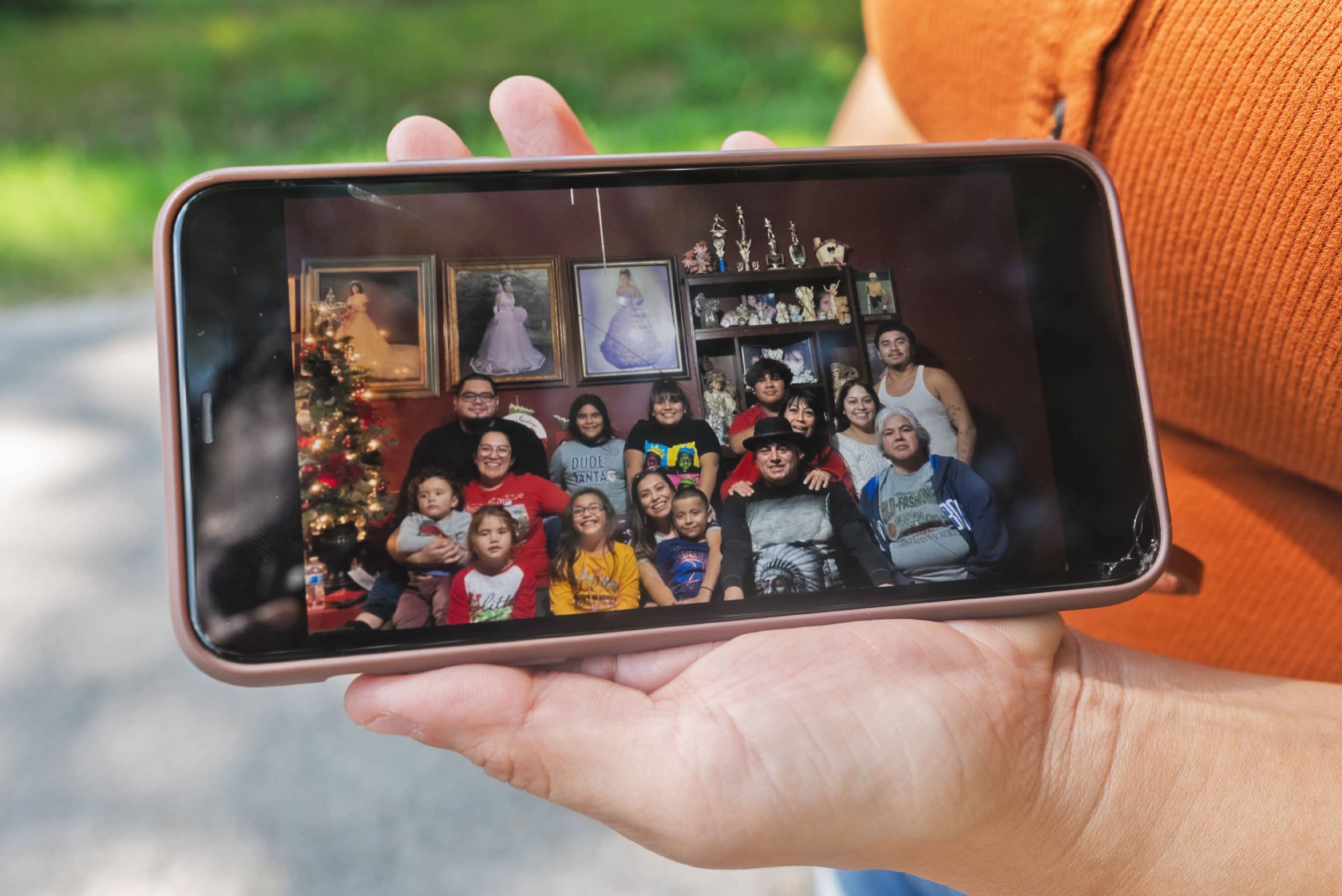
In a financial sense, the program worked for her. “I’m in my mid-30s, I can use this as an investment and eventually move out to the country like I’ve always wanted to.” But for some of her neighbors, she’s not sure that they’ll ever be made whole after losing the communities that they’ve lived in for their whole lives. Her 80-year-old neighbor, for example, has always been taken care of even though she lives alone. Neighbors drive her to the doctors, drop off meals and pet food, and even drive her out to convenience stores to buy scratch-offs. There’s no guarantee that she’ll be able to stay close to her support system.
Many of those neighbors have scattered now — some, like Mendoza and her sister, found houses 10 minutes away; others are 35 minutes away, preferring not to resettle in a subdivision with homeowner association mandates after decades of living in unincorporated county land, where there are no strict rules.
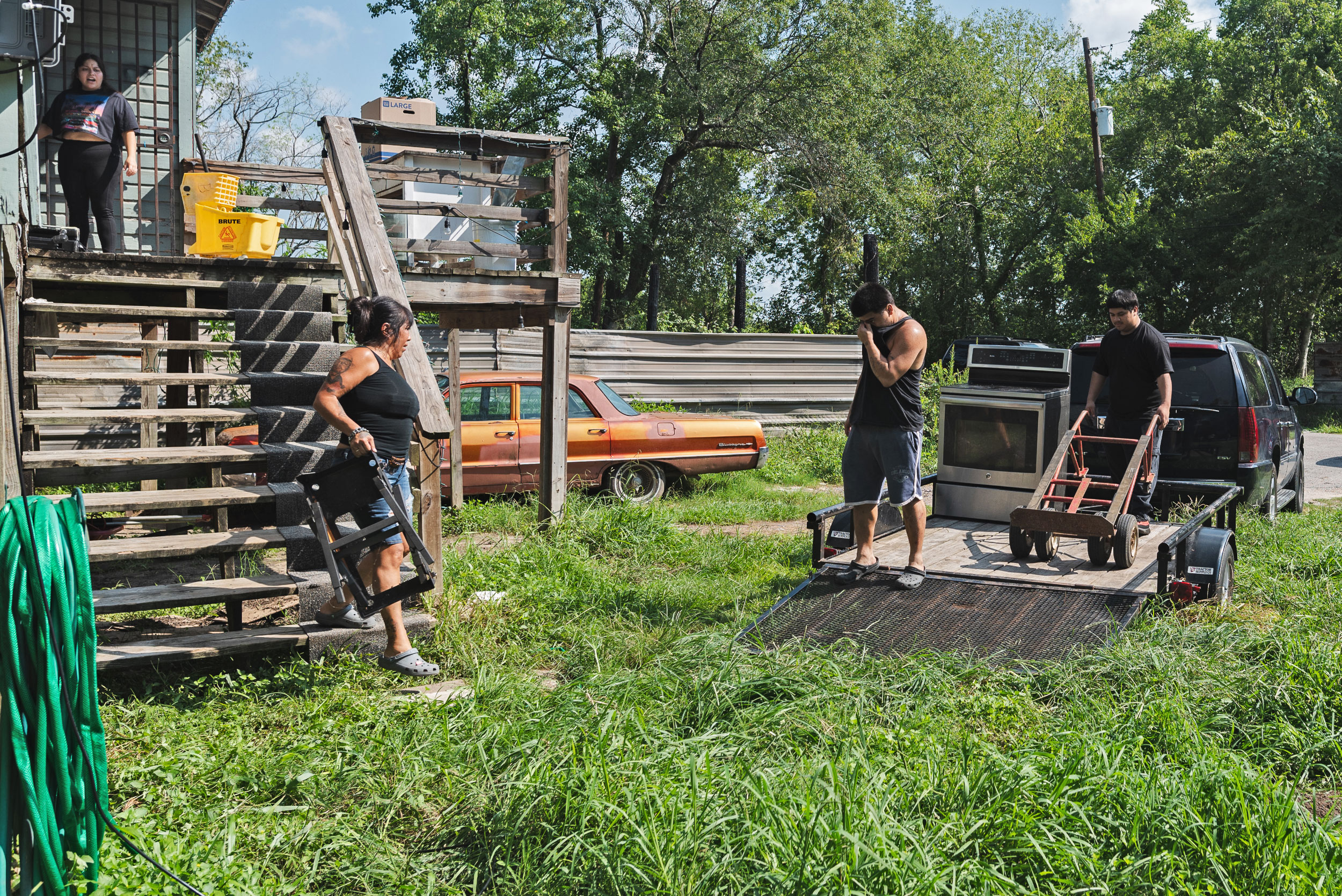
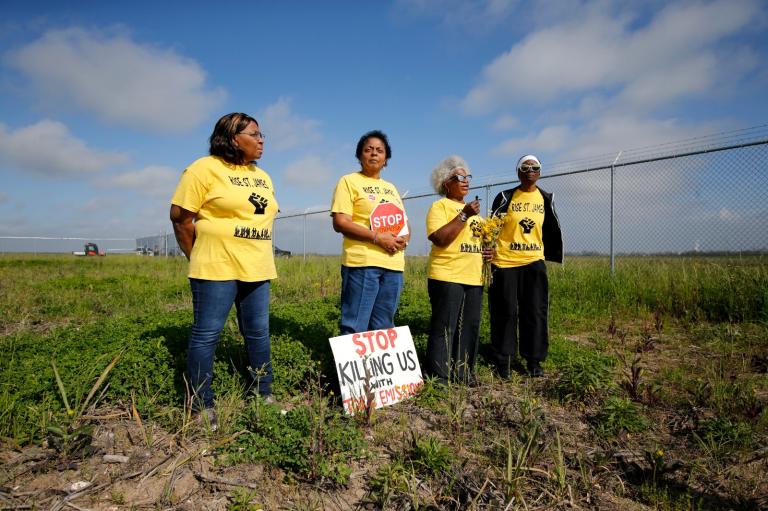
Over the past two years, Mendoza has become the neighborhood’s unofficial spokesperson. She’s written op-eds in the local paper and joined a community committee that’s been advising the county on how to provide support to Allen Field residents through the long, technical process. Neighbors and relatives are used to seeing Mendoza walk up and down the streets with reporters, pointing out which homes have been sold already, which ones are still in need of repairs from Winter Storm Uri, and the vandalism of recently vacated properties. Other residents are hesitant to speak publicly, worried about getting in trouble with the caseworkers handling their property sales.
There’s a joke around the neighborhood that the county moved Mendoza out first so that they wouldn’t have to deal with her anymore. But she has no intention of going anywhere. “They completely tore apart our village,” Mendoza said. “They’ll be hearing from me till the last resident moves out.”
A message from
Your support keeps our climate news free.
Grist is the only award-winning newsroom focused on exploring equitable solutions to climate change. It’s vital reporting made entirely possible by loyal readers like you.
At Grist, we don’t believe in paywalls. Instead, we rely on our readers to pitch in what they can so that we can continue bringing you our solution-based climate news. Donate today to keep our site free.