Norman HajjarClick to embiggen.
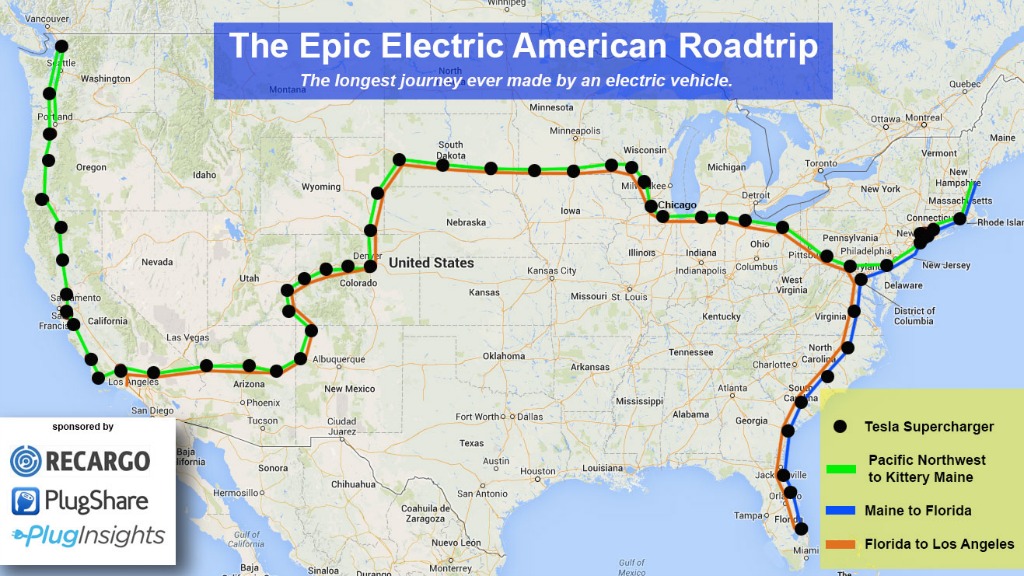
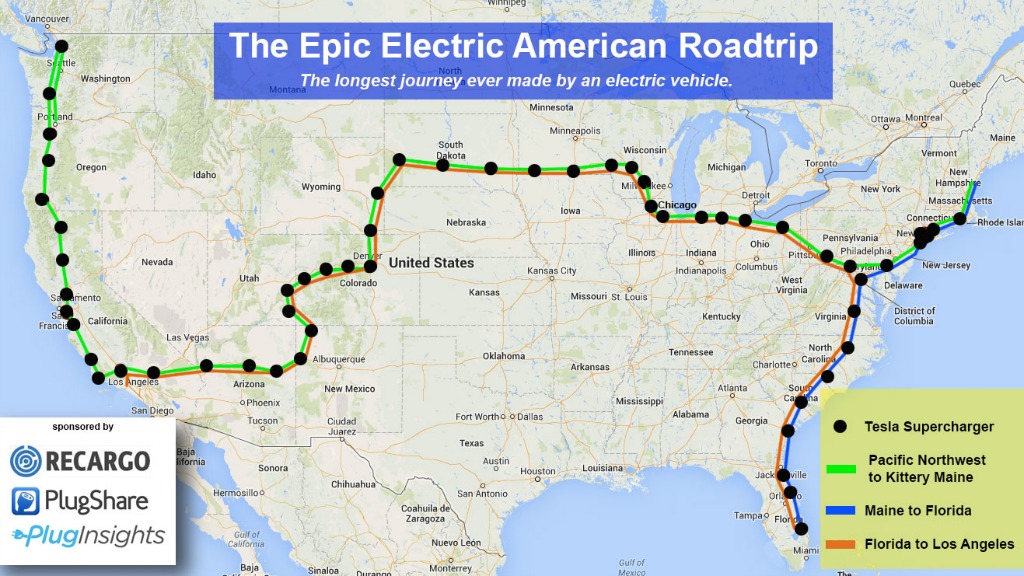
Have you ever driven cross-country? What about twice, AND down both coasts? That’s what Normal Hajjar is doing in a Tesla Model S: covering almost 12,000 miles in an EV, just to prove it can be done.
You’d think it’d be a pain, what with charging it all the time, but he told Fast Co. Exist the infrastructure is there:
“The reality is that it’s not difficult at all, other than the whole ordeal of driving which is the same with any gasoline vehicle. The key to this is fast-charging infrastructure.”
But the varying availability of permits, land, and electricity means charging stations are often located conveniently for the automaker, rather than strategically based on potential drivers’ routes. Tesla is one company Hajjar thinks is doing it right:
“I think Tesla has an enlightened approach to it. They see, correctly, that the infrastructure is part of the vehicle. It’s every bit as much a part of the vehicle as the nuts and bolts and the steering wheel.”
The Epic Electric American Roadtrip is taking Hajjar — the research director for Recargo, which makes an app to locate charging stations — from the Pacific Northwest to Maine, then down to Florida (where he arrived on April 13), then back across the country to L.A. You can follow the rest of the journey on Twitter and PlugShare’s site.
A message from
Your support keeps our climate news free.
Grist is the only award-winning newsroom focused on exploring equitable solutions to climate change. It’s vital reporting made entirely possible by loyal readers like you.
At Grist, we don’t believe in paywalls. Instead, we rely on our readers to pitch in what they can so that we can continue bringing you our solution-based climate news. Donate today to keep our site free.