books
-
![]()
![]()
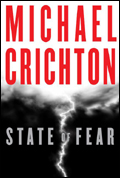
A review of the distorted plot and politics in Michael Crichton’s State of Fear
Michael Crichton's State of Fear is an attempt to meld serious politico-scientific critique with a modern techno-thriller. It's an ambitious undertaking, but to paraphrase Thomas Edison, success is 1 percent ambition and 99 percent not writing an awful book. Crichton's novel, alas, is unilluminating as a critique and unsatisfying as a thriller.
-
![]()
![]()
A review of the distorted science in Michael Crichton’s State of Fear
Michael Crichton's new novel State of Fear is about global-warming hysteria ginned up by a self-important NGO on behalf of evil eco-terrorists ... or by evil eco-terrorists on behalf of a self-important NGO. It's not quite clear. Regardless, the message of the book is that global warming is a non-problem. A lesson for our times? Sadly, no.
-
![]()
![]()
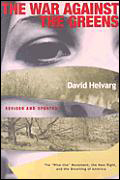
An excerpt from The War Against the Greens takes a hard look at the Wise Use movement
In 1988, the Wise Use movement was founded out of fear that George Bush Sr. was going to live up to his campaign pledge to be "the environmental president." This cabal of anti-environmental activists, organized by federally subsidized industries dependent on public lands, issued a natal document, the Wise Use Agenda. It called for, among other things: drilling the Arctic National Wildlife Refuge, logging Alaska's Tongass National Forest, opening wilderness to energy development, gutting the Endangered Species Act, and privatizing national parks. Today, the reactionary Wise Use Agenda has become the environmental policy of the administration of George Bush Jr.
-
![]()
![]()
Michelle Nijhuis reviews Against the Grain by Richard Manning
What's for dinner at your house? Unless you're a strict Atkins adherent, chances are you've got at least one of the world's four top crops on your plate. Corn, wheat, rice, and potatoes account for about two-thirds of the world's nourishment; from French fries to brown rice, these familiar starches dominate humanity's diet.
-
![]()
![]()
Kathryn Schulz reviews Monster of God by David Quammen
What this world needs," opined the nature writer David Quammen in a 1984 column for Outside magazine, "is a good vicious 60-foot-long Amazon snake." He was kidding, thankfully; the rest of the column goes on to describe the human tendency to massively exaggerate the size of anacondas in the Amazon. Now, though, 19 years later, Quammen has written Monster of God, a book arguing that precisely what the world does need is very large, very predatory animals.
-
Elizabeth Grossman reviews High and Mighty by Keith Bradsher
You see them poised astride rocky crevasses, fording forest streams, or rising huge and solitary in the shadow of a mountain peak. No, we’re not talking about grizzly bears; we’re talking about sport utility vehicles. Spoiling the view. “Jawbone Chatters. Spine Shivers. Engine Roars. Everest at -11 degrees,” proclaims one ad for the Toyota 4Runner. […]
-
![]()
![]()
Michelle Nijhuis reviews Hunting Season, A Killing Season, and Hoot
If the pen really is mightier than the sword, it seems like environmentalists should have worked themselves out of a job a long time ago. Take a stroll through almost any bookstore, and you'll find a nature-writing section full of lushly designed covers, beautifully turned prose, and impassioned arguments on behalf of the land. It looks like a slam-dunk for Team Green.
-
![]()
![]()
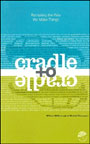
A review of Cradle to Cradle
The idea that growth can be good is anathema to most environmentalists. Yet that's exactly the argument made by William McDonough and Michael Braungart in Cradle to Cradle. Take a look at nature, the pair says, and you'll see that growth is not only good, but necessary -- that nature's very abundance is what environmentalists (and the rest of us) depend on and celebrate. The key is the right kind of growth -- and the key to that is better design.
-
![]()
![]()
Jonna Higgins-Freese reviews Small Wonder by Barbara Kingsolver
Several friends of mine, all of them environmentalists, have told me they picked up Small Wonder, Barbara Kingsolver's most recent collection of essays, but speedily put it down because the book just didn't pull them in. At first, I had the same reaction. And then I realized: small wonder. This book wasn't written for environmentalists. Yet because of Kingsolver's fame and her ability to talk about complex issues in a compelling way, Small Wonder may be more successful at communicating an environmental message to a lay audience than any other book published in recent years.