cars
-
Zipcar partners with city of Seattle, opens downtown location
Some 10,500 employees of the City of Seattle will now have access to a car at the office for personal errands or business trips, thanks to a new partnership with car-sharing provider Zipcar.
 Part of the city's Commute Trip Reduction effort, the Zipcar partnership is aimed at "encouraging more climate-friendly commutes," says Mayor Greg Nickels (D), because employees will be able to walk, bike, or take mass transit to work without worrying whether they'll need to, ahem, zip off to an appointment.
Within a 10-block radius of City Hall, there are more than 60 Zipcars parked at curbs and in garages. City employees (and other Zipcar members) can reserve these vehicles and then take them out for several hours, or even a whole day, returning them to their original parking spot. Zipcar then takes care of all maintenance, insurance, and fuel for the vehicles.
And for naysayers who think this will just encourage people to drive around unnecessarily, a 2008 survey of Seattle Zipcar members suggests otherwise, with half of the respondents saying they've increased their public transit usage since joining. And national surveys indicate that 50 percent of members sell their car or avoid buying one in the first place, reducing vehicle miles by almost 40 percent.
For those of you in Seattle, Zipcar is opening up a storefront-style office downtown (in the old Department of Licensing office, actually). They're hosting an open house today, and if you stop by before 5 p.m., you can join Zipcar for no annual fee (a savings of $50).
-
![]()
![]()
Umbra on gas engines and biodiesel
Dear Umbra, I take it that a conventional engine cannot be converted to biodiesel? Jann T. Helotes, Texas Dearest Jann, The short answer is no — you cannot use biodiesel in a conventional, unmodified gasoline engine. However, I’ve learned my lesson about giving car advice in this space, so the longer answer is: Anything can […]
-
Restructuring the U.S. transport system
Aside from the overriding need to stabilize atmospheric carbon dioxide levels to stabilize climate, there are several other compelling reasons for countries everywhere to restructure their transport systems, including the need to prepare for falling oil production, to alleviate traffic congestion, and to reduce air pollution. The U.S. car-centered transportation model, with three cars for every four people, that much of the world aspires to will not likely be viable over the long term even for the United States, much less for everywhere else.
The shape of future transportation systems centers around the changing role of the automobile. This in turn is being influenced by the transition from a predominantly rural global society to a largely urban one. By 2020 close to 55 percent of us will be living in cities, where the role of cars is diminishing. In Europe, where this process is well along, car sales in almost every country have peaked and are falling.
With world oil output close to peaking, there will not be enough economically recoverable oil to support a world fleet expansion along U.S. lines or, indeed, to sustain the U.S. fleet. Oil shocks are now a major security risk. The United States, where 88 percent of the 133 million working people travels to work by car, is dangerously vulnerable.
Beyond the desire to stabilize climate, drivers almost everywhere are facing gridlock and worsening congestion that are raising both frustration and the cost of doing business. In the United States, the average commuting time for workers has increased steadily since the early 1980s. The automobile promised mobility, but after a point its growing numbers in an increasingly urbanized world offer only the opposite: immobility.
While the future of transportation in cities lies with a mix of light rail, buses, bicycles, cars, and walking, the future of intercity travel over distances of 500 miles or less belongs to high-speed trains. Japan, with its high-speed bullet trains, has pioneered this mode of travel. Operating at speeds up to 190 miles per hour, Japan's bullet trains carry almost a million passengers a day. On some of the heavily used intercity high-speed rail lines, trains depart every three minutes.
Beginning in 1964 with the 322-mile line from Tokyo to Osaka, Japan's high-speed rail network now stretches for 1,360 miles, linking nearly all its major cities. One of the most heavily traveled links is the original line between Tokyo and Osaka, where the bullet trains carry 117,000 passengers a day. The transit time of two hours and 30 minutes between the two cities compares with a driving time of eight hours. High-speed trains save time as well as energy.
Although Japan's bullet trains have carried billions of passengers over 40 years at high speeds, there has not been a single casualty. Late arrivals average 6 seconds. If we were selecting seven wonders of the modern world, Japan's high-speed rail system surely would be among them.
-
Does anyone think battery swap-out is useful or even needed for electric vehicles?
The Washington Post ran a very good article on electric vehicles Saturday. I recommend it to anyone who wants an overview of the important issue of where American companies will source their batteries. The article notes:
GM plans on a battery pack big enough to last 40 miles, at which point a small gasoline engine will take over. Some rival companies are considering a smaller battery pack that might go only 20 miles, still enough to serve the needs of many local commuters without adding as much weight and cost.
That was my point in the post, "Has GM overdesigned the Volt: Is a 40-mile all electric range too much?"
Like pretty much all recent articles on EVs, this one highlighted the uber-marketers of the EV world:
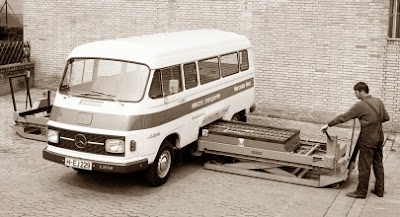
Shai Agassi, the chief executive of Better Place, which is building electric car infrastructure in Israel, Hawaii, Northern California and several other places, thinks electric cars should have batteries only. He proposes setting up swap stations where motorists on long trips could exchange a depleted battery for one fully charged.
"We just don't think that the answer to how to extend the battery is to put a power plant in our trunks," he said.You can see a computer simulation of the Project Better Place battery exchange station here.
I recently asked my EV wonk friends what they thought of the battery swap-out model, and I will reprint some of their answers below. I have never actually found anyone who thought it was a viable idea. Where, for instance, would it be done? Sunday's New York Times asserts:
-
President Obama should clear the way for state innovation on climate policy
 The following is the second in a series of guest posts from the Constitutional Accountability Center, a progressive legal think tank that works on constitutional and environmental issues. It is written by online communications director Hannah McCrea and president Doug Kendall, who also help maintain CAC's blog, Warming Law. (Part I)
-----
In a 1932 dissenting opinion, Supreme Court Justice Louis Brandeis famously wrote: "It is one of the happy incidents of the federal system that a single courageous State may, if its citizens chose, serve as a laboratory, and try novel social and economic experiments without risk to the rest of the country."
In the absence of federal action on climate change under the Bush administration, state and local governments have been taking advantage of this "happy incident" by passing measures that will reduce their contribution to global warming. Last September, ten northeastern states began auctioning allowances in the country's first mandatory regional cap-and-trade program, the Regional Greenhouse Gas Initiative (RGGI), while several western states began working with Canadian provinces to set up a similar program under the Western Climate Initiative.
Signaling that the nexus of leadership in U.S. climate policy lies currently at the state level, California Gov. Arnold Schwarzenegger hosted the Governors' Global Climate Summit in November, ostensibly to facilitate a high-level meeting between international and American leaders that bypassed the federal government. Unsurprisingly, California has led state efforts in advancing climate policy, and is currently in the process of adopting the largest and most comprehensive greenhouse gas reduction program in the country. These initiatives signal that Justice Brandeis's vision of states as "laboratories" of regulation is very much alive in the realm of climate policy.
Of course, state innovation has been most visible (and most contentious) when it comes to auto emissions standards, as seen with this week's blockbuster news that President Barack Obama is ordering the EPA to revisit the California waiver denial. As Grist readers may recall, in 2004 California formally adopted the "Pavley standards," an aggressive enhancement of auto emissions standards that would require a 30 percent reduction in greenhouse gas emissions for new vehicles by 2016. Normally, states aren't allowed to depart from federal auto emissions standards in this way, but under Section 209 of the Clean Air Act, California has special permission to set better-than-federal fuel economy standards, provided it obtains a waiver of preemption from the EPA. Once California gets a waiver, other states are allowed to adjust their own standards to match California's, creating a mechanism in which states gradually bring about a nation-wide reduction in auto emissions.
-
Mail delivery cutbacks could trim vehicle emissions
 Apparently, the U.S. Postal Service is considering cutting back on one day of mail delivery per week.
Personally, I suppose I'm fine with this, since I get very little time-sensitive mail. But I imagine that there are some folks who'd see this as a real hardship -- yet another little blow, at a time when there are plenty of big ones to absorb.
Regardless, someone just emailed me to ask how the service cutbacks might affect global warming.
Sadly, I've got no time for a real answer. But Google gives me just enough information for a ballpark answer: as an upper-bound estimate, I think that a one-day-per-week cutback in mail delivery could reduce vehicle CO2 emissions nationwide by as much as 700,000 tons per year.
-
Asheville developers go big with eco, at the worst time ever
I've just stumbled across this supremely bold (or foolish) eco-project, and I intend to follow it. Background: It's a proposed green condo complex with a green roof, solar panels, and efficient appliances. Yeah, yeah, blah blah ... but! If you buy one (for just $2 million or so) you get a Smart car! Which you park in an underground garage that can fit only Smart cars! Which would be the world's first garage-that-can-fit-only-a-certain-model-of-car!
It's so crazy, I wish to hell it would work. Alas, the developers are up against maybe the worst economic situation possible in which to launch such a scheme. In their county alone (Buncombe County in the Asheville, N.C., area), seven years' worth of high-price homes are hanging out on the market. Sigh.
-
Are the Big Three just ghostwriting WaPo editorials now?
The Washington Post editorial board, drifting ever farther right, covers its Auto Alliance position on CAFE with a shiny, self-righteous veneer of Krauthammerian posturing on gas taxes.
-
Sue me harder
So, remember how we're going to dump billions and billions of dollars into the laps of the Big Three automakers, to rescue them from their own myopic decisions? And remember how automakers are suing the crap out of every state that tries to implement California's tailpipe emission standards? Remember how Obama green-lit the waiver for those standards yesterday, and how those standards are overwhelmingly supported by the public?
Putting all that together, it occurred to New Yorker writer Elizabeth Kolbert to wonder whether automakers will use that taxpayer money to fund their lawsuits against, um, taxpayers.
So she contacted them, and the following day put up a second post: Yes. Yes, they are going to use taxpayer money to sue taxpayers.