United States
-
![]()
![]()
In Garbage Land, Elizabeth Royte talks dirty
Garbage Land: On the Secret Trail of Trash by Elizabeth Royte, Little Brown and Co., 320 pgs., 2005. Our soda man delivers. He comes bounding up the steps, easily cradling an ancient-looking wooden crate under one arm. The contents are 24 seven-ounce bottles of cola and birch beer, for which we hand him $7, and […]
-
Their dependence on gaz guzzlers makes them highly vulnerable, says a new study
Ah, now we're talking. Earlier this week I was a bit snarky about this article, which flung broad statements about with very little empirical support (understandable, I guess, for a breezy op-ed).
But a new study that just came across my desk puts some teeth in the argument that going green is smart business strategy for automakers.
Jointly published by the U. of Michigan and NRDC, the study analyzes what would happen to the Big Three U.S. automakers in the event of an oil-price spike.
As I've mentioned before, the possibility of such a spike is not remote. With supply and demand in such tight and tenuous balance, anything -- domestic politics, terrorist attacks, accidents, you name it -- could cause major disruptions in the oil market. How would American companies weather such a storm? From the NRDC press release:
-
![]()
![]()
U.S. leaders, residents turn backs on impending coastal chaos
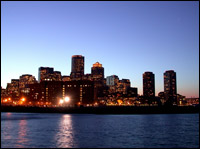
Don’t let Beantown become a has-been town. Buckle your seatbelts: it’s going to be a wet ‘n’ wild ride. That’s the prediction — or, rather, the certainty — that today’s global warming carries. Erratic and unpredictable weather is en route, and coastal areas are among the places destined to be hardest hit. So why are […]
-
![]()
![]()
Are corporations hog-tying conservation groups in CAFTA fight?
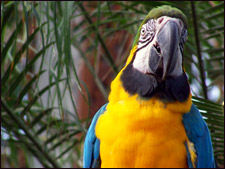
Macaws and effect in Central America. A year ago, President Bush signed the Central American Free Trade Agreement. Since then, the controversial plan has inspired protests across the U.S. and in Central America. And while past trade agreements have been ratified by Congress in less than two months, the Bush administration has delayed the vote […]
-
Fiddler on the Hot Tin Roof
Climate scientists grow more concerned as Rome burns, Nero fiddles In most fields of science, lay opinion tends to be more alarmist than scientific opinion, says Carbon Mitigation Initiative codirector Robert Socolow. “But, in the climate case, the experts — the people who work with the climate models every day, the people who do ice […]
-
Activists fight new round of proposed LNG terminals
While President Bush extols the virtues of liquefied natural gas (LNG) in speeches, energy companies have been at work, planning some 50 new LNG import terminals across North America, most slated for U.S. ports. Meanwhile, citizens and officials in Delaware, New Jersey, New York, Oregon, and Rhode Island, where new terminals are proposed, are fighting […]
-
Dems and Republicans buy different kinds of cars; guess who likes big American SUVs?
You could probably guess that Prius drivers tend to be Democrats and Hummer drivers tend to be Republicans. But that's just the tip of the iceberg on car-and-driver political connections, writes John Tierney in The New York Times, summarizing new market research that I find both fascinating and hilarious.
Jaguars, Land Rovers, and Jeep Grand Cherokees are very "Republican" vehicles. Volvos are the most "Democratic" cars, followed by Subarus and Hyundais. (Funny comment from Slate columnist Mickey Kaus: "Subaru is the new Volvo --that is, it is what Volvos used to be: trusty, rugged, inexpensive, unpretentious, performs well, maybe a bit ugly. You don't buy it because you want to show you have money; you buy it because you have college-professor values.")
-
![]()
![]()
Environmental funders share blame for movement’s weak pulse
In responding to “The Death of Environmentalism,” activist Ken Ward writes, “If the future toward which we rush is folly, the solution proposed by Michael Shellenberger and Ted Nordhaus is foolishness.” In this excerpt from his full rebuttal to the essay, Ward describes the role environmental foundations play in frustrating effective campaigning, and suggests that […]
-
![]()
![]()
Bill Bryson’s books offer environmental ethics with a light touch
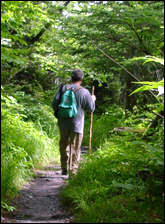
A Walk in the Woods, the venerable travel writer's best-selling 1998 account of hiking a portion of the Appalachian Trail, conjured memories of adventures I'd had as a kid in the forests where I grew up. Bryson seems to capture my dueling feelings about the woods: beautiful and inspiring from a distance -- "an America that millions of people scarcely know exists" -- yet disorienting and at times menacing from within. "[The] trees surround you, loom over you, press in from all sides," Bryson writes. "Woods choke off views and leave you muddled and without bearings. They make you feel small and confused and vulnerable, like a small child lost in a crowd of strange legs."