Garbage Land:
On the Secret Trail
of Trash by Elizabeth
Royte, Little Brown
and Co., 320 pgs., 2005.
Our soda man delivers. He comes bounding up the steps, easily cradling an ancient-looking wooden crate under one arm. The contents are 24 seven-ounce bottles of cola and birch beer, for which we hand him $7, and last month’s crate. The thick, wavy glass bottles bear an old-fashioned logo that reads, “Castle Soda: Food for Thirst.”
Bottled in a declining industrial town in Connecticut, Castle is like some visitor from another time. The idea of returnable, refillable bottles seems quaint and archaic in the age of plastic. Indeed, the bottler tells us it’s impossible to find anyone who makes seven-ounce glass bottles anymore, so the company’s crates are dotted with outcasts from other local bottlers that went out of business in Connecticut, New York, and Pennsylvania.
I buy Castle not because it’s better than Coke, but because I love seeing those empties taken back to their source. Like Elizabeth Royte, author of Garbage Land, I’ve wondered and worried about what happens to all that non-returnable waste I generate. With me it’s idle curiosity; with Royte — who sets out to track down just where trash ends up — it becomes an obsession.
It turns out that following your garbage wherever it leads is, like compost, darkly rich material. This is probably the best book ever about trash. Usually, garbage is too much “out of sight, out of mind” to make a lively subject, and what little coverage exists is dry and technical. But Royte, author of the much-lauded The Tapir’s Morning Bath, knows how to orchestrate telling statistics and vivid description to illuminate every dirty corner of the business (though if you were expecting the gory details of mob infiltration, you might be disappointed).
Where do we go from here?
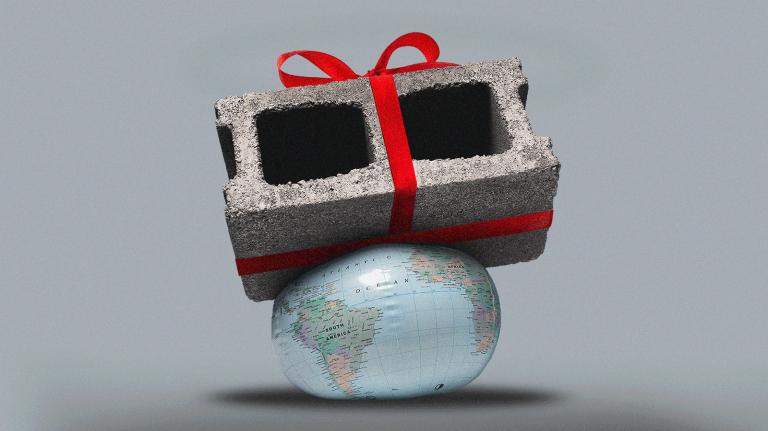
Americans generate more than four pounds of trash per person, each day — more than twice the per capita rate of Oslo, Norway. We have gifted the world with Styrofoam, non-returnable soda bottles, and innumerable forms of redundant packaging, all of which now litters every corner of our planet and is found washed up on even the most remote beaches. And now here’s Royte to tell us that even the most conscientiously managed landfills leak and leach and pollute.
The author lives in New York City, which for decades sent about 13,000 tons of trash a day to the largest landfill in the world, Fresh Kills on Staten Island. Intrepid to a fault, she refuses to be kept out of Fresh Kills — closed to regular use since 2001 — and ends up paddling around it in a boat. (Garbage Land is not for the squeamish, and you may not want to read it over dinner. Royte is very good at evoking the sights, sounds, and especially smells of the landfills and waste-processing plants she visits all over the New York metropolitan area, in rural Pennsylvania, and as far afield as San Francisco.)
Talking to an endless series of experts who seem glad that someone cares about what they do, she learns that the retaining walls in place at Fresh Kills can allow the daily release of one million gallons of toxic stew (a mixture of such chemicals as cyanide, arsenic, cadmium, chromium, and mercury) into New York Harbor.
Many of us assuage the guilt over our contributions to such planet-trashing by embracing curbside recycling programs, feeling virtuous every time we fill up the blue bin. But is it worth it? Royte sheds light on the process — and the drawbacks — of recycling everything from plastic bottles to electronic gadgets.
Ever feel a warm glow about hauling your old desktop down to electronics recycling day at the local high school? Did you imagine highly trained workers carefully disassembling your old components under surgical conditions? Think again. Imagine instead a Chinese village, where men, women, and children wearing no protective gear extract copper yokes from our exported monitors with chisels and hammers. “Squatting on the ground, they liberated chips and tossed them into plastic buckets while acrid black smoke rose from burning piles of wire,” reads a report cited by Royte. After using a mix of hydrochloric and nitric acid to coax small amounts of gold out of the components, they “dumped the computer carcasses and the black sludge in nearby fields and streams.” Many other recyclables are similarly shipped overseas, where their handling is unrestrained by environmental regulations.
If that’s true, then what’s the point? Garbage Land is a reporter’s book; it’s highly readable and exhaustively documented, but not very prescriptive. We’re left with the distinct impression that there’s no clean answer to the trash problem. Europe’s wide-ranging recycling laws, bio-waste plants, and emphasis on manufacturer responsibility (all detailed within) offer one way forward, and the concept of zero waste (now a national aim in New Zealand and a publicly stated goal in San Francisco and Seattle) offers another.
But in the U.S. — where only 11 states have bottle bills, and 95 percent of the 12 billion magazines produced every year are printed on virgin paper — we have a long way to go. In fact, with her merciless revelations of the hard realities of garbage and its processing, Royte leaves the clear impression that there’s only one real solution: use less stuff.