Utah state Representative Raymond Ward was reading a story in The New York Times about a growing trend in Europe, and it sparked an idea to make energy more affordable and portable at home.
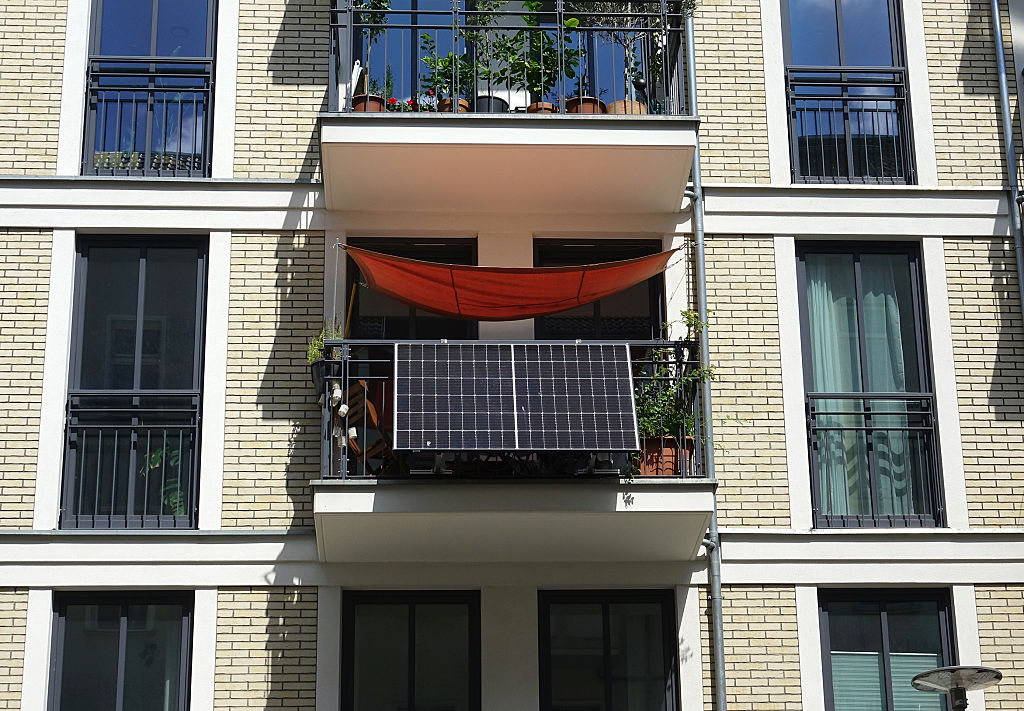
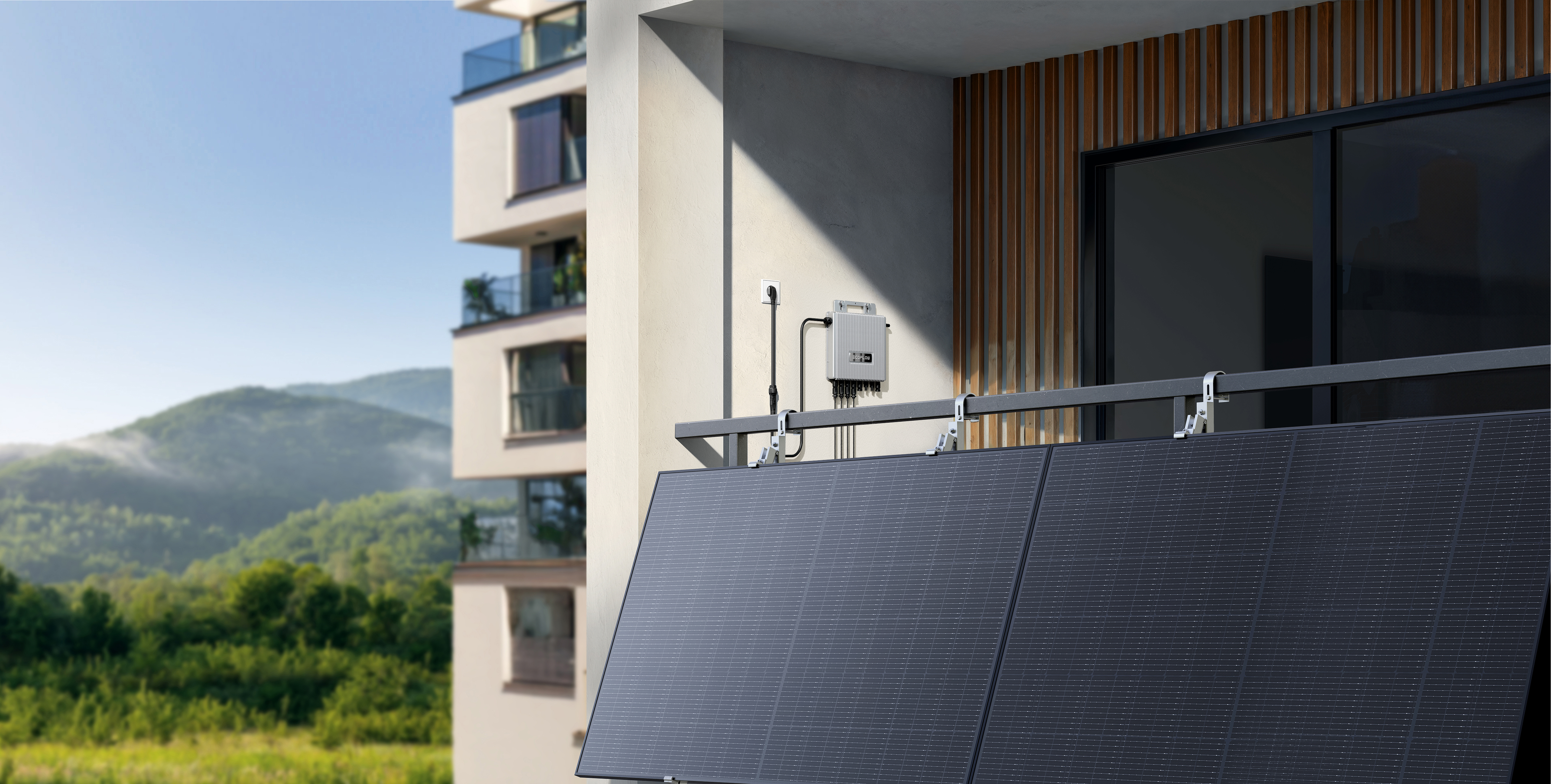
Plug-in solar panels — sometimes called “balcony solar” — allow people to generate electricity by plugging panels directly into a standard outlet and help cut down on utility bills, without the need for expensive rooftop installations. The relatively cheap technology has taken off in parts of Europe, and a recent Utah law sponsored by Ward has spurred interest across the U.S.
Utah lawmakers passed HB 340 last year with bipartisan and unanimous support, becoming the first state to allow residents to plug solar systems directly into residential outlets.
“It’s great for anyone who wants a little solar power but does not want to pay $30,000 for a roof install,” said Ward, a Republican.
Ward learned about plug-in solar panels after reading about their popularity in Germany. Balcony panels there added 10 percent more solar capacity to the grid in just a few months, The New York Times reported, just as Russia’s war with Ukraine was draining energy supplies.
Since Ward’s bill passed last year, 30 more states plus the District of Columbia have drafted similar bills, according to information tracked by the plug-in solar lobbying group Bright Saver.
“Thank you, Utah,” said Cora Stryker, a co-founder of the California-based nonprofit. “It’s a common-sense, no-brainer thing that should keep sweeping the country.”
Maine’s governor signed a similar bill earlier this month. Virginia’s plug-in solar bill currently sits on the governor’s desk awaiting a signature. Colorado and Maryland have legislation approved by both chambers of their statehouses. Bills in Hawaii, New Hampshire, New Jersey, Oklahoma, and Vermont have passed in one chamber so far.
Despite that momentum, U.S. residents still can’t buy plug-in panels from the same big box stores that sell other consumer electronic appliances, like hair dryers, washing machines, or toasters. That’s because Utah and other states also need rules and regulations for the panels, because while they sound simple, they flip the way the electrical utility system works on its head.
Residential households are only designed to pull power off the grid, through wires to outlets, and into plugged-in devices. Balcony solar does the opposite by creating power and pushing it backward into the outlet and “upstream” through a home’s wires, Ward explained. “Utilities tend, in general, not to want anybody else to make power,” he said.
Power providers also have concerns about safety, the lawmaker said. If line workers are trying to repair an electrical line they think is switched off, for example, but a condo’s solar panels are still pushing electricity through that line, it could put those employees in danger of getting electrocuted.
To Ward, those problems were solvable. “The electricity is the same over [in Europe] as it is over here,” he said. “All the same rules of physics work and have proved to be safe.”
But U.S. residents can’t smuggle balcony solar systems over in a suitcase from Europe, because North America uses different plugs and voltages.
Ward collaborated with Utah’s largest electricity provider, Rocky Mountain Power, to craft language for his bill so that the plug-in movement in Utah can be homegrown.
A spokesperson for Rocky Mountain Power noted the utility took no position on Ward’s bill. “We remain concerned that some products entering the market may not meet the requirements of the bill,” the spokesperson wrote in an email, “potentially creating electrical hazards for utility workers.”
The legislation removes liability for utilities, and owners of plug-in panels can’t ask for payments for the electricity they send back to the grid. It also requires a company called Underwriters Laboratories, often shortened to UL Systems, to develop safety certification for plug-in panels.
UL develops all kinds of safety standards for consumer products, building materials, and other goods. But Utah’s legislation marked the first time they were asked to test plug-in panels, and the company got to work over the summer. Kenneth Boyce, vice president of engineering for UL, said he was surprised to see his company named in Utah’s legislation.
“But we take it very seriously,” Boyce said.
The company issued a white paper in November outlining potential hazards with the panel systems themselves as well as how they might interact with a typical home’s wiring. From there, it developed product-level requirements that will allow the UL mark to appear on certified products.
“We’re … making sure we keep [consumers] safe while they get the benefits of participating in the energy transition,” Boyce said. “We can do both.”
Underwriters Laboratories’ researchers tested ways to ensure that plug-in panels don’t make circuit breakers explode, or that GFCI plugs that are supposed to trip and switch off — commonly found in bathrooms, kitchens, and outdoors — don’t fry and malfunction without the residents’ knowledge.
No plug-in systems have been certified by UL to date, Boyce said. “We expect that will change soon,” he said, noting he’s heard from multiple manufacturers. He expects the UL stamp to appear on U.S. panels in “months, maybe even weeks.”
Some inventive individuals, including the popular Utah YouTuber JerryRigEverything, have cobbled together their own plug-in systems. They use components that are individually UL certified, like panels, cords, and inverters. But all the components combined into a balcony system haven’t been tested and green-lit for safety, Boyce cautioned.
For those willing to take the risk, a global company called EcoFlow is one of the most popular online retailers for plug-in panels in the U.S. They’re currently in conversations with UL about how to certify their product, according to Ryan Oliver, a spokesperson for EcoFlow.
They’ve sold portable solar systems for about four years in Europe “where they’re very popular,” he said.
An inverter, which brings electricity from the solar panels into the home and shuts down generation to ensure safety, currently costs about $300 on EcoFlow’s website. A system that includes a battery to store solar energy costs $1,200. And compatible solar panels run between $250 to $1,000, depending on the size of the array.
“It’s consistent with Utah’s values of wanting to supply your own energy, and letting people make their own decisions around meeting their needs,” said Josh Craft, director of government relations and public affairs for Utah Clean Energy.
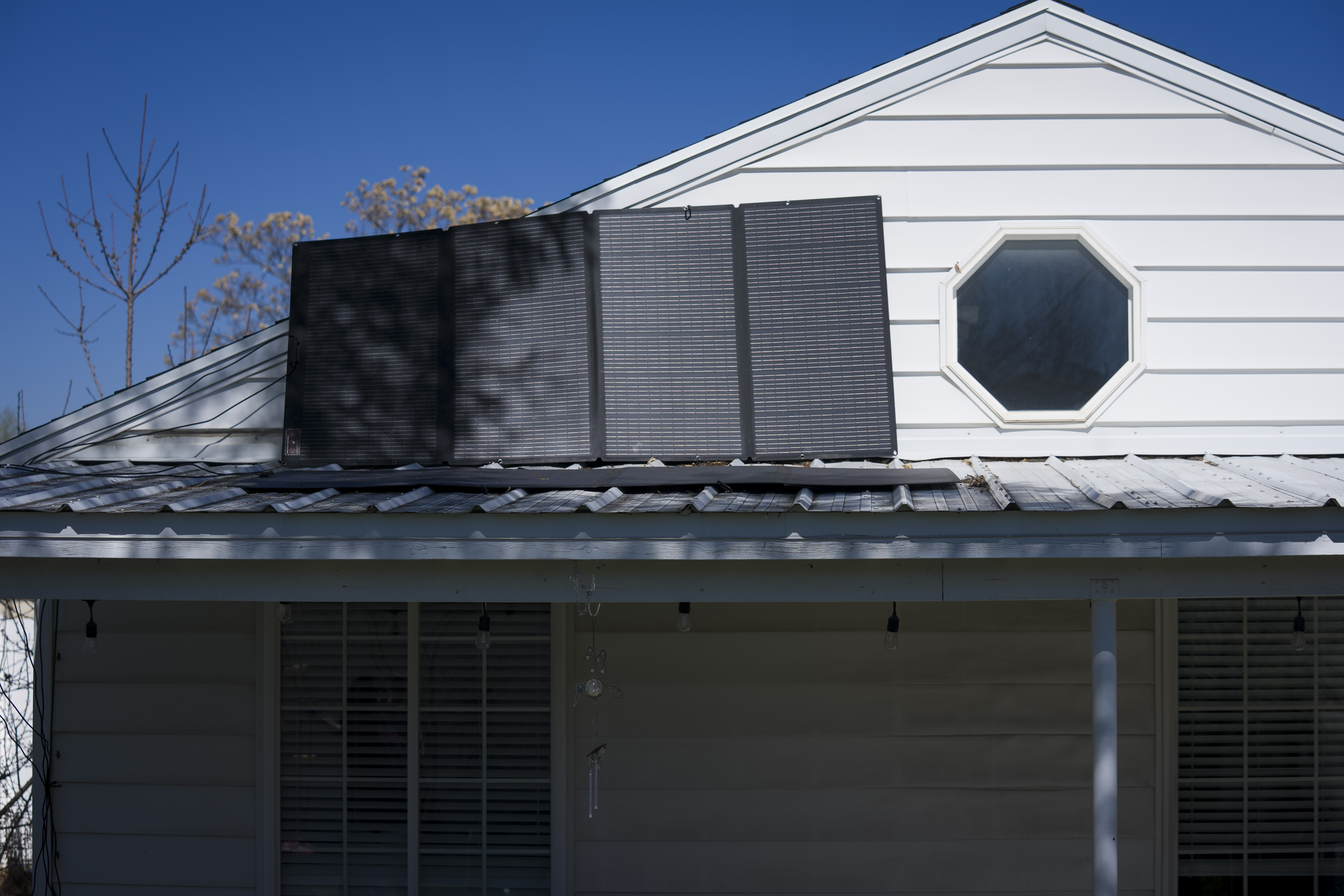
Craft said he’s experimenting with his own plug-in system at home donated by EcoFlow. “It works. It’s fun,” he said. “I have foldable panels set up on my patio roof.”
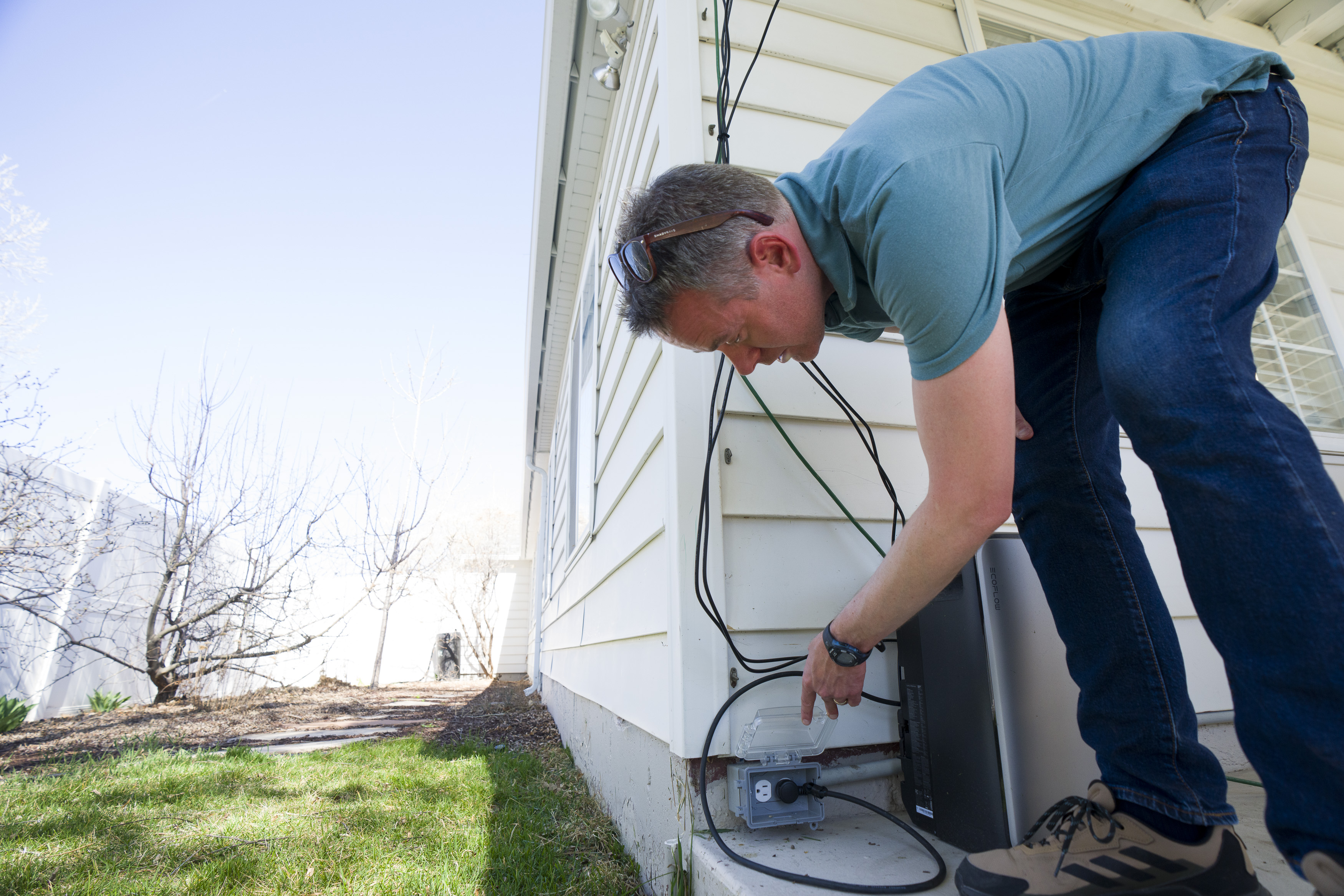
Bethany Baker / The Salt Lake Tribune
The panels could also amp up an entirely new market for clean energy. Their surge in popularity comes at a time when the Trump administration is slashing subsidies for wind and solar projects, even as energy bills are expected to spike due to demands from data centers and artificial intelligence, Craft noted.
Utah code resulting from Ward’s bill caps power output from plug-in systems at 1,200 watts, which means they won’t offset all the electrical use from a typical household.
On his YouTube channel, JerryRigEverything reported that his array saves about a dollar a day on his electricity bill. Craft figures his system, which is combined with a battery, cuts down his power bill by about 10 percent, but he hasn’t tested it while running an air conditioner.
In just the last few weeks, Ward said he’s had conversations with lawmakers in Hawaii, Washington, Minnesota, and Colorado about how to facilitate plug-in solar in their states. With Maine adopting a similar policy and several other states close behind, Utah’s experiment is already spreading.
“Heck yeah,” Ward said.
A message from
Your support keeps our climate news free.
Grist is the only award-winning newsroom focused on exploring equitable solutions to climate change. It’s vital reporting made entirely possible by loyal readers like you.
At Grist, we don’t believe in paywalls. Instead, we rely on our readers to pitch in what they can so that we can continue bringing you our solution-based climate news. Donate today to keep our site free. All donations DOUBLED for a limited time.