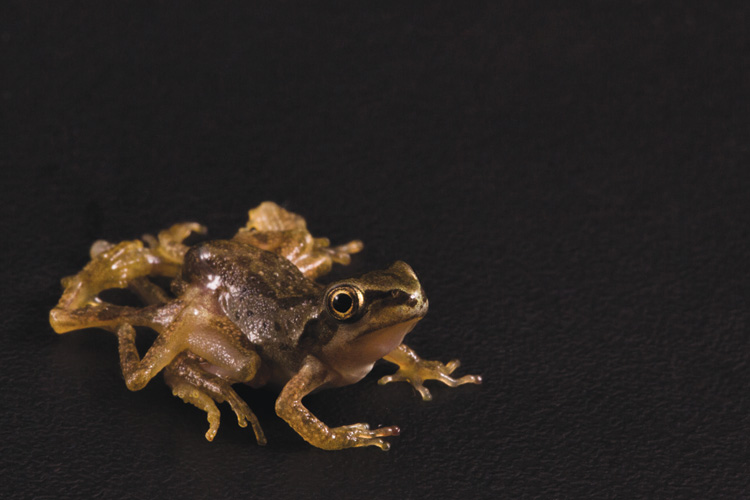
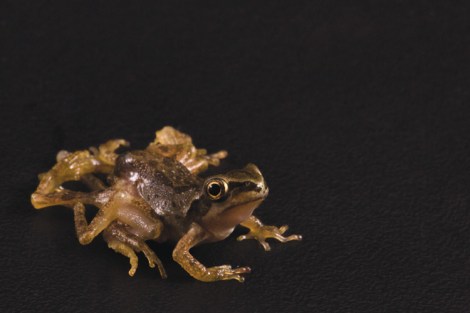
David Herasimtschuk / Freshwaterillustrated.com via HCNAn eight-legged frog.
Finding an eight-legged frog, most of us would assume there’s got to be a nuclear plant somewhere nearby. But in at least 17 states, radiation or other toxic waste isn’t responsible for frogs with extra legs and skin flaps. Instead, the mutations are the work of a parasite — the flatworm Ribeiroia ondatrae, which gets all up in frogs’ business and makes them totally weird.
[The flatworm] breeds inside the common freshwater ramshorn snail, burrows into tadpoles’ limbs, and creates cysts that interfere with development, explains Johnson. The adult frogs have trouble feeding themselves and become easy prey.
Humans aren’t entirely free of blame for this state of affairs. According to HCN, all the tinkering we’ve done with the environment has made frogs more vulnerable to infection. Plus, nutrient runoff from agriculture leads to more algae leads to more snails leads to more parasites leads to more terrifying spiderfrogs. The story ends just like the tale of the old lady that swallowed a fly: eventual doom.
A message from
Your support keeps our climate news free.
Grist is the only award-winning newsroom focused on exploring equitable solutions to climate change. It’s vital reporting made entirely possible by loyal readers like you.
At Grist, we don’t believe in paywalls. Instead, we rely on our readers to pitch in what they can so that we can continue bringing you our solution-based climate news. Donate today to keep our site free.