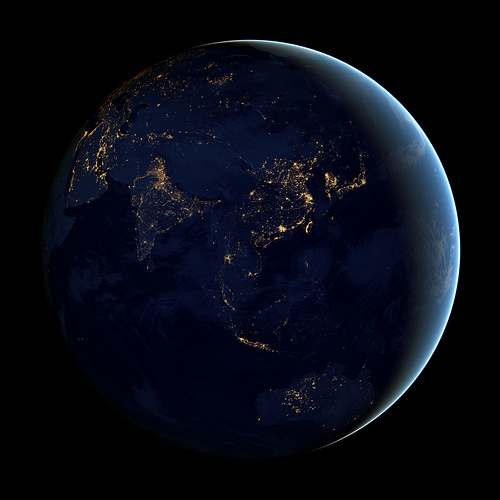
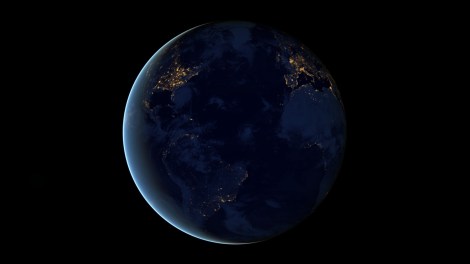
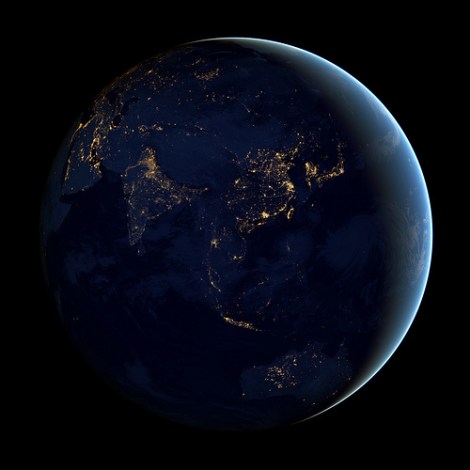
NASA and NOAA have a new, fancy satellite that’s equipped to look at the planet at night, as opposed to during the day, like most of their satellites. There are plenty of scientific reasons for having this capability, but it’s also allowed NASA to put together these amazing composite pictures, drawn from images collected on cloud-free nights, which show “the glow of natural and human-built phenomena across the planet in greater detail than ever before,” NASA says.
Here’s the planet, with India and Australia facing outward:
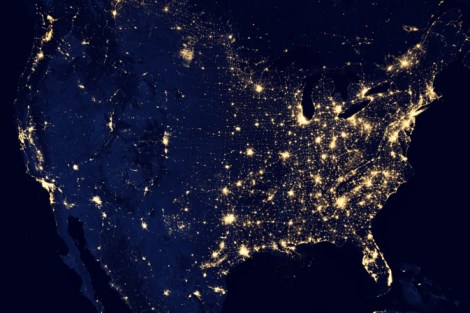
And you can zoom into countries:
And even smaller areas. Here’s the Nile:
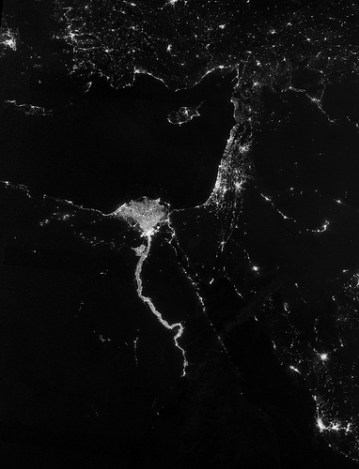
On one level, these pictures are beautiful. But they’re also evidence of the light pollution humans are spreading over the entire surface of the Earth. It’s not an innocuous light show: It has real impacts on people and on wildlife.
A message from
Your support keeps our climate news free.
Grist is the only award-winning newsroom focused on exploring equitable solutions to climate change. It’s vital reporting made entirely possible by loyal readers like you.
At Grist, we don’t believe in paywalls. Instead, we rely on our readers to pitch in what they can so that we can continue bringing you our solution-based climate news. Donate today to keep our site free.