Latest Articles
-
Super scrubber turns CO2 into fuel
Boffins at the University of Southern California have created a plastic-based, sand-like solid that absorbs CO2 from the air at room temperature and releases it at 185 degrees F, reports the Christian Science Monitor. Think of it like clumping cat litter for air — it sucks up CO2 and makes it easily removable. It can […]
-
Trick out your Kindle with solar panels
Screwdriver-and-soldering-iron types have probably already made their e-readers solar powered, but what if you didn’t have any Schottky diodes lying around? SolarFocus has the technologically inept among us covered, with a Kindle cover that charges your device with solar panels. An hour of full sunlight can charge your Kindle enough for three days of reading, […]
-
Sports enthusiasts urge you to ditch sports drinks

Professional snowboarders Bryan Fox and Austin Smith have started a "Drink Water" campaign, urging people to stop drinking the $20-a-gallon sugar-juice that props up their industry.
-
Monsanto won’t have to clean up dioxin in West Virginia
West Virginia continues to win the game of exposing human beings to extremely hazardous conditions in exchange for working-class pay, then telling them to deal with it when they get sick. The latest example of this behavior doesn't even have to do with coal, but with Monsanto and Agent Orange.
For 30 years, the Monsanto plant in a town called Nitro (named after the chemicals produced there! For real!) produced a defoliant ingredient that would later be used in Agent Orange. But the herbicides made in Nitro were contaminated with dioxin, which meant that Nitro residents were exposed to the toxic chemical beginning in the late 1940s. Dioxin has been connected to every bad health impact imaginable—for adults, problems like cancer and immune suppression, and for kids, problems like birth defects and learning disabilities. And now, because of the way West Virginia law works, the most that the citizens of Nitro can ask from the company is that it covers the cost of medical testing fees. -
Cooking grease is now so valuable that people are stealing it
Who says that clean energy policies don't create jobs? The boom in biodiesel has created not only a new commodities market in cooking grease, but a new business opportunities for security professionals -- not to mention providing work for thieves and black-market fences, which is a kind of job? That’s because fryer oil is now such a valuable resource that people are straight-up stealing it.
In recent years, a couple of state governments have realized that cooking grease has a use as a biofuel source and have regulated grease collection. At the same time, though, some less-than-savory characters have realized the grease’s value as well and are boosting it, costing some small rendering businesses losses on the order of $750,000 per year. And so the world comes to this impasse, as described by The New York Times:
The grease is often stored in black Dumpsters that reek of death, in back alleys, which is why pickups usually take place in the middle of the night.
-
Critical List: No Grand Canyon uranium mining; Supreme Court case on wetlands
The Obama administration will announce today that it's limiting uranium mining near the Grand Canyon.
And the Supreme Court will hear arguments in a major environmental case in which the Sacketts, a couple backed by the conservative property rights group Pacific Legal Foundation, claim the EPA unfairly restricted their use of the property by determining that it was a wetland.A Japanese whaling ship is holding three activists who boarded it to protest its activities.
Is there a bubble in shale gas stakes? -
![]()
![]()
Heart to hearth: Darfur Stoves Project’s Andree Sosler makes survival sustainable
From her Berkeley office, Andree Sosler distributes cheap, clean, efficient cooking stoves to women in the Darfur region of Sudan.
-
![]()
![]()
Live and let dioxin: Big Ag is worried about scaring us off meat and milk
This month, the EPA is expected to finally release limits for safe exposure to dioxins in food. Industry groups -- like the United Egg Producers, National Meat Association, and National Milk Producers Federation -- are stepping up to say: shhh!
-
Water cyclists: An epic ride to raise awareness of a scarce resource
A year and a half ago, two Dutchmen set out by bike to spread the word about the global water crisis. Fourteen thousand miles later, they say the real work still lies ahead -- but first, they'd like to kick it with beers and a couple of nice girls.
-
![]()
![]()
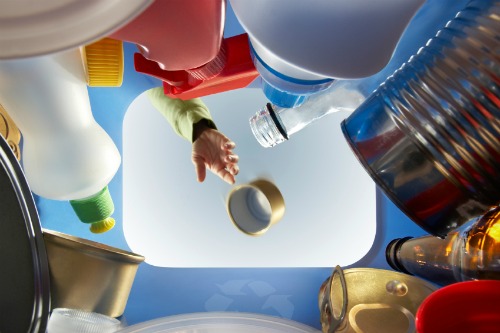
Ask Umbra: Can I really put all my recyclables in one bin?
A reader wonders if it's better to separate recyclables or to just throw everything in one bin. Umbra sorts out the truth.