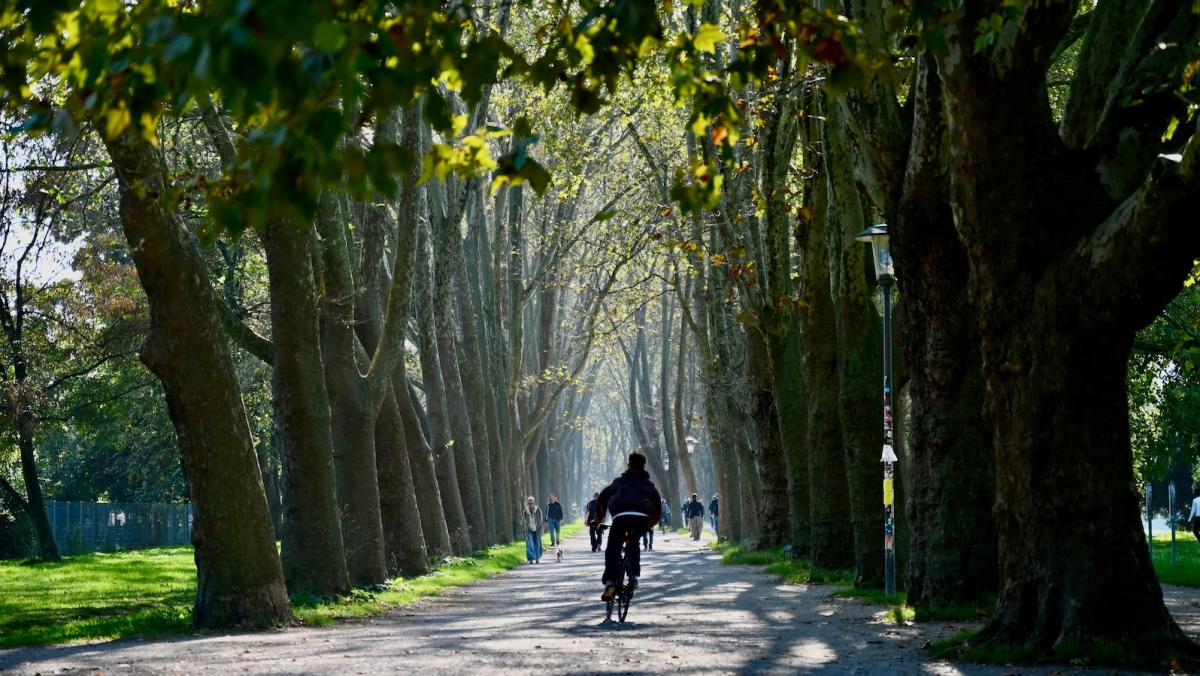
The next time you pass an urban tree, stop to appreciate what it’s been through. As a youngster, it was especially vulnerable to pests and diseases, not to mention vandalism. Now grown up, it must contend with ever-rising temperatures due to the heat island effect — the built environment’s tendency to soak up solar energy and slowly release it at night.
You might assume, then, that city trees are by default worse off than their rural counterparts. But new research suggests that urban vegetation is more resilient than you might think. Using satellite data from 2001 to 2022, researchers found that in more than three-quarters of 751 cities worldwide, plant life better coped with climate stresses like extreme heat than greenery in the surrounding countryside. In one-third of those municipalities, trees showed a “dual advantage,” losing less greenness from pressures in the first place, but also recovering faster from them.
That’s allowing metropolitan vegetation to do what it does best: reduce temperatures by providing shade, boost biodiversity by creating habitats, and mitigate flooding by allowing rainwater to soak into soil instead of pooling on concrete. “Generally, the urban environment is harsher for vegetation — for example, the air temperature and also the air pollution,” said Zhengfei Guo, an ecologist at the University of Hong Kong and lead author of a new paper describing the research. “Therefore, our results that found urban vegetation is more resilient than rural vegetation is very surprising.”
So what’s going on here? The researchers reckon this increased resiliency comes down to something no tree can thrive without: water.
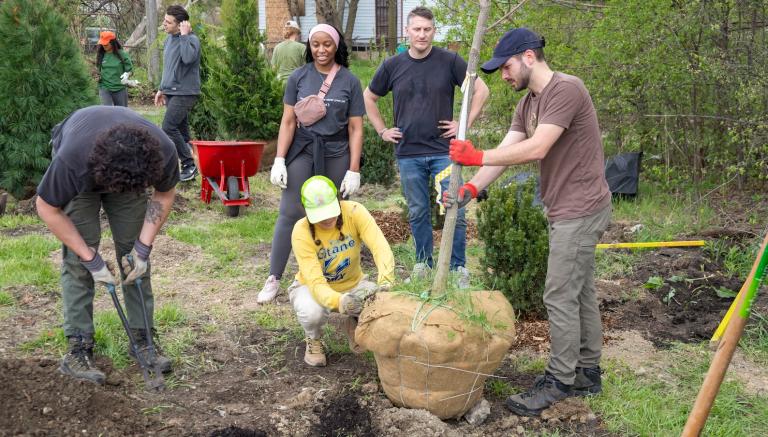
If you’ve ever seen your local parks department or a nonprofit plant a tree on the street, you might have noticed them placing a plastic bladder around its trunk. This provides consistent water for the sapling to help it grow big and strong in its most vulnerable years. Elsewhere in the metropolis, crews make sure that green spaces are sufficiently hydrated. And in backyard gardens, residents use hoses or drip irrigation systems to keep their flora verdant.
The built environment itself is inadvertently helping here, too. The traditional way of designing a city called for funneling water into sewer systems as quickly as possible to prevent pooling and flooding. As rainwater cascades off buildings and sidewalks, it flows into patches of dirt with trees, where it can soak into the ground.
Which is all to say: Urban vegetation is often pampered compared to what’s growing wild in the countryside. This is an advantage in the long term, but doubly so during relentless droughts and increasingly miserable heat waves. While rural trees desiccate, their compatriots in cities are regularly attended to. “They’re showing this kind of great ability to be resilient, most likely from just intentional management from people, or just the way we’ve simply designed cities to move and work,” said Eric North, program manager for urban forestry at the Arbor Day Foundation, who wasn’t involved in the new research.
For many plants in the city, additional heat can actually help. The urban heat island effect raises temperatures perhaps 20 degrees Fahrenheit higher than in nearby rural areas, because all that concrete and brick holds onto the sun’s warmth. This is potentially deadly for people, on account of the mercury staying high through the wee hours and denying the body time to cool down and recuperate. (Indeed, nights overall are warming faster than days are.) But it can be advantageous for well-watered plants, because the phenomenon is also in effect outside of summer. This is extending growing seasons, providing some species with extra time to flourish.
Interestingly, while these researchers found that vegetation was overall more resilient in cities, it was more so in the urban core compared to the outer neighborhoods. One theory why is that the heart of a city tends to be more developed and parks more rigorously tended. “The urban edge is not as stable as the urban core,” Guo said.
However, just because all that greenery has been enjoying surprising resilience, that doesn’t mean it’s guaranteed to do so forever, as the impacts of climate change grow ever more dire. “Some new ways to think about how to better sustain the urban area will become more and more important,” said Jin Wu, an ecologist at the University of Hong Kong and coauthor of the new paper.
For one, cities are trying to prioritize planting native species, which may already be adapted to withstand drought. They’re also looking to hotter places, importing species that scientists already know work there — essentially getting ahead of the baking to come. Selecting trees that are both drought-tolerant and have large canopies brings a double benefit, as the additional shade protects the surrounding dirt. “I’m assuming that’s really what a driving factor here is,” North said. “That it’s keeping the moisture that’s in the ground locked in, instead of evaporating off the ground, and so it’s more available for plants to use.”
Cities are also getting smarter about water. Los Angeles, for instance, is building “sponge city” infrastructure, things like roadside green spaces that allow water to soak into the ground and collect in cisterns rather than flow into sewers. It’s also using spreading grounds — giant dirt bowls, basically, where rainwater is piped and allowed to percolate into the underlying aquifer, from which it can be pumped during the dry season.
With proper water management, cities can remain green in the challenging decades to come. They’re building out urban gardens, for example, which bring all the benefits of greenery in general and provide nutritious food for residents. Scientists are also growing crops on rooftops under the shade of solar panels, generating clean electricity and supersized vegetables.
In a weird way, then, cities are becoming more rural. Now we have evidence that with a little TLC, plants can ensure metropolises don’t just survive, but thrive.