Climate Climate & Energy
All Stories
-
What in the Sand Hill?
High on the list of Very Remote Places on Earth are the Great Sand Hills, a 730-square-mile stretch of sage brush and dunes in southwestern Saskatchewan, Canada. There is one road in the region, and precious little traffic on it. The main residents are mule deer, coyotes, burrowing owls, and the endangered Ferruginous hawk. But […]
-
Running Knows
Climate change is caused by human activities — and maybe by more of them than previously thought. That was the conclusion of a report released today by NASA, which found that land-use changes such as farming, irrigation, and urban sprawl contribute as much if not more to climate change than does the burning of fossil […]
-
The Iceman Cometh
A Spanish scientist says that when giant gobs of ice fall from the sky, it’s a sure sign of global warming. Jesus Martinez-Frias, the director of planetary geography at Spain’s Astrobiology Center in Madrid, has spent the last two and a half years studying the ice meteors, known as megacryometeors. Although it may sound contradictory […]
-
![]()
![]()
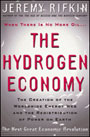
Elizabeth Grossman reviews The Hydrogen Economy by Jeremy Rifkin A review of The Hydrogen
In his new book, The Hydrogen Economy, Jeremy Rifkin argues that throughout history, the use of energy has determined the rise and fall of civilizations. In this analysis, a civilization is successful until it begins spending more of its energy supply to maintain its infrastructure than to enhance the lives of its citizens. For example, ancient Rome began to falter when it expanded its domain at the expense of the health and welfare of its people, exploiting slaves, practicing unsustainable agriculture, and exhaustively felling forests for firewood.
-
London Flog
Meanwhile, a very different report from the old country: Flooding caused by global warming could threaten $340 billion worth of homes and businesses in the U.K., according to the government’s Energy Saving Trust. The report says that one out of every 13 homes in the country would be hit hard by rising seas and increased […]
-
I’d Like My C, Under the Sea
A six-year experiment in burying carbon dioxide under the ocean has been highly successful, according to the scientists behind the project. Since 1996, CO2 emitted during methane gas exploration in the North Sea has been pumped back into the ground, where it has been trapped in a giant bubble almost a third of a mile […]
-
Sweet!
Along with emissions from power plants, pollution from vehicles is the major air-pollution culprit. But that could change if cars ran on sugar, as a team of scientists at the University of Wisconsin at Madison has proposed. In a paper published in yesterday’s edition of the journal Nature, the scientists detailed a technique for breaking […]
-
Sprawl Together Now
A new culprit has been named in the drought that has plagued more than a third of the U.S. this summer: urban sprawl. A report released yesterday by American Rivers, the Natural Resources Defense Council, and Smart Growth America found that the rapid expansion of pavement and developed land in metropolitan areas amounts to a […]
-
Think of New England
While tens of thousands of people from all over the world gather in South Africa to wrangle over global environmental issues, a far smaller coalition is meeting quietly this week to ensure that New England governors and eastern Canadian premiers follow through on their promise to combat climate change. The Connecticut Climate Action Group, a […]
-
Is biodiesel the fuel of the future?
The Granola Ayatollah of Canola, aka Charris Ford, slides behind the wheel of his 1980 International Scout truck and turns the key. The truck burbles to life and off we go, cruising down the gravel roads that divide the aspen groves of southwestern Colorado’s Horsefly Mesa. It would be just a standard evening joyride, except […]