Coal is by far the dirtiest of the world’s major energy sources. It accounts for almost half of the cumulative global carbon emissions since the industrial era began — as much as oil and natural gas combined. And it generates much more carbon dioxide per unit of energy than either oil or gas. Most climate experts agree that phasing out coal power is the single biggest change the world could make to slow down global warming.
For almost 20 years, the United States has whipsawed on the question of whether the federal government should try to speed up that phaseout. After Barack Obama failed to push a carbon tax through Congress, his administration drafted the “Clean Power Plan,” which would have forced electric utilities to cut their emissions by shifting away from coal. President Donald Trump repealed that rule during his first term, and the Supreme Court later said that the president could not unilaterally force utilities to give up the fuel.
Instead of forcing utilities to abandon coal, the Biden administration tried to work around the Supreme Court ruling in its 2024 rule by giving utilities a choice. They could either retire their coal plants sometime in the 2030s, or they could equip them with new machines that would capture almost all the carbon dioxide that would come out of their smokestacks. The result either way would be a significant drop in carbon emissions from the power sector.
The Trump administration is now repealing that rule. The Environmental Protection Agency announced on Monday that it plans to wipe away all federal regulations for carbon emissions from the electricity sector, essentially allowing utilities to warm the Earth as much as they want. The agency used the same justification as it did in its repeal of climate regulations on motor vehicles earlier this year, arguing that the science of climate change was uncertain and that the repeal would save consumers money on power bills.
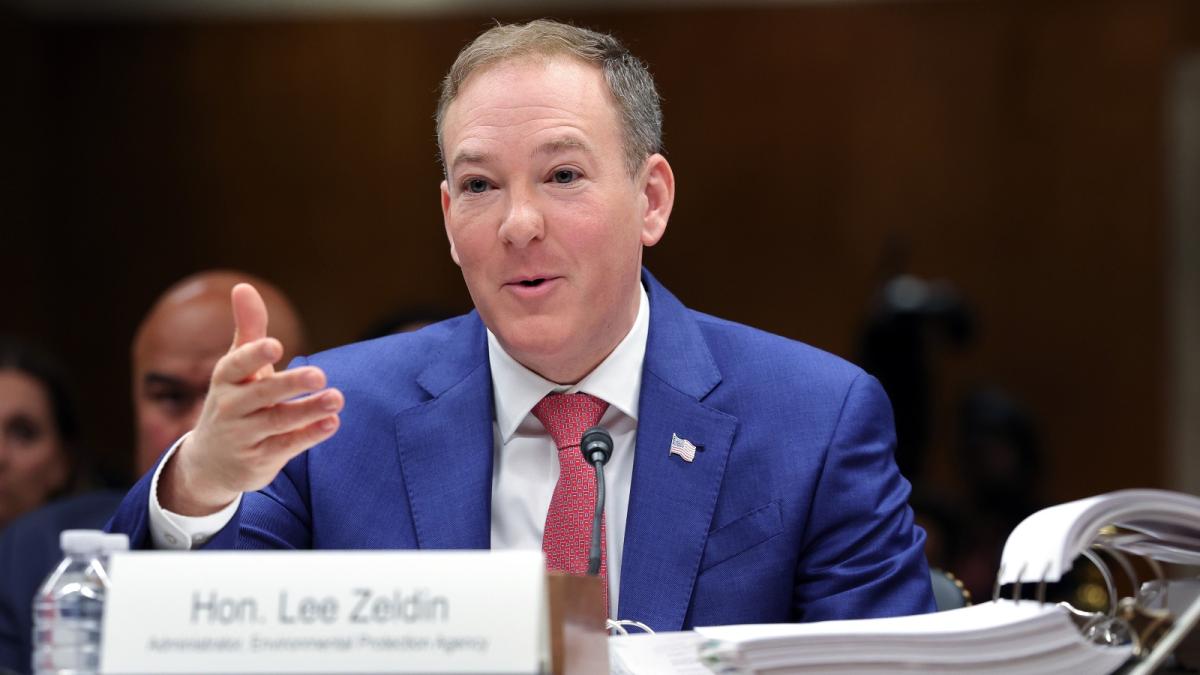
“For over 15 years, the Obama and Biden administrations implemented a war on coal to destroy reliable and affordable energy,” said Trump’s EPA chief Lee Zeldin at an international energy summit in Texas. “We are working to go even further so that American energy can be fully unleashed. Realizing the full potential of American energy means more jobs, lower prices, and a more prosperous America.”
This repeal deals a significant blow to the federal government’s efforts to force the power sector away from coal. The whiplash between Democratic and Republican administrations has been so frequent and so severe that neither the Obama nor the Biden rules have done much to speed the decarbonization of the power sector, especially when compared to other federal efforts like the Inflation Reduction Act subsidies for solar and wind.
“The reason to have a target is that it sends a clear signal to decision-makers in companies,” said Kenneth Gillingham, a professor of environmental economics at Yale University and an economic adviser to the Obama administration, where he helped draft the Clean Power Plan. “If you’re on the fence between choosing two things, you might as well choose the one that’s in line with the target. That’s been undermined. There has to be some teeth behind it.”
Even though the Obama and Biden rules never took effect, coal power has still been plummeting in the United States over the past 20 years. That’s thanks to the shale fracking boom, which lowered the cost of natural gas and made it cheap for utilities to replace their coal plants with gas plants. When burned, natural gas does warm the Earth, but slower than coal, and the shift has caused overall power sector emissions to fall in the U.S. by almost half.
The repeal of the Biden rule will likely delay that phaseout and will have significant effects for the nation’s public health. Coal plants also release harmful toxins like mercury and particulate matter, leading to thousands of premature deaths around the world. Inasmuch as the Biden rule would have sped up coal closures, it would also have prevented around $370 billion in health damages from climate change and air pollution. The Biden administration predicted that in 2035, the rule would have prevented hundreds of thousands of asthma flare-ups, hundreds of emergency room visits, and more than 1,200 premature deaths.
The artificial intelligence boom is also slowing the phaseout of coal. The Biden administration drafted its 2024 rule at a time when coal was expected to keep shrinking on its own; the rule projected a “continued decline in projected coal-fired steam generating unit capacity as well as a steady decline in annual operation of those [plants] that remain online,” driven largely by “eroding economic opportunities for coal-fired steam generating units to operate.” Now the rapid growth in power demand from data centers has led to a resurgence in demand for coal plants, and has led many utilities to push out the retirement date for their legacy coal assets. For coal power plants that sell into wholesale markets like the Midwest and the mid-Atlantic, high prices have made it worthwhile to stay online. (The Trump administration has also ordered some coal plants to stay online past their planned retirements, a move that a federal court found to be unlawful earlier this month.)
A case in point is Southern Company, the massive utility that produces energy for states including Georgia and Mississippi. Under the Biden administration, the utility had planned to retire its major Mississippi coal plant by 2028, but Southern announced last year that data centers would necessitate keeping it online well into the 2030s. The company’s previous efforts to install carbon capture at its coal units, meanwhile, have ended in failure. Environmental groups have criticized these decisions and argued that AI demand is inflated, but the Trump administration is happy to give utilities leeway to keep coal online.
The next president who seeks to take action on climate change will face much the same coal challenge that Obama did: how to speed up the phaseout of a fuel that is declining, but not dying? Gillingham argues that the short-term boost provided by Trump and the data center boom may not help rescue the coal fleet. The nation’s coal plants are only getting older, and many utilities will choose to replace them with gas or other fuels rather than repair them. The next president may still need the regulatory “stick,” but by that time the sector may be on its last legs.
“We have more electricity demand than we did before, which is, on the margins, going to make it easier for a coal plant to stay on,” said Gillingham. “But the trend is pretty clear, and you can only fight markets so much.”