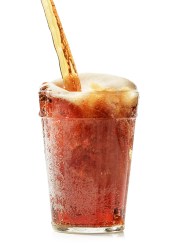
Photo by Shutterstock.
Like the speakers at the ongoing Republican National Convention, I communicate the “hard truths.” Here’s one for today: No one likes a party pooper.
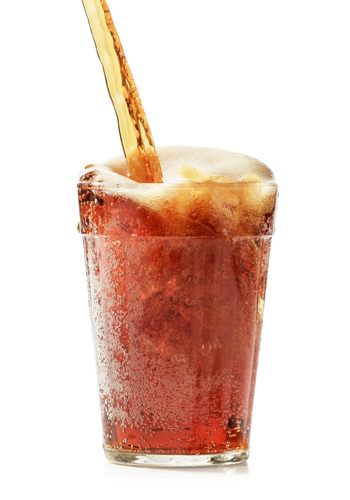
I’m inspired by a recent poll conducted by The New York Times which found 60 percent of New York City residents oppose Mayor Michael Bloomberg’s ban on sodas larger than 16 ounces.
His constituents’ opposition, which other polls have documented at lower levels, isn’t stopping Bloomberg, however. It’s still full steam ahead on the ban, which only requires a vote by his handpicked Board of Health to become the law of the land.
Of course, as the Wall Street Journal reported in June, just because Bloomberg says it’s the law doesn’t necessarily mean it will stay the law. He’s out of office come January. According to the WSJ, one of the leading candidates for New York City mayor, City Council Speaker Christine Quinn, is skeptical of the ban; she observed that a “future mayor ‘should certainly think about’ reversing the ban.” Her opposition is grounded in a misconception — that the ban will somehow limit people’s right to drink as much soda as they want, when in fact anyone intent on drinking mass quantities of soda will be free to buy it.
As I argued when the ban was first announced, Bloomberg and his public health team are instead banking on the documented psychological phenomenon that limiting serving sizes limits the desire to consume more. Indeed, the New Yorker’s influential financial writer James Surowiecki recently endorsed this view (and the ban itself) from an economist’s perspective.
Perhaps a more common reaction to the ban is what one might charitably call the “constitutional argument,” which was expressed by what the Wall Street Journal declared a “slender” occasional soda drinker: “If I want a soda one day I have that right,” she said. “If one day I want to buy a five-gallon pail of soda, I should be able to.” That’s totally covered by the Ninth Amendment, am I right?
I mean, come on! This is America, dammit! If we want to drown ourselves in liquid candy, we should be able to! After all, the supersizing of fountain soda is one of the few good deals Americans have enjoyed over the past several decades. Good jobs, good wages, good health care, and good government? Not so much. But as much soda as you can drink? American progress at its best! It’s understandable that many people would be reluctant to give up the last great benefit of living in America.
In all seriousness, there is a huge leap from the first part of that interviewee’s statement to the second. Bloomberg’s proposal isn’t an outright ban. And New Yorkers will still be able to buy unlimited numbers of two-liter bottles (as well as Big Gulps, since 7-Elevens will be exempt from the ban). But I have no doubt that the American Beverage Association, which is fighting the ban, wants New Yorkers to think the way that she does.
It’s definitely a fair question to ask how people will react to the ban, however. A recent study by researchers from Emory University suggests that more and more people, and more and more children, will switch to diet soda — which is not covered by the Bloomberg ban. To an extent, that’s already happening. The study, which appeared in the peer-reviewed American Journal of Clinical Nutrition, found that diet beverage consumption has doubled among kids over the last decade.
You can argue that this is a good thing. Kids are drinking less sugar! But the study observes that the effects of low-calorie sweeteners (LCS) on kids aren’t well understood:
The effects of these sugar alternatives have not been well studied, and both short- and long-term effects have yet to be determined …
… Recent human and animal studies have shown that LCSs may affect glucose metabolism, satiety, and vascular function, despite their inherent lack of energy. A growing body of evidence suggests that repeated exposure to sweet substances may lead to the development of preferences for highly sweet foods and beverages. This is particularly concerning in young children, among whom early exposure to highly sweet substances can lead to the development of dietary patterns replete with highly caloric foods, typically lacking in nutritional value.
That last point is key. There’s growing evidence that sugar is addictive, but what if it’s as much the sweetness as anything that causes that addiction? In other words, drinking diet soda might still program young brains to prefer and seek out other “highly caloric foods.” It could be a “win the battle, lose the war” sort of thing.
Let’s be clear: The jury is very much out on all this. As Barry Popkin, a top researcher on the public health effects of diet and soda consumption, told NPR recently, “we still have no evidence of any toxicological or negative health effect of diet sweetener intake.”
NPR noted that the European Union is still going ahead with a scientific review of the safety of aspartame, one of the leading artificial sweeteners (if you want to read about aspartame’s controversial route to FDA approval under President Reagan, Tom Philpott dug into it for Grist).
There is some indirect evidence of the dangers of diet sweetener intake, however. A study quoted in Mother Jones found that “people who drink at least one diet soda a day are 43 percent more likely to experience a ‘vascular event’ — i.e., strokes and heart attacks — than people who drink none.” That risk is present even after researchers accounted for other metabolic and health factors like obesity, diabetes, or hypertension.
I know this is a sensitive area for a lot of people — and the research is merely suggestive and quite thin (though I will bet that beverage companies have piles of data on the health effects of low-calorie sweeteners that they’re keeping to themselves).
Clearly, Americans hate to be told what to do, even when their health is on the line. Smoking bans in restaurants and nightclubs weren’t popular at first either. But no one that I know of has gotten booted from elected office for supporting smoking bans. The New York City soda ban isn’t popular in polls at the moment, but the ban, once implemented with non-world-ending consequences, will likely soon become a minor irritant.
But all of this points to a larger problem. If we’re programming ourselves to seek out high-calorie foods no matter what kind of sweetener we use, we are and will remain our own worst enemies. If that’s the case, it will take far more than supersized soda bans to change our deep and abiding affection for sugar.
A message from
Your support keeps our climate news free.
Grist is the only award-winning newsroom focused on exploring equitable solutions to climate change. It’s vital reporting made entirely possible by loyal readers like you.
At Grist, we don’t believe in paywalls. Instead, we rely on our readers to pitch in what they can so that we can continue bringing you our solution-based climate news. Donate today to keep our site free.