J. Telling
If you’ve ever wondered whether water improves with age like a fine wine, wonder no longer: The answer is “nope.” Scientists found water in Canada that had been trapped in veins of rock 1.5 miles underground for at least a billion and possibly as much as 2.64 billion years. In the name of pure research, one of the discoverers took a taste. It was gross. Mystery solved.
Barbara Sherwood Lollar, a geologist who coauthored the Nature paper on this antique H2O, is not having any truck with “floral notes” or “full body.” Her professional opinion: “It tastes terrible. … You would definitely not want to drink this stuff.” Apparently the color and texture aren’t too appetizing either:
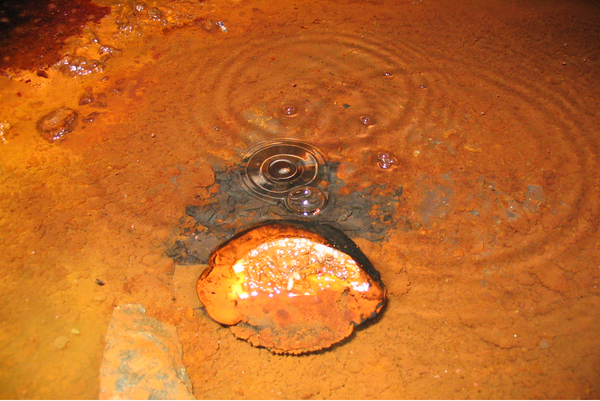
What jumps out at you first is the saltiness. Because of the reactions between the water and the rock, it is extremely salty. It is more viscous than tap water. It has the consistency of a very light maple syrup. It doesn’t have color when it comes out, but as soon as it comes into contact with oxygen it turns an orangy color because the minerals in it begin to form — especially the iron.
But while this does not represent a new gastronomic frontier for water, it’s still a very cool scientific discovery, especially if it turns out to contain microbial life. Finding out whether it does is Lollar’s next project, after she rinses the taste out of her mouth.
A message from
Your support keeps our climate news free.
Grist is the only award-winning newsroom focused on exploring equitable solutions to climate change. It’s vital reporting made entirely possible by loyal readers like you.
At Grist, we don’t believe in paywalls. Instead, we rely on our readers to pitch in what they can so that we can continue bringing you our solution-based climate news. Donate today to keep our site free.