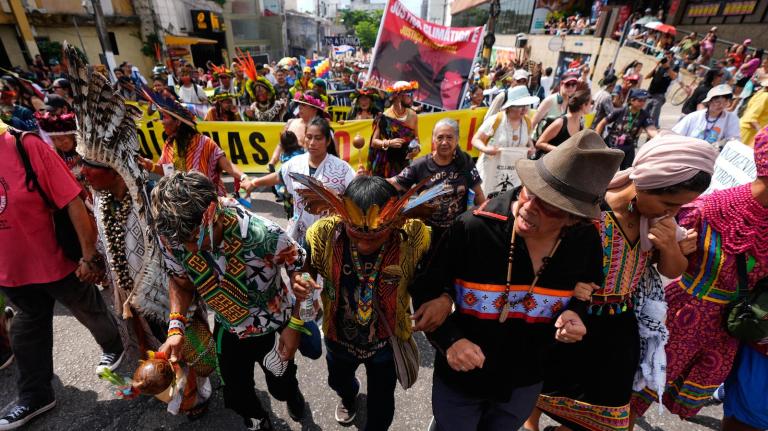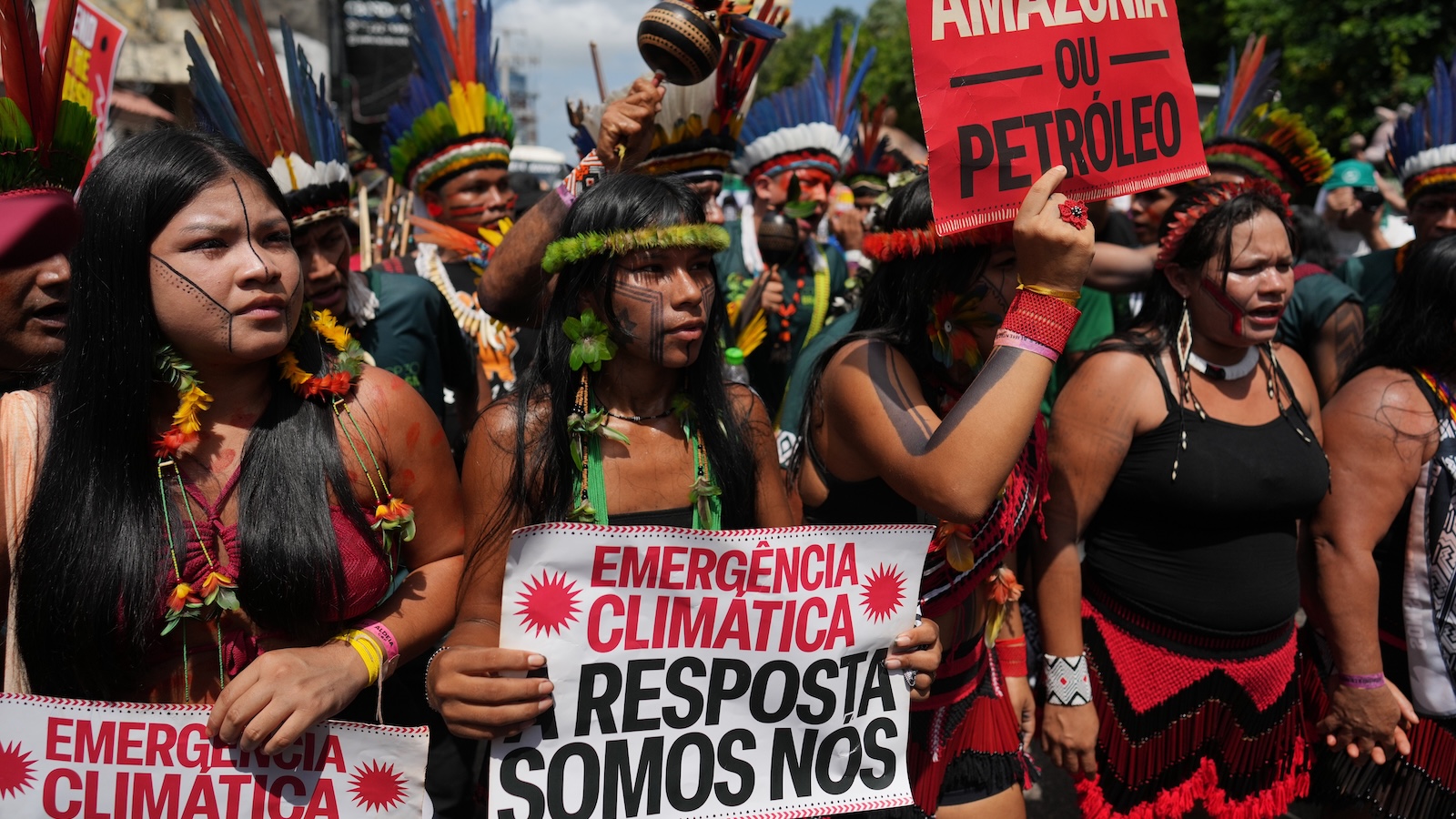
A new study published this month in the journal Environmental Politics reveals that efforts to repress climate and environmental protest are growing worldwide through a combination of new legislation, novel uses of existing legal processes, police actions, vilification of activists, and both violence and killings. The authors contend that acts of repression are likely to expand and intensify as authoritarian regimes roll back climate policies, with a particular focus on President Donald Trump’s actions in office criminalizing protest, increasing police power, and publicly attacking climate and environmental commitments.
The authors say the effects of this “repertoire or repression” are threefold. First, a risk of legal sanctions, carceral punishment, and violence diverts resources from movements and deters environmental action. Second, criminalization delegitimizes climate movements in the public eye by framing them as counterproductive, criminal, or dangerous. And third, that criminalization and enforcement of new legislation diverts attention from climate change by focusing conversations on ‘extremists’ and ‘eco-terrorists’ opposed to the public interest.
“Underlying all of this, we can see very clearly over the last few years there’s been an incessant vilification of climate and environmental activists around the world,” said Oscar Berglund, a co-author of the report. “Media and politicians are very much involved and this kind of vilification feeds into all these kinds of repressions.”
Drawing on data from 14 countries, research at the University of Bristol found that countries engage with repression by creating new laws designed to regulate protests, like in the United States and the United Kingdom, that create criminal penalties for protests that target “critical infrastructure” like pipelines. However, non-state actors, like corporations or private security firms, engage in lethal acts of violence toward environmental and land defenders, particularly those who are Indigenous. The authors write that these efforts at “criminalization and repression are not aberrations of climate governance but a core governing strategy.” The study also highlights that climate and environmental protests have been steadily increasing each year since 2018.
Vilifying protestors in public and through the media has been key to state repression tactics. In the Philippines, “red-tagging” labels activists, especially those who are Indigenous, as communists or terrorists as a method to redirect public attention from protests on climate issues. In the U.S. state of Georgia, activists protesting the construction of “Cop City,” a police training site outside Atlanta that required deforestation, were charged with domestic terrorism, facing up to 35 years in prison. One activist, Manuel Esteban Paez Terán, was killed after being shot at least 57 times, marking what some experts have called the first case in the U.S. where an environmental activist has been shot and killed by security forces.
Outside of the U.S., where more violent forms of deterrence are committed, the report’s authors say that militaries, police forces, and landowners often carry out killings or kidnappings of activists due to states creating “a permissive environment and culture of impunity for private actors.” According to data from Global Witness, an international organization that investigates environmental and human rights abuses, more than 2,100 land and environmental defenders were killed between 2012 and 2023. Approximately 43 percent were Indigenous, and a majority of killings took place in Latin America.
“Since colonization, Indigenous people have defended and put their bodies in the way of environmental destruction because it’s changed the places where they live,” said Berglund. “That has very much continued in recent years, and you often find that Indigenous peoples are leading struggles against mining or fossil fuel extraction.”
Since President Donald Trump assumed office this year, the U.S. exited the Paris Agreement again, while companies have abandoned their own climate commitments, partially due to ongoing backlash from the current administration on environmental, social, and governance, or ESG. The study says “many political and corporate actors have backtracked on climate targets, not because they deny climate change or their contribution to it, but because it has become politically viable to accept its inevitability.”
In October, President Trump ordered federal law enforcement agencies to review reports filed by the Government Accountability Institute and the Capital Research Center, two conservative think tanks, that link progressive organizations with anti-fascist or “antifa” networks. The Sierra Club and Center for Biological Diversity are listed among these alleged groups.
“It’s delegitimizing these actors and making them invisible,” said Berglund. “That enables the violence against them.”
A message from
Your support keeps our climate news free.
Grist is the only award-winning newsroom focused on exploring equitable solutions to climate change. It’s vital reporting made entirely possible by loyal readers like you.
At Grist, we don’t believe in paywalls. Instead, we rely on our readers to pitch in what they can so that we can continue bringing you our solution-based climate news. Donate today to keep our site free.