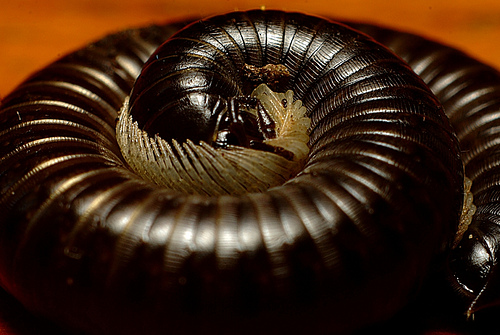
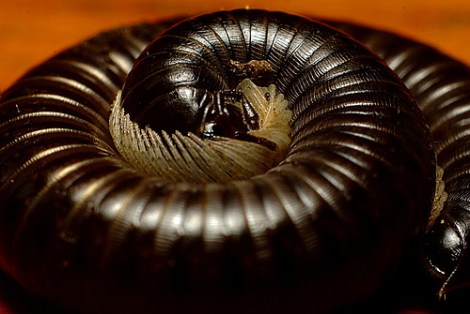
Millipedes aren’t exactly large, which is why it took hundreds and hundreds of them to crash a train in Australia last week. Don’t worry; it wasn’t a bad crash: A train that was moving slowly into the station bumped into a stationary one. Six people’s necks were hurt. (Nice try, millipedes, but we don’t see a horror movie about you coming anytime soon.)
Here’s what happened, according to The Atlantic’s Megan Garber:
The creatures have a tendency to hang out on train tracks, it seems, their shiny-black exoskeletons acting as perfect camouflage. And when a train comes along, they … well, you know. And when there are a lot of millipedes being squished at the same time, that leads to tracks that are much less friction-filled than normal. “The train loses traction and the train has slipped,” explained David Hynes, a spokesman for the Public Transport Authority of Western Australia …
“What happened in previous instances,” Hynes said, “is trains which were traveling at speed have gone over an infestation, crushed them and made the tracks slimy.”
Basically, all that dead millipede ooze messed with the physics of the train/track relationship. This isn’t the first time this has happened, either! Supposedly it’s because Australia just has too many millipedes (they don’t have a natural predator on the island) … but we’re suspicious. Could the car lobby have gotten to the millipedes? With all those legs, you can’t trust these worms.
A message from
Your support keeps our climate news free.
Grist is the only award-winning newsroom focused on exploring equitable solutions to climate change. It’s vital reporting made entirely possible by loyal readers like you.
At Grist, we don’t believe in paywalls. Instead, we rely on our readers to pitch in what they can so that we can continue bringing you our solution-based climate news. Donate today to keep our site free.