👋 Hey there, everyone. As you know, this newsletter is all about “climate solutions” — how we go about addressing and adapting to the climate crisis and doing our best to build a better world in the process. Those are crucial, urgent, and in some ways exciting questions, and I’ve tended toward the phrase “climate solutions” because it seems to be the best catchall for the many ideas and initiatives that fall under those banners. But today, I’ve got a slightly different perspective on solutions for you all: the perils of thinking we can “solve” the puzzle of climate change without dismantling the systems that caused it.
We’ve also got a bunch of new stories this week about the continued growth of clean energy, especially outside of the U.S.
This post originally appeared in Grist’s weekly solutions newsletter, Looking Forward. Not on our list yet? Subscribe here to get it in your inbox every Friday.
Why it’s so hard to quit fossil fuels
Grist / courtesy of Verso Books
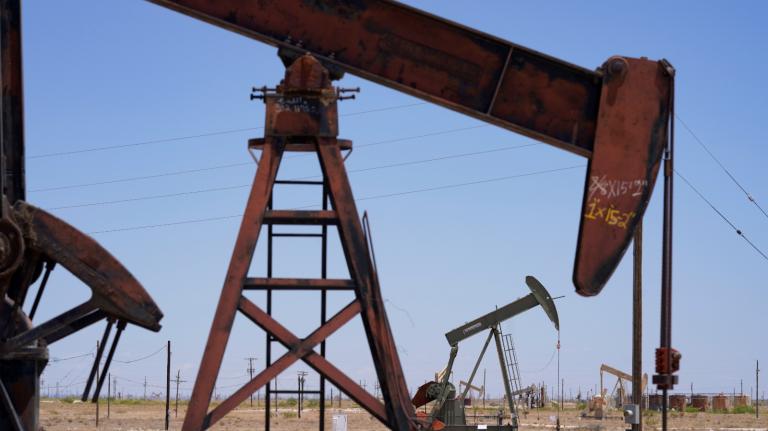
If you care about the future of our planet (as I’m certain you do, if you’re reading this), you’ve likely felt some frustration from watching the continued pace of business as usual. We’ve known the science of anthropogenic climate change for decades, but global emissions continue to rise, governments continue to fall short on climate targets, and new fossil fuel infrastructure continues to be built.
Can those first two things possibly reverse, while the third remains true? Some would certainly like us to believe so — that we can engineer our way out of a warming planet without letting go of oil, gas, and coal, and the profits they bring. What if, for example, we put lamps above tropical forests to supercharge photosynthesis, tricking plants into slurping up all our excess CO2? What if we could protect ice sheets from melting by constructing massive underwater curtains? What if we just snatched all our greenhouse gas emissions out of the air and tucked them away somewhere?
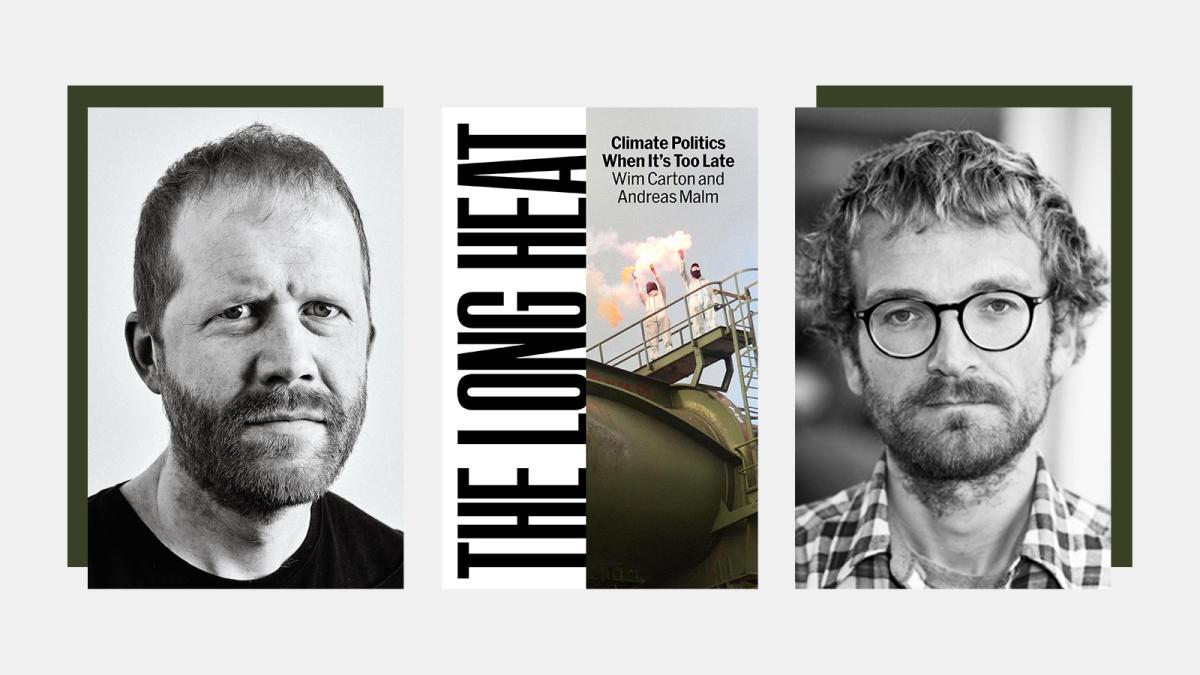
These ideas are explored (or, rather, excoriated) in The Long Heat: Climate Politics When It’s Too Late, a new book by Andreas Malm and Wim Carton, professors at Lund University in Sweden and well-known thinkers on climate politics. (Malm also wrote the 2021 book How to Blow Up a Pipeline.) My colleague Joseph Winters read and reviewed the book for Grist.
One of the central points of The Long Heat is that the system of “fossil capital” — the assets and infrastructure associated with fossil fuels — which underpins so much of our modern society, has been thought of as an “unassailable background condition.” Although more and more people understand that the planet is warming and want to see something done to address it, on some level, many people “assume that it’s too politically infeasible to address fossil capital,” Joseph said, paraphrasing the authors.
Instead, the authors argue, capitalism rewards alternative solutions that allow the entrenched system to stay in place. A spate of startups has already arisen seeking to profit off of carbon removal and other proposed technological innovations.
The authors’ stance on geoengineering — a broad term for interventions that attempt to hijack our climate systems to slow or reverse global warming, like the forest lamps idea — is “uncompromising opposition,” Joseph writes. But the two other broad approaches that they discuss, adaptation and carbon removal, are more complicated.
Carbon capture and climate adaptation measures have been, the authors argue, co-opted by bad actors who want to use them as substitutes for actually phasing out fossil fuels. But they’re also increasingly, urgently, necessary. “That puts climate activists in a tough spot,” Joseph said. “They have to both continue relentlessly to push for mitigation — the one thing that needs to happen in order to address the climate crisis — but because we’ve waited so long, now we also have to do adaptation and, to some extent, carbon removal.”
The picture is admittedly pretty grim — as the book’s subtitle, Climate Politics When It’s Too Late, would suggest. But, as Joseph told me, the book offers a glimmer of hope in the idea of uncertainty. “I guess, if you were to sum it up, it would be like, ‘Yeah, things are bad now, but that doesn’t mean that there’s not gonna be some sudden reversal in the trajectory of climate politics, and all of a sudden things will get dramatically better.’”
If not a sense of hope, I personally find motivation in the reminder not to get distracted. When we talk about climate solutions, we should talk about how we save people’s lives and make them better (which has to involve adaptation) and about the math of planetary emissions (which likely involves some carbon removal) — but it’s also on us to keep the focus on an urgent and comprehensive transition away from fossil fuels. As former Grister Lylla Younes wrote in her review of the authors’ first book, Overshoot: “This is what Carton and Malm leave the reader with, a sense that confronting the climate crisis will not come from policymakers beholden to fossil fuel giants and their trillions in assets, but from ordinary people, and their collective desire to shove the world toward real, lasting change.”
Read more:
- So many climate solutions, so few emissions reductions. A new book explains why.
- How the world gave up on 1.5 degrees
More from Grist
✅ Renewables report card
A report published this week by the global think tank Ember showed that despite setbacks in the U.S., clean energy has reached new highs globally. For the first time, renewable sources overtook coal in the global energy mix. New wind and solar are coming online even faster than the increase in energy demand — which means they’re displacing some fossil fuels as they grow. Read more
⚖️ Courtroom drama
Young people are once again suing the federal government over climate change. A decade after Juliana v. United States, a landmark court case hinging on the rights to life, liberty, and property, youth plaintiffs and their representatives are now taking a different approach in Lighthiser v. Trump, going after specific executive orders that threaten to make climate change worse. Read more
❤️ Love in the time of climate change
Living through a disaster, like a hurricane or wildfire, can be traumatic. Sometimes that shared trauma brings people closer together. Other times, it may drive a wedge into existing cracks. A year after Hurricane Helene, here’s an emotional and moving look at how that historic disaster changed people’s relationships. Read more
In other news
- Australia is on a path to converting its grid to 100% renewable energy (Canary Media)
- Despite the Trump administration’s claims, federal data shows that states with more renewables have lower energy prices (Politico)
- Women in Mexico are challenging gender roles and reviving ancient techniques to steward a network of island farms (The Associated Press)
- Time’s list of the best inventions of 2025 includes fire-detecting satellites, lab-grown butter, and coral restoration tech (Time)
- In the UK, you can now buy solar panels, heat pumps, and EV chargers from IKEA (TechRadar)
And finally, looking forward to …
… Halloween. I don’t know about y’all, but as soon as October hits I have one mode only, and it’s spooky mode. This year, I feel like my craving for treats, tricks, and general autumn shenanigans has reached new levels. (This is genuinely me right now.) So, although it’s a bit of a departure from our usual fare, here’s a Halloween drabble offering for you.
🎃🎃🎃
It must be your favorite feeling: the energy in the air when the sky starts to darken on Halloween night.
Your mom says when she was a kid, teenagers didn’t go trick-or-treating. But that would suck — trick-or-treating in your neighborhood is the best. You love it even more than the monthly potlucks, the holiday party at Sandy’s, the clothing and book swaps. Halloween rules.
Bella will be over soon with the matching witch costumes she sewed for the two of you. The crisp autumn air, the homemade candy, and the hope of sharing a walk home with your crush await.
— a drabble by Claire Elise Thompson
🎃🎃🎃
A drabble is a 100-word piece of fiction — in this case, offering a tiny glimpse of what a clean, green, just future might look like. Want to try writing your own (and see it featured in a future newsletter)? We would love to hear from you! Please send us your visions for our climate future, in drabble form, at lookingforward@grist.org
👋 See you next week!