👋 Hi, everybody! Today, we’ve got a story for you about how renewable energy projects can create some surprising wins for communities. A rural county in Texas is courting wind developments and getting the companies to invest directly in services the community needs — with a little help from the state’s tax code.
We’ve also got news about clean energy, the just transition, and a discovery of a carbon sink more potent than the Amazon.
This post originally appeared in Grist’s weekly solutions newsletter, Looking Forward. Not on our list yet? Subscribe here to get it in your inbox every Friday.
Aging in place — under the wind turbines
Reid Bader / Grist
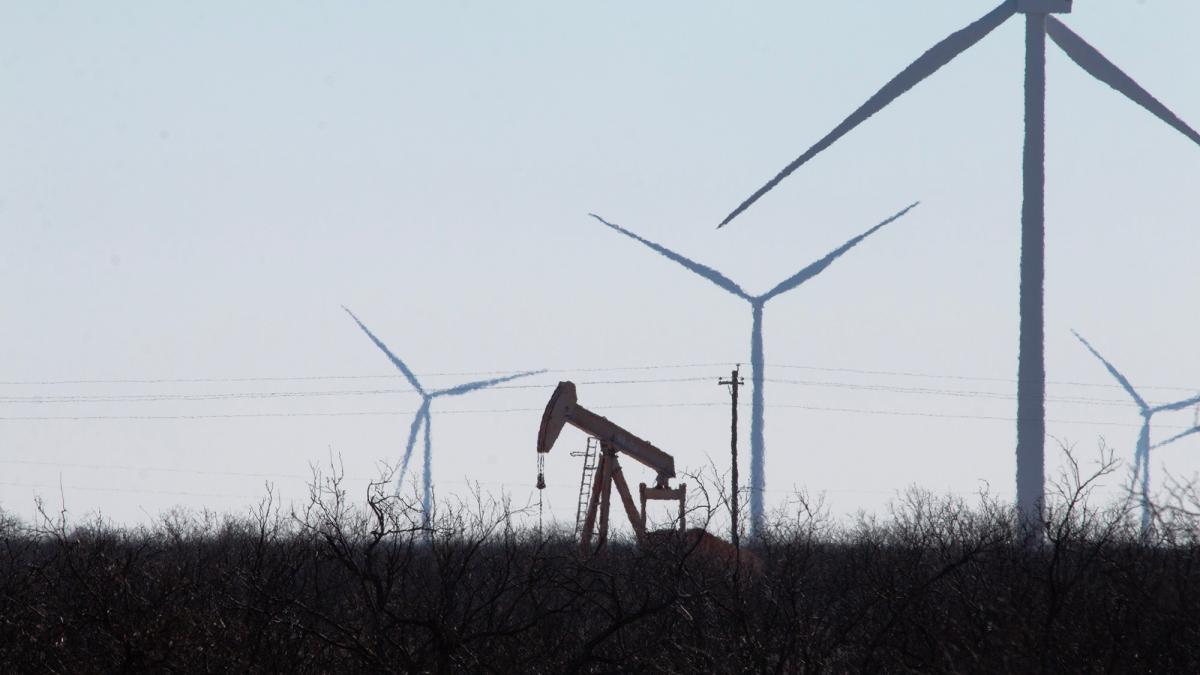
The residents of Ozona, Texas, have long depended on oil and gas revenue to keep their town afloat. But since the 2010s, another energy source has been adding stability to their county’s budget: wind. This may or may not come as a surprise, if you know that the Lone Star State has led the nation in wind energy for nearly two decades. But what is surprising is the way this newer industry is directly benefiting the local community. Not by supplying them with energy — that’s sent to the grid to be used elsewhere, not unlike the fossil fuels that have been harvested from the region for decades. In Ozona, officials have made use of the state’s tax code (the sexiest tool in any tool belt) to get the new industry on the block to help support some of the rural county’s most vulnerable residents: seniors.
“There was a lot of concern that folks were having trouble aging in place in that remote, blue-collar environment, so this was part of the solution,” reporter Bekah McNeel told me late last year when she first pitched a story on Ozona’s unique use of a special tax arrangement with wind companies. The town of 2,800 is the seat of Crockett County, one of the most rural places in Texas. Bekah’s story published yesterday, exploring how wind energy — often a source of contention when it pops up in a new area — became a boon for the town’s older residents.
Reid Bader / Grist
It works like this: To help attract new developments (in this case, wind farms), the county can offer a temporary property tax break to the company, in exchange for direct community investments (in this case, donations to the senior center, the local Meals on Wheels program, and other initiatives supporting older residents). The tax abatements can last up to 10 years, under the Texas tax code, after which the companies pay their full taxes and counties benefit from that increased revenue. But in the meantime, those direct investments in community initiatives can plug holes quickly.
That was the case for Helping Hands, the local Meals on Wheels program that provides food to homebound seniors. Federal funding for these types of programs has been hit hard recently, thanks to the end of pandemic-era support and the Trump administration’s slashing of grants and federal budgets. The government shutdown last fall (the longest in history) disrupted funding even further. In September, a $20,000 donation from the wind company came just in time to keep Helping Hands afloat, the director told Bekah.
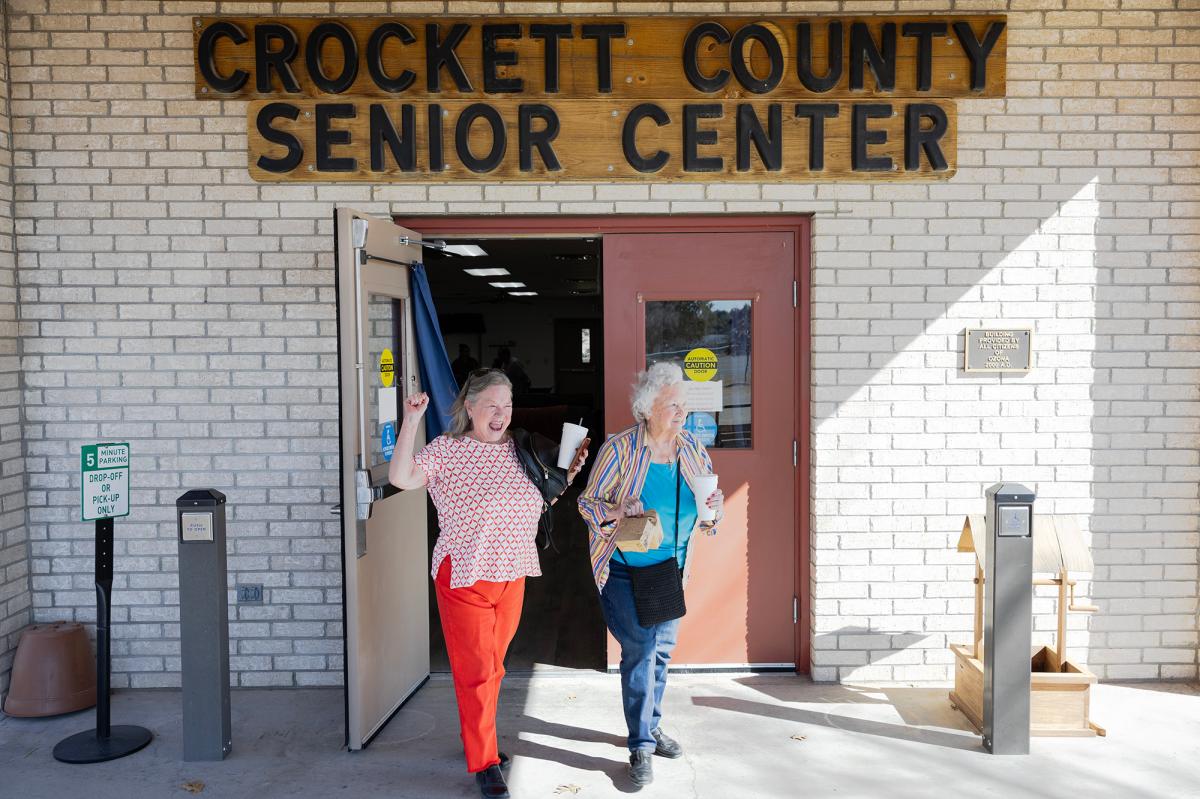
Helping Hands runs out of the local senior center, another beneficiary of wind farm donations. While she was in town reporting the story, Bekah got to attend the center’s Valentine’s Day dance. That event, along with more regular programming like bingo, dominoes, and nutritious lunches, was funded in part by the nearby wind projects.
As Bekah wrote, Crockett County is considered a “mature region” for oil and gas, meaning many wells are nearing the end of their productive life. But unlike those fossil fuels, wind is not a finite resource. In the longer term, wind investment means a more stable source of revenue for the county. The tax abatement deals are a bonus, and one that has shaped how the renewable energy industry is experienced by residents.
It’s a model that other local governments could use to make new industry arrivals work for their communities — and some are doing so. In one instance Bekah noted, Medina County, Texas, which is quickly becoming a data center hot spot, used a tax abatement deal to get those companies to invest in road improvement projects where residents were concerned about traffic getting worse. And although this particular story focuses on the Texas tax code, there are similar provisions in other states.
“Tax abatements aren’t revolutionary at all,” Bekah said, “but the way Ozona uses them — the culture of doing great things for seniors — is definitely something I’ve never seen to the degree I saw it there.”
Dive deeper:
More from Grist
🏞️ No small peat
The Amazon rainforest gets all the credit for being a carbon-storing powerhouse. But new research has revealed that its peaty grassland neighbor, the cerrado, stores about six times more carbon per hectare than the famed rainforest. This discovery lends urgency to efforts to protect the cerrado. Read more
⚒️ Workforce of nature
Geothermal — a renewable energy source that enjoys bipartisan support — uses many of the same drilling techniques developed by the fossil fuel industry. As it grows, it could present a natural transition for oil and gas workers. Read more
🌿 Hornworts and all
A plant called hornwort might hold the answer to supercharging crop yields. Scientists have just discovered that this plant managed to hack photosynthesis — a process that, despite supporting all life on Earth, is terribly inefficient. Read more
In other news
- War is once again threatening energy security. Some experts argue renewables are the long-term answer. (The New York Times)
- Solar panels are still supplying power to the White House — where they were first installed as a symbol of domestic energy security (Axios)
- Offshore wind projects along the East Coast are getting back on track, reaching milestones this month (Canary Media)
- The future of Energy Star, the appliance efficiency program, is looking more secure as it moves under DOE (Utility Dive)
- Trump intervened to halt a planned closure of a Washington coal plant. The state heaped taxes on it instead. (Heatmap News)
And finally, looking forward to …
… a future where senior care is baked into our society — especially as the planet heats up.
☀️☀️☀️
It’s just a mini heat wave. Nevertheless, you’re dutifully making your rounds, checking in on neighbors, making sure the cooling centers have power and supplies. When you park your e-bike outside the local nursing home, the solar panels are humming busily — hot, but working. Two other volunteers are already here, happily chatting away in the still air-conditioned living room.
“I bet this is nothing like some of the hot summers you’ve lived through,” one of the volunteers says to a woman with long silver hair.
“Not at all,” she responds, and launches into a cautionary tale about the old days.
— a drabble by Claire Elise Thompson
☀️☀️☀️
A drabble is a 100-word piece of fiction — in this case, offering a tiny glimpse of what a clean, green, just future might look like. Want to try writing your own (and see it featured in a future newsletter)? We would love to hear from you! Please send us your visions for our climate future, in drabble form, at lookingforward@grist.org
👋 See you next week!