air pollution
-
![]()
![]()
Obama considering ‘cash-for-clunkers’ program
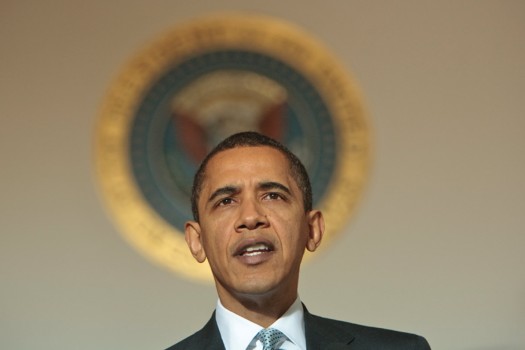
President Obama discusses the latest efforts to aide the U.S. auto industry. (White House photo) Did President Obama endorse a “cash for clunkers” program today? Maybe. In detailing the government’s latest efforts to shore up General Motors and the U.S. auto industry, Obama said this: Finally, several members of Congress have proposed an even more […]
-
No particular policy instrument is appropriate for all environmental problems
I introduced my previous post by noting that there are several prevalent myths regarding how economists think about the environment, and I addressed the "myth of the universal market" Â-- the notion that economists believe that the market solves all problems. In response, I noted that economists recognize that in the environmental domain, perfectly functioning markets are the exception, not the rule. Governments can try to correct such market failures, for example by restricting pollutant emissions. It is to these government interventions that I turn this time.
A second common myth is that economists always recommend simple market solutions for market problems. Indeed, in a variety of contexts, economists tend to search for instruments of public policy that can fix one market by introducing another. If pollution imposes large external costs, the government can establish a market for rights to emit a limited amount of that pollutant under a so-called cap-and-trade system. Such a market for tradable allowances can be expected to work well if there are many buyers and sellers, all are well informed, and the other conditions I discussed in my last posting are met.
The government's role is then to enforce the rights and responsibilities of permit ownership, so that each unit of emissions is matched by the ownership of one permit. Equivalently, producers can be required to pay a tax on their emissions. Either way, the result -- in theory -- will be cost-effective pollution abatement, that is, overall abatement achieved at minimum aggregate cost.
The cap-and-trade approach has much to recommend it, and can be just the right solution in some cases, but it is still a market.
-
China’s environment problems serious: minister
SHANGHAI — China’s environmental problems remain serious with local governments not putting enough pressure on businesses to control pollution, the nation’s environment protection minister has said. Efforts to toughen environment laws have not done enough to fix the widespread problems for China’s air, lakes and rivers, Zhang Lijun said Tuesday, according to the official Xinhua […]
-
The game plan: regulating CO2 under the Clean Air Act
This element of Obama’s impending energy policy hasn’t gotten nearly the attention it deserves. If he does it right, it could be the secret weapon that kills new coal plants for good — with far greater certainty than a middling cap-and-trade program. Obama has always said, to those who were listening closely, that he plans […]
-
Next stop for Obama team: EPA's endangerment finding

Stopped EPA from blocking California's effort to regulate tailpipe GHG emissions. Check!
Stopped a new coal plant. Check!
The next "stop" on the Obama Climate Action Train is the "endangerment finding" so the EPA can finally put a stop on greenhouse gases.
In Massachusetts [vs. EPA], the Supreme Court found that greenhouse gases (GHGs) are "pollutants" under the Clean Air Act; that EPA must determine whether GHGs emitted from new motor vehicles do or do not endanger public health or welfare, or supply a reason for not making this determination; and that, if EPA makes an "endangerment finding," it must issue regulations.
The key question: Can elevated levels of GHG concentrations be reasonably anticipated to endanger public health or welfare? Does the Pope buy papal indulgences carbon offsets?
This is not a tough call for a President who just said: "climate change, which, if left unchecked, could result in violent conflict, terrible storms, shrinking coastlines, and irreversible catastrophe." And for 1,000 years! Indeed, he campaigned on this very issue (see the October 16 post, "Obama to declare CO2 a dangerous pollutant").
In an email to EPA employees [PDF], Administrator Lisa Jackson wrote of "five priorities that will receive my personal attention" -- the first of which is "Reducing greenhouse gas emissions":
As Congress does its work [on global warming legislation], we will move ahead to comply with the Supreme Court's decision recognizing EPA's obligation to address climate change under the Clean Air Act.
Greenwire ($ub. req'd) has the full story:
-
Adopting tougher emissions standards, new eco-label in Washington
California gets all the glory. As Kate mentioned, President Obama has ordered the EPA to reconsider a request from California and 13 other states to set automobile emissions standards that are tougher than federal standards. It's that "13 other states" phrase that should be most important to Puget Sound readers, as Washington is one of the bunch.
Along with Arizona, Connecticut, Maine, Maryland, Massachusetts, New Jersey, New Mexico, New York, Oregon, Pennsylvania, Rhode Island, and Vermont, Washington has pledged to adopt California's standards, which would aim to reduce vehicle greenhouse-gas emissions 30 percent by 2016.
So what has to happen here once the California waiver is OK'd? Well, technically, nothing. Once those stricter standards are approved for California, they'll go into effect here in Washington, starting with the 2011 model year vehicles (which you'll start to see on dealer lots next year). That is, unless state courts get involved. According to Sandy Howard of Washington's Department of Ecology, there are still some pending state lawsuits that could affect the overall outcome.
Well, if we can't force automakers to build greener cars, how about shaming consumers into buying greener cars?
-
Will Congress get a whiff and vote to clean up dirty diesel engines?
The Washington Post has an interesting note about the armada of diesel buses that have rolled into the nation's capital for the Obama inauguration -- and the need to clean them up.
The opportunity for the "policy change" described in the piece could be at hand as soon as the day after the inauguration, Wednesday, Jan. 21, when the House Appropriations Committee takes up the economic recovery bill. The committee already recognized the desire to include the cleanup of existing diesel engines as part of the stimulus bill. See the bottom of page 4 of the House plan [PDF], which includes $300 million for a diesel green jobs program.
-
Jeremy Piven's sushi addiction: good for mercury awareness
Whether you believe the Hollywood rumor that Jeremy Piven dropped out of the Broadway production of Speed-the-Plow due to a heavy regime of partying and a subsequent rehab session, or his doctor's assertion that the star was ill due to mercury poisoning from a high dose of sushi (two servings per day, Pivs? Good Lord), the winner in this agent's nightmare is awareness of mercury contamination.
Piven went on Good Morning America on Thursday to explain himself, warn about excessive consumption of fish high on the food chain like tuna, and point people to BlueVoice.org. BlueVoice correctly pins the blame largely on coal-burning power plants and their propensity to sprinkle lakes, rivers, and oceans with emissions high in methylmercury that bioaccumulates up the food chain. I'd call that, um, a quicksilver lining.
-
NASA: China's pollution control efforts improved air quality during the Olympics
Over at the Atlantic, James Fallows noted a NASA study, presented at the December meeting of the American Geophysical Union, that shows that China's efforts to clean up the air pollution during the Olympics did improve air quality.
Though the reductions in air pollutants seems to be specific to the Beijing area, the report noted:
During the two months when restrictions were in place, the levels of nitrogen dioxide (NO2) -- a noxious gas resulting from fossil fuel combustion (primarily in cars, trucks, and power plants) -- plunged nearly 50 percent. Likewise, levels of carbon monoxide (CO) fell about 20 percent.
The release that accompanied the report noted that the "steep decline in certain pollutants surprised the researchers," and in all fairness, it surprised me too. My coverage of the Beijing air was decidedly pollution-heavy. Though it's hard for me to swallow that Beijing may have gotten the air-pollution measures right -- an API of 95 is bad no matter how you spin it -- I couldn't agree more with Fallows:
... it shows that corrective steps can improve even the most hopeless-seeming environmental disasters. It's worth trying to do something, rather than just hunkering down in bed and trying to take very, very shallow breaths -- my strategy in the months from April to July.
In other words, Yes We Can.NASA images below the fold: